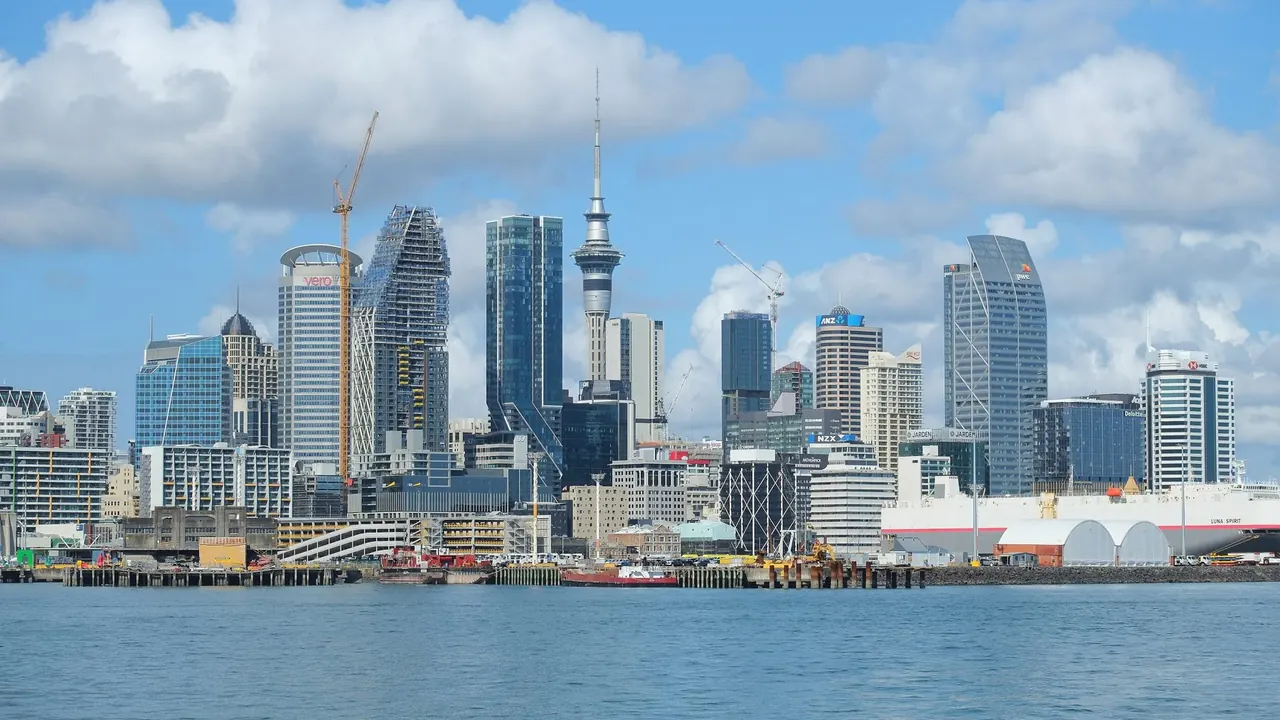
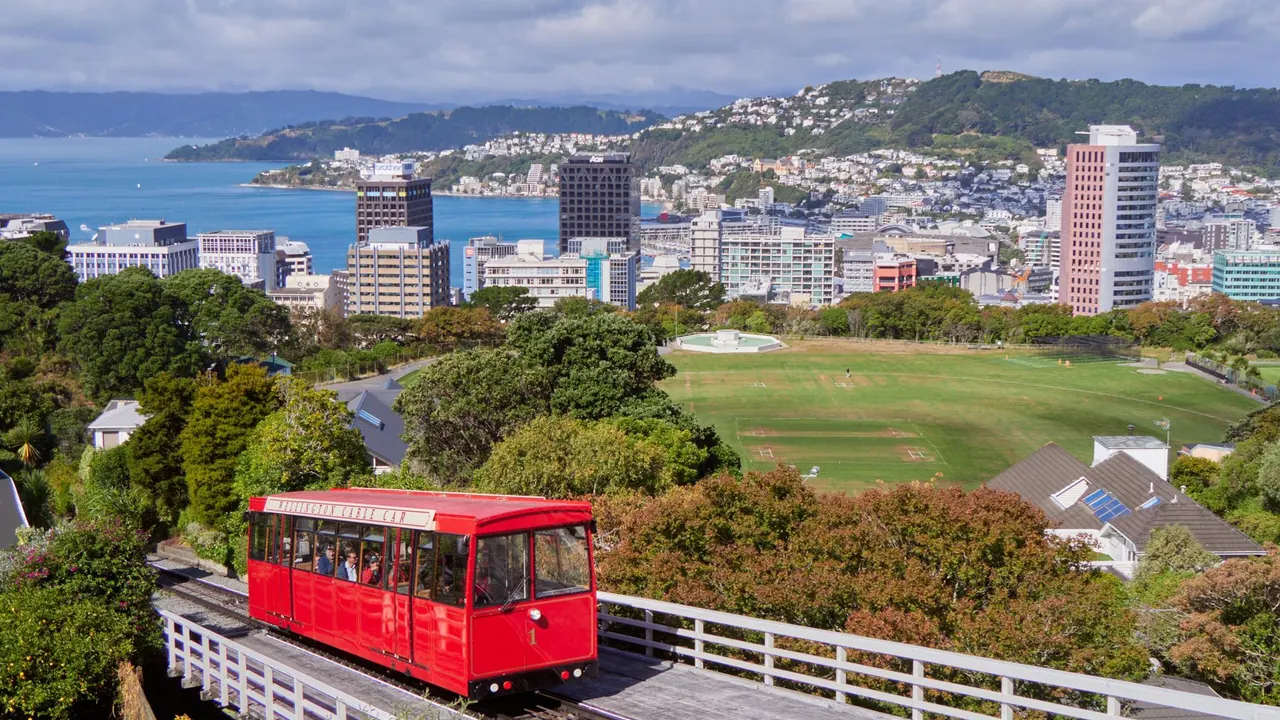
Photos: Auckland by Pseudopanax at English Wikipedia, Public domain; Wellington by lumoplank, CC0.
Auckland or Wellington?
Our verdict in twelve categories, each scored against the same fixed benchmark cities, and the climate month by month, so you can choose for your trip.
Choose Auckland for
- beaches
- day trips
- wellness
Auckland suits a summer trip built around the water: sheltered sandy bays on the east side, ferries out to Waiheke and Rangitoto, the volcanic cones and the kauri forest of the Waitākere Ranges. It is the better base for families and for anyone who wants plenty of days out of the city, provided they accept a sprawling layout and probably a hire car for part of the stay.
Choose Wellington for
- getting around
- live music and the arts
- nightlife
Choose Wellington for a compact capital you can cover on foot, with Te Papa, the cable car and Cuba Street close together and a stronger evening offer of theatre, ballet and live music. It is a city for walking, coffee and stage shows rather than swimming, and it works best as a few days on a wider New Zealand route.
Scoreboard
Twelve categories on one fixed scale from 0 to 100. The shaded stretch is the gap between the two.
Your match
Pick a travel style or drag the sliders, and both match scores follow your weighting.
Wins on beaches and day trips with your weighting.
Wins on getting around and live music and the arts with your weighting.
What matters to you?
Category by category
What the scores mean for a trip.
Beaches & swimming
Auckland is the clear choice for swimming. Its east-coast bays along Tamaki Drive and on the North Shore are calm, sandy and safe for children, the gulf warms to around 20°C in late summer, and the black-sand west coast at Piha and Muriwai adds proper surf.
Wellington's Oriental Bay and the Miramar coves are pleasant for a walk or a quick dip on a still day, but the Cook Strait water stays several degrees cooler and the wind often decides the afternoon. There the beach is an outing, not the reason to come.
Food & drink
The two eat equally well, but in different ways. Auckland's strength is breadth: regional Chinese, Korean and Malaysian cooking along Dominion Road and in the suburbs, Pacific food at the markets, green-lipped mussels and snapper by the sea, and wine on Waiheke a ferry ride away.
Wellington is smaller and more concentrated, with its eating packed into Cuba Street and Courtenay Place, and it leads on coffee and craft beer, with taprooms scattered around Te Aro. Its local accent comes from inland as well as the sea, with Wairarapa lamb and Martinborough pinot noir beside Cook Strait fish, and the weekend night markets make easy street food.
Culture & sights
Auckland's War Memorial Museum, on the crest of the Domain, holds a carved meeting house and a war canoe among its Māori and Pacific treasures, and Wellington answers with Te Papa on the waterfront, free to enter and strong on the country's story. In each city that one museum carries the sightseeing, and with little historic streetscape in either, two or three days covers the main sights.
What differs is the setting around them. Auckland's other sights lean towards landscape, with Māori pā earthworks on the volcanic cones and the Sky Tower over the skyline, while Wellington, as the capital, adds the Beehive, Parliament and the wooden Old St Paul's within a short walk.
Nightlife
Neither is a club city, and both are quiet midweek. The real difference is layout: Auckland's evenings are split between Ponsonby Road, K Road and the Viaduct, often with a taxi between them, while in Wellington Courtenay Place and the Cuba Street lanes sit side by side, so a night of craft-beer bars and cocktail rooms can be done entirely on foot.
Nature & outdoors
Both have outstanding nature close at hand, and the difference is sea against hills. Auckland's is maritime and volcanic: Rangitoto and the birds of Tiritiri Matangi by ferry, sailing and dolphin watching in the Hauraki Gulf, and kauri rainforest and waterfalls in the Waitākere Ranges.
Wellington's wild country starts at the end of the street, with the town belt, Zealandia's native birds and the fur seals at Red Rocks, and it is the better city for mountain biking. Its strong winds and quick changes, though, make outdoor plans less certain.
Day trips
Auckland has more to fill a day: Waiheke's vineyards and beaches by ferry, Devonport across the harbour, the wineries and farmers' market around Matakana to the north, and Hobbiton for a long day south.
Wellington's best outing is over the Remutaka hills to Martinborough and the colonial main streets of Greytown and Featherston. Beyond the Wairarapa and the Kāpiti Coast little is within easy reach, so the city works better as a stop on a longer route than as a base.
Good for families
Auckland gives children more to do: a zoo with a large native section, an aquarium tunnel beneath sharks and rays, MOTAT's trams and planes, the Rainbow's End theme park and calm beaches for swimming. The price is driving between them.
Wellington keeps things closer together, with Te Papa's earthquake house and giant squid, the cable car to the Botanic Garden and the waterfront playgrounds all near each other. It has no theme park or large aquarium, though, and wind, rain and steep steps call for a wet-weather plan.
Getting around
Wellington is far easier to get around. Its flat central strip from the railway station to Courtenay Place holds most of the sights and can be walked in under half an hour, with the cable car, suburban trains and buses covering the rest.
Auckland's centre is walkable and its harbour ferries are a pleasure, but the city sprawls, buses and trains reach only part of it, and the west coast, the ranges and the northern wineries really need a car or a tour.
Shopping & style
Neither is a shopping destination, and both sell the same things worth taking home: merino, pounamu and Pacific crafts. Auckland leans towards New Zealand designer labels in Ponsonby and Newmarket and has the Pacific-flavoured Ōtara market, while Wellington's character lies in the vintage clothing, record shops and second-hand books of Cuba Street.
Affordability
Both are expensive, with costly central hotels and dear drinks, so choosing one over the other will not save much. The savings come in different forms: in Auckland, free volcanic cones and beaches and cheap Asian food courts, offset by ferries and car hire; in Wellington, a walkable centre that cuts transport costs and a free national museum.
Live music & performing arts
Wellington has the stronger stage. It is home to the New Zealand Symphony Orchestra and the Royal New Zealand Ballet, its theatre runs from mainstream plays to fringe work in black-box venues, and small music venues around Cuba Street host bands and jazz.
Auckland's calendar is steady rather than deep: the Philharmonia in the Town Hall, opera seasons and touring musicals at the ornate Civic. Its highlight is the Pasifika Festival, which brings a Pacific music and dance flavour of its own.
Wellness & relaxation
Auckland is the better place to unwind, mainly because hot springs are within reach: the thermal pools at Parakai are about an hour away, and Waiheke's slower pace and retreats are a ferry ride off.
Wellington has no thermal water nearby, so relaxing there means a day spa, the heated harbourside pool at Oriental Bay or a quiet walk in the Botanic Garden.
When should you go?
Pick your month. The climate figures are measured averages, not a forecast.
Auckland in July
Wellington in July
Daytime high, °C
Rainfall in the month, mm
Where the figures come from
Auckland's station stands 189 m below the city centre, so the centre is likely a little cooler than the figures say.
Wellington's sunshine is measured 47 km from the centre, at Paraparaumu Aerodrome.
Temperature and rainfall are climate normals, averaged over the years shown. Auckland: 1961-1990 normals, Auckland Aerodrome Aws (17 km from centre). Wellington: 1961-1990 (sunshine 1991-2020) normals, Wellington Aerodrome Aws (5.3 km from centre).
Both cities are at their best from December to March, and neither ever gets too hot for walking the streets. Auckland is the warmer of the two, with highs around 24°C in January and February and the sea at about 21°C into March, warm enough for comfortable swimming. Winter brings the rain, peaking near 135mm in July, though it stays mild enough for sightseeing between showers.
Wellington runs a few degrees cooler all year, and its sea barely reaches 17°C, so summer there is for walking the coast rather than swimming. January is its sunniest month with about 233 hours of sunshine, while from May to August it turns cool, wet and much dimmer, better suited to museums and theatres than to the outdoors.
Which traveller are you?
On a beach and sun trip, Auckland wins easily. Its sheltered east-coast bays are calm and warm enough for real swimming in late summer, Piha brings surf, and Waiheke's white-sand coves are a ferry ride away, while Wellington's cold strait water leaves its beaches for strolling.
For a short city break, Wellington is the neater choice. Te Papa, the waterfront, Parliament and the Cuba Street bars sit along one walkable strip, the cable car does the climbing, and an evening can end at the ballet or a small music venue, all without a car.
On a relaxing and wellness trip, Auckland has more to offer. The hot springs at Parakai make an easy half day, Waiheke's retreats and slower pace are close by, and the calm bays help, whereas unwinding in Wellington stops at day spas and harbour walks.
Before you go
| Measure | Auckland | Wellington |
|---|---|---|
| Official language | English, New Zealand Sign Language, Māori | English, New Zealand Sign Language, Māori |
| Currency | New Zealand Dollar (NZD) | New Zealand Dollar (NZD) |
| Sockets | I230 V, 50 Hz | I230 V, 50 Hz |
| Driving side | Left | Left |
| Time zone | UTC+12, UTC+13 in summer | UTC+12, UTC+13 in summer |
| Emergency number | 111 | 111 |
| Elevation | 196 m | 0 m |
| Main airport | Auckland International Airport (AKL)18 km from centre63 non-stop destinations | Wellington International Airport (WLG)5 km from centre20 non-stop destinations |
| Public holidays this year | 12 days | 12 days |
By the numbers
| Measure | Auckland | Wellington |
|---|---|---|
| City population | 1,470,100 | 216,200 |
| People per km² | 2,630 | 487 |
| Museums within 10 km | 15 | 12 |
| UNESCO World Heritage sites within 50 km | 0 | 0 |
| Swim season, months above 21 °C | 1 month | None |
Where else could you go?
Every comparison below shares a destination with this one, so you can follow Auckland or Wellington somewhere new.