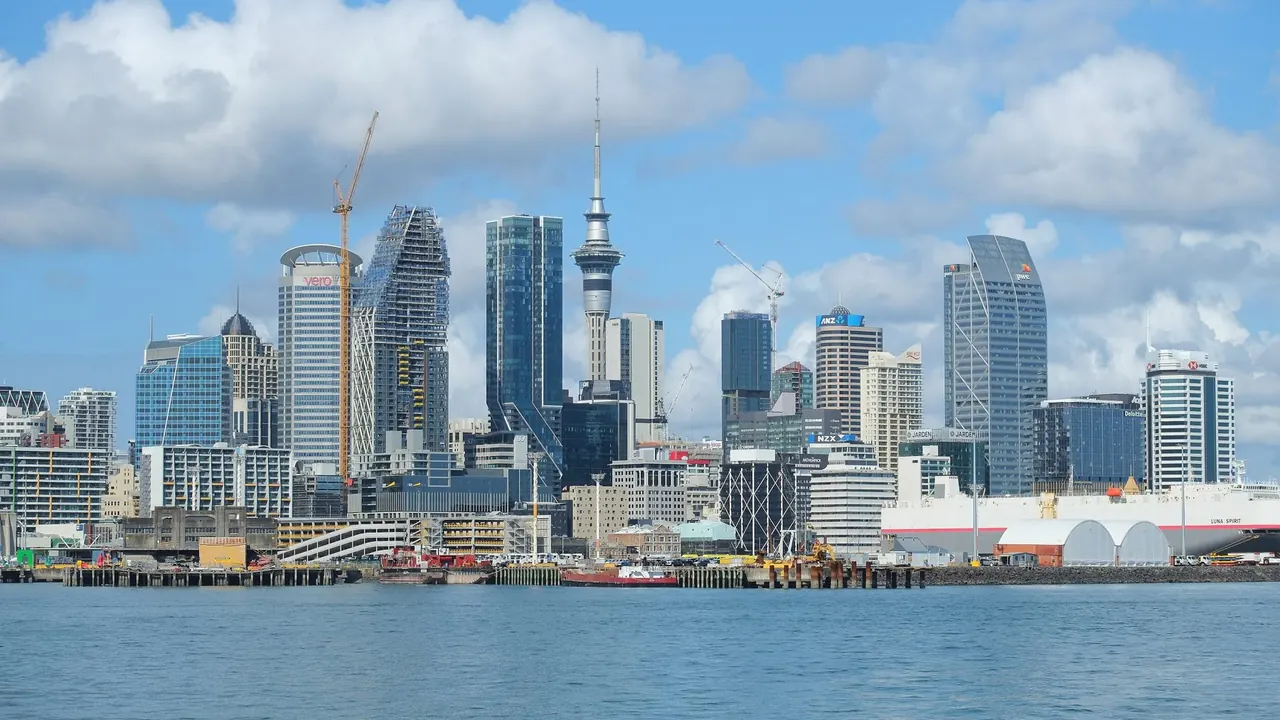
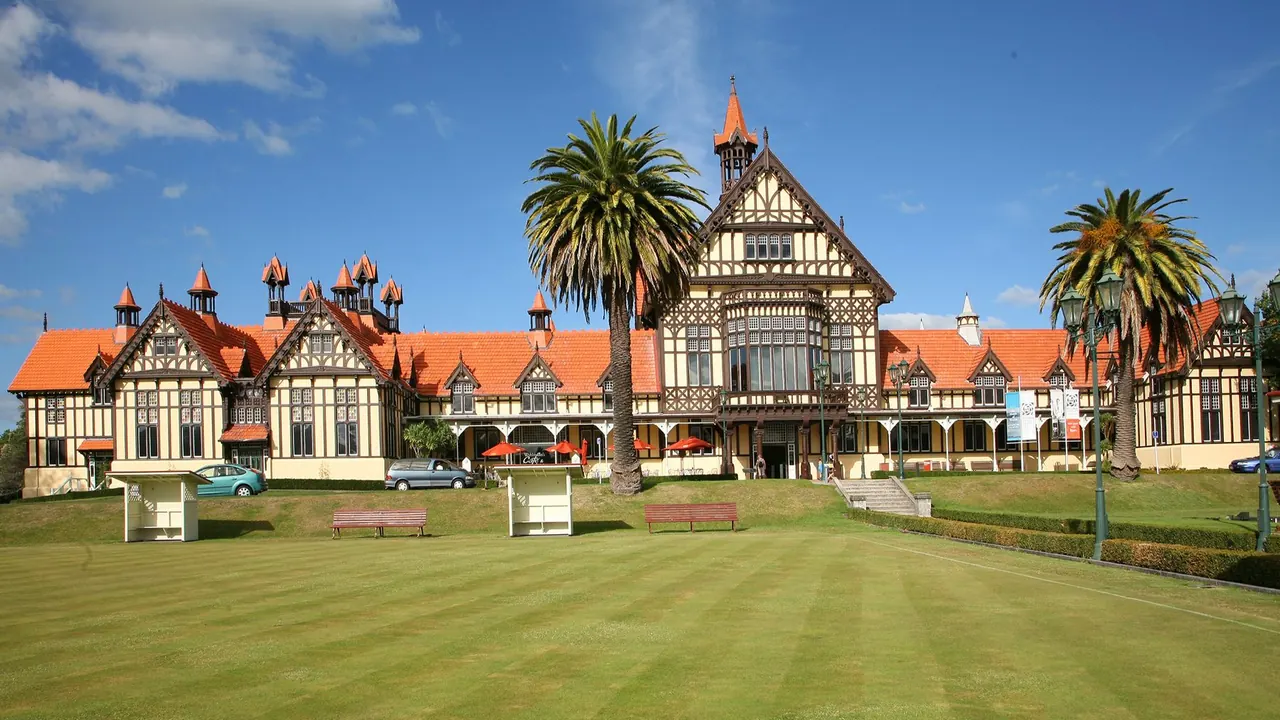
Photos: Auckland by Pseudopanax at English Wikipedia, Public domain; Rotorua by W. Bulach, CC BY-SA 4.0, cropped.
Auckland or Rotorua?
Our verdict in twelve categories, each scored against the same fixed benchmark cities, and the climate month by month, so you can choose for your trip.
Choose Auckland for
- beaches
- food and drink
- nightlife
Auckland is the better choice for a varied trip where the city is part of the pleasure. You get sheltered harbour beaches along Tamaki Drive and the North Shore, a wide spread of Asian and Pacific cooking, evenings on Ponsonby Road or K Road, and ferries out to Waiheke and Rangitoto. It suits travellers who want sea, food and some city life in one stay and who can accept high costs and a fair amount of driving.
Choose Rotorua for
- wellness
- prices
- nature and the outdoors
Travellers who want to soak, slow down and watch the ground steam will get more from Rotorua. The town grew up around bathing, Te Arawa culture is lived in rather than put on display, and geysers, mud pools and volcanic lakes are a short drive away. It is a small place where people go to bed early. A few unhurried days there are rewarding, but it has little to offer anyone looking for restaurants, shops or a night out.
Scoreboard
Twelve categories on one fixed scale from 0 to 100. The shaded stretch is the gap between the two.
Your match
Pick a travel style or drag the sliders, and both match scores follow your weighting.
Wins on beaches and food and drink with your weighting.
Wins on wellness and prices with your weighting.
What matters to you?
Category by category
What the scores mean for a trip.
Beaches & swimming
Auckland is a real beach city. Its two harbours have calm, sandy bays at Mission Bay, St Heliers and Takapuna that suit children, and the black-sand surf beaches at Piha and Muriwai make a wilder day out. Waiheke's quieter bays are a ferry ride away.
Rotorua is inland, so swimming means the smaller lakes such as Tarawera and Okareka in summer, or an hour's drive to the sea at Mount Maunganui. The lakeside hot springs are a pleasant curiosity, but nobody should choose Rotorua for its beaches.
Food & drink
Auckland eats far better, mostly thanks to the people who live there. Dominion Road has regional Chinese, Korean and Malaysian cooking, the markets have Pacific Island food, and there are green-lipped mussels and snapper on the menus, with the Waiheke vineyards within easy reach.
In Rotorua, most restaurants are on the covered stretch of Tutanekai Street, and the food is reliable rather than memorable. Its one distinctive meal is hāngī cooked over geothermal steam, usually eaten as part of an evening cultural performance, and it is worth doing once.
Culture & sights
Auckland has the stronger sights for a couple of days of sightseeing. The main one is the Auckland War Memorial Museum, with its Māori and Pacific treasures, followed by the Art Gallery and the Maritime Museum's story of Polynesian voyaging.
Rotorua has fewer sights, but its Māori heritage is still lived in. Families at Whakarewarewa cook in steam vents, carvers train at the institute next door, and at Ohinemutu the meeting house and St Faith's Church stand on steaming ground. A carved canoe in a museum and a village that still cooks in steam vents are very different experiences, and many visitors want both.
Nightlife
Auckland has a real night out to offer: wine bars on Ponsonby Road, late bars and small clubs on Karangahape Road, and an after-work crowd at the Viaduct. Even so, it is better for a long evening of drinks than for a big club night. Rotorua has a few pubs near the lake and no clubs at all, so an evening there usually means a cultural performance or a hot pool.
Nature & outdoors
Both cities are built on volcanic ground and both are superb for the outdoors, but the landscapes differ. Auckland's is green and close to the sea. There are grassy volcanic cones in the suburbs, Rangitoto and the bird sanctuary of Tiritiri Matangi in the gulf, and kauri forest in the Waitākere Ranges, and the Hauraki Gulf is good for sailing, kayaking and whale watching.
Rotorua's ground is still active, which Auckland's is not. You can see geysers at Te Puia, the coloured terraces at Wai-O-Tapu and the Waimangu valley left by the 1886 eruption. The redwood forest on the edge of town is a major mountain-biking area, and the ring of lakes adds trout fishing and kayaking.
Day trips
The best outings from Auckland go by water or into wine country. Waiheke's hillside vineyards, olive groves and beaches are about forty minutes away by ferry, and Devonport's Victorian harbourside village is a short crossing. To the north, Matakana has wineries, a weekend farmers' market and the coast around Leigh. That makes Auckland's list the longer and more varied one, though Hobbiton is a long day from here.
Rotorua is much closer to Hobbiton, about an hour away through dairy country, and Taupo and Mount Maunganui are about an hour away too. Beyond those, most excursions head into the landscape rather than to historic towns or wine regions, so a few days are enough to see the best of them.
Good for families
Both work well with children, but in different ways. Auckland has the usual city attractions: the zoo, the aquarium on Tamaki Drive with its shark tunnel, MOTAT and Rainbow's End, with calm beaches for the rest of the day.
In Rotorua, geysers and mud pools are the main entertainment, and the gondola and luge, kiwi viewing and sheep-shearing shows add to them. In both places a car makes life easier, and in Rotorua small children need holding near the boiling ground.
Getting around
Neither city is easy without a car, but Auckland gives you more options. The harbour ferries to Devonport, Waiheke and Rangitoto are a pleasure in themselves, and buses and a limited train network reach Ponsonby, Newmarket and Mission Bay. The west coast and the wineries still need a car or a tour.
Rotorua's small, flat centre is easy on foot, but the geothermal valleys are 20km to 30km south and buses are infrequent, so most visitors drive or join tours. On the plus side, the roads are quiet and parking is easy, unlike Auckland's busy motorways at peak times.
Shopping & style
Auckland is not a shopping destination, but Ponsonby Road, Newmarket and Britomart offer New Zealand fashion and design that Rotorua does not have at all. Auckland also has merino knitwear and the Ōtara market with its Pacific stalls. Rotorua's shopping is narrower but more personal: carving, flax weaving and pounamu bought where the makers work at Whakarewarewa.
Affordability
Both are expensive, and the difference is in where the money goes. In Auckland, hotels, restaurants and Waiheke wine are the big costs, softened by free beaches, volcanic cones and cheap Asian food courts. Rotorua's motels, many with their own hot pools, cost less per night, but a hire car and the entry fees at geothermal parks and cultural evenings soon add up.
Live music & performing arts
For concerts and theatre, Auckland is the place to be. The Auckland Philharmonia plays in the Town Hall, which has fine acoustics, and New Zealand Opera stages seasons in the city. Touring musicals play at the Civic, an ornate 1929 theatre with a starry ceiling, and the Arts Festival and Pasifika Festival are the highlights of the year. The calendar is broad but modest rather than first-rate.
Rotorua does one thing, and does it well: kapa haka, the Māori song, poi dance and haka performed most evenings at the cultural villages and marae, usually after a welcome ceremony. Beyond that, there is a civic arts centre with touring shows, but little regular classical music, theatre or jazz.
Wellness & relaxation
This is where Rotorua stands apart. It has been a spa town since the nineteenth century, and it offers lakefront mineral pools at several temperatures, private pools you can book by the hour, mud bathing at Hell's Gate and free hot streams in the bush.
Auckland has day spas, yoga studios in Ponsonby and the Parakai hot pools about an hour away. Visitors from Auckland who want proper geothermal bathing usually end up travelling to Rotorua.
When should you go?
Pick your month. The climate figures are measured averages, not a forecast.
Auckland in July
Rotorua in July
Daytime high, °C
Rainfall in the month, mm
Where the figures come from
Auckland's station stands 189 m below the city centre, so the centre is likely a little cooler than the figures say.
Rotorua has no weather station within reach, so its figures come from a gridded climate model rather than a measured record, and read a broad area rather than the city itself.
Temperature and rainfall are climate normals, averaged over the years shown. Auckland: 1961-1990 normals, Auckland Aerodrome Aws (17 km from centre). Rotorua: 2001-2020 normals, NASA POWER reanalysis grid, no weather station within 90 km.
Both cities have their summer from December to March and their wettest weather in midwinter, but Auckland is the milder of the two. January and February bring coastal highs of about 24°C. The harbour is warmest from January to March, at around 21°C, which is the only real window for beach days. From April the rain builds to a July peak of about 135mm, yet winter days stay mild enough for walking the streets.
Rotorua is a few degrees cooler all year, with July highs near 11°C. Winter there is chilly, but that suits the hot pools, which feel best on a cold evening. Summer is the season for lake swimming and drives to the coast, and November is usually its driest month. In both cities, spring and autumn are comfortable for walking and sightseeing.
Which traveller are you?
On a beach and sun trip, Auckland is the clear pick. Calm sandy bays line Tamaki Drive and the North Shore, the west coast has surf beaches, and Waiheke adds white sand. Rotorua offers only summer lake swimming and a drive to the coast.
For a relaxing and wellness trip, Rotorua is made for it. Lakefront mineral pools, warm mud at Hell's Gate, motels with their own hot pools and free wild springs put bathing at the centre of each day, and Auckland cannot match that.
On a food and nightlife trip, Auckland wins easily. Regional Asian cooking on Dominion Road, local seafood, Ponsonby's restaurants and Waiheke wine lead on to late bars on K Road. Rotorua has one main dining street and goes quiet well before midnight.
Before you go
| Measure | Auckland | Rotorua |
|---|---|---|
| Official language | English, New Zealand Sign Language, Māori | English, New Zealand Sign Language, Māori |
| Currency | New Zealand Dollar (NZD) | New Zealand Dollar (NZD) |
| Sockets | I230 V, 50 Hz | I230 V, 50 Hz |
| Driving side | Left | Left |
| Time zone | UTC+12, UTC+13 in summer | UTC+12, UTC+13 in summer |
| Emergency number | 111 | 111 |
| Elevation | 196 m | 280 m |
| Main airport | Auckland International Airport (AKL)18 km from centre63 non-stop destinations | Rotorua Regional Airport (ROT)7 km from centre3 non-stop destinations |
| Public holidays this year | 12 days | 12 days |
By the numbers
| Measure | Auckland | Rotorua |
|---|---|---|
| City population | 1,470,100 | 58,500 |
| People per km² | 2,630 | 22 |
| Museums within 10 km | 15 | 1 |
| UNESCO World Heritage sites within 50 km | 0 | 0 |
| Swim season, months above 21 °C | 1 month | None |
Where else could you go?
Every comparison below shares a destination with this one, so you can follow Auckland or Rotorua somewhere new.