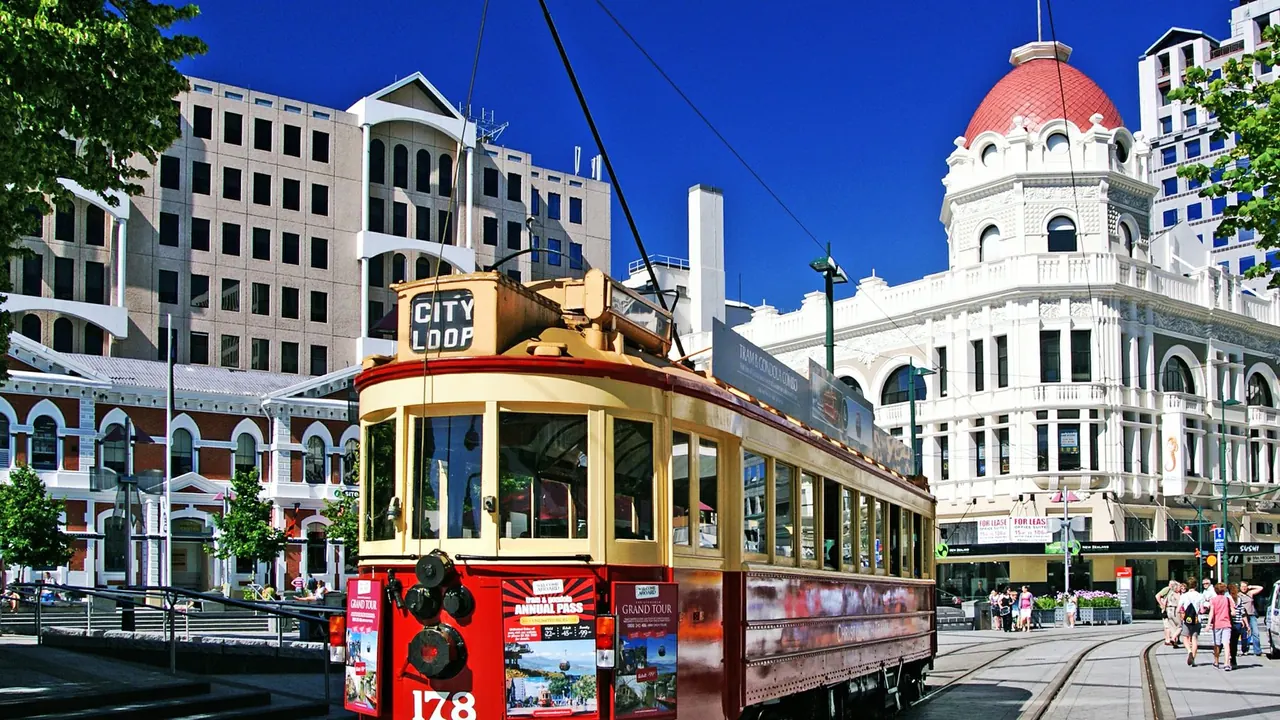
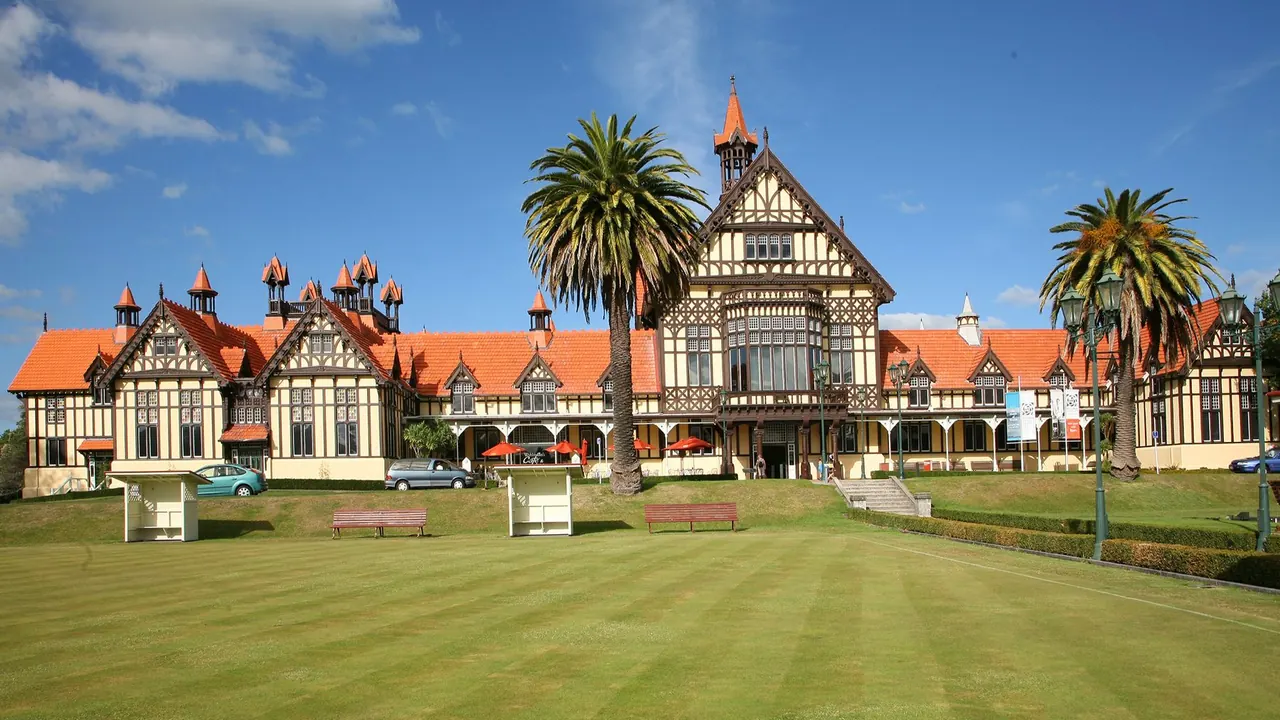
Photos: Christchurch by Bernard Spragg. NZ, CC0; Rotorua by W. Bulach, CC BY-SA 4.0, cropped.
Christchurch or Rotorua?
Our verdict in twelve categories, each scored against the same fixed benchmark cities, and the climate month by month, so you can choose for your trip.
Choose Christchurch for
- nightlife
- getting around
- food and drink
Christchurch suits travellers who want a proper small city as their base. The flat centre is easy to cover on foot or by bike, the evenings offer riverside bars, a symphony orchestra and professional theatre, and the food draws on Canterbury farmland and the Waipara wine country. Beyond the city, the Port Hills, Banks Peninsula and the Southern Alps make it one of the best gateways in the country for walking, sailing and winter skiing.
Choose Rotorua for
- wellness
- nature and the outdoors
- families
Rotorua is the better pick for a slower, stranger trip built around steam, hot water and Māori culture. Geysers, mud pools and coloured terraces lie on the doorstep, the Te Arawa villages give the place its meaning, and the day ends in a mineral pool or at a hāngī rather than in a bar. Bring a car and expect quiet nights, because the town gives its best to people who want to soak, walk the redwoods and go to bed early.
Scoreboard
Twelve categories on one fixed scale from 0 to 100. The shaded stretch is the gap between the two.
Your match
Pick a travel style or drag the sliders, and both match scores follow your weighting.
Wins on nightlife and getting around with your weighting.
Wins on wellness and nature and the outdoors with your weighting.
What matters to you?
Category by category
What the scores mean for a trip.
Beaches & swimming
Neither is a beach destination, but the water is different. Christchurch has real sea beaches inside the city, with the long grey surf strand at New Brighton and the sheltered bay at Sumner, though the sea stays cold enough that most visitors walk and paddle rather than swim.
Rotorua's swimming is in fresh water at lakes such as Tarawera and Okareka, which are warmer in summer and sometimes come with hot springs at the edge. The nearest real surf beach is at Mount Maunganui, about an hour's drive away.
Food & drink
Christchurch is the better place to eat. Canterbury lamb, Akaroa salmon and Waipara pinot noir give its menus a sense of place, and the riverside market, the laneways of the rebuilt centre and a good spread of Asian kitchens offer enough choice for several evenings.
Rotorua's dining is concentrated on one covered street by the lake and is practical rather than memorable, with limited choice late in the evening. What it has that Christchurch lacks is hāngī, food steamed over geothermal vents and usually eaten as part of a cultural evening.
Culture & sights
Each town has a single strong story and sights you can cover in a couple of days. Christchurch's is colonial and recent: the Gothic Revival quadrangles of the Arts Centre, the earthquakes told through the Transitional Cathedral and the memorial wall, plus the South Island's best gallery of New Zealand art and the city's links with Antarctica.
Rotorua's story is Māori. At Whakarewarewa, Te Arawa families still cook in the steam vents, and carvers train in the open at the institute next door, while Ohinemutu's meeting house and St Faith's Church stand on steaming ground by the lake. The Tudor-style Bath House and the Buried Village complete a visit that feels far less European than Christchurch.
Nightlife
Christchurch is the only one of the two with a night out worth the name. The bars along Oxford Terrace by the river, the lanes of the centre and Victoria Street fill on Friday and Saturday, although clubs are few and weeknights are quiet.
Rotorua has a handful of pubs near the lake and no clubs at all. Its evenings are spent at a cultural performance or in a hot pool.
Nature & outdoors
Both are superb bases for the outdoors, but the landscapes could hardly be more different. Christchurch looks towards hills, sea and mountains: crater-rim tracks on the Port Hills, kayaking among Hector's dolphins in the bays of Banks Peninsula, and alpine tramping at Arthur's Pass or skiing at Mt Hutt about two hours west.
Rotorua's appeal is the restless ground itself, with mud pools in town parks, Wai-O-Tapu's coloured terraces, the Pohutu geyser and the volcanic scar of Mount Tarawera. Its redwood forest is one of the great mountain-biking areas in the southern hemisphere, and the ring of lakes adds trout fishing and paddling.
Day trips
Both towns have a short list of outings, mostly into scenery. From Christchurch the highlights are places with character: the French-founded harbour village of Akaroa, hillside Lyttelton, the Waipara wine valley and the hot pools of Hanmer Springs.
Rotorua's outings are better known by name. Hobbiton, Lake Taupo, the beach at Mount Maunganui and the Waitomo glowworm caves all lie within a couple of hours, but there is no wine region or historic village to compare with Akaroa.
Good for families
Both work well with children, in different ways. Christchurch is flat, calm and easy, with a huge riverside playground, punts and a heritage tram in the centre, and penguins at the Antarctic Centre and open-range animals at Orana on the outskirts.
In Rotorua the erupting geysers and plopping mud do most of the entertaining, with the luge, gondola, farm shows and zorbing as extras. The sulphur smell and the fenced but genuinely boiling ground mean toddlers need a closer eye there than they would by the Avon.
Getting around
Christchurch is noticeably easier without a car. The centre is compact and completely flat, separated cycleways and shared e-scooters extend its reach, and buses run to the beaches and the airport, although the peninsula and the wildlife parks still call for a hire car.
Rotorua's lakeside grid is walkable, but the main geothermal valleys lie 20km to 30km south and local buses are of little use to visitors. Without a car you depend on tours and shuttles.
Shopping & style
Christchurch has the wider range, though neither is a shopping destination. The rebuilt centre has a chain-store precinct, the riverside market and Ballantynes, the department store that has traded since the 1850s, along with merino knitwear and local wine to take home.
Rotorua has no department stores or fashion to speak of. Its one real strength is Māori craft: carving, flax weaving and pounamu bought where the makers work at Whakarewarewa, which is the more meaningful souvenir of the two.
Affordability
The two cost much the same, and both are cheaper to sleep in than New Zealand's big tourist hubs. Rotorua's long motel strips, many with private hot pools, give good value for the room, but most of its headline geothermal parks and cultural evenings charge a hefty entry fee.
In Christchurch the gallery, gardens and beaches are free, so a day in town costs little beyond meals. In both places a hire car is the cost that adds up.
Live music & performing arts
Christchurch has the fuller calendar. The symphony orchestra plays in a Town Hall known for its acoustics, the Court Theatre is a leading professional company, and the Isaac Theatre Royal takes touring musicals and ballet.
Rotorua offers one performance Christchurch cannot match: kapa haka, the song, poi and haka staged most evenings at the villages and marae. Beyond that there is a modest civic arts centre and little else.
Wellness & relaxation
This is where Rotorua stands apart. It grew up as a spa town and bathing is still the point of a stay, from the lakefront mineral pools and warm mud at Hell's Gate to free wild hot streams reached by boat or forest track.
Christchurch's best offering is the hot saltwater pools on the beach at New Brighton. For serious thermal bathing it sends you to Hanmer Springs, about an hour and a half away.
When should you go?
Pick your month. The climate figures are measured averages, not a forecast.
Christchurch in July
Rotorua in July
Daytime high, °C
Rainfall in the month, mm
Where the figures come from
Rotorua has no weather station within reach, so its figures come from a gridded climate model rather than a measured record, and read a broad area rather than the city itself.
Temperature and rainfall are climate normals, averaged over the years shown. Christchurch: 1991-2020 normals, Christchurch (8.7 km from centre). Rotorua: 2001-2020 normals, NASA POWER reanalysis grid, no weather station within 90 km.
The two towns run almost the same temperatures through the year: summer highs of about 22°C to 23°C from December to March, mild autumns and springs, and cool winters in June and July that are still fine for walking if you dress for it. The difference is rain and water. Christchurch is the drier of the two all year, sunniest from October to January, with its wettest spell in winter still modest. Rotorua is markedly wetter, with more than 100mm a month from April to July, so its autumn and winter bring many grey, damp days.
For swimming, Christchurch's sea peaks at only about 17°C in January and February, so even high summer is for a brisk dip. Rotorua's lakes warm up enough for summer swimming, and the Bay of Plenty coast reaches around 21°C in February. In winter the balance shifts: Christchurch becomes the base for skiing in the Alps, while Rotorua's hot pools make its wet season more bearable.
Which traveller are you?
On a relaxing and wellness trip, Rotorua is the clear choice. It began as a spa town, and the lakefront mineral pools, the warm mud at Hell's Gate and motels with their own hot tubs put bathing at the centre of every day.
For a food and nightlife trip, Christchurch gives you more. It has a covered market by the river, laneway dining, Waipara wines close by and riverside bars that fill at weekends, while Rotorua's evenings mostly end with a hāngī and an early night.
For a short city break, Christchurch works better. Its compact, flat centre links the Arts Centre, gallery, gardens and river on foot or by bike, whereas Rotorua's main sights are spread across the district and are hard to reach without a car.
Before you go
| Measure | Christchurch | Rotorua |
|---|---|---|
| Official language | English, New Zealand Sign Language, Māori | English, New Zealand Sign Language, Māori |
| Currency | New Zealand Dollar (NZD) | New Zealand Dollar (NZD) |
| Sockets | I230 V, 50 Hz | I230 V, 50 Hz |
| Driving side | Left | Left |
| Time zone | UTC+12, UTC+13 in summer | UTC+12, UTC+13 in summer |
| Emergency number | 111 | 111 |
| Elevation | 20 m | 280 m |
| Main airport | Christchurch International Airport (CHC)10 km from centre28 non-stop destinations | Rotorua Regional Airport (ROT)7 km from centre3 non-stop destinations |
| Public holidays this year | 13 days | 12 days |
By the numbers
| Measure | Christchurch | Rotorua |
|---|---|---|
| City population | 383,200 | 58,500 |
| People per km² | 1,298 | 22 |
| Museums within 10 km | 11 | 1 |
| UNESCO World Heritage sites within 50 km | 0 | 0 |
| Swim season, months above 21 °C | None | None |
Where else could you go?
Every comparison below shares a destination with this one, so you can follow Christchurch or Rotorua somewhere new.