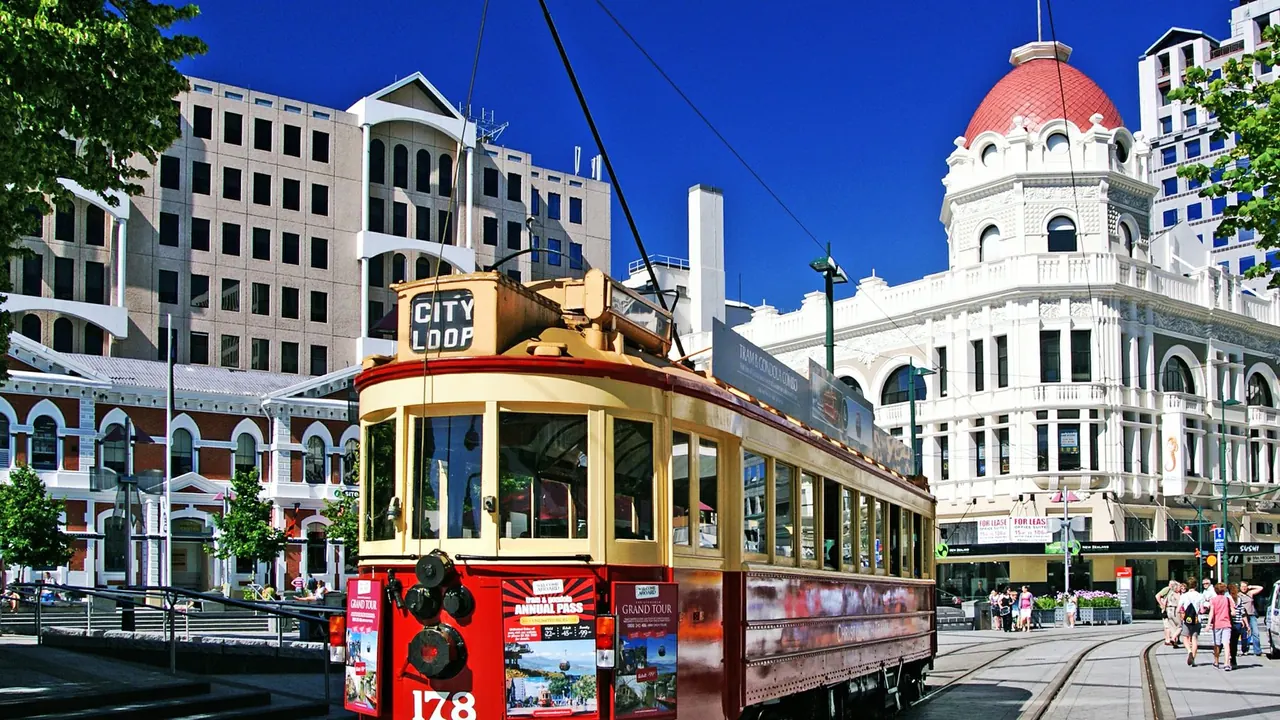
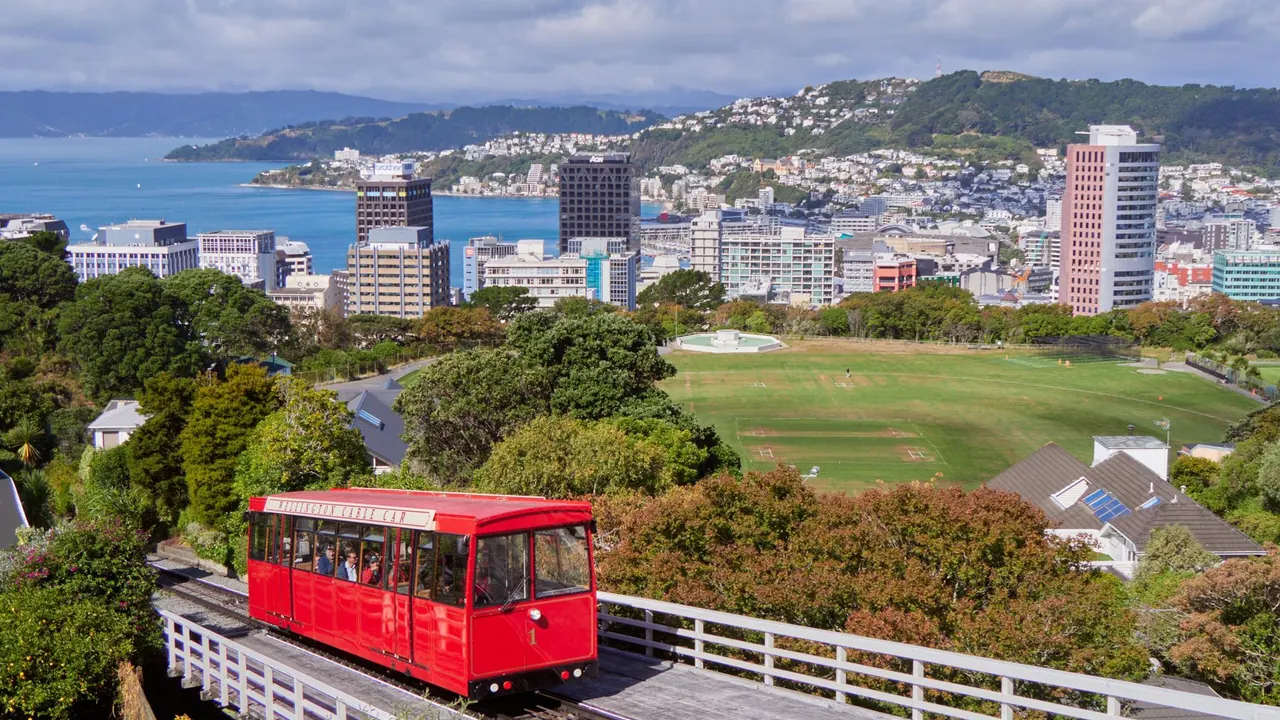
Photos: Christchurch by Bernard Spragg. NZ, CC0; Wellington by lumoplank, CC0.
Christchurch or Wellington?
Our verdict in twelve categories, each scored against the same fixed benchmark cities, and the climate month by month, so you can choose for your trip.
Choose Christchurch for
- wellness
- nature and the outdoors
- beaches
Christchurch suits travellers who see the city as a base for the landscape beyond it. The Southern Alps, Banks Peninsula and the Port Hills are all within reach, and in winter the ski fields are too. Hot pools at New Brighton and Hanmer Springs make the slower days easy. It is flat and good with children, and the earthquake story gives the centre its own reason for a visit. Plan on hiring a car, and on quiet evenings.
Choose Wellington for
- getting around
- live music and the arts
- food and drink
Wellington is the better pick for a city stay where the evenings matter as much as the days. Cafés, craft-beer taprooms, small music venues and the national orchestra and ballet all sit along one walkable strip between Lambton Quay, Cuba Street and Courtenay Place, with Te Papa on the waterfront. You can manage without a car. In return you get a windier, wetter climate and a city that feels designed for city life rather than for getting away from it.
Scoreboard
Twelve categories on one fixed scale from 0 to 100. The shaded stretch is the gap between the two.
Your match
Pick a travel style or drag the sliders, and both match scores follow your weighting.
Wins on wellness and nature and the outdoors with your weighting.
Wins on getting around and live music and the arts with your weighting.
What matters to you?
Category by category
What the scores mean for a trip.
Beaches & swimming
These are two equally modest beach cities, and the difference is in the kind of shore. Christchurch has open ocean beach: the long grey strand of New Brighton facing Pegasus Bay, sheltered Sumner for an evening swim, and surf at Taylors Mistake.
Wellington's beaches are harbour beaches. Oriental Bay has a promenade and diving platform a short walk from the centre, and Scorching and Worser Bays are calm coves on the Miramar Peninsula. In both cities the sea stays cold, and a beach day is a walk more than a swim.
Food & drink
Wellington is the better place to eat and drink. Its café culture is unusually dense, with serious roasters, and its brewery taprooms around Cuba Street and Te Aro make a casual evening an occasion. Courtenay Place and the waterfront cover smarter meals, and Asian and Pacific cooking runs through the city.
Christchurch's strength is the farmland around it: Canterbury lamb, Akaroa salmon, and Waipara pinot noir and riesling less than an hour north. Its riverside food market and laneway dining are good, but a few evenings cover the choice.
Culture & sights
Wellington has the slight edge, mostly because of Te Papa, the free national museum with strong Māori and Pacific collections. The capital adds Parliament with its Beehive, the wooden church of Old St Paul's and the huge timber Government Buildings.
Christchurch offers something else: a once very English city still dealing with its earthquakes. The Gothic Revival quadrangles of the Arts Centre, the cardboard Transitional Cathedral and the earthquake museum tell that story, and the Art Gallery holds the South Island's best New Zealand collection. Each city takes two days or so.
Nightlife
Christchurch keeps its evenings low-key. The bars along Oxford Terrace are good for a relaxed drink beside the Avon. Away from the river, the lanes of the rebuilt centre and Victoria Street, just north of it, add craft-beer pubs and wine bars. Outside Friday and Saturday the city goes quiet early.
Wellington gives you more of a night out. Everything is within walking distance, so you can start in the craft-beer and cocktail bars off Cuba Street and finish in the late bars and few clubs of Courtenay Place. Midweek is quiet there too, but at weekends you have more places to choose from and more of them stay open late.
Nature & outdoors
Both cities are excellent for the outdoors, and Christchurch reaches the bigger landscapes. Arthur's Pass and the Southern Alps are about two hours west, for alpine walking in summer and skiing in winter. The drowned volcanic bays of Banks Peninsula offer kayaking among Hector's dolphins, and the crater-rim tracks of the Port Hills start from the suburbs.
Wild country is closer in Wellington. You can hear native birds at Zealandia a bus ride from the centre, walk the south coast to the Red Rocks seal colony, and ride the mountain-bike trails at Makara Peak, though the wind often decides the plan.
Day trips
Neither city has a long list of outings, and Christchurch's best is slightly better. Akaroa, the harbour village of French origin on Banks Peninsula, is a lovely day. Hillside Lyttelton is twenty minutes away, and Hanmer Springs and the Waipara vineyards lie to the north.
From Wellington, the trip worth making is over the Remutaka hills to the Wairarapa. There you can cycle between Martinborough's vineyards and browse the colonial main street of Greytown. The Kāpiti Coast is an easy train ride.
Good for families
Both cities are easy and safe with children, and they work in different ways. Christchurch is flat, so pushchairs are easy, and it has one of the country's largest playgrounds by the river. Its big draws are on the edges of the city: penguins at the Antarctic Centre, kiwi at Willowbank and open-range animals at Orana, all much easier with a car.
Wellington puts its best attraction in the centre: Te Papa, with its earthquake house and giant squid. The cable car to the Space Place observatory and the zoo are short trips. Steep streets and wet days take more planning there.
Getting around
Wellington is much easier without a car. Most sights sit along a flat strip you can walk in under half an hour. The cable car, suburban trains and the Days Bay ferry cover the rest, and a car is only worth having for the Wairarapa.
Christchurch's centre is just as flat and has good cycleways and e-scooters. But the wildlife parks, the gondola and Banks Peninsula are hard to reach by bus, and most visitors hire a car for part of their stay.
Shopping & style
Wellington is better for browsing. Cuba Street's vintage clothing, record shops, second-hand books and design stores give it a character that Lambton Quay's chain stores don't.
In Christchurch, shopping is a small rebuilt precinct with Ballantynes, a department store since the 1850s, and suburban malls. For merino, pounamu or crafts, its weekend markets are better than its shops.
Affordability
Both cities follow New Zealand's high prices, with Christchurch a little gentler on rooms. Its hotels and motels cost less than the capital's, though restaurant meals, drinks and the car most visitors hire eat into that saving.
In Wellington, central hotels are expensive, especially when events fill the city. On the other hand, the walkable centre means you don't need a car, and Te Papa and the town belt walks are free.
Live music & performing arts
Wellington has much more on stage because the national companies are based there. The New Zealand Symphony Orchestra plays at the Michael Fowler Centre and the Royal New Zealand Ballet at the St James. There are black-box theatres, jazz and band rooms around Cuba Street, and the late-summer arts festival brings international work.
Christchurch has a respectable programme for its size: its own symphony orchestra in the acoustically admired Town Hall, the Court Theatre, and touring shows at the Isaac Theatre Royal. Still, on many nights there is little on.
Wellness & relaxation
Christchurch is clearly better for a restful stay, thanks to hot water. The saltwater pools on the New Brighton beachfront let you soak while watching the surf. Hanmer Springs, with its forest mineral pools, is about an hour and a half away.
Wellington has no bathing tradition. Relaxing there means the heated harbourside pool at Oriental Bay, a hotel spa, or a long coffee followed by a walk in the Botanic Garden.
When should you go?
Pick your month. The climate figures are measured averages, not a forecast.
Christchurch in July
Wellington in July
Daytime high, °C
Rainfall in the month, mm
Where the figures come from
Wellington's sunshine is measured 47 km from the centre, at Paraparaumu Aerodrome.
Temperature and rainfall are climate normals, averaged over the years shown. Christchurch: 1991-2020 normals, Christchurch (8.7 km from centre). Wellington: 1961-1990 (sunshine 1991-2020) normals, Wellington Aerodrome Aws (5.3 km from centre).
The two cities have almost the same temperatures. Summer highs reach about 22°C from December to February, and winter days are cool at around 11-13°C, so neither city is ever too hot for walking. Neither is warm enough for a proper beach trip either. The sea peaks at about 17°C in both cities in late summer, and most visitors will only paddle. For swimming, sightseeing and long evenings outdoors, January and February are the best months in both.
Rain is where they differ. Christchurch stays fairly dry all year, wettest in May at 69mm, and spring is sunny there, so October and November are good months to visit as well. Wellington gets steadily wetter from autumn, with June and July both above 110mm, and the wind makes it feel colder. For Wellington, keep to late spring and summer. Christchurch's damp, cool winter has one advantage: it is the season for the ski fields to the west.
Which traveller are you?
On a food and nightlife trip, Wellington wins clearly. Its café and craft-beer culture runs deeper, and Cuba Street's bars and Courtenay Place's late places are a short walk apart. Christchurch eats well from Canterbury produce but goes quiet early outside weekends.
For a relaxing and wellness trip, choose Christchurch. You can soak in the hot saltwater pools on New Brighton beach, spend a day at the forest mineral pools of Hanmer Springs, and punt slowly along the Avon. Wellington has no bathing tradition, and its thermal towns are hours away.
Skiers should choose Christchurch without hesitation. Mt Hutt and the club fields of the Southern Alps are about two hours away, and Arthur's Pass adds alpine walking for days off the slopes. Wellington's winters bring rain and wind rather than snow you can ski on.
Before you go
| Measure | Christchurch | Wellington |
|---|---|---|
| Official language | English, New Zealand Sign Language, Māori | English, New Zealand Sign Language, Māori |
| Currency | New Zealand Dollar (NZD) | New Zealand Dollar (NZD) |
| Sockets | I230 V, 50 Hz | I230 V, 50 Hz |
| Driving side | Left | Left |
| Time zone | UTC+12, UTC+13 in summer | UTC+12, UTC+13 in summer |
| Emergency number | 111 | 111 |
| Elevation | 20 m | 0 m |
| Main airport | Christchurch International Airport (CHC)10 km from centre28 non-stop destinations | Wellington International Airport (WLG)5 km from centre20 non-stop destinations |
| Public holidays this year | 13 days | 12 days |
By the numbers
| Measure | Christchurch | Wellington |
|---|---|---|
| City population | 383,200 | 216,200 |
| People per km² | 1,298 | 487 |
| Museums within 10 km | 11 | 12 |
| UNESCO World Heritage sites within 50 km | 0 | 0 |
| Swim season, months above 21 °C | None | None |
Where else could you go?
Every comparison below shares a destination with this one, so you can follow Christchurch or Wellington somewhere new.