Photos: Dunedin by W. Bulach, CC BY-SA 4.0, cropped; Rotorua by W. Bulach, CC BY-SA 4.0, cropped.
Dunedin or Rotorua?
Our verdict in twelve categories, each scored against the same fixed benchmark cities, and the climate month by month, so you can choose for your trip.
Choose Dunedin for
- nightlife
- culture and sights
- getting around
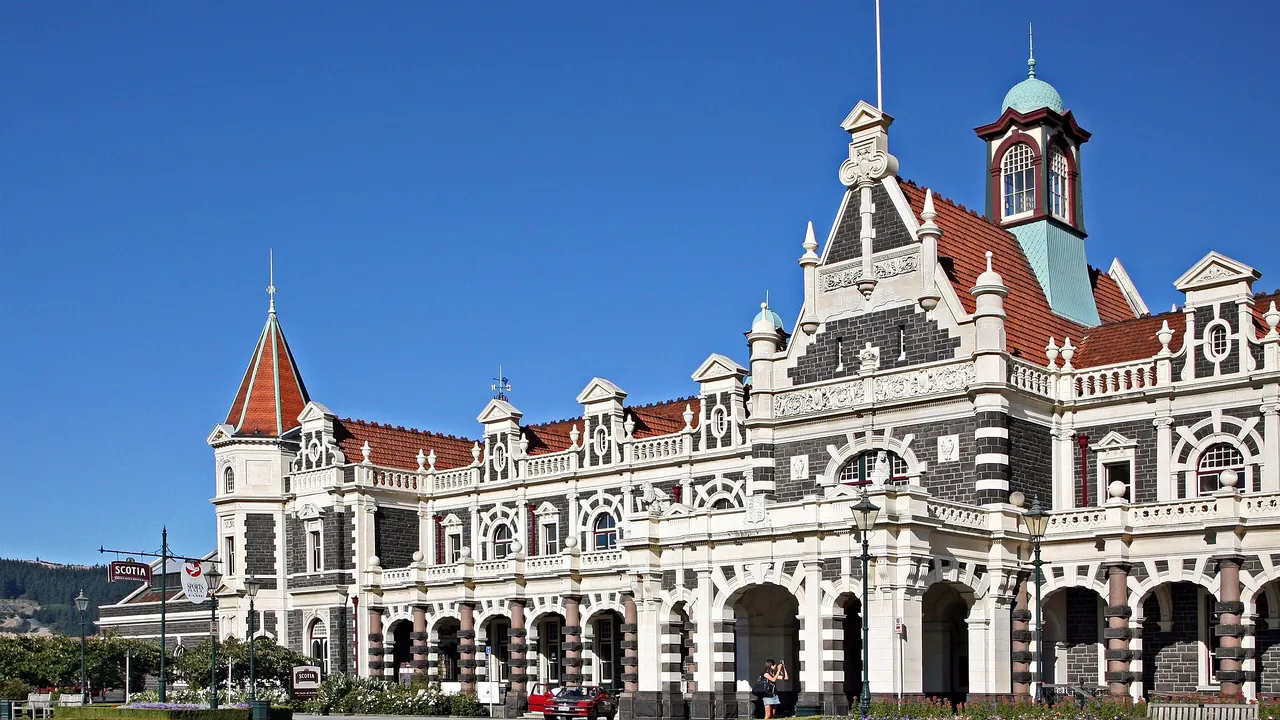
Dunedin is the better pick if you want a proper small city to explore on foot. Gold-rush money left it Victorian and Edwardian streets, and it has good museums, a student bar scene that keeps some evenings lively and a compact centre. Its other great draw is wildlife. Albatross, yellow-eyed penguins and sea lions live on the Otago Peninsula, right on the edge of town.
Choose Rotorua for
- wellness
- families
- nature and the outdoors
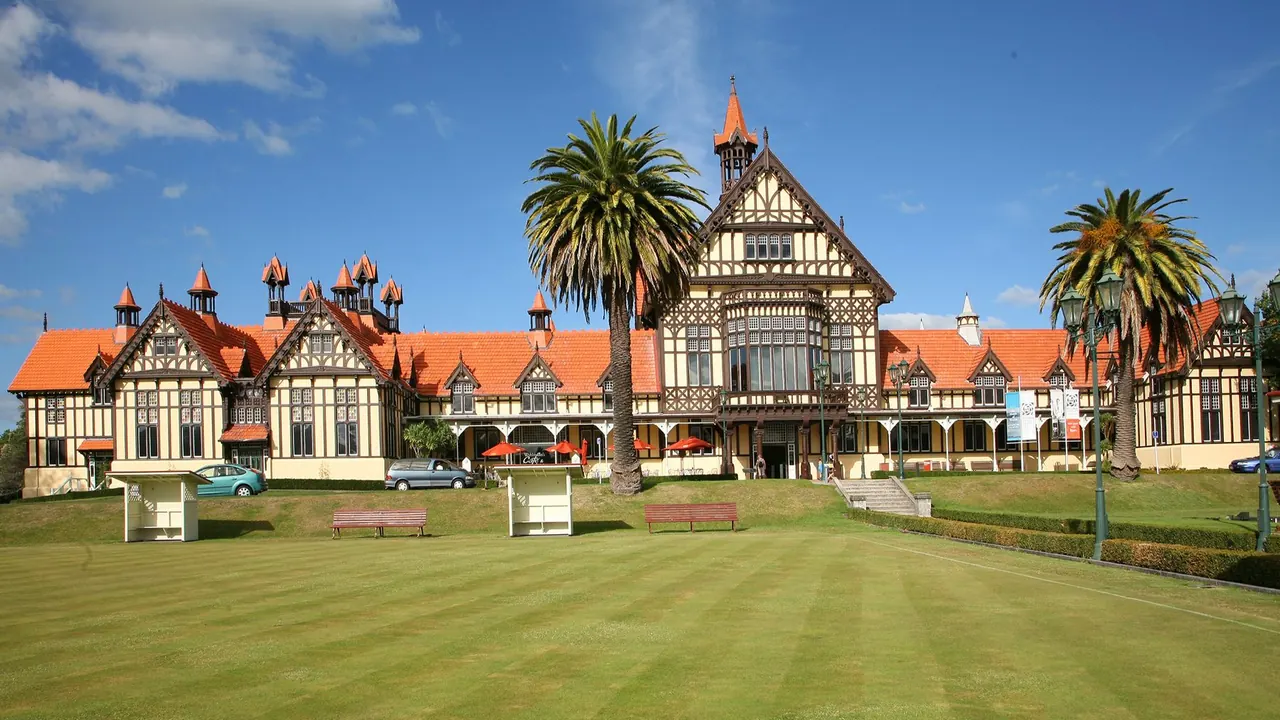
Rotorua suits travellers who came to New Zealand for the strange and the restorative. Geysers, mud pools and coloured terraces are a short drive away. The lakefront mineral pools and motel hot pools make soaking part of every day, and living Māori culture at Whakarewarewa and Ohinemutu gives the town its character. Families with children do especially well here. Evenings end early, though, and a car is almost essential.
Scoreboard
Twelve categories on one fixed scale from 0 to 100. The shaded stretch is the gap between the two.
Your match
Pick a travel style or drag the sliders, and both match scores follow your weighting.
Too close to call, 1 point apart
Wins on nightlife and culture and sights with your weighting.
Wins on wellness and families with your weighting.
What matters to you?
Category by category
What the scores mean for a trip.
Beaches & swimming
Neither city is a beach destination, and the difference between them is the water. Dunedin has real surf beaches at St Clair and St Kilda, inside the city itself. The Pacific stays so cold, though, that most visitors walk the esplanade or use the heated saltwater pool rather than swim.
Rotorua has no sea, but in summer its smaller lakes, such as Tarawera and Okareka, are warm enough for a swim. The white surf beach at Mount Maunganui is about an hour's drive away. In short, Dunedin has a beach on the doorstep that is better for looking at, while Rotorua has warmer water that you have to drive to.
Food & drink
Dunedin eats a little better. Much of that is down to its Saturday farmers' market by the railway station, a long brewing history and cafés kept busy by the university. Blue cod, Bluff oysters in season and the toasted cheese roll give it a southern flavour, even though there is little fine dining.
In Rotorua, most restaurants are in the covered dining strip at the lake end of Tutanekai Street, and the food is mostly practical. The dish that belongs to the town is hāngī cooked over geothermal steam, usually eaten as part of an evening cultural experience rather than at a restaurant.
Culture & sights
Dunedin has more to see. Its Scottish founders grew rich on Otago gold, and much of the Victorian and Edwardian city they built still stands, from the Flemish-style railway station to the university clocktower. Olveston and Larnach Castle show how the wealthy lived, and the museums cover Māori, Pacific and settler history well.
Rotorua's culture is narrower but more alive. Whakarewarewa is a living village where families still cook in steam vents, and next door carvers and weavers train in the open. At Ohinemutu, the carved meeting house and St Faith's Church stand on steaming ground. After the Bath House and the Buried Village, there is little else to see.
Nightlife
After dark, Dunedin is the livelier of the two, though only by the standards of a student town. During term, the bars around the Octagon and George Street fill from Thursday to Saturday and a few stay open late with DJs. For a quieter drink, there are craft-beer and wine bars in the old warehouse streets.
Rotorua has no club scene, and most of the town is asleep before midnight. Evenings here usually mean a hāngī with a cultural performance, or a late soak in a hot pool. It makes a pleasant evening, but it is not a night out.
Nature & outdoors
Both cities are outstanding for nature, but in completely different ways. Dunedin's draw is wildlife. Taiaroa Head has the only royal albatross colony on any mainland, yellow-eyed penguins come ashore at dusk, and sea lions rest on Sandfly Bay and Allans Beach. Tunnel Beach and the hill tracks add good walking.
Rotorua comes out slightly ahead for sheer spectacle and variety. Geysers, Champagne Pool, the Waimangu valley and the split summit of Mount Tarawera make up one of the most active geothermal landscapes on earth. Mountain biking in the redwood forest, kayaking on the volcanic lakes and trout fishing give you more ways to be active than Dunedin's cool coast.
Day trips
The two are evenly matched for day trips, but they take you to different things. From Dunedin, the best outings are to old towns: Oamaru's white limestone harbour precinct and gold-rush settlements such as Lawrence and St Bathans. The Central Otago vineyards make a long day out.
Rotorua's day trips are more about famous sights and landscape: the Hobbiton film set near Matamata, Lake Taupo and the beach at Mount Maunganui. The Waitomo glowworm caves are near the limit for a day. History lovers will prefer the trips from Dunedin, and sightseers those from Rotorua.
Good for families
Dunedin is small, safe and unhurried, and children love its animals: albatross over Taiaroa Head, sea lions on a peninsula beach and penguins at dusk. When it rains, the science centre and butterfly house at Otago Museum help, as do the Botanic Garden aviary and the heated pool at St Clair. Cold days even in summer, though, and streets too steep for a pushchair make it harder work than Rotorua.
Rotorua keeps a family busy for longer. Mud pools bubble and steam rises in Kuirau Park for free, and the geyser at Te Puia and the coloured pools further south hold most ages. A kiwi and trout nature park and adventure parks with zorbing add to the mix. Motels with kitchenettes and their own hot pools are easy with children. The sulphur smell puts some off, the attractions need a car, and small children need holding near the boiling ground.
Getting around
Dunedin is easier to manage without a car. The Octagon, George Street, the railway station and the university are within an easy walk of each other on flat ground, and buses run to St Clair and the Botanic Garden. To reach the peninsula's wildlife, though, you still need a car or a tour.
In Rotorua, only the small grid between the lake and the Government Gardens is easy to walk. The geothermal valleys lie 20km to 30km south, the lakes are scattered and the buses are infrequent, so a hire car is close to essential. Quiet roads and easy parking make driving simple.
Shopping & style
George Street gives Dunedin the edge for browsing. Alongside the chains there are independent shops, local designers who favour dark, practical clothing, second-hand bookshops that suit the city's literary side, vintage stores and merino knitwear.
Rotorua is worth shopping for one thing, Māori craft. Carved wood, woven flax and pounamu pendants are best bought where the makers work at Whakarewarewa, or from galleries that can tell you who made a piece. Apart from that, Tutanekai Street and Fenton Street offer mostly outdoor gear and souvenirs.
Affordability
Costs come out much the same. Both are cheaper places to stay than New Zealand's big cities, but neither makes for a cheap trip. In Dunedin, the student population keeps cafés affordable and the museums and gallery are largely free, but the albatross and penguin tours add up.
In Rotorua, motels with their own hot pools are good value. However, each geothermal park, luge ride and cultural evening charges its own entry fee, so the savings come from the free thermal parks and forest walks.
Live music & performing arts
Neither city has a serious theatre or classical season, and what each does offer grows out of the place itself. Dunedin is known for guitar music, and the Dunedin Sound tradition lives on in small pubs and venues. Touring shows play the Regent, and the city's orchestra gives concerts in the Town Hall, though there is less on outside term.
Rotorua's signature is kapa haka, the Māori song, poi dance and haka performed most evenings at cultural villages and marae, usually with a welcome ceremony and a meal. Rotorua gives a visitor the more distinctive evening, while Dunedin offers more variety.
Wellness & relaxation
This is where Rotorua pulls furthest ahead. It grew up as a spa town in the late nineteenth century, and bathing still shapes a stay. There are lakefront mineral pools at different temperatures, private pools you can book by the hour, warm geothermal mud, and free wild hot streams reached by forest track or by boat.
Dunedin has no bathing tradition beyond the heated saltwater pool at St Clair and a handful of day spas. Its calm comes instead from light traffic and slow mornings in the Botanic Garden.
When should you go?
Pick your month. The climate figures are measured averages, not a forecast.
Dunedin in July
Rotorua in July
Daytime high, °C
Rainfall in the month, mm
Where the figures come from
Dunedin has no weather station within reach, so its figures come from a gridded climate model rather than a measured record, and read a broad area rather than the city itself.
Rotorua has no weather station within reach, so its figures come from a gridded climate model rather than a measured record, and read a broad area rather than the city itself.
Temperature and rainfall are climate normals, averaged over the years shown. Dunedin: 2001-2020 normals, NASA POWER reanalysis grid, no weather station within 90 km. Rotorua: 2001-2020 normals, NASA POWER reanalysis grid, no weather station within 90 km.
Neither city is a hot-weather destination, but Rotorua is clearly the warmer of the two. From December to March, daytime highs reach around 23°C. That is warm enough to swim in the smaller lakes or drive to the sea at Mount Maunganui, where the water reaches about 21°C in February. Winter is cool and noticeably wet, with rain peaking at about 113mm a month in June and July, although a hot pool makes the colder months easier to enjoy.
Dunedin stays cool all year. Even January and February only reach about 16°C, and the sea never gets above 14°C, so in any season this is a trip for walking and wildlife rather than the beach. Rain is spread fairly evenly through the year and is a little lighter in late winter. Winter days are chilly but still fine for exploring the city if you wear layers. November to March is the most comfortable time for the peninsula.
Which traveller are you?
For a relaxing and wellness trip, Rotorua is the clear choice. It was built as a spa town. Lakefront mineral pools, warm geothermal mud and motels with their own hot pools make soaking the point of each day, while Dunedin has little beyond one heated seawater pool.
On a culture and arts trip, Dunedin has more to fill the days. You can see the railway station, the bluestone university, Olveston and Larnach Castle as well as Otago Museum and Toitū. Rotorua's sights centre on Māori heritage at Whakarewarewa and Ohinemutu and are seen quickly.
On a family trip with children, Rotorua keeps them busier. Children understand erupting geysers and bubbling mud pools straight away, and the gondola, luge, redwood walkway and farm shows fill the rest of the time. Dunedin's albatross and penguins delight children too, but cold weather and steep streets make it harder going.
Before you go
| Measure | Dunedin | Rotorua |
|---|---|---|
| Official language | English, New Zealand Sign Language, Māori | English, New Zealand Sign Language, Māori |
| Currency | New Zealand Dollar (NZD) | New Zealand Dollar (NZD) |
| Sockets | I230 V, 50 Hz | I230 V, 50 Hz |
| Driving side | Left | Left |
| Time zone | UTC+12, UTC+13 in summer | UTC+12, UTC+13 in summer |
| Emergency number | 111 | 111 |
| Elevation | 19 m | 280 m |
| Main airport | Dunedin International Airport (DUD)24 km from centre4 non-stop destinations | Rotorua Regional Airport (ROT)7 km from centre3 non-stop destinations |
| Public holidays this year | 12 days | 12 days |
By the numbers
| Measure | Dunedin | Rotorua |
|---|---|---|
| City population | 106,200 | 58,500 |
| People per km² | 32 | 22 |
| Museums within 10 km | 11 | 1 |
| UNESCO World Heritage sites within 50 km | 0 | 0 |
| Swim season, months above 21 °C | None | None |
Where else could you go?
Every comparison below shares a destination with this one, so you can follow Dunedin or Rotorua somewhere new.
- Queenstownvs Dunedin
- Aucklandvs Rotorua
- Christchurchvs Dunedin
- Wellingtonvs Rotorua
- Wellingtonvs Dunedin
- Christchurchvs Rotorua