Photos: Queenstown by Robert Linsdell, CC BY 2.0, cropped; Rotorua by W. Bulach, CC BY-SA 4.0, cropped.
Queenstown or Rotorua?
Our verdict in twelve categories, each scored against the same fixed benchmark cities, and the climate month by month, so you can choose for your trip.
Choose Queenstown for
- nightlife
- getting around
- food and drink
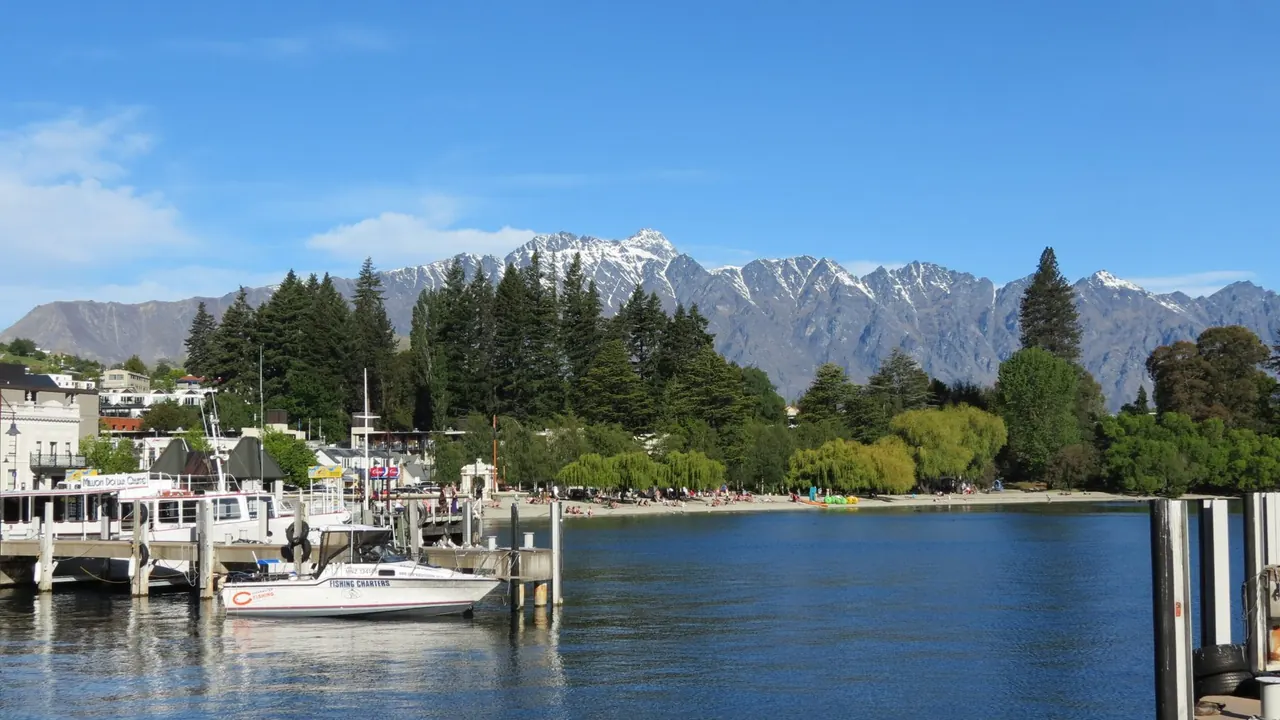
Queenstown suits an active trip in big mountain country. Lake Wakatipu, the Remarkables and the trails into Mount Aspiring National Park begin at the edge of town, the bungy, jet-boat and skydiving operators are all based here, and in winter several ski fields lie within easy reach. It also has the livelier evenings and the better food, with Gibbston pinot noir a short drive away. Expect resort prices for nearly everything.
Choose Rotorua for
- wellness
- culture and sights
- prices
Travellers who would rather soak than leap will be happier in Rotorua. Bathing in mineral pools and warm streams is the point of a stay here, Te Arawa culture gives the town a depth Queenstown lacks, and the steaming parks and geysers keep children absorbed. Rooms cost less and the evenings are quiet and early. The landscape is remarkable too, but it is geothermal rather than alpine.
Scoreboard
Twelve categories on one fixed scale from 0 to 100. The shaded stretch is the gap between the two.
Your match
Pick a travel style or drag the sliders, and both match scores follow your weighting.
Wins on nightlife and getting around with your weighting.
Wins on wellness and culture and sights with your weighting.
What matters to you?
Category by category
What the scores mean for a trip.
Beaches & swimming
Neither town is a beach destination, but Rotorua does summer swimming better. Lake Wakatipu stays bracingly cold even in late summer, so Queenstown's shingle beach and town jetty are for a quick plunge, and Lake Hayes and Moke Lake are the gentler option.
Around Rotorua, Tarawera, Okareka and Rotoiti warm up enough for a proper swim, and warm streams add an unusual twist. For a real day by the sea, the surf beach at Mount Maunganui is about an hour's drive away.
Food & drink
Queenstown has more choice and better food, because visitors arrive all year and keep burger counters, bakeries, Asian kitchens and smart restaurants with venison and South Island seafood in business. Wine is its real strength, with the Central Otago pinot noir cellar doors of Gibbston a short drive up the gorge.
Rotorua's restaurants cluster at the lake end of Tutanekai Street and are plainer, and late dining is hard to find. What it has that Queenstown lacks is a dish of its own: hāngī cooked over geothermal steam and eaten at a cultural evening.
Culture & sights
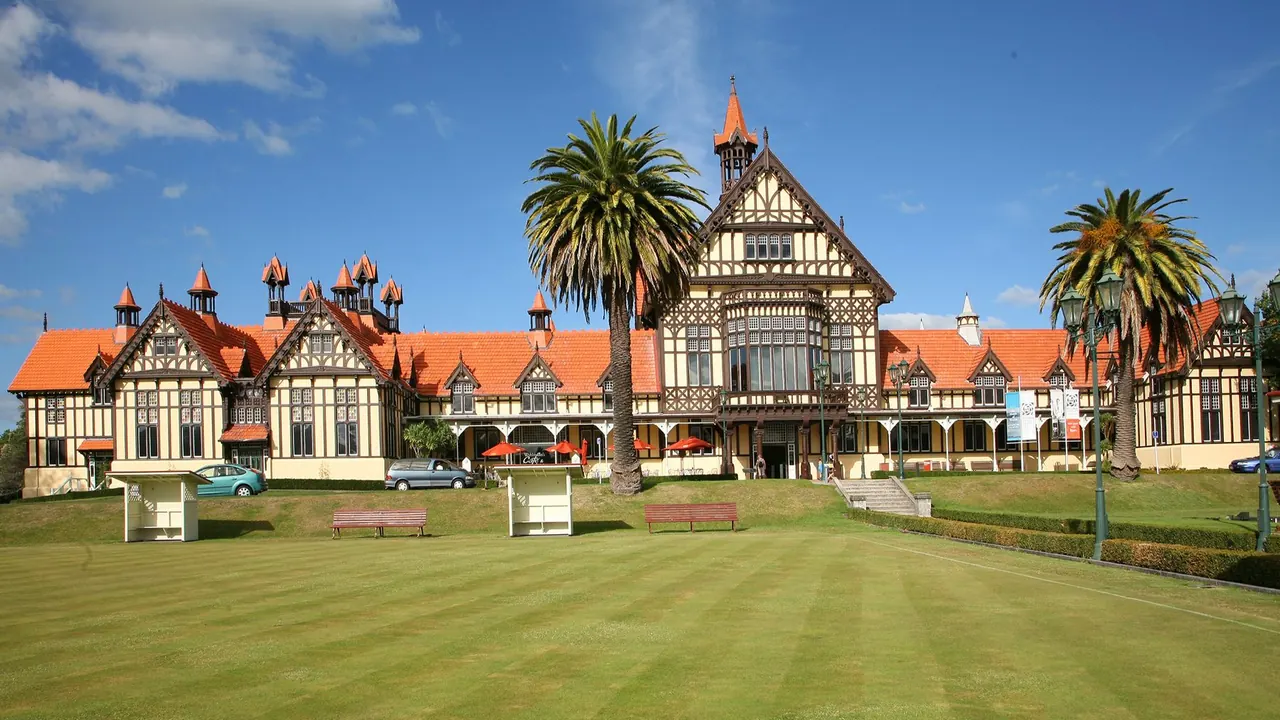
Rotorua is clearly the richer stop for culture. As the heartland of the Te Arawa people, it has Whakarewarewa, where families still cook in steam vents, the national arts and crafts institute where carvers and weavers train in the open, and the meeting house and St Faith's Church at Ohinemutu. The Bath House and the Buried Village of Te Wairoa add some history.
Queenstown has the 1912 steamship TSS Earnslaw, a few stone buildings from the 1860s and its lakeside gardens, and Arrowtown tells the gold-rush story better. Neither town has much for a museum-heavy itinerary, but in Rotorua the culture is a living one.
Nightlife
Queenstown has much more going on at night. Seasonal workers, backpackers and skiers fill the pubs and DJ bars around Shotover, Camp and Searle streets, with après-ski in winter and long evenings on lakefront terraces in summer. It is a drinking scene rather than a clubbing one, and a couple of nights covers it.
In Rotorua, most visitors spend the evening at a hāngī and cultural performance or in a hot pool. The few pubs near the lake are quiet well before midnight.
Nature & outdoors
Both are outstanding for the outdoors, but Queenstown is the stronger base. Lake Wakatipu and the Remarkables frame climbs up Ben Lomond, the Routeburn Track and the gorge cycle trails. Commercial bungy jumping began here, and in winter several ski fields are a short drive away.
Rotorua's landscape is a different kind of spectacle: the Pohutu geyser at Te Puia, Champagne Pool at Wai-O-Tapu, the Waimangu valley and bubbling mud in the town's own parks. The redwood forest on its edge is superb mountain-biking country, and the ring of volcanic lakes suits kayaking and trout fishing.
Day trips
Each town has a useful handful of outings, and neither has a long list. From Queenstown, the trips are to towns and vineyards: gold-rush Arrowtown is about twenty minutes away, Wanaka is over the Crown Range, and there are wine days in Gibbston and around Cromwell. Milford Sound is a long day out for the scenery.
Rotorua's trips lean towards famous sights and landscape: the Hobbiton film set, Taupo on New Zealand's largest lake, Tauranga with Mount Maunganui, and the Waitomo glowworm caves at the far edge of a day's range. It has no historic towns or wine country to match Arrowtown and Gibbston.
Good for families
Rotorua is slightly better with children, because erupting geysers and bubbling mud hold the attention of almost any age, and Kuirau Park is free to explore. It also has the luge on Mount Ngongotaha, sheep-shearing shows, the redwood walkway lit at night, and motels with their own hot pools. Small children need holding near the boiling ground, and the sulphur smell puts some off.
Queenstown has its own gondola and luge, kiwi at the wildlife park, the old steamship and good ski schools. However, the bungy jumps, swings and skydives it is famous for come with age and weight limits.
Getting around
Both centres are small and easy to walk, and both are better with a car. Queenstown manages better without one: buses run to Frankton, the airport and Arrowtown, a water taxi crosses the lake, and shuttles serve the ski fields and adventure activities. The single road in from Frankton backs up at busy times, and winter mountain roads can call for chains.
In Rotorua, the geothermal valleys lie 20km to 30km south of town and local buses are infrequent, so visitors without a car depend on tours and shuttles. In return, the roads are quiet and parking is easy.
Shopping & style
Neither town is a place to shop, and Queenstown has only a little more choice. The Mall has specialist ski, bike and hiking shops, merino and possum-wool knitwear, greenstone jewellery and galleries of landscape painting, and a craft market sets up by the wharf on summer weekends.
Rotorua's best buys are more distinctive: carving, woven flax and pounamu bought from the makers at Whakarewarewa. It also has a weekly night market with food and craft stalls.
Affordability
Queenstown is the dearer of the two, and the gap starts with the room. As an alpine resort it charges more for a bed than Rotorua does in almost any season, and the peaks come in winter for skiing and again in summer. The larger part of the bill is the adrenaline. A bungy jump, a jet-boat ride, a scenic flight or a few days of lift passes each cost far more than an afternoon in a hot pool, and a week of them soon outweighs the accommodation.
In Rotorua the money goes elsewhere. Motels cost noticeably less, and many have their own hot pool, so the town's main pleasure comes with the room. What adds up instead is getting about and paying at the gate. The geothermal valleys and the evening cultural experiences each charge entry, and because the sights are spread around the district, a hire car is hard to avoid.
Live music & performing arts
Rotorua has one performance worth planning an evening around: kapa haka, with song, poi dance and haka staged most nights at the cultural villages and marae, usually after a formal welcome. A modest civic arts centre adds touring shows and local productions.
Queenstown has covers bands in pubs and après bars, occasional comedians at its events centre, and street performances during the winter festival. Neither town has a regular theatre season.
Wellness & relaxation
Wellness is Rotorua's strongest suit. It grew up as a spa town in the nineteenth century, and a stay still centres on bathing: the lakefront mineral pools, private pools booked by the hour, geothermal mud and free soaks in hot streams reached by boat or forest track, all at an unhurried pace.
Queenstown has no hot springs of its own, so relaxing there means a cedar hot tub above the Shotover River, a lodge spa or an early morning on the Wakatipu shore. The centre is built around adrenaline, and calm is easier to find in Arrowtown or Glenorchy.
When should you go?
Pick your month. The climate figures are measured averages, not a forecast.
Queenstown in July
Rotorua in July
Daytime high, °C
Rainfall in the month, mm
Where the figures come from
Queenstown has no weather station within reach, so its figures come from a gridded climate model rather than a measured record, and read a broad area rather than the city itself.
Rotorua has no weather station within reach, so its figures come from a gridded climate model rather than a measured record, and read a broad area rather than the city itself.
Temperature and rainfall are climate normals, averaged over the years shown. Queenstown: 1991-2020 normals, TerraClimate 4 km grid at the town, no weather station within 90 km. Rotorua: 2001-2020 normals, NASA POWER reanalysis grid, no weather station within 90 km.
Queenstown has a summer season and a winter season, with a cool, wet spell in spring. January and February bring highs around 20°C, which is pleasant for walking and cycling but never hot, and only the small, shallow lakes are comfortable for a swim. By June and July, daytime highs drop into single figures. That is too cold for long days of sightseeing, but it is ski weather. Rain falls all year, and spring is the wettest stretch, with September close to 200mm.
Rotorua is several degrees warmer all year round. Summer highs reach about 23°C, and winter highs of around 11°C are mild enough to make a hot-pool soak on a cool day appealing. December to March is the time for the lakes, and the sea at Mount Maunganui reaches about 21°C in February. Rain is spread more evenly than in Queenstown. It is heaviest from April to July and lightest in November.
Which traveller are you?
On a relaxing and wellness trip, Rotorua is the clear choice. A stay there centres on lakefront mineral pools, geothermal mud and free soaks in wild hot streams. Queenstown offers hot tubs and lodge spas, but in a town built around adrenaline.
For a culture and arts trip, Rotorua again offers far more. It has the living village at Whakarewarewa, carvers and weavers working in the open, the meeting house at Ohinemutu and kapa haka in the evenings. Queenstown has a steamship and a few gold-rush buildings.
On a food and nightlife trip, Queenstown wins easily. It has many more places to eat, the Gibbston cellar doors make a long lunch in the vines easy, and the bars around Shotover and Camp streets stay loud past midnight while Rotorua goes to bed early.
Before you go
| Measure | Queenstown | Rotorua |
|---|---|---|
| Official language | English, New Zealand Sign Language, Māori | English, New Zealand Sign Language, Māori |
| Currency | New Zealand Dollar (NZD) | New Zealand Dollar (NZD) |
| Sockets | I230 V, 50 Hz | I230 V, 50 Hz |
| Driving side | Left | Left |
| Time zone | UTC+12, UTC+13 in summer | UTC+12, UTC+13 in summer |
| Emergency number | 111 | 111 |
| Elevation | 324 m | 280 m |
| Main airport | Queenstown Airport (ZQN)7 km from centre7 non-stop destinations | Rotorua Regional Airport (ROT)7 km from centre3 non-stop destinations |
| Public holidays this year | 12 days | 12 days |
By the numbers
| Measure | Queenstown | Rotorua |
|---|---|---|
| City population | 29,000 | 58,500 |
| People per km² | - | 22 |
| Museums within 10 km | 0 | 1 |
| UNESCO World Heritage sites within 50 km | 0 | 0 |
| Swim season, months above 21 °C | - | None |
Where else could you go?
Every comparison below shares a destination with this one, so you can follow Queenstown or Rotorua somewhere new.