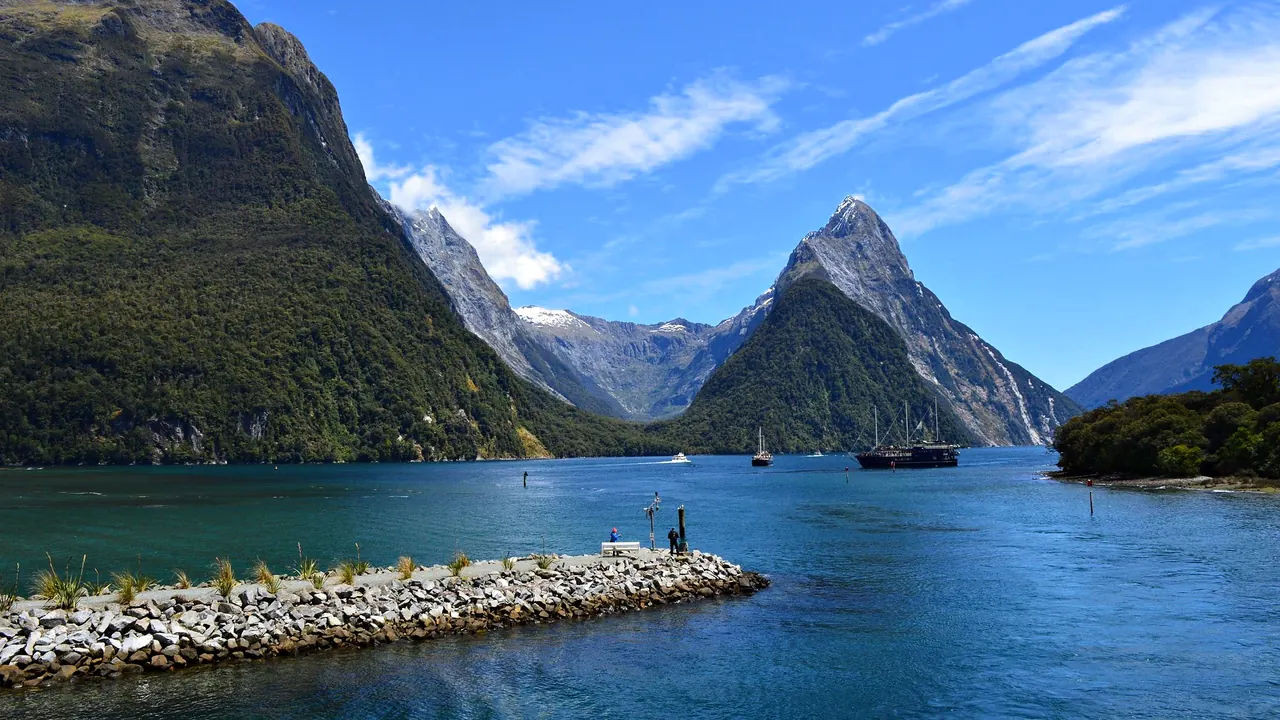
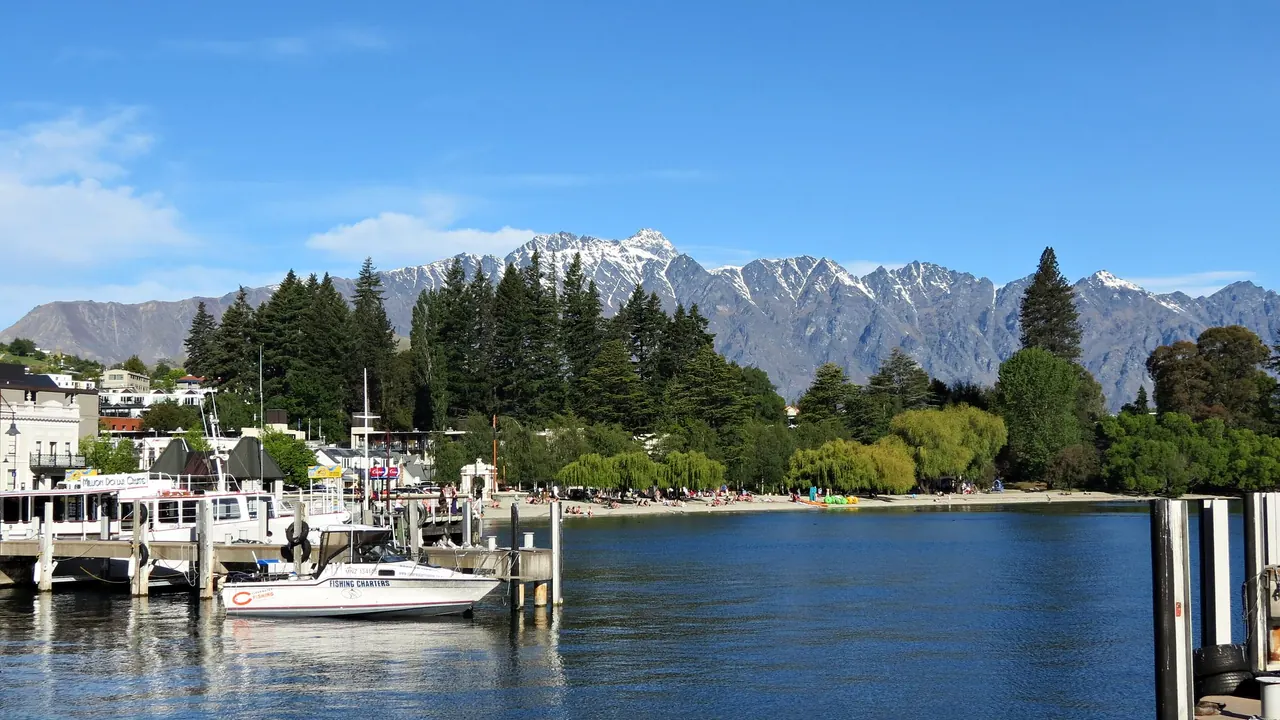
Photos: Fiordland by Esther Grosscurt, Pexels License; Queenstown by Robert Linsdell, CC BY 2.0, cropped.
Fiordland or Queenstown?
Our verdict in twelve categories, each scored against the same fixed benchmark cities, and the climate month by month, so you can choose for your trip.
Choose Fiordland for
- prices
Fiordland is for travellers who want the fiords themselves and little else. Milford and Doubtful Sounds, the Milford, Kepler and Routeburn tracks and long still evenings by Lake Te Anau are the whole point, and Te Anau sits far closer to them than anywhere else. Choose it if you will happily eat simply, go to bed early and spend your days in rain, rainforest and boat wakes, ideally as a few days on a wider South Island route.
Choose Queenstown for
- nightlife
- day trips
- food and drink
Queenstown matches Fiordland for scenery but adds a working town around it. You get restaurants and Gibbston pinot noir, bars that stay loud into the night, the gondola and luge for children, ski fields in winter and Arrowtown or Wanaka for a day out. It suits couples, groups and families who want adventure and comfort from one base, and who accept that Milford Sound becomes a very long day from there.
Scoreboard
Twelve categories on one fixed scale from 0 to 100. The shaded stretch is the gap between the two.
Your match
Pick a travel style or drag the sliders, and both match scores follow your weighting.
Wins on prices with your weighting.
Wins on nightlife and day trips with your weighting.
What matters to you?
Category by category
What the scores mean for a trip.
Beaches & swimming
Neither has a sea coast you would swim from, but Queenstown at least has a summer beach scene. Sunbathers crowd the shingle on Queenstown Bay and at Frankton, people jump off the town jetty, and Lake Hayes and Moke Lake warm up enough for a proper swim in January and February.
Fiordland offers a short dip from the shingle at Lake Te Anau or Lake Manapouri, slightly less cold than Wakatipu. Still, nobody lingers, the fiord shores are boat-access rock rather than sand, and sandflies spoil any still afternoon by the water.
Food & drink
Queenstown eats far better. Its lakefront and the lanes off the Mall cover everything from burgers and ramen to polished lodge-style dining, and the cellar doors of the Gibbston Valley make a long lunch among the pinot noir vines easy.
In Fiordland, eating means one short main street in Te Anau, where walkers fill up on big breakfasts, pies, venison and blue cod. Beyond that there is a single stop at Milford Sound and whatever you carry on the track.
Culture & sights
Neither is a trip for museums, so the difference is in what little there is. Fiordland's interest is in engineering and landscape history: the hand-hewn Homer Tunnel, the hydro works at West Arm and the national park visitor centre in Te Anau. Queenstown has the 1912 steamship TSS Earnslaw, a few gold-rush stone buildings and, twenty minutes away, Arrowtown's restored Chinese settlement, which tells the goldfields story better.
Nightlife
This is one of the widest gaps between them. Queenstown's few blocks around Shotover, Camp and Searle streets fill with seasonal workers, backpackers and skiers, with après-ski in winter and lakefront terraces on long summer evenings. It is mostly bars and DJs rather than proper clubs, but a weekend there can run well past midnight.
Te Anau has a handful of pubs and hotel bars where walkers trade stories over a beer before an early start. The town falls quiet long before midnight, and the evening's main event is the stars over the lake.
Nature & outdoors
Both are among the finest outdoor destinations anywhere, but they offer different landscapes. Fiordland is wilderness on a vast scale: Milford Sound under Mitre Peak, the emptier reaches of Doubtful Sound, fur seals and dolphins, and the Milford and Kepler tracks starting near Te Anau. You need to accept heavy rain and sandflies.
Queenstown puts mountains and adrenaline on the doorstep. You can climb Ben Lomond from town, take the Kawarau Bridge bungy, ride jet boats on the Shotover and cycle the gorge trails. The Remarkables and Coronet Peak make it the winter choice, and the Routeburn's eastern end is a lake drive away at Glenorchy.
Day trips
Queenstown is much the better base for outings. Arrowtown is about twenty minutes away, Wanaka is an hour over the Crown Range, and the wine country of Gibbston, Cromwell and Bannockburn lies along the same road, with Clyde and Alexandra a little further on.
From Te Anau, the big days out are the fiords themselves. Reaching a town means about two hours' drive to Queenstown or south to Invercargill, Riverton and Bluff, so most people simply move on rather than return.
Good for families
Queenstown gives children far more to do. The gondola and luge on Bob's Peak, kiwi at the wildlife park, the steamer cruise, the Frankton indoor pools and ski schools at Coronet Peak and Cardrona all fill the days. The catch is that the famous bungy jumps and swings have age limits.
Fiordland has a few outstanding moments: the glowworm caves across Lake Te Anau, seals on the fiord cruises and takahē at the small wildlife centre. Rain, sandflies and the long Milford Road make it better suited to older children.
Getting around
Both reward a car, but Queenstown is easier without one. Its tiny centre is walkable, and buses and a water taxi reach Frankton, the airport and Arrowtown. Ski shuttles and tour pickups take care of the mountains, although the single Frankton road clogs at busy times.
In Fiordland, Te Anau is walkable, but everything you come for is far out of town. The road to Milford Sound takes around two hours each way, against three to four from Queenstown. Doubtful Sound needs a boat, a bus and another boat, and trailheads depend on shuttles or water taxis.
Shopping & style
Te Anau's shopping is practical rather than enjoyable. You go for a forgotten rain jacket, insect repellent or supermarket supplies before a track, and a few pounamu and merino pieces are the only things worth taking home.
Queenstown gives you far more to browse. The Mall and the lanes around it have specialist ski and bike shops, merino and possum-wool knitwear, greenstone and galleries of landscape painting. On summer weekends there is also a craft market beside the wharf.
Affordability
Both are expensive, and in both the activities cost more than the beds. Fiordland's spending goes on fiord cruises, overnight boats on Doubtful Sound and scenic flights. Its limited rooms in Te Anau fill in summer, though campervans, campgrounds and the free short walks along the Milford Road keep costs down.
Queenstown's costs come from bungy jumps, jet boats and lift passes, and room rates climb in the ski season and over Christmas. Its hostels, apartments with kitchens and supermarkets at Frankton give budget travellers more ways to save than Te Anau can.
Live music & performing arts
Neither is a place for shows, but Queenstown has a little more. Pubs and après bars have covers bands and acoustic sets most evenings, an events centre hosts touring comedians and bands, and the winter festival brings street performances for a few days. In Te Anau, the evening entertainment is a small cinema and the occasional musician in a pub.
Wellness & relaxation
Queenstown does more for anyone who wants to be pampered. It has private cedar hot tubs above the Shotover, lodge and resort spas towards Arrowtown and calm mornings on the Wakatipu shore. Glenorchy offers quiet away from the tour buses and adventure bookings in the centre.
Fiordland has no spas to speak of, only a few massage rooms and lodge hot tubs. Its restfulness comes from the setting: phone signal fades beyond Te Anau, and the evenings by Lake Manapouri are deeply still.
When should you go?
Pick your month. The climate figures are measured averages, not a forecast.
Fiordland in July
Queenstown in July
Daytime high, °C
Rainfall in the month, mm
Where the figures come from
Fiordland has no weather station within reach, so its figures come from a gridded climate model rather than a measured record, and read a broad area rather than one spot.
Queenstown has no weather station within reach, so its figures come from a gridded climate model rather than a measured record, and read a broad area rather than one spot.
Temperature and rainfall are climate normals, averaged over the years shown. Fiordland: 1991-2020 normals, TerraClimate 4 km grid at the town, no weather station within 90 km. Queenstown: 1991-2020 normals, TerraClimate 4 km grid at the town, no weather station within 90 km.
Summer is the season for both. From December to February, daytime highs around Te Anau and in Queenstown reach about 20°C. That is warm enough for a quick lake dip, and November to April is the walking season on the Fiordland tracks. Neither is ever dry. The Fiordland figures are measured around Te Anau, where rain peaks in early winter at about 170mm in June. The fiords themselves, Milford Sound above all, are far wetter, with several metres of rain a year, so expect downpours there even in summer. Queenstown's wettest stretch comes in spring, with around 200mm in September and October not far behind.
Winter divides them. Around Te Anau, days stay a little milder at about 10°C, but the Milford Road can close for snow or avalanche risk. Queenstown drops to about 6°C by day in July. That is cold for strolling but good for its ski fields. Autumn, in March and April, suits either, and it is when Queenstown's gold poplars are at their best.
Which traveller are you?
On an outdoors trip, both are superb, so it depends on the kind of outdoors you want. Fiordland is the place for multi-day walking and quiet fiords. Choose Queenstown for jet boats, bungy, mountain biking, skiing and summit walks starting from the streets.
For a food and nightlife trip, Queenstown is the clear choice. It has winery lunches in the Gibbston Valley, lamb and venison menus along the lakefront and lanes of busy bars, while Te Anau offers pies, a few pubs and quiet streets before midnight.
On a family trip with children, Queenstown works better. The gondola, luge, kiwi wildlife park, lake steamer and Frankton pools fill the days easily. Fiordland's glowworm caves and fiord cruises are memorable, but suit older children for two or three days.
Before you go
| Measure | Fiordland | Queenstown |
|---|---|---|
| Official language | English, New Zealand Sign Language, Māori | English, New Zealand Sign Language, Māori |
| Currency | New Zealand Dollar (NZD) | New Zealand Dollar (NZD) |
| Sockets | I230 V, 50 Hz | I230 V, 50 Hz |
| Driving side | Left | Left |
| Time zone | UTC+12, UTC+13 in summer | UTC+12, UTC+13 in summer |
| Emergency number | 111 | 111 |
| Elevation | - | 324 m |
| Main airport | Queenstown Airport (ZQN)7 non-stop destinations | Queenstown Airport (ZQN)7 km from centre7 non-stop destinations |
| Public holidays this year | 12 days | 12 days |
By the numbers
| Measure | Fiordland | Queenstown |
|---|---|---|
| Population | - | 29,000 |
| Museums within 10 km | - | 0 |
| UNESCO World Heritage sites within 50 km | - | 0 |
Where else could you go?
Every comparison below shares a destination with this one, so you can follow Fiordland or Queenstown somewhere new.
- Dunedinvs Queenstown
- Christchurchvs Queenstown
- Wellingtonvs Queenstown
- Rotoruavs Queenstown
- Aucklandvs Queenstown
- North Islandvs Fiordland