New Zealand
Fiordland
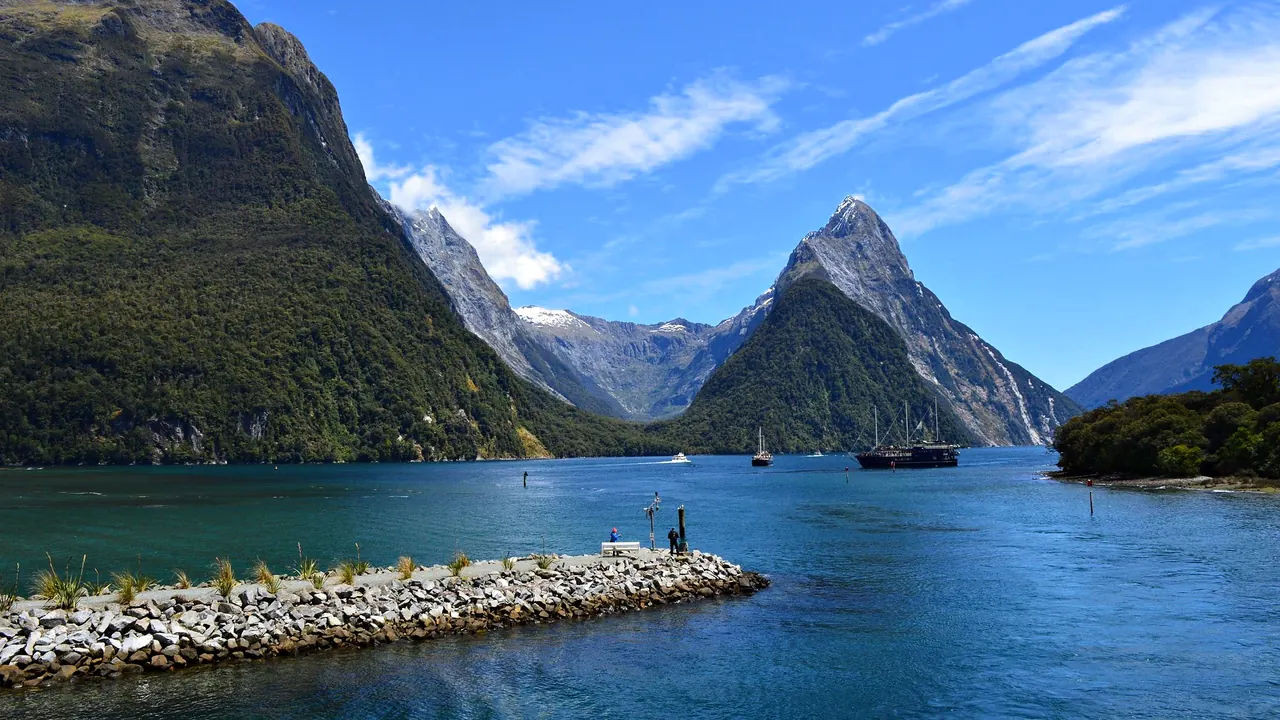
Milford Sound and Mitre Peak from the wharf
- Nature & outdoors97
- Families35
- Getting around30
Photo: Esther Grosscurt, Pexels License
Fiordland lies in South Island, which has its own page.
Match
24
Every category weighted equally
- Beach & sun25
- Culture & arts19
- Food & nightlife16
- Family trip29
- Outdoors34
- Relax & unwind28
- Shopping & style19
- On a budget23
Fiordland in twelve categories
Our verdict on each, scored 0 to 100 against the same fixed benchmark cities, so a score means the same thing on every page.
Beaches & swimming. Scores 7 out of 100.
Food & drink. Scores 20 out of 100.
Culture & sights. Scores 7 out of 100.
Nightlife. Scores 4 out of 100.
Nature & outdoors. Scores 97 out of 100.
Day trips. Scores 22 out of 100.
Good for families. Scores 35 out of 100.
Getting around. Scores 30 out of 100.
Shopping & style. Scores 6 out of 100.
Affordability. Scores 22 out of 100.
Live music & performing arts. Scores 3 out of 100.
Wellness & relaxation. Scores 30 out of 100.
Fiordland category by category
Beaches & swimming
7Fiordland is no place for a beach vacation. The coast is a chain of steep-walled fiords and storm-beaten shores, reached by boat and almost entirely without sand you could lie on, and the water is cold and dark with tannin. Sandflies gather on any shore on a still day.
The nearest thing to a swim is a summer dip in Lake Te Anau or Lake Manapouri from the shingle near town. On a warm January afternoon this is refreshing, but the water rarely gets far above 15°C and few people stay in long.
Food & drink
20Eating here means Te Anau, a small lakeside town with a short main street of cafés, pubs, bakeries and a few restaurants that cater to walkers heading out or coming back hungry. Meat pies, flat whites and big breakfasts set the tone, and the better menus lean on what the region produces: farmed venison, Southland lamb, blue cod and crayfish from the southern coast.
Beyond Te Anau and the smaller Manapouri, there is essentially nothing: Milford Sound has a single café-and-bar stop and the walking tracks are self-catered. People come for the landscape and eat simply, often from their own supplies.
Culture & sights
7There is little to see in the built sense. Fiordland is a wilderness with a couple of small, practical towns, and its history is thin on the ground: Māori pounamu routes and seasonal camps, early sealers and explorers, and later road and hydroelectric works.
The national park visitor centre in Te Anau explains this well. The hand-hewn Homer Tunnel on the Milford Road is interesting as a feat of engineering, and the Doubtful Sound trip crosses Lake Manapouri past the hydro works at West Arm. Otherwise there are no museums, historic quarters or monuments to fill a day.
Nightlife
4Evenings are quiet. Te Anau has a few pubs and hotel bars where walkers swap stories over a beer, and they close at a sensible hour. Most visitors are up early for a cruise, a long drive to Milford or the start of a track, so the town is still well before midnight. The night out here is a walk along the lakefront to look at the southern stars.
Nature & outdoors
97This is one of the great wild landscapes on earth. Glaciers carved the mountains into sheer-sided fiords where waterfalls drop hundreds of metres into black water, and the whole region is a vast national park of beech rainforest, granite peaks and lakes. A cruise or kayak on Milford Sound, under Mitre Peak, is the classic outing; Doubtful Sound, reached across Lake Manapouri and over Wilmot Pass, is larger, emptier and quieter. Fur seals, bottlenose dolphins and, in season, Fiordland crested penguins are often seen.
The walking is outstanding. The Milford, Kepler and Routeburn tracks are multi-day hikes of the highest order, and short sections such as Key Summit and Lake Marian work as day walks from the Milford Road. The region gets several metres of rain a year, which feeds the waterfalls but means wet days are normal, and sandflies are persistent. Summer, from November to April, is the walking season.
Day trips
22Day trips in the sense of other towns are scarce. The big outings from Te Anau, to Milford Sound and Doubtful Sound, are journeys into the landscape rather than places to visit. For a town, Queenstown lies about two hours away by road, and the old gold-mining village of Arrowtown a little beyond it, which makes for a long day. Invercargill and the southern coastal settlements of Riverton and Bluff are a similar drive south. Most visitors treat Fiordland as a stop on a wider South Island route rather than a base for outings.
Good for families
35Fiordland suits families with older children who like boats and walks. The cruises on Milford and Doubtful Sounds, with waterfalls and seals, are memorable at any age, and the boat trip across Lake Te Anau to the glowworm caves, where a small underground river runs through the dark, is a reliable hit. Te Anau itself is safe and easy, with a lakefront path and a small wildlife centre where takahē, a rare flightless bird, can be seen.
There is little else built for children, though. The Milford Road is a long return drive, rain is frequent, and the sandflies test young patience, so it works better as two or three days on a touring route than as a whole vacation.
Getting around
30Te Anau and Manapouri are small enough to walk, but everything you come for lies far beyond them. Most visitors drive, or join coach tours that leave from Te Anau and from Queenstown. The road to Milford Sound runs about 120km through mountains and the Homer Tunnel, a slow, beautiful drive of around two hours each way that can close for snow or avalanche risk in winter. Doubtful Sound has no road from town at all: the trip is a boat across Lake Manapouri, a bus over the pass and another boat on the fiord. Walking tracks need transport to and from the trailheads, usually by shuttle or water taxi.
Shopping & style
6There is almost nothing to shop for. Te Anau has an outdoor gear shop or two for forgotten rain jackets and insect repellent, a handful of souvenir and pounamu shops, and a supermarket for stocking up before a walk. Merino clothing and greenstone pieces are the only local things worth carrying home.
Affordability
22Fiordland is expensive to do properly. Accommodation in Te Anau is limited and fills in the summer season, so motels and lodges are priced accordingly, and eating out is costly for what it is. The main reasons to come are paid experiences: fiord cruises, overnight boats on Doubtful Sound, guided walks, kayak trips and scenic flights all add up quickly. Travellers on a budget manage with campervans, campgrounds, self-catering and the many free short walks along the Milford Road, but the region never feels cheap.
Live music & performing arts
3There is essentially no performing arts scene. Te Anau has no theatre or concert venue beyond a small cinema, and live music amounts to an occasional musician in a pub. Evenings are for rest, not shows.
Wellness & relaxation
30Fiordland has no bathing or spa culture: there are no hot springs, and wellness amounts to a few massage rooms and lodge hot tubs around Te Anau. What it does offer is a deep quiet. Days follow the weather and the light, phone signal fades past the edge of town, and evenings by Lake Te Anau or Lake Manapouri are very still. Visitors who want to unwind find the place restful, but those looking for pampering will find little to book.
Where to stay in Fiordland
Te Anau is the natural base, and for most visitors the only one they need. The lakeside town has nearly all the region's beds, food and supplies, the coach tours and shuttles leave from here, and it sits within reach of the Milford Road, the Kepler Track and the boats to the glowworm caves. It suits first visits, families and walkers alike, though rooms are limited and fill up in summer, so it pays to book early.
Manapouri, about 20km south, is smaller and quieter, with a few places to stay on the shore of its lake. It suits a stay built around Doubtful Sound, since the boats leave from here, or anyone who wants still evenings and doesn't mind driving into Te Anau for meals.
Further in, the choices are more basic. Campervans and campgrounds along the Milford Road suit budget travellers and early starters who want to reach the fiord before the coaches. An overnight boat on Doubtful Sound is the most memorable night in the region, and on the multi-day tracks you sleep in huts along the way. Two or three nights in Te Anau, with perhaps one night out on the water, covers most trips.
When should you go?
Pick a month to see what it is like. The climate figures are measured averages, not a forecast.
Fiordland in July
Daytime high, °C
Rainfall in the month, mm
The whole year
Shaded against this destination’s own year: the deepest cell is its best month for that figure and the palest its weakest.
Where the figures come from
Fiordland has no weather station within reach, so its figures come from a gridded climate model rather than a measured record, and read a broad area rather than one spot.
Temperature and rainfall are climate normals, averaged over the years shown. Fiordland: 1991-2020 normals, TerraClimate 4 km grid at the town, no weather station within 90 km.
Before you go
| Measure | Fiordland |
|---|---|
| Official language | English, New Zealand Sign Language, Māori |
| Currency | New Zealand Dollar (NZD) |
| Sockets | I230 V, 50 Hz |
| Driving side | Left |
| Time zone | UTC+12, UTC+13 in summer |
| Emergency number | 111 |
| Main airport | Queenstown Airport (ZQN)7 non-stop destinations |
| Public holidays this year | 12 days |
Compare Fiordland with
Every comparison with a written verdict behind it.