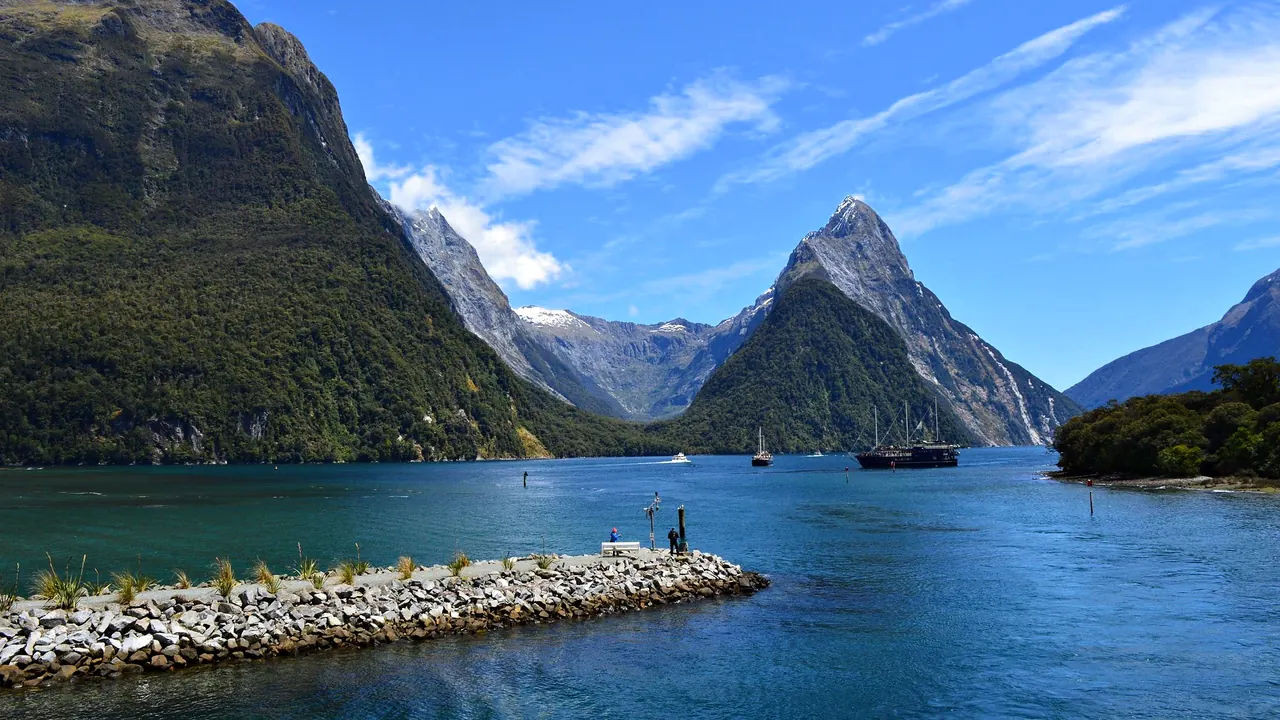
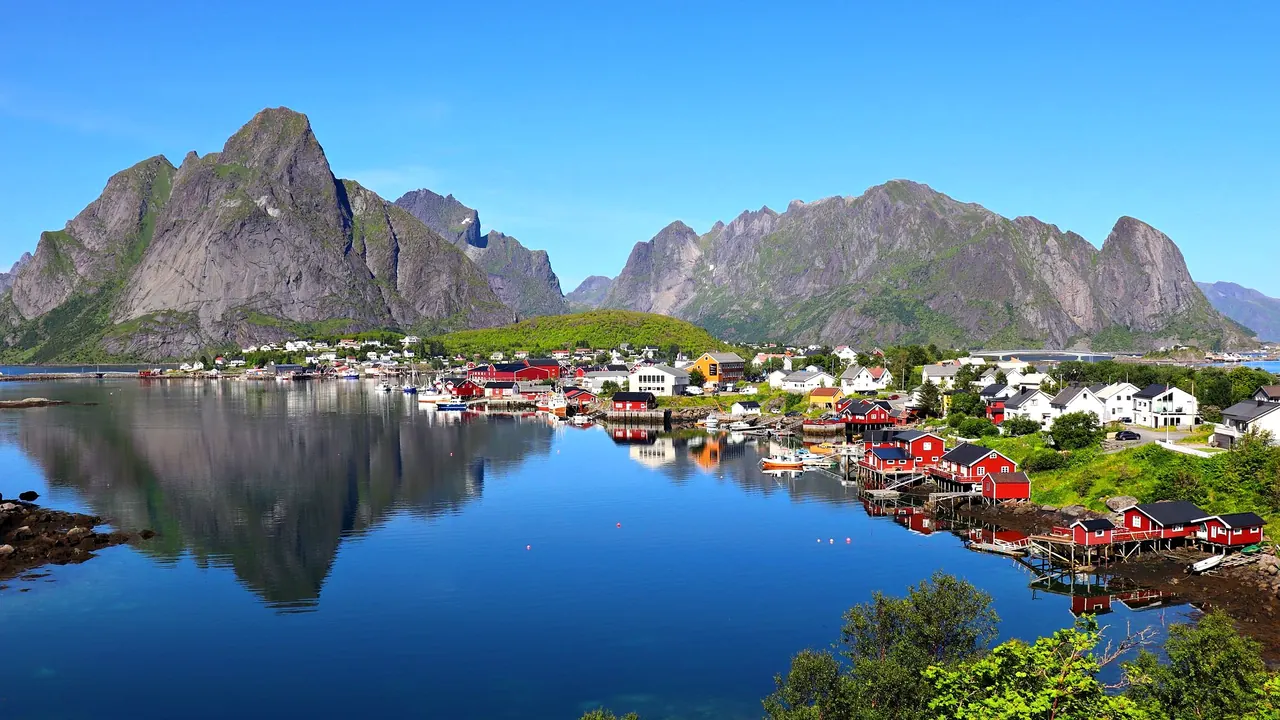
Photos: Fiordland by Esther Grosscurt, Pexels License; Lofoten by Mario Vogt, Pexels License.
Fiordland or Lofoten?
Our verdict in twelve categories, each scored against the same fixed benchmark cities, and the climate month by month, so you can choose for your trip.
Choose Fiordland for
- prices
- nature and the outdoors
Fiordland is the choice for walkers who want wilderness on a grand scale. The Milford, Kepler and Routeburn tracks, the boat trips under the walls of Milford and Doubtful Sounds, and the rainforest and waterfalls make it a place you go into rather than look at. Away from Te Anau there is little else, and you go knowing that rain is part of the deal. It is also the slightly less punishing of the two on cost.
Choose Lofoten for
- culture and sights
- beaches
- food and drink
Lofoten gives you a landscape that is just as dramatic, with more of a human story attached. The peaks rise straight behind working fishing harbours, and you get red rorbu cabins to sleep in, cod cooked the way the islands have cooked it for centuries, a Viking longhouse and pale beaches to walk. The northern setting adds the midnight sun in summer and the northern lights in winter. Choose it if you want short, steep summits and village life between them, and can live with Norwegian prices.
Scoreboard
Twelve categories on one fixed scale from 0 to 100. The shaded stretch is the gap between the two.
Your match
Pick a travel style or drag the sliders, and both match scores follow your weighting.
Wins on prices and nature and the outdoors with your weighting.
Wins on culture and sights and beaches with your weighting.
What matters to you?
Category by category
What the scores mean for a trip.
Beaches & swimming
Neither is a beach destination, but Lofoten at least has beaches worth seeking out. Fiordland's coast is fiord walls and storm-beaten rock reached by boat, and the only real swim is a cold dip in Lake Te Anau or Lake Manapouri from a shingle shore near town, with sandflies for company.
Lofoten has genuine white-sand bays with turquoise water: Haukland, Uttakleiv, Ramberg, and Kvalvika, which you reach on foot. The sea stays cold even in high summer, so they are places for walks, picnics and a quick plunge before the sauna, not for lying out all day.
Food & drink
Lofoten eats better, and it has a food culture of its own. Centuries of drying cod on wooden racks have left stockfish, klippfisk and bacalao on menus alongside fish soup, cod tongues and Arctic char, and in late winter the skrei season brings the cod at its best. Self-caterers buy fish straight off the quay.
Fiordland's eating is concentrated in Te Anau's short main street. Pies, flat whites and big walkers' breakfasts set the tone, and the better menus offer venison, Southland lamb and blue cod. Beyond town there is next to nothing, and on the tracks you carry your own food.
Culture & sights
Lofoten has far more to see. Its heritage is the winter cod fishery: rorbuer on stilts in every harbour, the preserved trading post at Nusfjord, the fishing village and stockfish museums at Å, and the reconstructed chieftain's longhouse at Borg. Add the wooden Vågan Church at Kabelvåg and you have several good rainy afternoons.
Fiordland has barely any built heritage. The national park visitor centre in Te Anau tells the story of pounamu routes, sealers and explorers. The hand-cut Homer Tunnel and the hydro works at West Arm are interesting on the way to somewhere else, but they are not destinations in themselves.
Nightlife
Both are quiet after dark, and neither has a club. Te Anau's pubs and hotel bars fill with walkers who go to bed early before a cruise or a track. In Lofoten you get a harbourside beer in Svolvær or a drink on a Henningsvær quay, with a band now and then. What really fills the night is different in each place: the southern stars over the lakefront in Fiordland, the midnight sun or the northern lights in Lofoten.
Nature & outdoors
Both are among the great wild landscapes, but they differ in kind. Fiordland is vast and enclosed: glacier-cut fiords, waterfalls dropping into black water, beech rainforest and multi-day tracks such as the Milford, Kepler and Routeburn. Boats on Milford and Doubtful Sounds bring fur seals, dolphins and crested penguins, and heavy rain and sandflies are part of the experience.
Lofoten is a chain of granite peaks rising from the sea. Short, steep climbs like Reinebringen and Ryten give huge views in a few hours, and there is sea kayaking, climbing, surfing at Unstad and ski touring down to the shore in late winter. Sea eagles are everywhere, and the light changes with the seasons, from midnight sun to northern lights.
Day trips
From Te Anau the big days out are the fiords themselves, the long road to Milford Sound or the boat-and-bus journey to Doubtful Sound, rather than other towns. The nearest real towns are Queenstown and the old gold-mining village of Arrowtown, about two hours away. Invercargill and Bluff are a similar drive south. Any of them makes a long day.
In Lofoten a day out means driving along the island chain to the next harbour village: Henningsvær, Svolvær, Reine or Hamnøy. They are pretty but much alike, and after two or three you have seen the pattern. Ferries also run to Værøy and Røst, which people visit for the seabirds.
Good for families
In Fiordland, children remember the boats: fiord cruises past waterfalls and seals, and the crossing of Lake Te Anau to the glowworm caves. Back in town there are takahē at the small wildlife centre. It all suits older children better than toddlers.
Lofoten has more to do on land, with rock pools and sand at Ramberg and Haukland, fishing off the quays, seals and otters at the Kabelvåg aquarium, and costumes at the Viking museum at Borg. In both places, long drives and wet weather wear children down.
Getting around
In both places a car makes life easier, but Fiordland's highlights can be reached without one. Coach tours leave Te Anau and Queenstown for the slow mountain road to Milford, and Doubtful Sound is a boat, bus and boat trip with no road from town at all. Shuttles and water taxis serve the trailheads.
In Lofoten a hire car is close to essential. Everything strings out along the E10 across bridges and tunnels, buses are sparse and trailhead parking is tight. Getting there also needs planning, by small airport, the Bodø ferry or the coastal ships.
Shopping & style
Lofoten has more worth taking home. Galleries in Henningsvær and Svolvær sell local painting and photography, glassblowers and ceramicists work in the villages, and wool sweaters and stockfish make good souvenirs. Fiordland offers a gear shop for a forgotten rain jacket, a supermarket for track supplies, and merino and greenstone as the only real local buys.
Affordability
Fiordland is the gentler on the wallet, though neither is cheap. Its costs come mostly from paid experiences, such as cruises, overnight boats, guided walks and scenic flights. Campervans, campgrounds and the free short walks along the Milford Road let a careful traveller get by.
Lofoten is costly at every turn, because Norwegian prices apply to meals, alcohol, groceries, fuel and car hire, and cabins sell out early. What saves money is that the landscape is free and most rorbuer have a kitchen.
Live music & performing arts
Lofoten has a little more to offer. In summer there are small music festivals and concerts in churches and old fish-processing buildings, though there is no theatre or concert season. Fiordland has no stage at all, only a small cinema in Te Anau and an occasional musician in a pub.
Wellness & relaxation
Neither has hot springs or a spa tradition, and both offer deep quiet instead. Lofoten has a ritual of its own: wood-fired saunas by the water, some floating in the harbour, with plunges into the cold sea between rounds. Fiordland's version is lodge hot tubs, a few massage rooms, and still evenings by the lakes once the phone signal fades.
When should you go?
Pick your month. The climate figures are measured averages, not a forecast.
Fiordland in July
Lofoten in July
Daytime high, °C
Rainfall in the month, mm
Where the figures come from
Fiordland has no weather station within reach, so its figures come from a gridded climate model rather than a measured record, and read a broad area rather than one spot.
Lofoten has no rain gauge within 25 km of the centre, so its rainfall comes from a gridded climate dataset read at the destination rather than from a gauge further away.
Temperature and rainfall are climate normals, averaged over the years shown. Fiordland: 1991-2020 normals, TerraClimate 4 km grid at the town, no weather station within 90 km. Lofoten: 2011-2025 (rainfall 1991-2020) normals, Svolvaer Airport (4.4 km from centre).
The two are in opposite hemispheres, so their good seasons fall at opposite ends of the calendar. Around Te Anau the walking months run from November to April, with highs near 20°C in January and February. Rain comes in every month, and none gets much below 100mm. It falls fairly evenly through the year: June is the wettest at 170mm, with March and May not far behind. From June to August the days are cool and short, and snow can close the Milford Road.
Lofoten's season is June to August. Highs reach about 17°C in July, early summer is the driest part of the year, and the sun does not set for weeks. By August the sea has warmed to about 13°C, which is enough for a bracing dip and no more. From September the rain picks up and the days shorten. In midwinter highs stay only just above freezing, and that is the northern lights season.
Which traveller are you?
On a culture and arts trip, Lofoten is the clear pick. It has the Lofotr Viking Museum, the preserved trading post at Nusfjord, the fishing museums at Å and summer concerts in churches and old fish halls. Fiordland has little beyond a visitor centre and a road tunnel.
On a trip with a tight budget, Fiordland makes the money go further. Spend one day on a Milford Sound cruise, then fill the others with the climb to Key Summit, the walk to Lake Marian and evenings on the Te Anau lakefront. Lofoten's summits are free too, but everyday living there costs more.
On an outdoors trip, Fiordland suits walkers who want several days on a famous track through rainforest and over alpine passes, plus fiord cruises with dolphins and penguins. Lofoten suits people who want short, steep summits, sea kayaking, surfing and hiking under the midnight sun.
Before you go
| Measure | Fiordland | Lofoten |
|---|---|---|
| Official language | English, New Zealand Sign Language, Māori | Norwegian, Nynorsk, Bokmål, Sámi |
| Currency | New Zealand Dollar (NZD) | Norwegian Krone (NOK) |
| Sockets | I230 V, 50 Hz | CF230 V, 50 Hz |
| Driving side | Left | Right |
| Time zone | UTC+12, UTC+13 in summer | UTC+1, UTC+2 in summer |
| Emergency number | 111 | Police 112, ambulance 113, fire 110 |
| Main airport | Queenstown Airport (ZQN)7 non-stop destinations | Svolvær Airport, Helle (SVJ)3 non-stop destinations |
| Public holidays this year | 12 days | 13 days |
By the numbers
| Measure | Fiordland | Lofoten |
|---|---|---|
| Swim season, months above 21 °C | - | None |
Where else could you go?
Every comparison below shares a destination with this one, so you can follow Fiordland or Lofoten somewhere new.
- Queenstownvs Fiordland
- Tromsovs Lofoten
- Laplandvs Lofoten
- Norwegian Fjordsvs Lofoten
- Svalbardvs Lofoten
- North Islandvs Fiordland