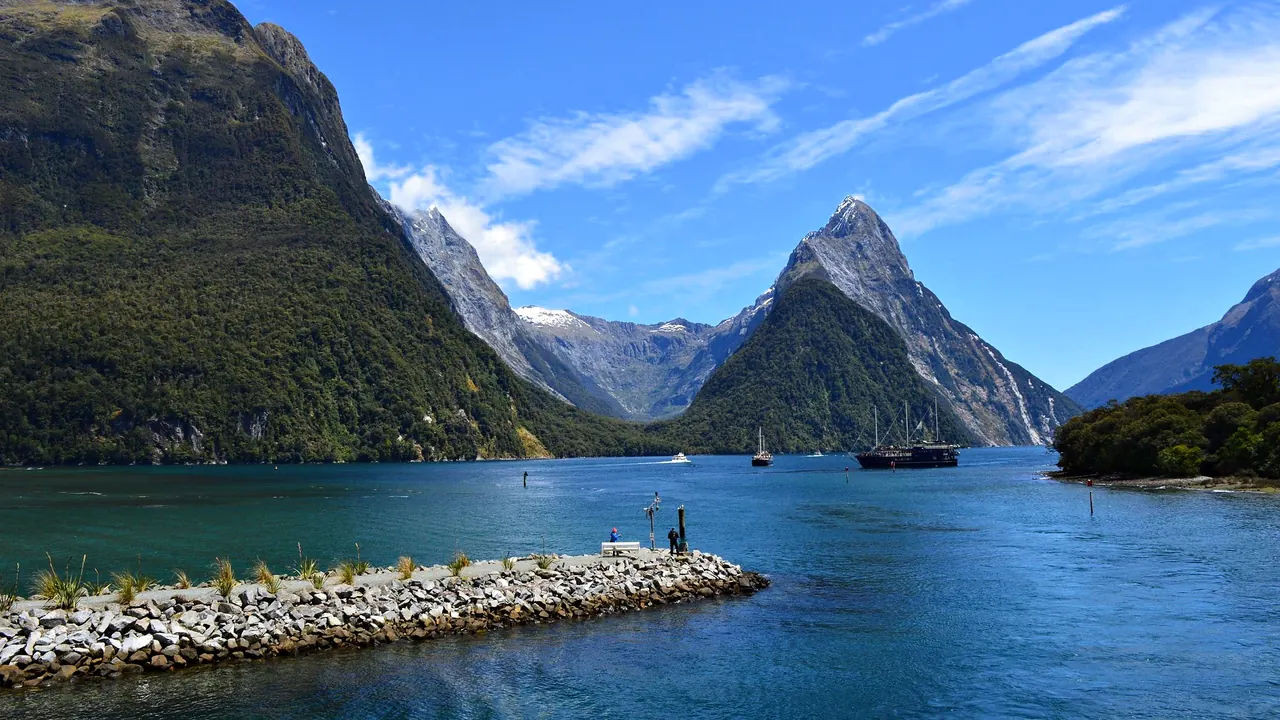
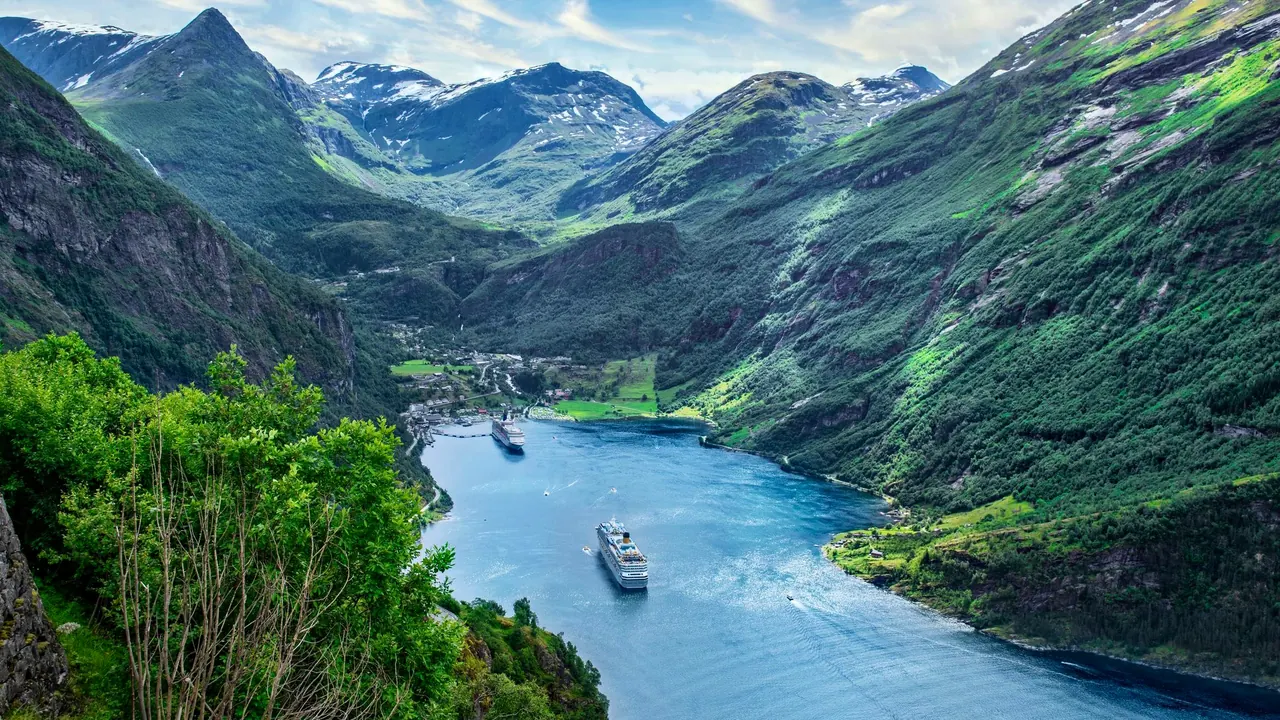
Photos: Fiordland by Esther Grosscurt, Pexels License; Norwegian Fjords by Enrique, Pexels License.
Fiordland or Norwegian Fjords?
Our verdict in twelve categories, each scored against the same fixed benchmark cities, and the climate month by month, so you can choose for your trip.
Choose Fiordland for
- prices
Fiordland is for the traveller who wants wilderness and little else. It is a near-empty national park with two small towns at its edge, so the trip is the Milford, Kepler or Routeburn track, a cruise or kayak on Milford or Doubtful Sound, and quiet evenings by Lake Te Anau. It is still costly, but a little less punishing than Norway, and it fits best as a few days on a wider South Island route. You give up nearly everything that a town would offer.
Choose Norwegian Fjords for
- culture and sights
- live music and the arts
- nightlife
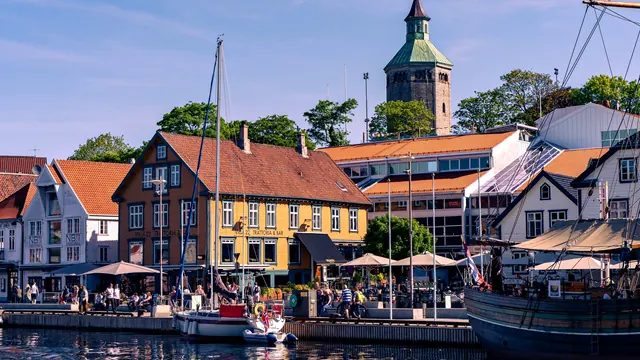
The Norwegian Fjords match that scenery and add a lived-in country around it. Bergen, Stavanger and Ålesund bring Hanseatic wharves, stave churches, seafood, concerts and a proper night out, while orchard villages and farms sit along the shore. That makes Norway the better choice for families, for anyone who wants culture between the hikes and for those who would rather tour by train and boat than drive. Expect to pay heavily for it.
Scoreboard
Twelve categories on one fixed scale from 0 to 100. The shaded stretch is the gap between the two.
Your match
Pick a travel style or drag the sliders, and both match scores follow your weighting.
Wins on prices with your weighting.
Wins on culture and sights and live music and the arts with your weighting.
What matters to you?
Category by category
What the scores mean for a trip.
Beaches & swimming
Neither is a beach destination, but Norway at least gives you a chance. In a warm July the sheltered inner fjords can be pleasant for a swim from rocks and jetties, and the long dune beaches of Jæren near Stavanger offer real sand facing the North Sea.
Fiordland's shores are storm-beaten, sandless and plagued by sandflies. The only swim worth having is a brief, chilly dip in Lake Te Anau or Lake Manapouri on a summer afternoon.
Food & drink
Norway gives you far more to eat. Its cold water yields superb shellfish, salmon and halibut, the coast around Ålesund has its klippfisk tradition, and Hardanger sells cider and cherries along the shore. Bergen, with its harbour fish market and Nordic tasting menus, is a city worth eating in.
Fiordland comes down to the main street of Te Anau, with pies, big breakfasts and a few menus built around venison, Southland lamb, blue cod and crayfish. Past Te Anau you carry your own food.
Culture & sights
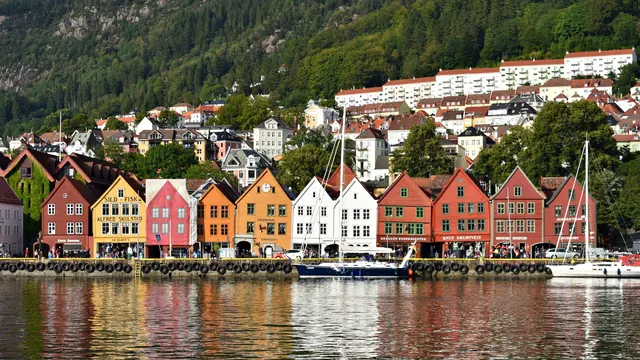
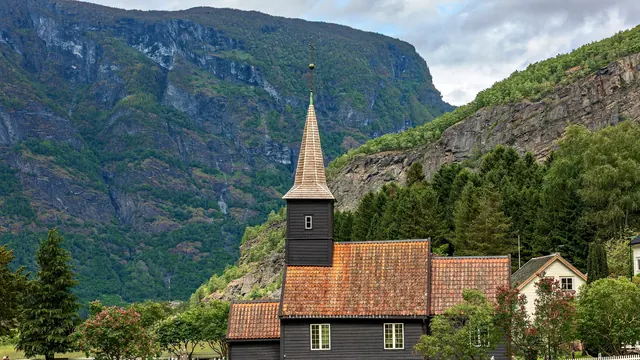
This is the widest gap between the two. Norway has centuries of settlement to show: the timbered wharf of Bryggen, Håkon's Hall, the carved stave churches at Urnes, Borgund and Hopperstad, and the rebuilt Art Nouveau centre of Ålesund.
Fiordland was never really settled. Its story of pounamu routes, sealers and hydro schemes is told in the Te Anau visitor centre, and the hand-hewn Homer Tunnel and the West Arm power works are about as close as it comes to sights.
Nightlife
In Norway you can at least go out. Bergen's students keep the pubs, cocktail bars and a few clubs around the harbour busy at weekends, and Stavanger's old waterfront fills up on summer evenings, although the price of drink keeps nights short.
Fiordland has a few pubs in Te Anau where walkers share a beer before an early night. Expect the stars over the lake rather than any music.
Nature & outdoors
Here the two are equals, and each is among the great glaciated landscapes anywhere, but they feel different. Fiordland is untouched: a huge national park of beech rainforest and granite where there are no farms, and the land drops into fiords with dolphins, fur seals and crested penguins. Its multi-day tracks, the Milford, Kepler and Routeburn, are the heart of it, and you walk them through heavy rain and persistent sandflies.
The Norwegian fjords are inhabited, with orchards, farms and villages beneath the cliffs, and they add snowfields and glaciers you can walk on, such as the arms of Jostedalsbreen. Hikes like Preikestolen and Trolltunga are big single-day efforts rather than hut-to-hut journeys, and the season falls from June to September rather than in the southern summer.
Day trips
Norway is far richer in places to reach. From Bergen you can ride the train to Voss and Flåm, take a boat to Undredal or Balestrand, or visit Ole Bull's island villa, and Stavanger has Utstein Abbey and the white wooden houses of Skudeneshavn close by.
Fiordland's great outings, to Milford and Doubtful Sounds, go into wilderness, not to towns. The nearest real alternatives are Queenstown and Arrowtown, a long two-hour drive away, or Invercargill and Bluff to the south.
Good for families
Norway works better with children of all ages. Bergen alone has an aquarium, the VilVite science centre and the funicular up to a playground on Fløyen, and Ålesund and Stavanger add a sea aquarium, an amusement park and a hands-on petroleum museum.
Fiordland suits older children for a short stay. The boat to the glowworm caves, the takahē at the wildlife centre and the fiord cruises are memorable, but little else is built for children, and long drives, rain and sandflies all test patience.
Getting around
Norway lets you see the fjords without a car. The classic loop by train to Myrdal, the Flåm railway, a boat through the Nærøyfjord and a bus back is a trip in itself, and express boats run up the Sognefjord. Driving is slow, with ferries and hairpin bends, and services thin out sharply outside summer.
In Fiordland nearly everything depends on a car or a coach tour. The Milford Road takes around two hours each way and can close in winter, Doubtful Sound needs a boat, a bus and another boat, and the trailheads need shuttles or water taxis.
Shopping & style
Neither place is for shopping, but Norway has a little more to browse. Bergen has a compact shopping centre and craft workshops in the old Bryggen buildings, and village shops sell patterned wool sweaters, pewter, knives and Hardanger embroidery.
Te Anau gives you outdoor gear, insect repellent and a supermarket for the track. Merino and pounamu greenstone are the only souvenirs worth carrying home.
Affordability
Both are expensive, and Norway is the harder on a budget. Hotels in Flåm and Geiranger, restaurant meals, taxed alcohol and every ferry and scenic railway add up fast.
Fiordland's paid cruises, overnight boats and scenic flights are not cheap either, and Te Anau's limited rooms fill up in summer. Still, a campervan and the free walks along the Milford Road let you stretch your money a little further than in Norway.
Live music & performing arts
Norway has a real musical life, centred on Bergen. The Bergen Philharmonic plays in Grieghallen, the city hosts its international festival in late spring, and summer brings lunchtime Grieg recitals at Troldhaugen. Stavanger has a concert hall, and Molde's jazz festival fills the town each July.
Fiordland has a small cinema in Te Anau and, now and then, a musician in a pub.
Wellness & relaxation
Neither has hot springs, so here the difference lies in what fills the quiet. Norway offers a ritual of sorts in the wood-fired saunas on jetties and floating platforms, followed by a plunge into the fjord, along with spas in a few historic fjord hotels and still summer evenings over the water.
Fiordland offers stillness and not much else to book: lodge hot tubs, a few massage rooms and the calm of Lake Manapouri once your phone loses signal.
When should you go?
Pick your month. The climate figures are measured averages, not a forecast.
Fiordland in July
Norwegian Fjords in July
Daytime high, °C
Rainfall in the month, mm
Where the figures come from
Fiordland has no weather station within reach, so its figures come from a gridded climate model rather than a measured record, and read a broad area rather than one spot.
Norwegian Fjords's temperatures are measured 27 km from the centre, at Fjaerland Bremuseet Bøyum.
Norwegian Fjords has no rain gauge within 25 km of the centre, so its rainfall comes from a gridded climate dataset read at the destination rather than from a gauge further away.
Temperature and rainfall are climate normals, averaged over the years shown. Fiordland: 1991-2020 normals, TerraClimate 4 km grid at the town, no weather station within 90 km. Norwegian Fjords: 2006-2020 (rainfall 1991-2020) normals, Fjaerland Bremuseet Bøyum (27.2 km from centre).
The two run on opposite calendars. Fiordland is at its best from November to April, the southern summer, when days around Te Anau reach about 20°C and the walking tracks are in season. It never really dries out, though. Rain falls steadily all year and is heaviest in early winter, around 170mm in June, when days turn cool and snow can close the Milford Road. Winter is mild enough for walking around town, but grey and wet.
The Norwegian Fjords have their window from June to August, with highs near 20°C, long light and the high trails open. May is the driest month and pleasant for the towns, though snow still lies up high. From September the rain builds to its heaviest in December, at around 184mm, and winter days hover near freezing, so this is very much a summer destination. Neither place is ever warm enough for a proper beach day.
Which traveller are you?
For a culture and arts trip, the Norwegian Fjords win easily. Bergen offers Bryggen, KODE's Munch collection, Grieg's villa at Troldhaugen and the Bergen Philharmonic, and stave churches and Ålesund's Art Nouveau streets lie along the way. Fiordland has a visitor centre and a road tunnel.
On a family trip with children, Norway works as a whole vacation. Its towns make comfortable bases for rest days, and touring by train and boat suits younger children who tire of the car. Fiordland is better kept for older children, as two or three days on a longer route.
On a trip on a tight budget, Fiordland is the slightly kinder of two expensive places. The landscape is the attraction and largely free to walk into, so one well-chosen cruise can be the only big cost. Norway strains a budget more, because everyday meals and transport cost heavily.
Before you go
| Measure | Fiordland | Norwegian Fjords |
|---|---|---|
| Official language | English, New Zealand Sign Language, Māori | Norwegian, Nynorsk, Bokmål, Sámi |
| Currency | New Zealand Dollar (NZD) | Norwegian Krone (NOK) |
| Sockets | I230 V, 50 Hz | CF230 V, 50 Hz |
| Driving side | Left | Right |
| Time zone | UTC+12, UTC+13 in summer | UTC+1, UTC+2 in summer |
| Emergency number | 111 | Police 112, ambulance 113, fire 110 |
| Main airport | Queenstown Airport (ZQN)7 non-stop destinations | Bergen Airport, Flesland (BGO)64 non-stop destinations |
| Public holidays this year | 12 days | 13 days |
Where else could you go?
Every comparison below shares a destination with this one, so you can follow Fiordland or Norwegian Fjords somewhere new.
- Queenstownvs Fiordland
- Scottish Highlandsvs Norwegian Fjords
- Lofotenvs Norwegian Fjords
- Laplandvs Norwegian Fjords
- North Islandvs Fiordland
- Svalbardvs Norwegian Fjords