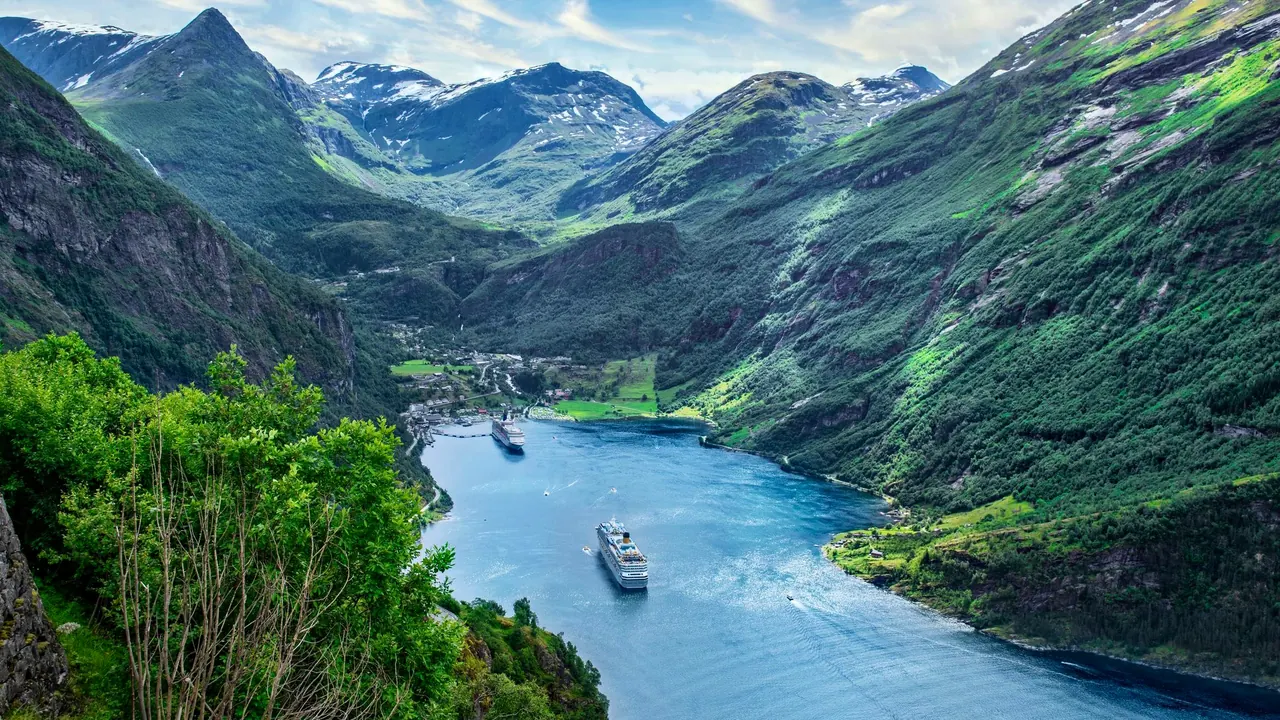
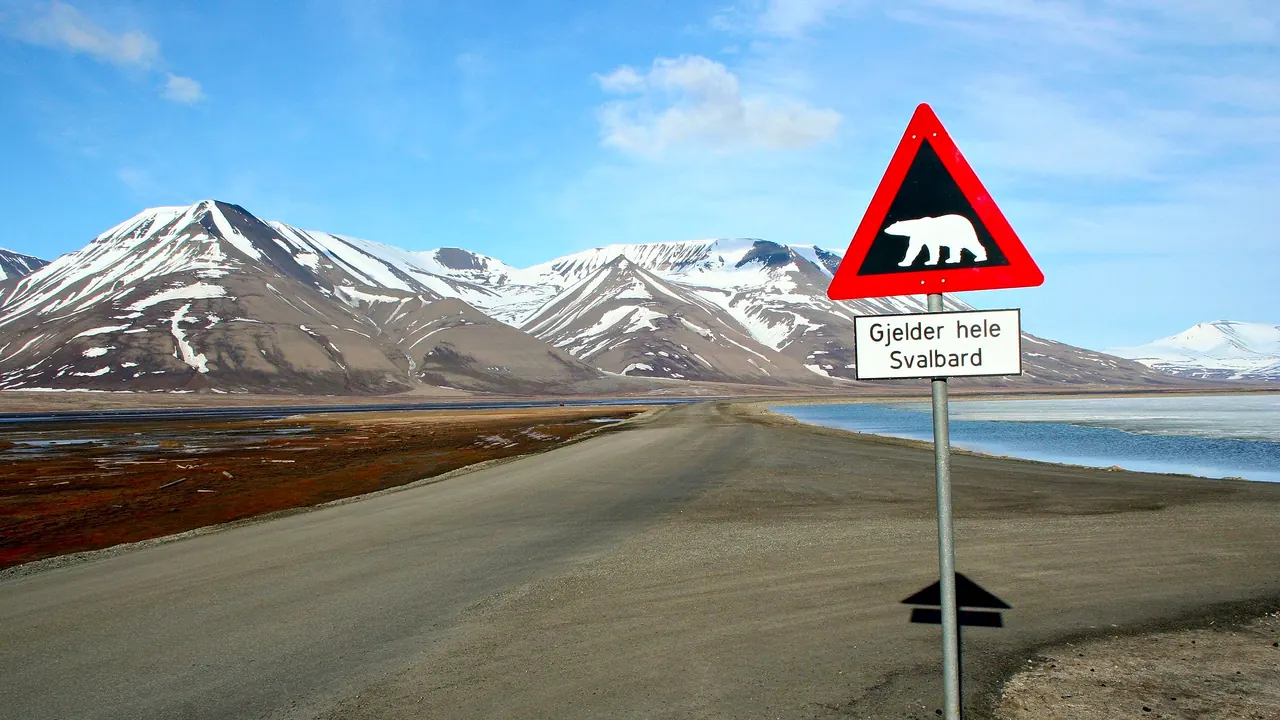
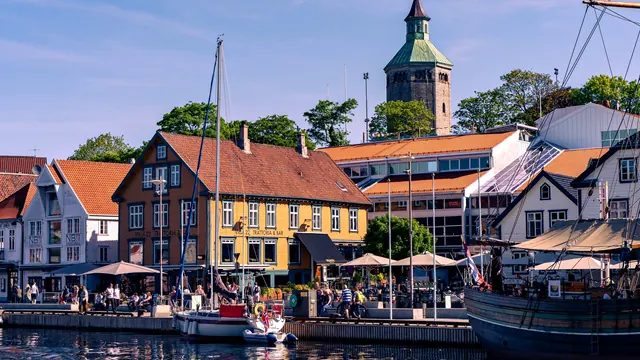
Photos: Norwegian Fjords by Enrique, Pexels License; Svalbard by Sprok, CC BY-SA 3.0, cropped.
Norwegian Fjords or Svalbard?
Our verdict in twelve categories, each scored against the same fixed benchmark cities, and the climate month by month, so you can choose for your trip.
Choose Norwegian Fjords for
- culture and sights
- families
- live music and the arts
Choose the Norwegian Fjords for a summer journey through dramatic scenery that you can largely arrange yourself: hikes above the Lysefjord or out to Trolltunga, the train and boat route down to Flåm, and Bergen as a base with its old wharf, concert halls, seafood and attractions for children. It suits couples, families and anyone who wants the landscape with real towns attached.
Choose Svalbard for
Svalbard does not lead in any category we score.
Svalbard is for the traveller who wants the high Arctic itself and will give up almost everything else to get it. Polar bears, walrus, glacier fronts and dog sleds are the whole point. Longyearbyen is small, every outing beyond it needs a guide, and there is little to fill the hours between excursions. It rewards adults and older teenagers on a focused trip that feels like an expedition.
Scoreboard
Twelve categories on one fixed scale from 0 to 100. The shaded stretch is the gap between the two.
Your match
Pick a travel style or drag the sliders, and both match scores follow your weighting.
Wins on culture and sights and families with your weighting.
Has no clear advantage with the weighting you have chosen.
What matters to you?
Category by category
What the scores mean for a trip.
Beaches & swimming
Neither is a beach destination, but the fjords at least allow a swim. In a warm spell the sheltered inner fjords can reach about 17-20°C, and you can swim from rocks, jetties and small pebble coves. Near Stavanger, the Jæren dunes give you real sand on the open coast.
Svalbard's water stays around 4-7°C even in high summer, and its grey shingle shores are polar bear country. The only swim on offer there is a quick plunge off a boat or a few lengths in Longyearbyen's indoor pool.
Food & drink
The fjords eat more widely and more richly: shellfish, halibut and klippfisk on the coast, cider and cherries along the Hardangerfjord, and real restaurant choice in Bergen and Stavanger, as well as the fish market on Bergen's harbour. Out in the villages, though, you are often down to a hotel dining room that closes early.
Svalbard's cooking is all in Longyearbyen. A few serious kitchens serve reindeer, Arctic char, seal and king crab, there is locally brewed beer, and one old restaurant keeps a remarkable wine cellar. That makes for a couple of memorable dinners, but not a varied week of eating.
Culture & sights
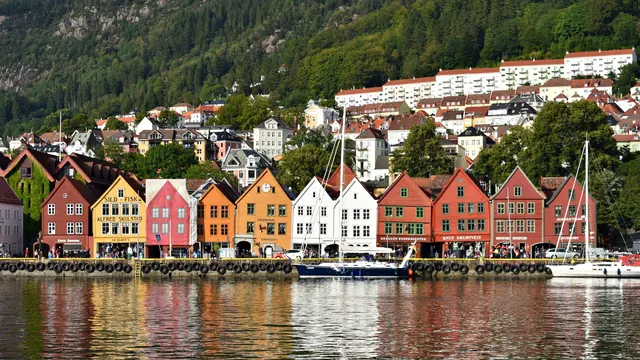
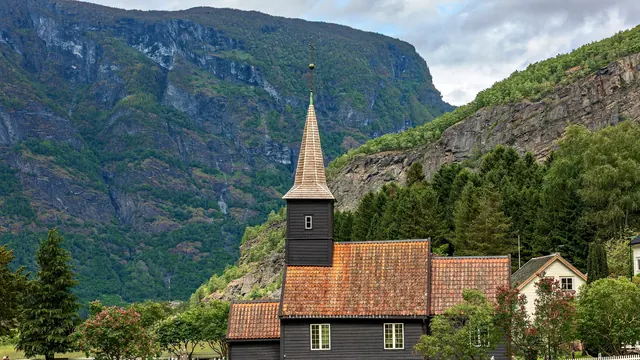
The fjords have far more to see. There is Bergen's timbered Bryggen wharf, Håkon's Hall and the art at KODE, Ålesund's Art Nouveau streets, and stave churches such as Urnes and Borgund that are among Norway's oldest buildings.
Svalbard's heritage is about trappers, whalers, miners and polar expeditions, best explained at the Svalbard Museum. Add the old mine entrances and cable-car towers above Longyearbyen and a look at the Seed Vault from outside, and you have seen most of it in a day.
Nightlife
Neither is a trip for late nights, but only the fjords have a real city to go out in. On Friday and Saturday nights Bergen's students fill the pubs, cocktail bars and handful of clubs around the harbour, and on summer evenings Stavanger's old town waterfront gets busy. In the fjord villages, an evening out means a drink on a hotel terrace in the late light.
In Longyearbyen, going out means a few pubs on the main street, where guides, miners and researchers drink the local beer together. Weekends can be cheerful in the dark winter months, but there is nowhere to dance, and after a couple of evenings you will have been everywhere.
Nature & outdoors
Both are among the world's great landscapes, but very different kinds. The fjords are steep and green, with waterfalls, orchards and snowfields above deep water. From June to September you can walk to Preikestolen or Trolltunga on your own, kayak under the cliffs or join a guided walk on the Jostedalsbreen glacier.
Svalbard is bare high-Arctic wilderness with no roads at all, and its draw is the wildlife: reindeer in town, walrus on remote beaches and polar bears on the ice. It has something in every season, from spring sledging to midnight-sun boat trips to the northern lights, but you always go out with a guide.
Day trips
The fjords give you many more outings, most of them easy. From Bergen you can take the train to Voss and Flåm and a boat on to Undredal, an express boat to Balestrand, or a half-day trip to Ole Bull's villa at Lysøen. From Stavanger there are Utstein Abbey and the white wooden harbour town of Skudeneshavn.
Svalbard has just a few destinations, though they are memorable ones. Barentsburg is a working Russian mining town, and Pyramiden is an abandoned Soviet settlement. Each is several hours away by boat or snowmobile, and Ny-Ålesund usually needs a plane.
Good for families
The fjords work well for children of most ages. Bergen has an aquarium, a science centre and the funicular up to Fløyen's playground and woods, while scenic trains, boat trips and farm stays fill the days. Long winding drives and hikes that are too long for small legs are the main drawbacks.
Svalbard can thrill older children with husky kennels, glacier boats and walrus, but nothing there is designed for children. Many trips have minimum ages, the cold is serious, and no one can step beyond town without an armed guide.
Getting around
The fjords are slow to cross but open to you. A car-free route of train, the Flåm railway, a boat along the Nærøyfjord and a bus takes you through the heart of the scenery, and with a car you can reach almost anywhere by hairpin roads and ferries. Bear in mind that short distances on the map take hours.
On Svalbard you can only get about freely by walking around Longyearbyen. No roads link the settlements, and leaving town legally means going with someone carrying protection against polar bears, so every outing is booked with a guide by boat, sled, snowmobile or plane, and weather can cancel it.
Shopping & style
Shopping is a sideline in both, but the fjords have more of it. There are craft and gallery workshops in Bryggen's wooden buildings, a pleasant pedestrian centre in Stavanger, and village shops selling patterned wool sweaters, pewter, knives and Hardanger embroidery, plus cider and goat cheese from the farms. Longyearbyen has one main street of outdoor gear and polar souvenirs, and its freedom from VAT makes extra thermal layers a little cheaper.
Affordability
Both are among the most expensive trips in Europe, so the real difference is how much you can control the cost. In the fjords you can rent a cabin, camp, cook from supermarket shopping and spend your days on hikes that cost nothing.
Svalbard leaves you less room. Hotel rooms are few, food is flown in, and because nobody leaves town without a guide, the costly excursions are the trip itself. Tax-free shopping is about the only saving.
Live music & performing arts
Bergen gives the fjords a proper musical life. The Bergen Philharmonic, one of the world's oldest orchestras, plays in Grieghallen, there is the Bergen International Festival in late spring, and Grieg recitals are held at Troldhaugen in summer. Further north, Molde's jazz festival fills the town each July.
Svalbard has two festivals, jazz in midwinter and blues as the polar night begins, with visiting musicians at Longyearbyen's culture house. For the rest of the year, its music is mostly local choirs and the odd pub band.
Wellness & relaxation
The fjords have something close to a bathing ritual. You can sit in a wood-fired sauna on a jetty or floating platform and then drop into the cold fjord, and a few historic fjord hotels add proper spas. Svalbard's equivalents are Longyearbyen's indoor pool and a sauna at some hotels after a cold day out.
Where the two meet is in their quiet, though it is a different kind of quiet. In the fjords it is a room above still water in the long summer evenings. On Svalbard it is a town with no traffic noise, under the midnight sun or the polar night.
When should you go?
Pick your month. The climate figures are measured averages, not a forecast.
Norwegian Fjords in July
Svalbard in July
Daytime high, °C
Rainfall in the month, mm
Where the figures come from
Norwegian Fjords's temperatures are measured 27 km from the centre, at Fjaerland Bremuseet Bøyum.
Norwegian Fjords has no rain gauge within 25 km of the centre, so its rainfall comes from a gridded climate dataset read at the destination rather than from a gauge further away.
Temperature and rainfall are climate normals, averaged over the years shown. Norwegian Fjords: 2006-2020 (rainfall 1991-2020) normals, Fjaerland Bremuseet Bøyum (27.2 km from centre). Svalbard: 1991-2020 normals, Svalbard Lufthavn (5.1 km from centre).
The fjords are at their best in summer. From June to August days are mild, peaking at about 20°C in July, which is pleasant for hiking and, on a fine afternoon, a brief swim. April and May are the driest months. From September the rain builds steadily to around 180mm a month by midwinter, when snow also closes the high roads and trails.
Svalbard never gets warm. July peaks at about 9°C, and March, at roughly -9°C, is among the coldest months even as the light returns. It stays dry all year, never much above 25mm of rain or snow a month, so when you go depends on what you want to do: March to May for snow and sledging, June to August for boats and guided hikes, and the dark winter for the northern lights.
Which traveller are you?
On a family trip with young children, the fjords are much the safer bet. Children can move about freely, the towns have indoor fallbacks for wet days, and the journeys by train and boat are an outing in themselves. Svalbard really only suits families with confident teenagers.
For a culture and arts trip, the fjords win clearly. Anyone who likes old wooden quarters, painting and an evening at a concert will find several days' worth in and around Bergen. Svalbard has a single good museum's worth of history, plus the stories behind its abandoned mines.
For wildlife watchers set on the high Arctic, Svalbard is the only real choice of the two. The fjords give you grand scenery and seals seen from a boat, but only Svalbard brings polar bears and walrus within reach, which makes the cost and the guided days worth it.
Before you go
| Measure | Norwegian Fjords | Svalbard |
|---|---|---|
| Official language | Norwegian, Nynorsk, Bokmål, Sámi | Norwegian, Nynorsk, Bokmål, Sámi |
| Currency | Norwegian Krone (NOK) | Norwegian Krone (NOK) |
| Sockets | CF230 V, 50 Hz | CF230 V, 50 Hz |
| Driving side | Right | Right |
| Time zone | UTC+1, UTC+2 in summer | UTC+1, UTC+2 in summer |
| Emergency number | Police 112, ambulance 113, fire 110 | Police 112, ambulance 113, fire 110 |
| Main airport | Bergen Airport, Flesland (BGO)64 non-stop destinations | Svalbard Airport, Longyear (LYR)3 non-stop destinations |
| Public holidays this year | 13 days | 13 days |
By the numbers
| Measure | Norwegian Fjords | Svalbard |
|---|---|---|
| Population | - | 2,668 |
Where else could you go?
Every comparison below shares a destination with this one, so you can follow Norwegian Fjords or Svalbard somewhere new.
- Scottish Highlandsvs Norwegian Fjords
- Lofotenvs Norwegian Fjords
- Tromsovs Svalbard
- Laplandvs Norwegian Fjords
- Lofotenvs Svalbard
- Laplandvs Svalbard