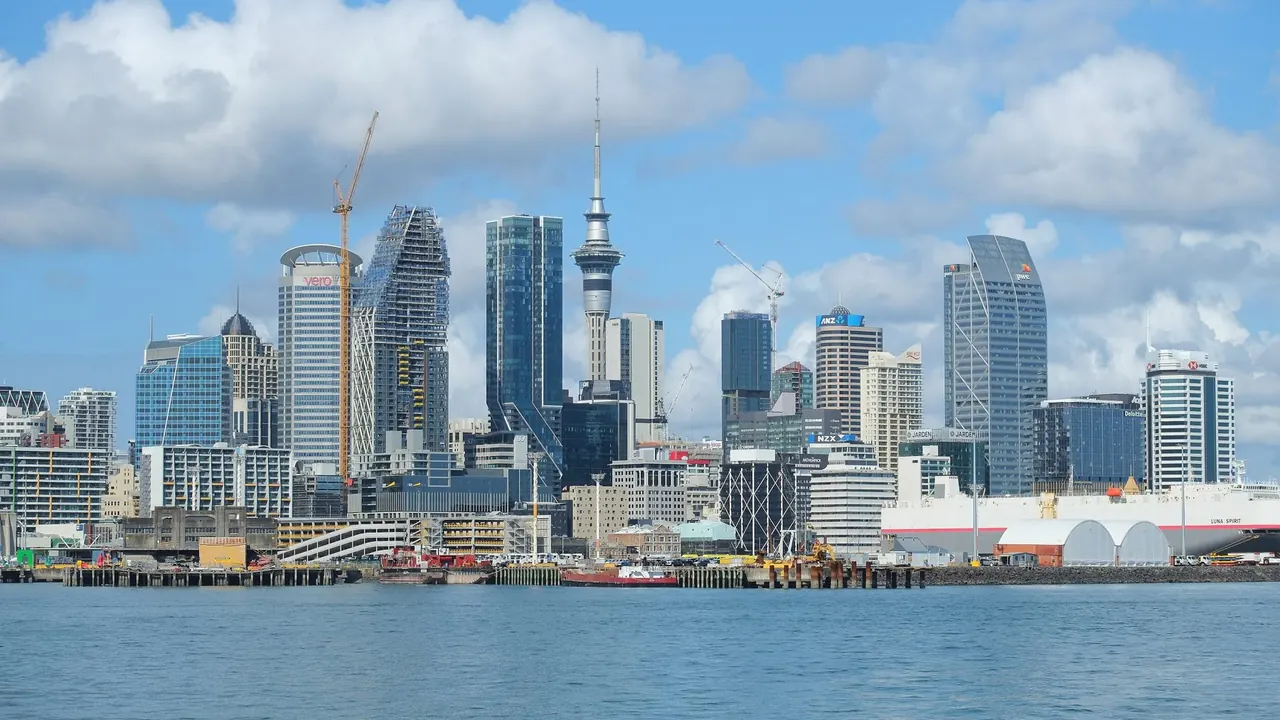
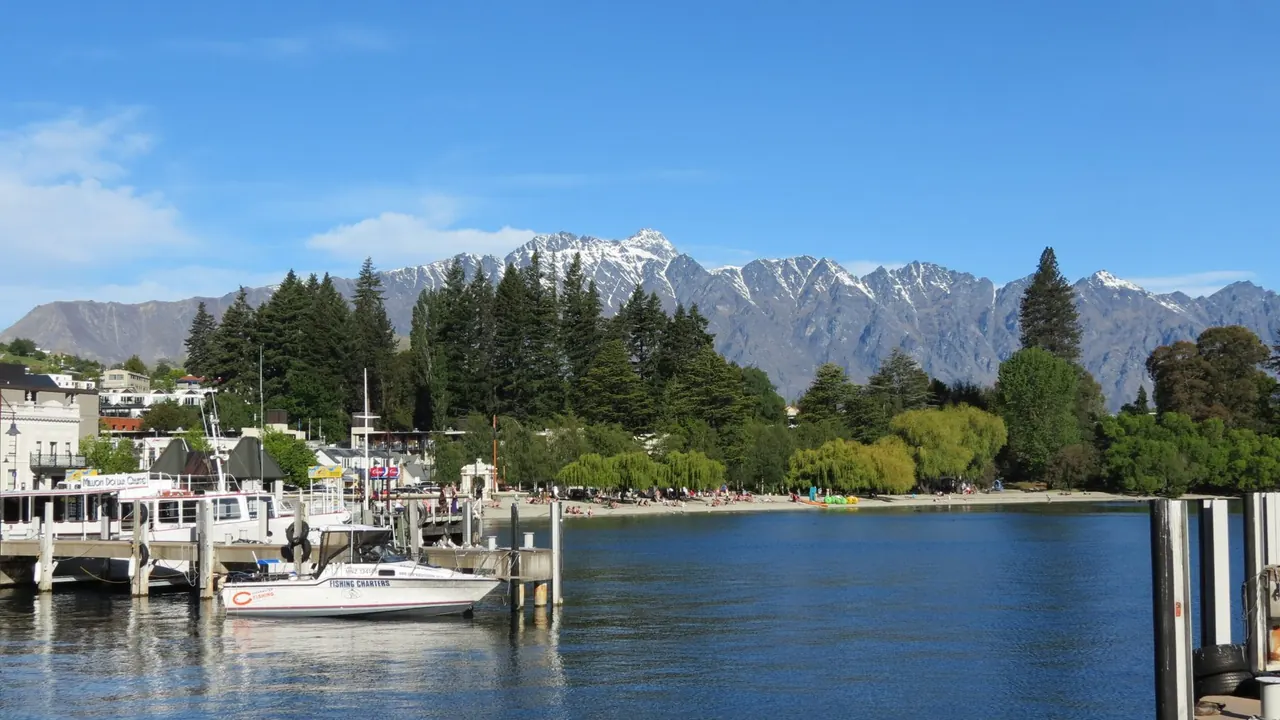
Photos: Auckland by Pseudopanax at English Wikipedia, Public domain; Queenstown by Robert Linsdell, CC BY 2.0, cropped.
Auckland or Queenstown?
Our verdict in twelve categories, each scored against the same fixed benchmark cities, and the climate month by month, so you can choose for your trip.
Choose Auckland for
- beaches
- culture and sights
- live music and the arts
Auckland suits a trip that mixes city and coast. You can swim off the sheltered bays along Tamaki Drive, take ferries out to Waiheke and Rangitoto, spend an afternoon with the Māori and Pacific treasures of the War Memorial Museum and eat your way along Dominion Road. Families, beach lovers and anyone who wants an orchestra or a festival in the evening will find more to fill the days here, and the stay is a little gentler on the budget.
Choose Queenstown for
- nature and the outdoors
- getting around
Choose Queenstown when the mountains are the whole point. The Remarkables, Lake Wakatipu and the tracks towards Mount Aspiring begin at the edge of town, and bungy jumps, jet boats and winter ski fields make it the country's adventure base. Expect almost no museums or theatre, cold lake water and resort prices. Walkers, skiers and thrill-seekers will find more here than in Auckland.
Scoreboard
Twelve categories on one fixed scale from 0 to 100. The shaded stretch is the gap between the two.
Your match
Pick a travel style or drag the sliders, and both match scores follow your weighting.
Wins on beaches and culture and sights with your weighting.
Wins on nature and the outdoors and getting around with your weighting.
What matters to you?
Category by category
What the scores mean for a trip.
Beaches & swimming
Auckland has real beaches. Sheltered, sandy bays such as Mission Bay and Takapuna are safe for children in late summer, the black sand at Piha and Muriwai draws surfers, and Waiheke has quieter coves.
Queenstown has no sea at all. Lake Wakatipu is so cold that a swim usually means a jump off the jetty and a quick scramble out, though Lake Hayes and Moke Lake are milder in midsummer. A sunny afternoon on the shingle at Queenstown Bay is pleasant, but you can't build a beach vacation around it.
Food & drink
Auckland has a much wider range of food, thanks to the Chinese, Korean, Malaysian and Indian kitchens on Dominion Road, the Pacific Island stalls at the markets and plenty of mussels, oysters and snapper from its own waters. Waiheke's vineyards are a ferry ride away.
Queenstown is mostly burgers, pies and lodge-style lamb and venison at resort prices, with queues at the popular spots. Its strength is wine: a long lunch among the Central Otago pinot noir cellar doors of Gibbston Valley is one of the best meals either place has to offer.
Culture & sights
Auckland has far more to see. The War Memorial Museum on the crest of the Domain keeps a carved meeting house and a war canoe among its Māori and Pacific treasures, the Art Gallery has its Māori portraits, and the Maritime Museum tells the story of Polynesian voyaging. Outside, the volcanic cones carry the earthworks of Māori pā and Devonport keeps its Victorian villas. That is enough for two full days.
Queenstown has no museum of real weight. Its sights come down to the coal-fired TSS Earnslaw, built in 1912 and still crossing the lake, a few stone buildings from the 1860s gold rush and the view from Bob's Peak, and a morning covers them all. Arrowtown tells the mining story better.
Nightlife
Both are drinking scenes rather than club cities, but they feel quite different. Auckland's evenings are spread across separate strips: Ponsonby Road for wine bars, Karangahape Road for late, alternative bars and the queer scene, and the harbourside Viaduct for after-work drinks. You often need a taxi to get from one to another.
Queenstown packs its pubs and DJ bars into a few central blocks, full of seasonal workers, backpackers and skiers, and a winter Saturday stays loud past midnight. It is livelier for groups in their twenties, though a couple of nights covers it.
Nature & outdoors
Most cities would envy Auckland's outdoors. It has grassy volcanic cones to climb, Rangitoto a short ferry ride away, rare birds on Tiritiri Matangi, kauri forest in the Waitākere Ranges and sailing on the Hauraki Gulf.
Queenstown is on another level. The Remarkables and Lake Wakatipu frame the town, tracks start from the streets, and the Routeburn and Mount Aspiring are up the lake road. This is also where commercial bungy began. Add jet boats, paragliding and four ski fields within reach in winter, and it is the stronger base for anyone who travels for the landscape.
Day trips
The day trips are about even, and both lean on wine. Auckland's best outings go by water, to Waiheke's vineyards and beaches or across to Devonport. Matakana's wineries lie to the north, and Hobbiton is a long drive south.
Queenstown's outings go by road. Gold-rush Arrowtown is twenty minutes away, Wanaka sits over the Crown Range and the vineyards around Gibbston and Cromwell are close by. Milford Sound makes a long day of fiords and scenery rather than towns.
Good for families
Auckland is the easier family trip. It has the zoo, the aquarium tunnel under sharks and rays on Tamaki Drive, MOTAT's trams and planes and calm beaches, although the attractions are spread out and you often drive between them.
Queenstown is compact and safe, and the gondola, the luge and the kiwi at the wildlife park make a good day out, as do the ski schools in winter. But the bungy jumps, swings and skydives have age and weight limits, and the long drives to the big scenery are tiring for younger children.
Getting around
In both places a hire car helps, but for different reasons. Auckland is a big, spread-out city with a hilly but walkable centre and pleasant harbour ferries. Buses and a limited train network don't reach the west coast or the wineries, and motorway traffic is heavy.
Queenstown's centre takes minutes to cross on foot, and buses and a water taxi reach Frankton and Arrowtown. Beyond that, winding roads lead to Glenorchy, Wanaka and the trailheads. A single route runs into town and gets congested, and in winter chains are sometimes needed.
Shopping & style
Auckland has more to browse. Ponsonby Road and Newmarket have New Zealand fashion and homeware, Britomart has upmarket stores in restored warehouses, and the Ōtara market has a Pacific flavour.
Queenstown's shops lean towards ski, bike and hiking gear, merino knitwear and greenstone. That makes it a handy place to kit out for the mountains, but there is little else beyond souvenirs.
Affordability
Neither is cheap, but Auckland is a little easier on the budget. The volcanic cones, beaches and coastal walks are free, and Asian food courts and suburban dumpling places keep meals affordable.
In Queenstown the activities are the main expense: bungy jumps, jet boats, scenic flights and lift passes come on top of resort-priced rooms and meals. Hostels, self-catering apartments and the Frankton supermarkets help, but plan the budget carefully.
Live music & performing arts
Auckland has a modest but real arts calendar. The Auckland Philharmonia plays at the Town Hall, New Zealand Opera stages seasons, touring musicals play under the starry ceiling of the Civic, and the Arts and Pasifika festivals come round each year.
Queenstown has no orchestra, opera or regular theatre. Evenings usually mean a covers band in a pub, with occasional touring acts and street concerts during the winter festival.
Wellness & relaxation
Neither has a bathing tradition, so the difference is in style. Auckland has natural hot springs at Parakai, about an hour away, plus day spas, yoga studios in Ponsonby and the slower pace of Waiheke's retreats.
Queenstown's way to unwind is a private cedar hot tub above the Shotover River after a day outdoors, or a lodge spa out towards Arrowtown. The centre is full of tour buses and adventure bookings, so for a calm stay base yourself in Arrowtown or Glenorchy.
When should you go?
Pick your month. The climate figures are measured averages, not a forecast.
Auckland in July
Queenstown in July
Daytime high, °C
Rainfall in the month, mm
Where the figures come from
Auckland's station stands 189 m below the city centre, so the centre is likely a little cooler than the figures say.
Queenstown has no weather station within reach, so its figures come from a gridded climate model rather than a measured record, and read a broad area rather than the city itself.
Temperature and rainfall are climate normals, averaged over the years shown. Auckland: 1961-1990 normals, Auckland Aerodrome Aws (17 km from centre). Queenstown: 1991-2020 normals, TerraClimate 4 km grid at the town, no weather station within 90 km.
Auckland is at its best from January to March, when days reach about 24°C and the sea in the harbour bays warms to around 21°C. That is the only stretch of the year for long, comfortable swims. The rest of the year stays mild enough for walking the volcanic cones and the waterfront, but winter is the wet season, and the rain is heaviest in July.
Queenstown is a few degrees cooler all year. Summer days of about 20°C are made for walking, cycling and long evenings by the lake rather than swimming, and autumn turns the poplars gold. From June to August highs fall to around 6°C, which is cold for the streets but right for the ski fields. Spring is the wettest time, with September bringing about 200mm.
Which traveller are you?
On a beach and sun trip, Auckland is the clear choice. Its east-coast bays along Tamaki Drive and on the North Shore have calm, swimmable sea in late summer, and Waiheke adds white sand. Queenstown offers only a quick, cold plunge in a snow-fed lake.
For an outdoors trip, Queenstown wins. Walking tracks climb straight from the streets, and the Routeburn and Mount Aspiring are a drive up the lake. Bungy, jet boats, mountain biking and winter skiing all centre on the town. Auckland's volcanoes and gulf islands are gentler.
On a culture and arts trip, pick Auckland. The War Memorial Museum's Māori and Pacific collections, the Art Gallery, the orchestra at the Town Hall and the Pasifika Festival give a stay real substance. Queenstown has an old steamship, a few gold-rush buildings and pub bands.
Before you go
| Measure | Auckland | Queenstown |
|---|---|---|
| Official language | English, New Zealand Sign Language, Māori | English, New Zealand Sign Language, Māori |
| Currency | New Zealand Dollar (NZD) | New Zealand Dollar (NZD) |
| Sockets | I230 V, 50 Hz | I230 V, 50 Hz |
| Driving side | Left | Left |
| Time zone | UTC+12, UTC+13 in summer | UTC+12, UTC+13 in summer |
| Emergency number | 111 | 111 |
| Elevation | 196 m | 324 m |
| Main airport | Auckland International Airport (AKL)18 km from centre63 non-stop destinations | Queenstown Airport (ZQN)7 km from centre7 non-stop destinations |
| Public holidays this year | 12 days | 12 days |
By the numbers
| Measure | Auckland | Queenstown |
|---|---|---|
| City population | 1,470,100 | 29,000 |
| People per km² | 2,630 | - |
| Museums within 10 km | 15 | 0 |
| UNESCO World Heritage sites within 50 km | 0 | 0 |
| Swim season, months above 21 °C | 1 month | - |
Where else could you go?
Every comparison below shares a destination with this one, so you can follow Auckland or Queenstown somewhere new.