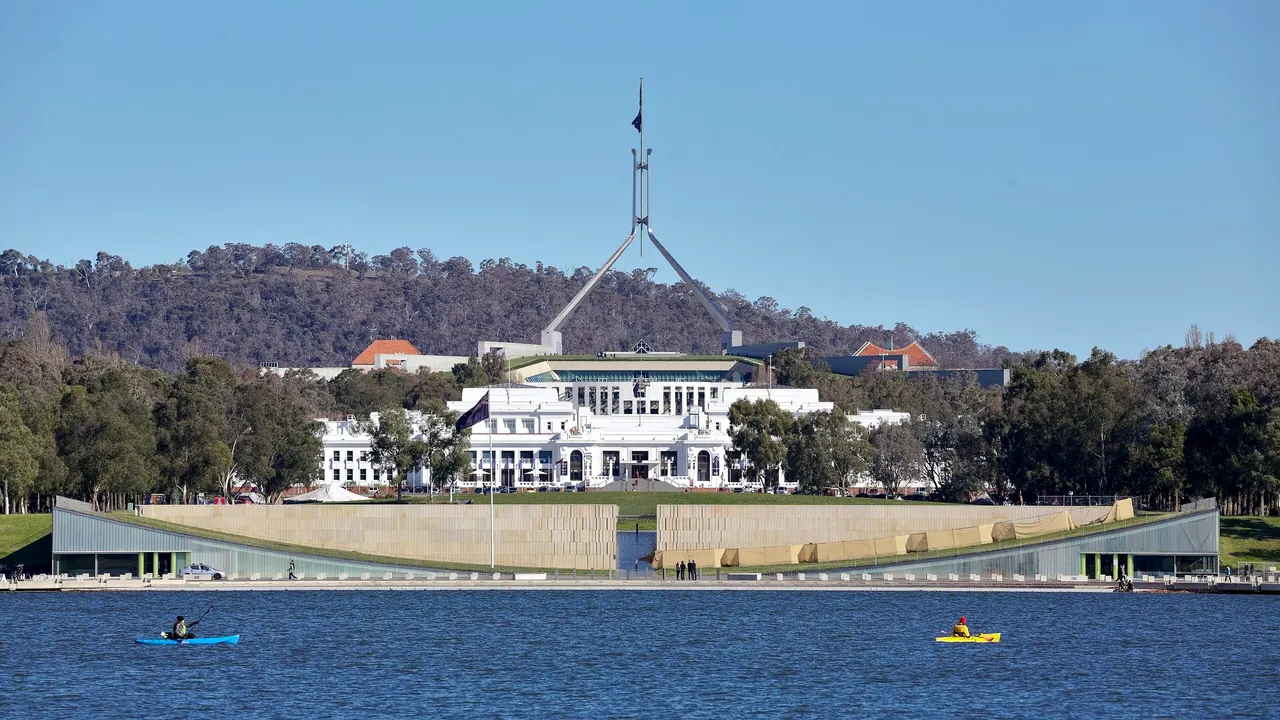
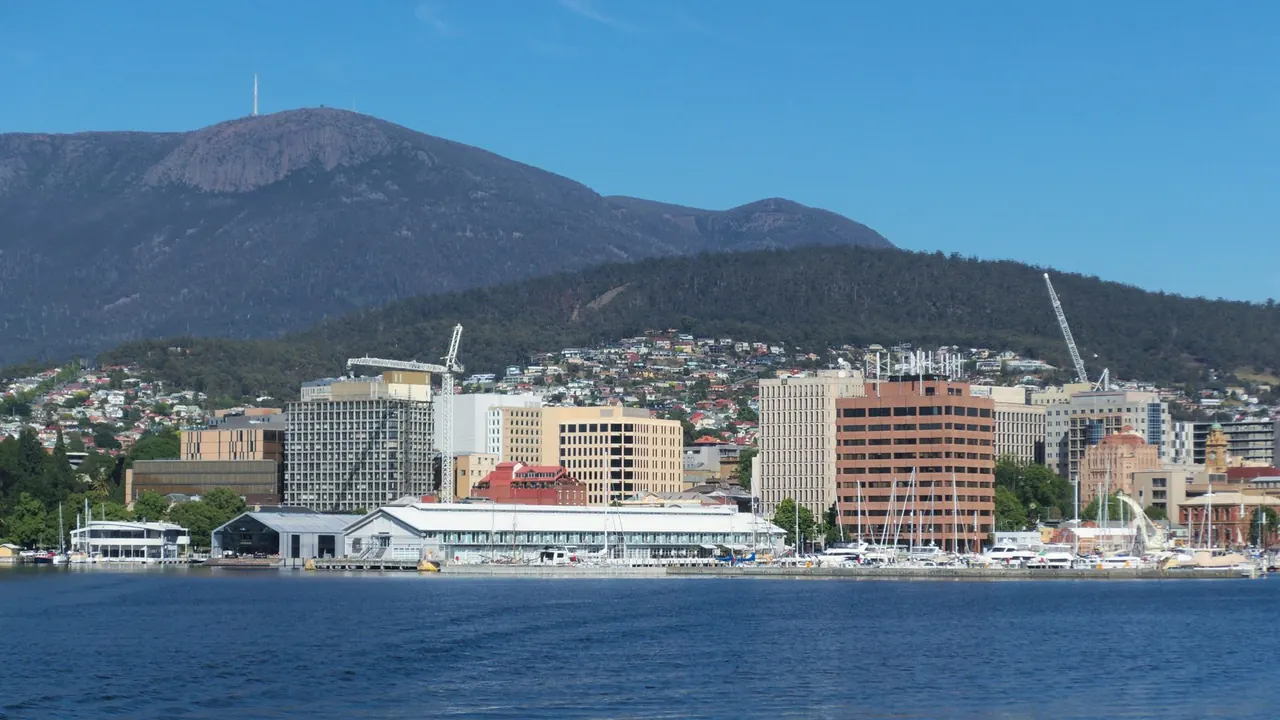
Photos: Canberra by Thennicke, CC BY-SA 4.0, cropped; Hobart by Gary Houston, CC0.
Canberra or Hobart?
Our verdict in twelve categories, each scored against the same fixed benchmark cities, and the climate month by month, so you can choose for your trip.
Choose Canberra for
- families
- prices
Canberra suits travellers who want to understand Australia through its national institutions, and families who want those institutions to come with hands-on exhibits. Parliament House, the War Memorial and the National Gallery sit around one lake, most of them free. Questacon, the zoo and Tidbinbilla can fill several easy days with children. It is a calm, orderly base, and it works best with a car or a bike.
Choose Hobart for
- nature and the outdoors
- beaches
- day trips
Hobart is for people who travel for landscape and produce. A mountain rises straight behind the waterfront, the Tasman Peninsula and Bruny Island are close enough for day trips, and the oysters, pinot noir and whisky are reasons to come in themselves. It also has a compact colonial centre you can actually wander, plus MONA, which has no real equivalent anywhere in Australia.
Scoreboard
Twelve categories on one fixed scale from 0 to 100. The shaded stretch is the gap between the two.
Your match
Pick a travel style or drag the sliders, and both match scores follow your weighting.
Wins on families and prices with your weighting.
Wins on nature and the outdoors and beaches with your weighting.
What matters to you?
Category by category
What the scores mean for a trip.
Beaches & swimming
Neither city is a swimming destination, but Hobart at least has sand in town. Canberra is inland. Its summer swimming happens at river spots such as Casuarina Sands and Kambah Pool, without lifeguards, and the real coast is a two-hour drive over the mountain.
Hobart has Sandy Bay, Long Beach and Kingston Beach close by and Seven Mile Beach near the airport. The cold water means these beaches are for walks and quick, bracing dips, not for whole days in the sea.
Food & drink
Hobart eats better because it is built on its own produce: east-coast oysters, scallop pies, salmon, summer cherries, and fish and chips sold from boats at the dock. Salamanca Market is the easy way in, and pinot noir, sparkling wine and whisky are made close by.
Canberra's food scene is pleasant but thin. It is good for brunch in Braddon and Asian lunches along Woolley Street in Dickson. Its strongest card is the cool-climate wineries around Murrumbateman, a short drive out of town.
Culture & sights
The two cities are equally rewarding, in very different ways. Canberra's appeal is national and institutional: Parliament House, the National Gallery's large Aboriginal and Torres Strait Islander collection, the War Memorial, and the planned layout of Burley Griffin's city seen from Mount Ainslie. There is almost no old streetscape to wander.
Hobart has history you can walk through. There are the sandstone warehouses of Salamanca Place, the Georgian lanes of Battery Point and the Female Factory convict site. On top of that comes MONA, a single museum unlike anything in Canberra, though two or three days cover the whole city.
Nightlife
Both cities are quiet after dark, and neither suits a big night out. Canberra's evenings follow the university and parliamentary calendar, with cocktail bars and small breweries on Lonsdale Street and a few student venues in Civic, and the city goes very still outside term time. Hobart's nights are wine and whisky bars and pubs in the old sandstone along Salamanca and in North Hobart, at their busiest when the yacht crews arrive around New Year.
Nature & outdoors
Canberra earns its name of bush capital. Kangaroos graze at dusk, there are trails on Black Mountain and Mount Ainslie, and Namadgi's granite ranges are forty minutes away. It is good, open, easy walking country.
Hobart's outdoors is on another level. A 1,270m mountain with fern gullies and the Organ Pipes rises right behind the city, and within a couple of hours there are the highest sea cliffs in the southern hemisphere, Bruny Island's penguins and the edge of the southwest wilderness. Canberra has nothing that compares with that coastline.
Day trips
Hobart has the destinations, and Canberra has pleasant drives. Around Canberra you find country towns such as Braidwood and Bungendore, and wine days in the Yass Valley. They are enjoyable, but there is no single place worth planning a trip around.
From Hobart, Port Arthur's convict ruins make a substantial day out. Georgian Richmond, the Huon Valley's orchards and the ferry to Bruny Island add variety. You need a car in both regions.
Good for families
Canberra is the stronger choice with children, because so much is designed with them in mind. Questacon's hands-on floors, close encounters at the National Zoo, the children's galleries at the national museums and the playground at the Arboretum make for easy indoor and outdoor days.
Hobart works well too, especially for older children who like being outdoors. They can see Tasmanian devils at the wildlife sanctuaries, spot penguins and explore the grounds at Port Arthur, but there is less built for children and the weather limits beach days.
Getting around
In Canberra, getting between sights takes planning. The parliamentary and gallery quarter, the cafés of Braddon and the suburbs are separate pieces of a planned city, so each move means choosing a bike, a bus or the car. The bike is the best choice here: off-road paths circle the lake and link the suburbs over gentle ground. The light rail is mainly useful if you are staying in the north, and with light traffic and easy parking, driving is simple.
Hobart is easier, because most of what a visitor wants in town is close together and you simply walk, though the walk back up from the waterfront is steep. Its boats give it something Canberra lacks, as the ride up the Derwent to MONA is part of the visit, not just a way to reach it. Outside the city the two even out, and Port Arthur or Namadgi are both much easier to reach with a hire car.
Shopping & style
Hobart is the better place to shop, mainly for things made on the island. Salamanca Market fills the waterfront on Saturdays, and the warehouse galleries sell Huon pine woodwork, glass, gin and whisky all week.
Canberra's shopping is mostly the Canberra Centre mall, plus Sunday mornings at the Old Bus Depot Markets in Kingston. The national gallery shops are good for Aboriginal art prints. Neither city has a luxury street.
Affordability
Both cities have Australian price levels, so expect meals, drinks and getting around to cost a lot. The difference is in where you save. In Canberra, almost every major institution is free to enter, and hotels tend to get cheaper at weekends once the political travellers leave. In Hobart, entry to the main sights costs more, and rooms are scarce in summer, but market food and self-catering with excellent produce keep the costs down.
Live music & performing arts
Hobart has more going on and more character. The Theatre Royal is Australia's oldest working playhouse, the Tasmanian Symphony Orchestra plays on the waterfront, and the festivals linked to MONA bring experimental performance, including in midwinter.
Canberra's stage life is steadier and more conventional, with touring shows at the Canberra Theatre Centre and the symphony orchestra's season. Its standout event is the National Folk Festival at Easter.
Wellness & relaxation
Neither city has a bathing tradition, so in both, rest comes mostly from the slow pace. Hobart offers a little more. Long lunches, the Botanical Gardens, clean air and the countryside lodges and retreats close by make a restful stay easy to put together.
Canberra's calm comes from quiet lakeside mornings and early evenings. Beyond a few day spas, there is little to plan a restful trip around.
When should you go?
Pick your month. The climate figures are measured averages, not a forecast.
Canberra in July
Hobart in July
Daytime high, °C
Rainfall in the month, mm
Temperature and rainfall are climate normals, averaged over the years shown. Canberra: 1991-2020 normals, Canberra (6.7 km from centre). Hobart: 1991-2020 normals, Hobart (2.3 km from centre).
Canberra's year has sharp seasons. Summer highs reach about 30°C in January, which is hot for walking between institutions spread out across open avenues. Winter afternoons fall to around 12°C, with frosty mornings. Spring and autumn are the comfortable months for walking and for the hills. The city is sunny all year, especially in December and January, and rain is moderate in every month, with April and May the driest.
Hobart is milder and more even. Summer highs sit around 23°C, so January to March is pleasant for walking and outdoor trips but never really beach weather. The sea peaks at only about 17°C. Winter is no colder than Canberra's by day but is greyer, with less sunshine, and rain is heaviest in late winter and spring, reaching about 65mm in August. Canberra's summer suits people who like heat. Hobart's suits people who would rather hike in it.
Which traveller are you?
On a family trip with children, Canberra is the easier choice. Questacon can fill most of a day, the National Zoo and Aquarium and the museums' children's galleries add more, and the quiet streets and lakeside parks mean every day goes smoothly.
For an outdoors trip, Hobart is clearly better. You can start on kunanyi/Mount Wellington from the edge of town, the Tasman Peninsula has huge sea cliffs and the Three Capes walk, and Bruny Island and Mount Field are within easy reach.
On a food and nightlife trip, Hobart comes out ahead on the food. Oysters, salmon and berries from the island, fish punts at Constitution Dock and local whisky beat Canberra's brunch-and-wine scene. Evenings in both cities are pubs and bars rather than clubs.
Before you go
| Measure | Canberra | Hobart |
|---|---|---|
| Official language | English | English |
| Currency | Australian Dollar (AUD) | Australian Dollar (AUD) |
| Sockets | I230 V, 50 Hz | I230 V, 50 Hz |
| Driving side | Left | Left |
| Time zone | UTC+10, UTC+11 in summer | UTC+10, UTC+11 in summer |
| Emergency number | 000 | 000 |
| Elevation | 578 m | 54 m |
| Main airport | Canberra Airport (CBR)6 km from centre11 non-stop destinations | Hobart International Airport (HBA)17 km from centre9 non-stop destinations |
| Public holidays this year | 13 days | 9 days |
By the numbers
| Measure | Canberra | Hobart |
|---|---|---|
| City population | 381,488 | 197,451 |
| People per km² | 809 | 116 |
| Museums within 10 km | 20 | 8 |
| UNESCO World Heritage sites within 50 km | 0 | 1 |
| Swim season, months above 21 °C | - | None |
Where else could you go?
Every comparison below shares a destination with this one, so you can follow Canberra or Hobart somewhere new.
- Sydneyvs Canberra
- Melbournevs Canberra
- Melbournevs Hobart
- Byron Bayvs Canberra
- Gold Coastvs Canberra
- Brisbanevs Canberra