Photos: Byron Bay by Visions of Domino, CC BY 2.0, cropped; Canberra by Thennicke, CC BY-SA 4.0, cropped.
Byron Bay or Canberra?
Our verdict in twelve categories, each scored against the same fixed benchmark cities, and the climate month by month, so you can choose for your trip.
Choose Byron Bay for
- beaches
- wellness
- nature and the outdoors
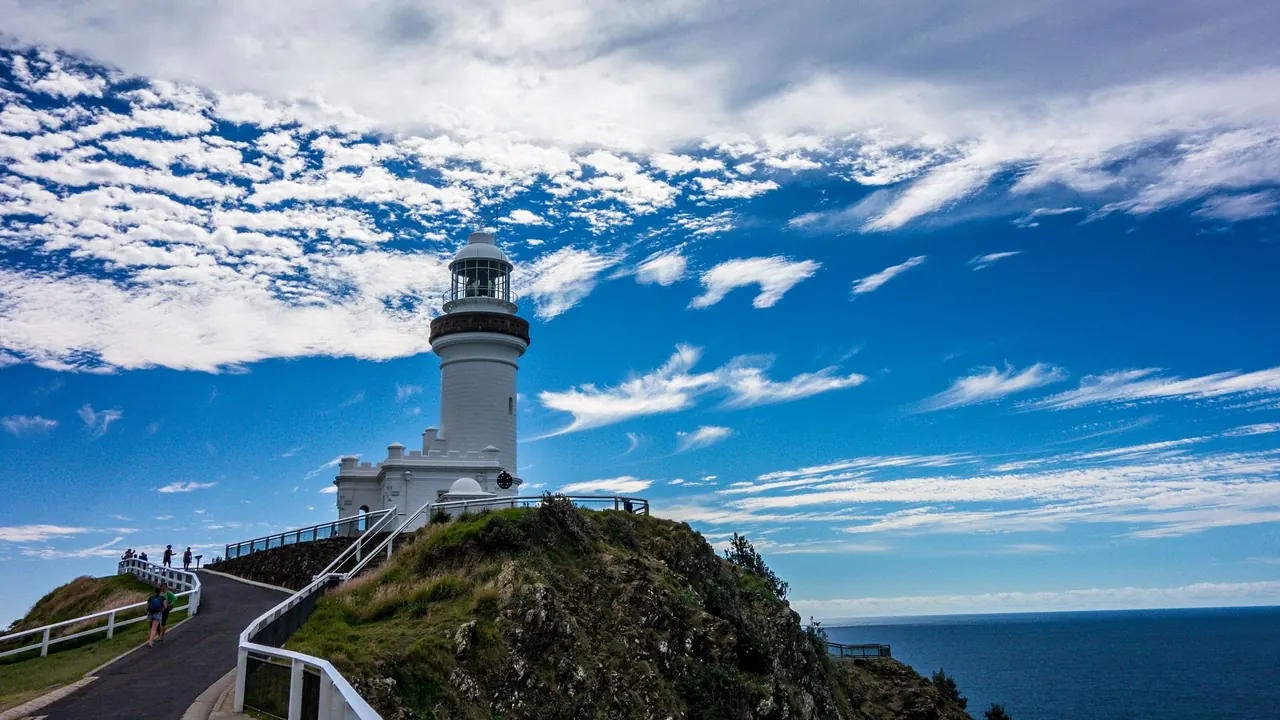
Byron Bay is the choice for a trip built around the sea. Within walking distance there are very different beaches, with surf at The Pass, diving at Julian Rocks and whales passing in winter, and the yoga studios and hinterland retreats fill the slower days. It suits couples, surfers and anyone who wants to wind down, as long as they accept high prices and a town whose sightseeing ends at the lighthouse.
Choose Canberra for
- culture and sights
- prices
- families
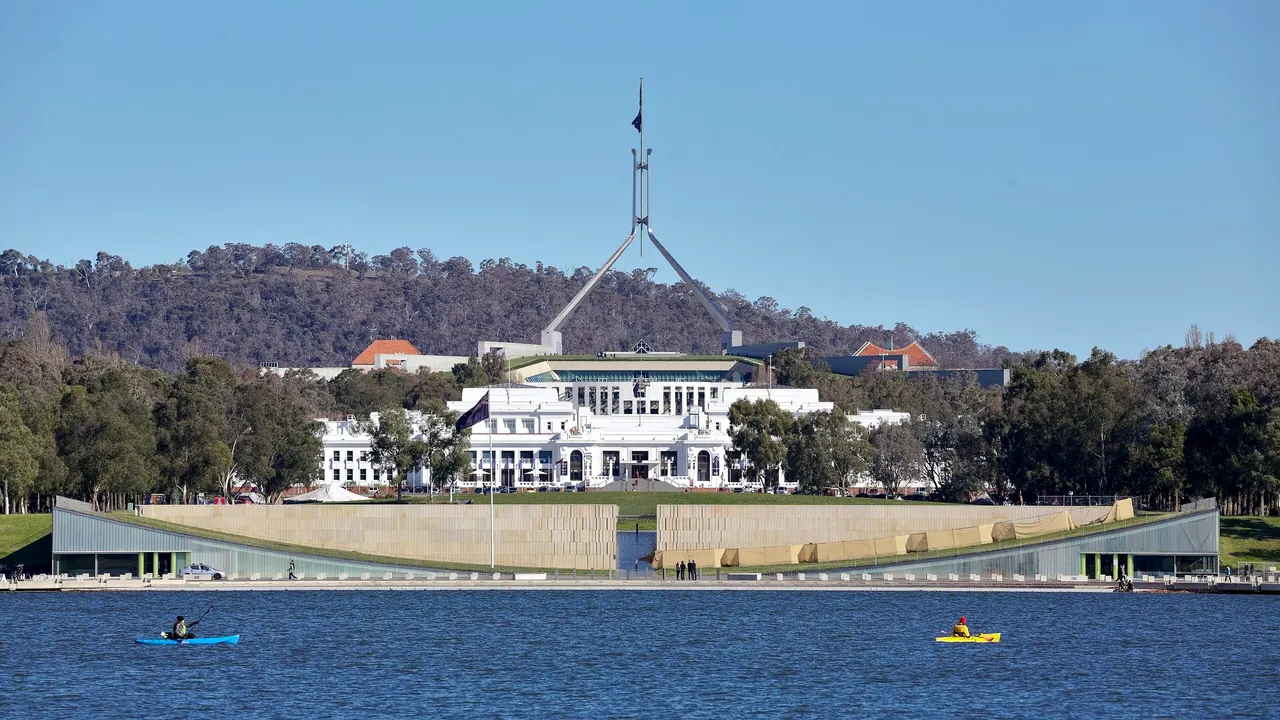
Pick Canberra if you want to come home having learned something. The national institutions around Lake Burley Griffin, from Parliament House to the War Memorial and the National Gallery, are mostly free, and Questacon and the zoo make it the easier city with children. It is quieter and cheaper to stay in, with bush walks on its doorstep, but there is no sea and little going on after dark.
Scoreboard
Twelve categories on one fixed scale from 0 to 100. The shaded stretch is the gap between the two.
Your match
Pick a travel style or drag the sliders, and both match scores follow your weighting.
Wins on beaches and wellness with your weighting.
Wins on culture and sights and prices with your weighting.
What matters to you?
Category by category
What the scores mean for a trip.
Beaches & swimming
This is where the two differ most. Byron Bay sits on a north-facing bay with everything from the sheltered point at The Pass and the small cove at Wategos to the long empty arcs of Tallow and Belongil. The water is warm enough to swim in all year, though the open surf beaches have strong rips, so swim between the flags.
Canberra is inland, roughly two hours from the coast at Batemans Bay. Locals swim in the Murrumbidgee and Cotter rivers at spots such as Kambah Pool and Casuarina Sands, which have no lifeguards, and Lake Burley Griffin is often closed by algae after warm spells. It is a way to cool off, not a beach trip.
Food & drink
Byron Bay eats better, mainly because of what grows around it. Macadamias, avocados, tropical fruit and grass-fed beef from the hinterland reach the cafés and farmers' markets, seafood comes off the coast, and there are a few ambitious kitchens in town, on hinterland farms and in Bangalow. Coffee and long brunches are the high point.
Canberra's good eating is spread across Braddon, the older strips of Kingston and Manuka, and the Asian kitchens of Dickson's Woolley Street. What it has that Byron lacks is cool-climate wine, with cellar doors around Murrumbateman. Neither city has a cuisine of its own or much depth at the top end.
Culture & sights
For sights there is no contest. Canberra was built to house the nation's institutions, and a few days can go on Parliament House, the National Gallery with its Aboriginal and Torres Strait Islander collection, the National Portrait Gallery, the National Museum and the War Memorial. The view from Mount Ainslie shows Walter Burley Griffin's plan laid out below.
Byron Bay has the lighthouse on Cape Byron, the most easterly point of mainland Australia, and little else to visit. Its deepest heritage is the Arakwal Bumberlin people's connection to the cape, which visitors meet on guided walks rather than in a museum.
Nightlife
Byron Bay has the livelier evenings: sunset drinks, big beer-garden pubs near Main Beach and a couple of late venues full of backpackers, especially on summer weekends. Even so, most nights are over soon after midnight.
Canberra goes out more quietly, in the cocktail bars and small breweries of Lonsdale Street in Braddon and the Civic laneways. Students fill a few venues at weekends, but outside term time and parliamentary sitting weeks the city is very still. In Byron the evenings are barefoot and young, while Canberra suits a drink after dinner.
Nature & outdoors
Both cities have good outdoors, but Byron Bay's is richer because it has the sea as well as the land. The cape track runs through rainforest to the lighthouse, with dolphins below and humpbacks passing from about June to November. Julian Rocks has turtles, rays and grey nurse sharks for divers, and the rainforest of Nightcap and Minyon Falls is within an hour.
Canberra's answer is bush within the city: eucalypt hills such as Black Mountain and Mount Ainslie with walking and mountain-bike trails, and kangaroos on the reserves at dusk. The granite summits of Namadgi, about forty minutes away, have rock-art sites and snow in winter. It suits hikers and cyclists more than swimmers.
Day trips
Around both cities the day trips are to small towns rather than major sights, and both need a car. From Byron Bay you can visit the heritage main street of Bangalow, counterculture Nimbin and the gallery at Murwillumbah, or go to the theme parks and high-rise beaches of the Gold Coast, about an hour north. That range gives Byron a slight edge.
Canberra's days out are about wine and history: cellar doors in the Yass Valley, the gold-rush town of Braidwood, the Victorian buildings of Goulburn and, further off, the Southern Highlands villages around Bowral and Berrima.
Good for families
Canberra is the better all-round choice with children. Questacon can fill most of a day, the National Zoo and Aquarium brings them close to big cats, and Tidbinbilla gives a good chance of kangaroos, emus and koalas. The Arboretum playground and the children's galleries at the museums fill the gaps, and nowhere is crowded.
Byron Bay is better for beach days, with rock pools, gentler water at The Pass and Wategos, and whales to spot. But it has few attractions built for children, the rips need close watching, and in peak summer the town is crowded and some streets are loud at night.
Getting around
Neither is easy without a car, though for different reasons. Byron Bay is a small, flat town where the main beaches are a walk or a bike ride away, but there is no train and buses are infrequent, so the hinterland and villages are out of reach without your own transport.
Canberra is a spread-out planned city with a light rail line into Civic, buses on one tap-on card and a good off-road cycle network around the lake. Walking between its districts takes a long time. Parking there is easy, unlike at Byron's beaches in summer.
Shopping & style
Byron Bay is more enjoyable for shopping, with a look of its own: linen, surfwear, swimwear and homewares from local labels in the centre, makers' studios at the Arts and Industry Estate and artisan markets. You can see it all in an afternoon.
Canberra is practical, with the chains in the Canberra Centre and a few independents in Braddon. The best stops are the Sunday Old Bus Depot Markets in Kingston and the national museum shops, which sell Australian design and Aboriginal art prints.
Affordability
Canberra is the cheaper place to stay. Hotel rates often drop at weekends once the political and business travellers leave, and the big sights, including Parliament House, the War Memorial and the National Gallery, are free. Eating out and taxis still cost what they do anywhere in Australia.
Byron Bay's accommodation costs more than in almost any other Australian beach town, rates climb in summer and on festival weekends, and cafés charge resort prices. The beaches, the cape walk and the waterfalls are free, and hostels and campsites make a backpacker budget possible.
Live music & performing arts
You wouldn't plan a trip to either around a show, but Canberra has more of a formal stage. There are touring plays, dance and musicals at the Canberra Theatre Centre, an orchestra season partly held in Llewellyn Hall, and the National Folk Festival at Easter.
Byron Bay's offer is folk, roots and surf-rock bands in the pubs, buskers in the warmer months and the long-running writers' festival. For an orchestra or professional theatre you have to drive to Brisbane or the Gold Coast.
Wellness & relaxation
Byron Bay is made for this kind of trip. There is yoga several times a day, plus spas, massage, breathwork and residential retreats in the hinterland hills, and the days follow the sea from an early swim to sunset. The best retreats are costly, though, and peak season takes away some of the calm.
Canberra has a few day spas and hotel wellness centres, but nothing to plan a stay around. What it does offer is quiet: calm mornings by the lake, uncrowded green space and early evenings.
When should you go?
Pick your month. The climate figures are measured averages, not a forecast.
Byron Bay in July
Canberra in July
Daytime high, °C
Rainfall in the month, mm
Temperature and rainfall are climate normals, averaged over the years shown. Byron Bay: 1991-2020 normals, Cape Byron (5.6 km from centre). Canberra: 1991-2020 normals, Canberra (6.7 km from centre).
Byron Bay never turns cold. The sea is 26°C from January to March and stays swimmable through winter, so swimming never really stops. Rain is the catch. Summer and early autumn are humid and wet, with February the wettest month at around 234mm, and June brings another heavy spell. From July to October it is much drier and good for walking the cape, though the days are too cool for long hours on the sand. That makes late winter and spring the most comfortable time for everything except the beach. November to April is the real beach season, as long as you don't mind showers.
Canberra has proper seasons and much less rain, spread evenly through the year. It gets plenty of sunshine, especially from October to March. January reaches about 30°C, which is hot for walking between the institutions. In July, daytime highs fall to about 12°C, with frosty, clear mornings. March and April, and October and November, are the best months for both the city and the hills. The two cities overlap badly only in midwinter. Byron's drier spell starts in July, just as Canberra reaches its coldest in July and August. In summer it runs the other way: Canberra stays fairly dry while Byron has its heaviest rain.
Which traveller are you?
On a beach and sun trip, Byron Bay is the clear choice. It has patrolled sand at Main Beach and Clarkes, a point break at The Pass, quiet coves like Wategos and warm water most of the year, while Canberra's nearest sea is two hours away over the mountains.
For a culture and arts trip, Canberra wins easily. The national galleries, Parliament House, the War Memorial and the National Museum are grouped around the lake, and the theatre and orchestra fill the evenings. Byron Bay offers a lighthouse and music in the pubs.
On a trip on a tight budget, Canberra makes the money go further. Its major museums are free and hotel rates often fall at weekends. In Byron Bay, beds and meals come at resort prices, and you need a hire car to go beyond the town.
Before you go
| Measure | Byron Bay | Canberra |
|---|---|---|
| Official language | English | English |
| Currency | Australian Dollar (AUD) | Australian Dollar (AUD) |
| Sockets | I230 V, 50 Hz | I230 V, 50 Hz |
| Driving side | Left | Left |
| Time zone | UTC+10, UTC+11 in summer | UTC+10, UTC+11 in summer |
| Emergency number | 000 | 000 |
| Elevation | 5 m | 578 m |
| Main airport | Ballina Byron Gateway Airport (BNK)21 km from centre2 non-stop destinations | Canberra Airport (CBR)6 km from centre11 non-stop destinations |
| Public holidays this year | 11 days | 13 days |
By the numbers
| Measure | Byron Bay | Canberra |
|---|---|---|
| City population | - | 381,488 |
| People per km² | - | 809 |
| Museums within 10 km | 1 | 20 |
| UNESCO World Heritage sites within 50 km | 1 | 0 |
| Swim season, months above 21 °C | 11 months | - |
Where else could you go?
Every comparison below shares a destination with this one, so you can follow Byron Bay or Canberra somewhere new.
- Gold Coastvs Byron Bay
- Brisbanevs Byron Bay
- Sydneyvs Canberra
- Noosavs Byron Bay
- Melbournevs Canberra
- Sydneyvs Byron Bay