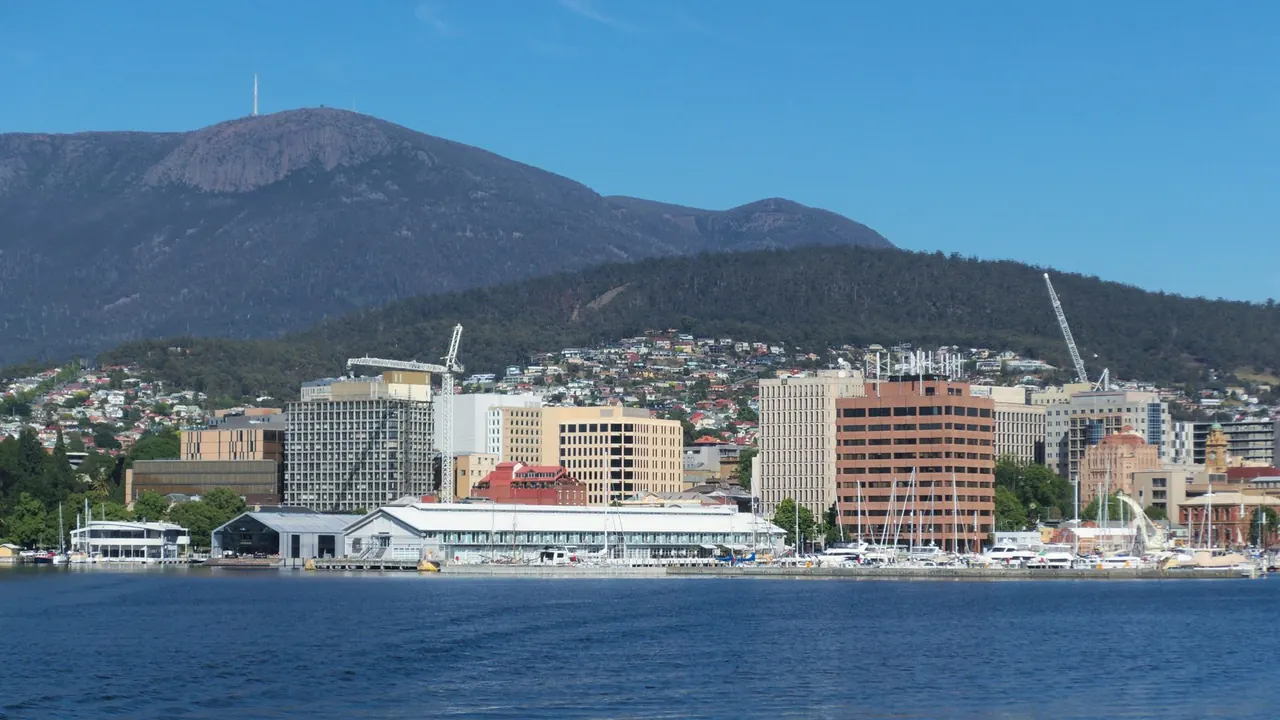
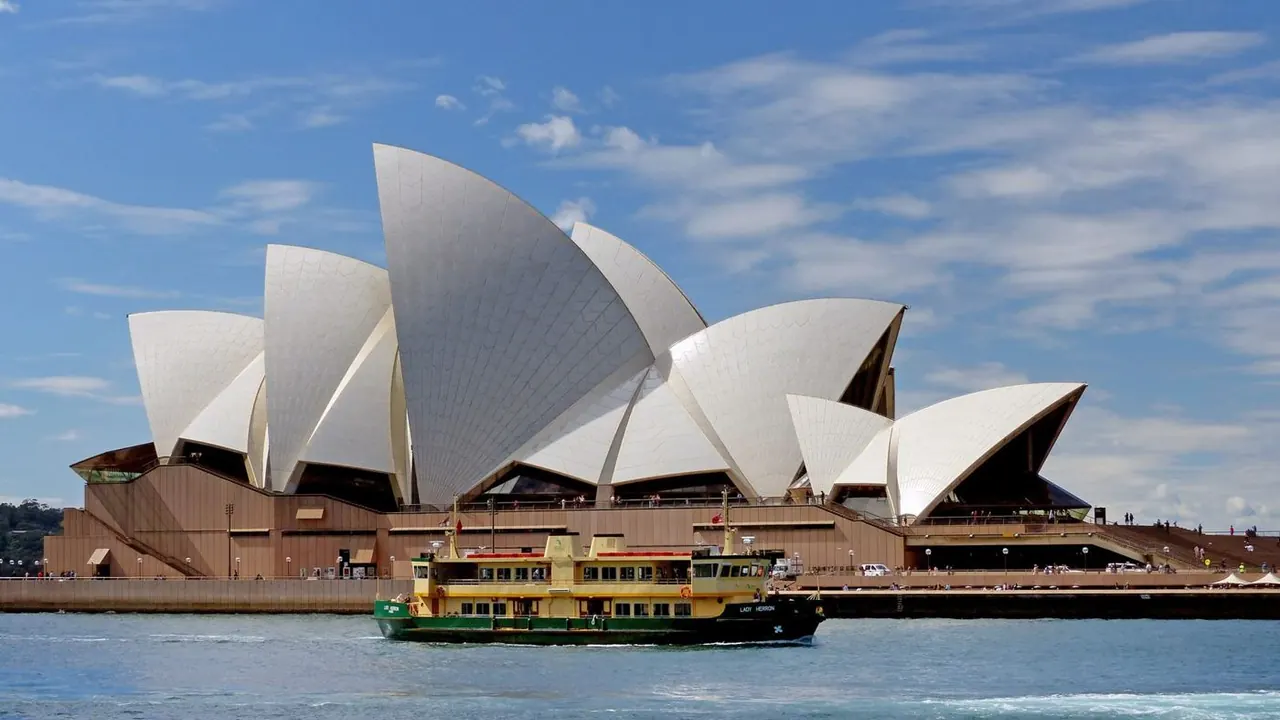
Photos: Hobart by Gary Houston, CC0; Sydney by Bernard Spragg, CC0.
Hobart or Sydney?
Our verdict in twelve categories, each scored against the same fixed benchmark cities, and the climate month by month, so you can choose for your trip.
Choose Hobart for
- prices
- day trips
Hobart suits travellers who want wild country close by and a small, quiet base to come back to. You can walk on kunanyi/Mount Wellington, drive to Port Arthur and Bruny Island, eat oysters with Tasmanian pinot noir or whisky, and spend a day at MONA. The city itself takes a few days. A hire car opens up the rest, and it costs a little less than Sydney. It is best for people who prefer a long dinner to a late night.
Choose Sydney for
- beaches
- nightlife
- getting around
Choose Sydney for a trip built around the water. The surf beaches and harbour coves are good for swimming for much of the year, and the ferries are a way of sightseeing as well as getting about. On top of that you get the Opera House stage, the food of the immigrant suburbs, a wider choice of bars and easy days out with children. It costs more and the countryside within reach is thinner, but the city gives you far more to fill each day.
Scoreboard
Twelve categories on one fixed scale from 0 to 100. The shaded stretch is the gap between the two.
Your match
Pick a travel style or drag the sliders, and both match scores follow your weighting.
Wins on prices and day trips with your weighting.
Wins on beaches and nightlife with your weighting.
What matters to you?
Category by category
What the scores mean for a trip.
Beaches & swimming
This is where the two differ most. Hobart has sand at Sandy Bay, Long Beach, Kingston Beach and Seven Mile Beach. With the water below 18°C even at its warmest, these are places for a walk or a bracing swim.
Sydney is a true beach city. It has ocean surf from Bondi to Coogee and along the Northern Beaches, calm netted coves such as Balmoral inside the harbour, and water warm enough to swim from late spring well into autumn. The surf beaches have rips, so swim between the flags.
Food & drink
Hobart's food comes from the island itself: oysters and mussels, salmon, scallop pies, cheese and summer cherries. Pinot noir and single malt are made a short drive away in the Coal River Valley. The produce is excellent, but there are few restaurants and the range of cuisines is narrow.
Sydney matches it on seafood, with the Pyrmont fish market at its centre, and adds what Hobart cannot. Whole suburbs cook Vietnamese, Lebanese, Indian and Chinese food, the top restaurants are serious, and coffee and brunch are taken seriously too. For a long stay with a different meal every night, Sydney is well ahead.
Culture & sights
The two are fairly even, and both tell the convict story through World Heritage sites. More of Hobart's past survives on its streets, in the 1830s sandstone warehouses of Salamanca Place and the Georgian lanes of Battery Point. It also has MONA, a cliffside museum unlike anything else in Australia.
Sydney's culture is about landmarks and collections in a mostly modern city. The Opera House and Harbour Bridge come first, then The Rocks, Hyde Park Barracks and the Aboriginal art at the Art Gallery of New South Wales. Neither city needs more than a few days.
Nightlife
Hobart's evenings mean pubs, wine bars and whisky bars around Salamanca Place and Elizabeth Street in North Hobart. They are busy at weekends and when the yacht crews arrive at New Year, and quiet the rest of the time.
Sydney has much more choice. There are basement cocktail bars in the CBD, the LGBTQ scene on Oxford Street, and Newtown and Enmore stay out later. Neither is a club city, but in Sydney you have somewhere to go on any night of the week.
Nature & outdoors
Both are excellent for the outdoors, but the landscapes differ. Hobart has a mountain: kunanyi/Mount Wellington rises to about 1,270m straight behind the town. Within a couple of hours are the Tasman Peninsula's sea cliffs and the Three Capes walk, Bruny Island's penguins, the tall forests of Mount Field and the edge of the southwest wilderness.
Sydney's nature is coastal and sunny. There are clifftop walks from Bondi to Coogee, the trails of the Royal National Park, surfing and paddling in the harbour, and whales passing in winter and spring, with the Blue Mountains two hours west. Hobart is cooler and wilder, while in Sydney a walk is easily combined with a swim.
Day trips
Hobart has the better day trips, and they are closer. Port Arthur's convict ruins are about an hour and a half away and Georgian Richmond half an hour. The Huon Valley, the car ferry to Bruny Island and the sandstone towns of the midlands fill more days with orchards, cellar doors and coast.
From Sydney, outings mean longer drives with fewer places at the end. The main ones are the Hunter Valley wineries, the old guesthouse towns of the Blue Mountains and the Southern Highlands, with Parramatta and Newcastle reachable by train. Both cities work best with a car.
Good for families
Hobart is calm and safe with children. The wildlife sanctuaries with Tasmanian devils and wombats, penguin spotting and short forest walks go down well with older children. There is no zoo, aquarium or theme park, though, and the cool weather limits beach days.
Sydney is much easier for families. You can take the ferry to Taronga Zoo, visit the aquarium and board the ships in Darling Harbour, see the Australian Museum's dinosaurs and ride the rides at Luna Park. The netted harbour beaches have gentle water for younger children.
Getting around
Hobart's centre is small enough to walk, from the CBD to Salamanca Place and Battery Point, though the streets climb steeply. The buses are limited, and almost everything outside town needs a hire car.
Sydney is spread much wider, but trains, metro, light rail, buses and ferries all take one tap-on card. The harbour ferries are a sight in themselves. In Sydney you can manage without a car until you leave the city, while in Hobart most visitors rent one early.
Shopping & style
Hobart's shopping is mainly the Saturday Salamanca Market and the warehouse galleries, which sell Huon pine, glass, gin and whisky. Sydney has far more: international flagships around Pitt Street Mall, the Victorian arcades of the Queen Victoria Building and the Strand, Paddington's local designers and a real speciality in Australian swimwear. Go to Hobart for crafts to take home and to Sydney for clothes.
Affordability
Hobart is the cheaper of the two, and most of the saving is on accommodation. Its hotels cost less than Sydney's, although the good waterfront rooms are pricier through summer and around the New Year yacht race. Other costs eat into that saving. Entry to the main sights is not cheap, the buses do little beyond the city, and every outing to the peninsula, the valleys or the national parks adds car hire and fuel.
Sydney's big costs are the harbour and beach hotels, which are dearest in summer and during big events, and eating and drinking out. Getting around costs less than you might expect. Fares are capped, so a ferry or train every day adds little, and you need no car in the city. The beaches, coastal walks, parks and main galleries cost nothing, which narrows the gap. Still, the nightly rate means Sydney comes out dearer overall.
Live music & performing arts
Hobart's stages are few but historic. The Theatre Royal is Australia's oldest working theatre, and the Tasmanian Symphony Orchestra plays on the waterfront. What sets the city apart are the MONA festivals, especially the midwinter one, and a visit works best timed around them.
Sydney has much more on any night. Opera Australia and the Sydney Symphony Orchestra perform at the Opera House, and there is Sydney Theatre Company at Walsh Bay, bold Australian drama at Belvoir, Bangarra's dance and the musicals in the big George Street theatres. You can find a performance without planning your dates around one.
Wellness & relaxation
Hobart offers rest through its slow pace: quiet sandstone streets, clean air, the Botanical Gardens and a few day spas. For anything more, visitors book a lodge or retreat in the countryside.
Sydney has a bathing tradition of its own in the ocean pools cut into the rock at Bondi, Bronte and Coogee. Locals swim there at dawn, and Wylie's Baths and McIver's Ladies Baths keep an unhurried, old-fashioned feel. Korean-style bathhouses add steam and soaking.
When should you go?
Pick your month. The climate figures are measured averages, not a forecast.
Hobart in July
Sydney in July
Daytime high, °C
Rainfall in the month, mm
Temperature and rainfall are climate normals, averaged over the years shown. Hobart: 1991-2020 normals, Hobart (2.3 km from centre). Sydney: 1991-2020 normals, Sydney Airport (3.7 km from centre).
Hobart is at its best in summer. From December to March days reach the low 20s, with a high of around 23°C in January. Days are long and sunny and rain is light, so this is the time for the mountain and the coast. Winter highs are about 13°C, late winter and early spring are the wettest weeks, and there can be snow on the summit. The sea warms to only about 17°C at most, so true beach weather never really arrives.
Sydney is warmer all year, and you can swim there for much longer. The sea stays around 23°C from January to March and is still pleasant into May. Late summer and early winter bring the heaviest rain, with June wettest at about 121mm. August to October is dry and sunny, which makes it the best time for walking. The mild winter is comfortable when Hobart is cold, though the hottest summer days make walking around midday tiring.
Which traveller are you?
For a beach and sun trip, Sydney is the clear choice. The ocean beaches from Bondi to Coogee, Manly's surf and the calm harbour coves all have warm water. Hobart's sea stays too cold for more than a brisk dip after a beach walk.
On a food and nightlife trip, Sydney has far more range. You can eat Vietnamese in Cabramatta, Lebanese in Lakemba or at an ambitious kitchen in Potts Point, then go on to laneway bars or late nights in Newtown. Hobart's produce is superb, but its restaurants are few and close early.
On a tight budget, Hobart is the easier of two expensive cities. Rooms cost somewhat less, and market food, pub meals and cooking with island produce go a long way. The mountain walks are free, though hiring a car takes back some of the saving.
Before you go
| Measure | Hobart | Sydney |
|---|---|---|
| Official language | English | English |
| Currency | Australian Dollar (AUD) | Australian Dollar (AUD) |
| Sockets | I230 V, 50 Hz | I230 V, 50 Hz |
| Driving side | Left | Left |
| Time zone | UTC+10, UTC+11 in summer | UTC+10, UTC+11 in summer |
| Emergency number | 000 | 000 |
| Elevation | 54 m | 6 m |
| Main airport | Hobart International Airport (HBA)17 km from centre9 non-stop destinations | Sydney Kingsford Smith International Airport (SYD)9 km from centre99 non-stop destinations |
| Public holidays this year | 9 days | 11 days |
By the numbers
| Measure | Hobart | Sydney |
|---|---|---|
| City population | 197,451 | 5,450,496 |
| People per km² | 116 | 449 |
| Museums within 10 km | 8 | 38 |
| UNESCO World Heritage sites within 50 km | 1 | 2 |
| Swim season, months above 21 °C | None | 6 months |
Where else could you go?
Every comparison below shares a destination with this one, so you can follow Hobart or Sydney somewhere new.