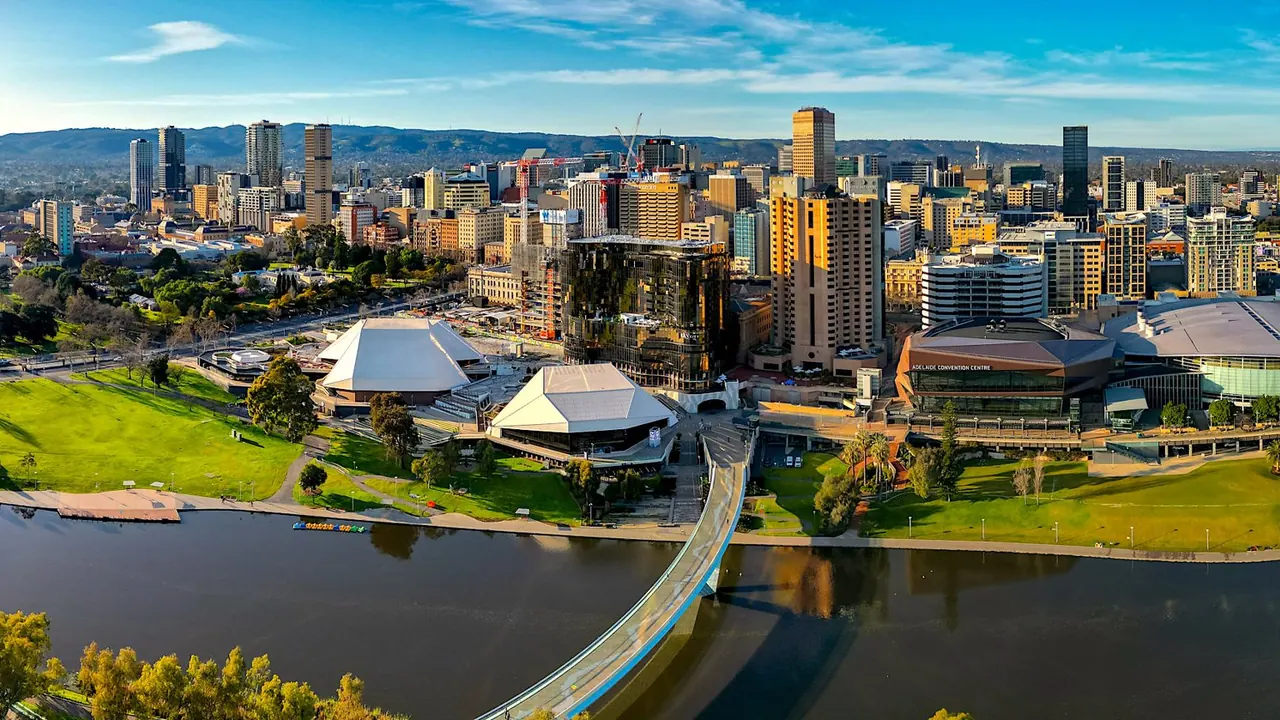
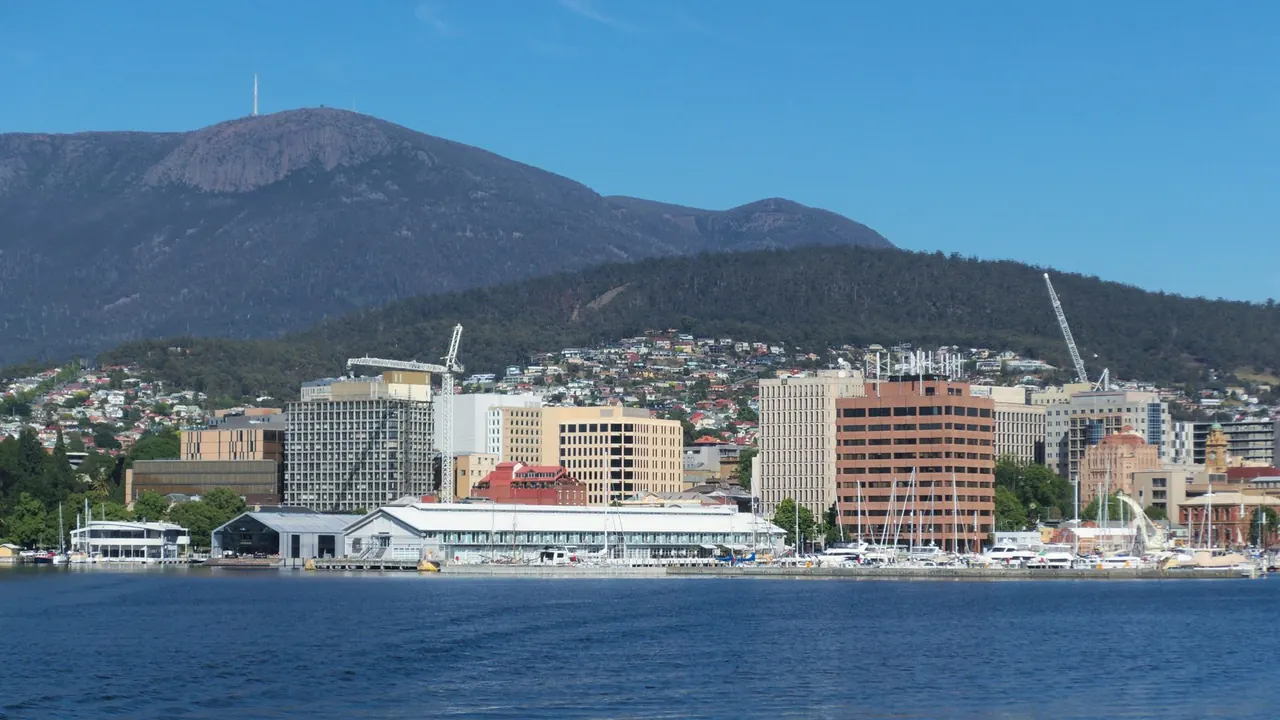
Photos: Adelaide by Ardash Muradian, CC BY-SA 2.0, cropped; Hobart by Gary Houston, CC0.
Adelaide or Hobart?
Our verdict in twelve categories, each scored against the same fixed benchmark cities, and the climate month by month, so you can choose for your trip.
Choose Adelaide for
- beaches
- live music and the arts
- families
Adelaide is the better pick for a warm, easy-going trip built around eating, drinking and the sea. It has calm swimming beaches a tram ride from the centre, a big covered market, and some of Australia's best-known wine country within an hour. In late summer its festivals fill the parklands and stages. Families and anyone who wants sun with little effort will find it the simpler choice.
Choose Hobart for
- nature and the outdoors
- culture and sights
Hobart suits travellers who would rather spend the day on a mountain trail or a sea-cliff walk than on the sand. Its wild landscapes start at the edge of town, its colonial streets are older and more atmospheric, and MONA gives it a museum unlike any other in the country. Expect cool weather, a car for most outings and quiet evenings.
Scoreboard
Twelve categories on one fixed scale from 0 to 100. The shaded stretch is the gap between the two.
Your match
Pick a travel style or drag the sliders, and both match scores follow your weighting.
Wins on beaches and live music and the arts with your weighting.
Wins on nature and the outdoors and culture and sights with your weighting.
What matters to you?
Category by category
What the scores mean for a trip.
Beaches & swimming
Adelaide has the beaches for actual swimming. Sandy shores face west over the sheltered Gulf St Vincent. Glenelg is a tram ride from the centre, and quieter jetty suburbs such as Henley Beach, Brighton and Semaphore run along the same coast. For clearer water, the reef at Port Noarlunga and the coves around Port Willunga are within an hour.
Hobart's bays are just as calm, so the difference between the two cities is the water temperature, not the surf. Sandy Bay, Kingston Beach and the long curve of Seven Mile Beach are good for a walk along the shore or a brisk plunge. In late summer, Adelaide's water is warm enough to spend whole afternoons in.
Food & drink
Adelaide has the broader table. The Central Market and Chinatown sit side by side, Gouger Street and the inner suburbs run from Vietnamese to tasting menus, and wine from the Barossa, McLaren Vale and the Hills is poured everywhere.
Hobart eats very well for its size, with channel oysters, fish and chips from the punts at Constitution Dock, Salamanca Market produce, cool-climate pinot and Tasmanian whisky. But it has fewer kitchens and a narrower range of cuisines. In both cities, plan on dining early.
Culture & sights
Hobart has more to see for its size. The 1830s warehouses of Salamanca Place, the Georgian lanes of Battery Point and the UNESCO-listed Cascades Female Factory give it a stronger sense of colonial history. MONA, reached by ferry up the Derwent, is a museum people do travel for.
Adelaide gathers its culture along North Terrace. The Art Gallery and the South Australian Museum are especially strong on Aboriginal art and objects, and the State Library's Mortlock Wing is worth a look. It is an orderly, attractive set that fills a day or two, but it has no single headline sight.
Nightlife
Neither city is built for late nights, but Adelaide has more going on. It has small wine bars in laneways around Peel and Leigh Streets, pubs and terraces on Rundle Street, and a louder club crowd on Hindley Street at weekends. During the late-summer festivals, pop-up bars fill the parklands.
Going out in Hobart means pubs, wine bars and whisky bars around Salamanca and North Hobart, with almost no clubbing. A long dinner and a dram is the usual evening.
Nature & outdoors
Hobart is far ahead here. kunanyi/Mount Wellington rises straight behind the city, with trails through fern gullies to the dolerite Organ Pipes and mountain-bike descents back into town. Within a couple of hours are the Tasman Peninsula's sea cliffs and the Three Capes walk, Bruny Island's penguins and white wallabies, and the tall forests and waterfalls of Mount Field. Snow can fall on the summit in any month, so walkers carry warm layers even in summer.
Adelaide's outdoors are pleasant but gentle. You can walk up Mount Lofty, follow the gorge and waterfalls at Morialta, spot koalas in the Hills or paddle among the Port River dolphins. Its great wildlife trip is Kangaroo Island, but that needs more than a day.
Day trips
Both cities offer strong day trips, but of different kinds, and you need a car for most of them from either base. From Adelaide the outings are about wine: the Barossa's Lutheran villages, McLaren Vale running down to the sea, the Clare Valley's Riesling and the Prussian-settler street of Hahndorf. Days are spent tasting and lunching.
Hobart's outings lean towards history and island scenery. Port Arthur's convict ruins are the highlight, alongside Georgian Richmond and its old bridge, the orchards and cider makers of the Huon Valley, and the car ferry to Bruny Island for oysters and lighthouse views.
Good for families
Adelaide gives children more to do with less effort. The zoo sits by the Botanic Garden, Cleland lets children get close to kangaroos and koalas, and Monarto has open-range African animals. Glenelg's shallow water and big riverside playgrounds round out an easy, flat city. Only summer heatwave afternoons need planning around.
Hobart's wildlife sanctuaries, with Tasmanian devils and wombats, are a real treat. Beyond those, the city relies on forest walks, penguin spotting and Port Arthur, which work best for older children in good boots, as there is no zoo and few beach days.
Getting around
Adelaide is easier to get around. Its flat grid suits walking and cycling, the city loop bus and the central tram section are free, and the tram runs straight to the beach at Glenelg.
Hobart's centre is compact too, but the streets climb steeply from the water. Its buses are modest, the river ferry to MONA is the most useful link, and the mountain bus is limited. Both cities need a hire car for the countryside, and in Hobart most visitors rent one.
Shopping & style
Adelaide has the wider range, though it is still modest. Rundle Mall has the department stores and old arcades, and King William Road has the boutiques. The best things to take home are South Australian opal, Aboriginal art from desert communities and wine bought at the cellar door.
Hobart's shopping is best on a Saturday, when Salamanca Market fills the waterfront with stalls. Through the week, the craft galleries in the old warehouses sell Huon pine woodwork and local glass, and Tasmanian gin and whisky make good things to take home. If you are shopping for fashion, you will find little in either city.
Affordability
Both cities have Australian prices, and neither is cheap. In Adelaide, the Central Market and Chinatown eateries keep everyday meals reasonable and hotels are easy to find outside the festival weeks, but wine touring adds car hire or tour fees.
Hobart's extra costs come from the car most visitors need, sight entry fees, and rooms that fill through summer and the New Year yacht race. Self-catering with excellent island produce and free walks on the mountain help to balance them.
Live music & performing arts
Adelaide's late summer puts it well ahead. The Fringe fills tents and pubs with comedy and cabaret, the Adelaide Festival brings international theatre and opera, and WOMADelaide takes over Botanic Park. Through the rest of the year the Festival Centre and the Adelaide Symphony Orchestra keep up a steady programme.
Hobart's stages are smaller but have character. The Theatre Royal is Australia's oldest working playhouse, and the Tasmanian Symphony Orchestra plays on the waterfront. The MONA-linked festivals, including one in midwinter, bring experimental work, but on an ordinary night there is little choice.
Wellness & relaxation
Neither city has a bathing tradition, so rest in both comes from the slow pace rather than spas. Adelaide's version is long vineyard lunches, garden strolls in the parklands and retreats in the Hills that pair treatments with wine country.
In Hobart, rest means quiet mornings on the sandstone waterfront and clean, cool air. Some locals swim in the Derwent through winter, and the more restorative stays are in lodges in the surrounding countryside.
When should you go?
Pick your month. The climate figures are measured averages, not a forecast.
Adelaide in July
Hobart in July
Daytime high, °C
Rainfall in the month, mm
Temperature and rainfall are climate normals, averaged over the years shown. Adelaide: 1991-2020 normals, Adelaide (West Terrace / ngayirdapira) (3.1 km from centre). Hobart: 1991-2020 normals, Hobart (2.3 km from centre).
Adelaide has a properly hot summer. Highs reach about 30°C in January and February, which makes midday walking hard work. The sea warms to around 22°C, so December to April is beach season. Winter is cool and noticeably wetter, with the most rain in June and July (about 78mm in June). For walking the streets and the hills, spring and autumn are the most comfortable. Adelaide is also the sunnier of the two all year, and the gap is widest in summer.
Hobart is never hot. Summer highs barely reach 23°C, and the sea stays at 17°C or below even at its warmest, so the beaches are for walks rather than swims. Rain is spread fairly evenly through the year, with late winter a little wetter, and winters are cold. December to March is the best stretch for hiking and the outdoors, which is the same season when Adelaide is often too hot for it.
Which traveller are you?
For a beach and sun trip, Adelaide wins easily. Its sheltered metropolitan beaches, from Glenelg to Semaphore, are warm enough to swim through late summer under long sunny days. In Hobart the water stays too cold for more than a quick dip.
On an outdoors trip, Hobart is the clear choice. You can hike kunanyi/Mount Wellington straight from town, and the Tasman Peninsula's sea cliffs, Bruny Island's wildlife and Mount Field's forests are all close by. Adelaide's hills are pleasant, but much gentler and drier.
On a family trip with young children, Adelaide is easier. It has a zoo, a safari park, calm shallow beaches and big adventure playgrounds, all in a flat, compact city. Hobart's wildlife sanctuaries delight children, but its cool weather and hilly streets work better for older ones.
Before you go
| Measure | Adelaide | Hobart |
|---|---|---|
| Official language | English | English |
| Currency | Australian Dollar (AUD) | Australian Dollar (AUD) |
| Sockets | I230 V, 50 Hz | I230 V, 50 Hz |
| Driving side | Left | Left |
| Time zone | UTC+9:30, UTC+10:30 in summer | UTC+10, UTC+11 in summer |
| Emergency number | 000 | 000 |
| Elevation | 1 m | 54 m |
| Main airport | Adelaide International Airport (ADL)6 km from centre35 non-stop destinations | Hobart International Airport (HBA)17 km from centre9 non-stop destinations |
| Public holidays this year | 12 days | 9 days |
By the numbers
| Measure | Adelaide | Hobart |
|---|---|---|
| City population | 1,387,290 | 197,451 |
| People per km² | 1,071 | 116 |
| Museums within 10 km | 13 | 8 |
| UNESCO World Heritage sites within 50 km | 0 | 1 |
| Swim season, months above 21 °C | 3 months | None |
Where else could you go?
Every comparison below shares a destination with this one, so you can follow Adelaide or Hobart somewhere new.