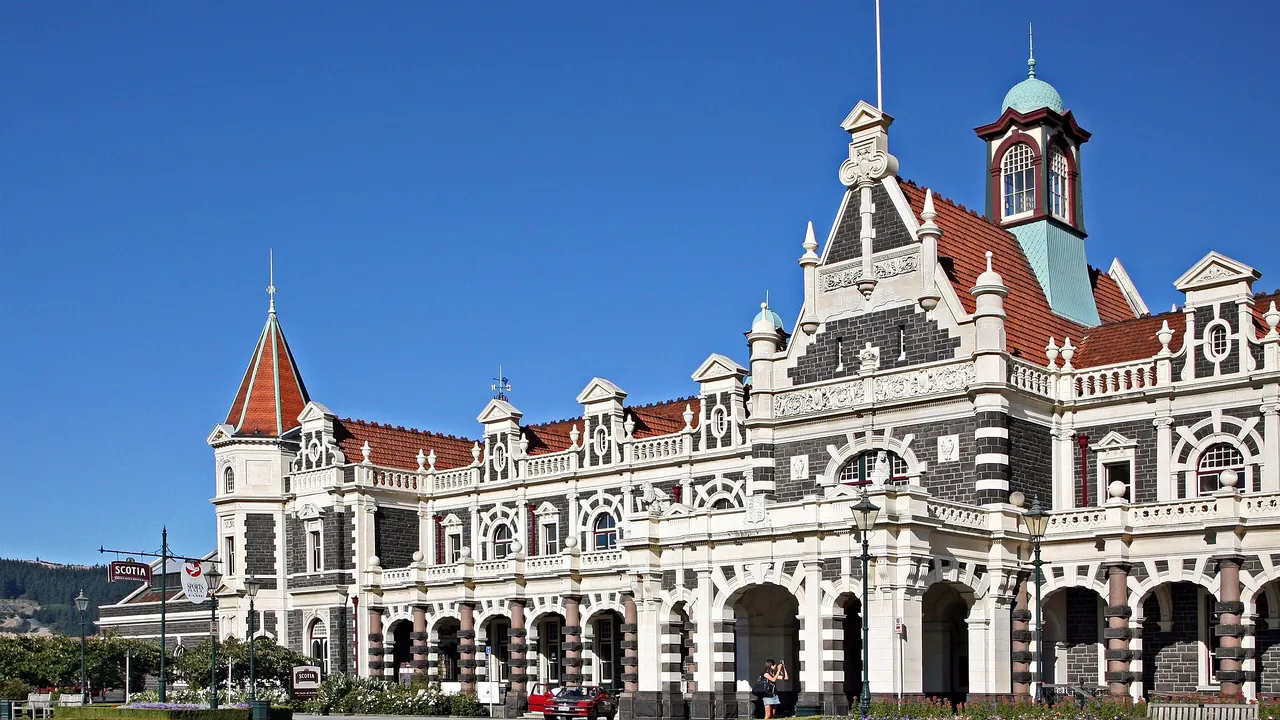
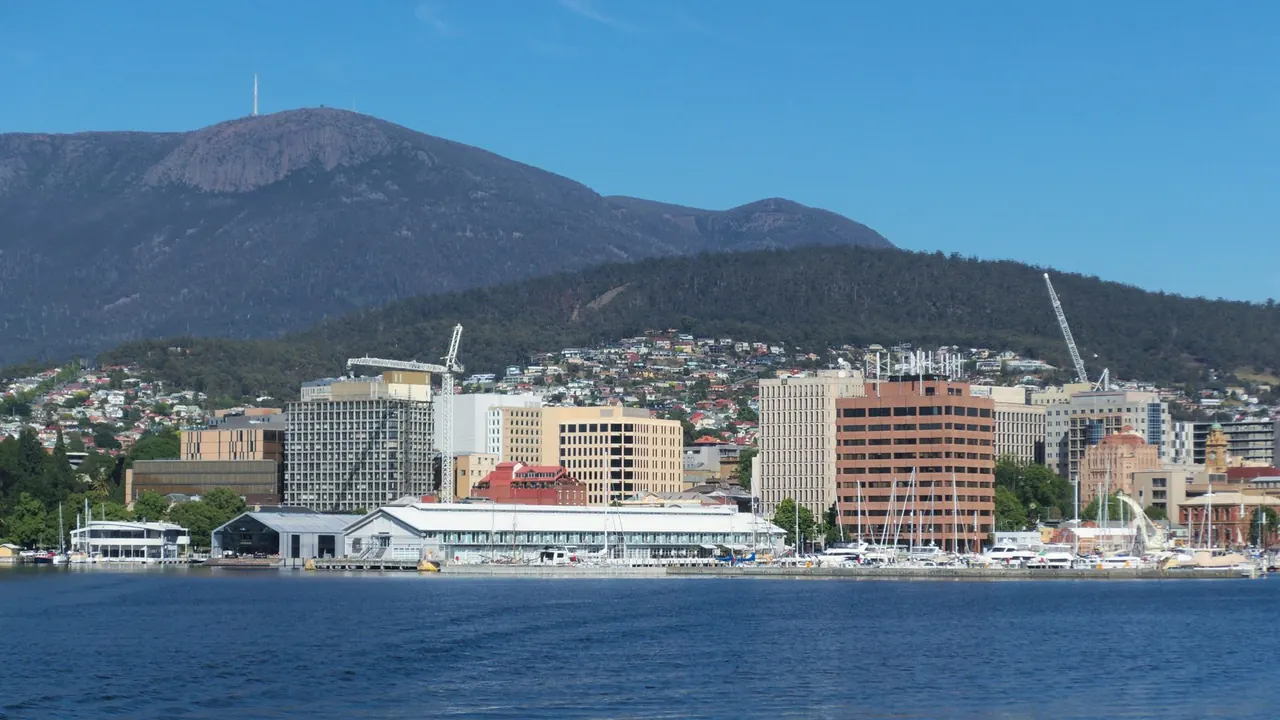
Photos: Dunedin by W. Bulach, CC BY-SA 4.0, cropped; Hobart by Gary Houston, CC0.
Dunedin or Hobart?
Our verdict in twelve categories, each scored against the same fixed benchmark cities, and the climate month by month, so you can choose for your trip.
Choose Dunedin for
- prices
- nightlife
Dunedin suits the traveller who comes mainly for wildlife and wants it on the doorstep. Royal albatross at Taiaroa Head, yellow-eyed penguins at dusk and sea lions on peninsula beaches are all within a short drive of a compact Victorian city that feels unhurried. It is also slightly easier on the wallet, with free museums and cheap student cafés. Expect quiet evenings, modest food and a small arts calendar.
Choose Hobart for
- food and drink
- day trips
- live music and the arts
Hobart is the better pick for a rounded trip that mixes outdoors, eating and a bit of culture. The mountain rises behind the waterfront, Tasmanian oysters, pinot noir and whisky make meals a highlight, and MONA, the Theatre Royal and the symphony give the evenings more to offer. It also has more good day trips, from Port Arthur to Bruny Island, and warmer, sunnier summers.
Scoreboard
Twelve categories on one fixed scale from 0 to 100. The shaded stretch is the gap between the two.
Your match
Pick a travel style or drag the sliders, and both match scores follow your weighting.
Wins on prices and nightlife with your weighting.
Wins on food and drink and day trips with your weighting.
What matters to you?
Category by category
What the scores mean for a trip.
Beaches & swimming
Both cities treat their beaches as places to walk rather than swim, but the shoreline is quite different. Dunedin faces the open Pacific: St Clair and St Kilda form one long surf beach with swell and rips, and the water stays around 14-15°C even in midsummer, so most visitors use the heated saltwater pool at St Clair instead.
Hobart's beaches line the calm Derwent estuary and sheltered bays such as Sandy Bay and Kingston, with Seven Mile Beach for a longer stroll. The water is a few degrees warmer, so a short dip on a warm February day is realistic, which it rarely is in Dunedin.
Food & drink
Hobart is the stronger city for eating. Its meals are built on Tasmanian produce, from channel oysters and salmon to scallop pies and summer berries, and the fish punts at Constitution Dock and Salamanca Market make that produce easy to find. Cool-climate pinot noir, sparkling wine and whisky can be tasted in town or out in the Coal River Valley, and a few ambitious kitchens raise the standard.
Dunedin eats more simply. The Saturday farmers' market by the railway station is its high point, along with blue cod, Bluff oysters in season, the cheese roll and a long brewing tradition, but dinner around the Octagon offers little depth and fine dining is scarce.
Culture & sights
These two are closely matched, and each takes two or three relaxed days, but they tell different colonial stories. Dunedin is a Scottish gold-rush city of Victorian and Edwardian stone, best seen in the railway station, First Church and the university clocktower, with Olveston and Larnach Castle showing private wealth from the inside.
Hobart is older and Georgian, with the sandstone warehouses of Salamanca Place, the cottages of Battery Point and the convict history of the Female Factory. Its trump card is MONA, a provocative museum with nothing like it in Dunedin.
Nightlife
Neither is a place for a big night out, and they are quiet in similar measure. The difference is who sets the tone: in Dunedin it is the students, so George Street and the Octagon fill with late bars and DJs during term and go flat outside it. Hobart's evenings centre on pubs, wine and whisky bars at Salamanca and in North Hobart, at their liveliest around New Year, when yacht crews arrive.
Nature & outdoors
Both cities have outstanding nature close by, and the choice comes down to what you want to see. Dunedin is about wildlife: albatross, yellow-eyed penguins and sea lions on the Otago Peninsula, forest birds at Orokonui, and coastal walks such as Tunnel Beach.
Hobart offers more variety of landscape. kunanyi/Mount Wellington has trails and bike descents straight from town, and within a couple of hours lie the Tasman Peninsula's huge sea cliffs and the Three Capes walk, the waterfalls of Mount Field and the edge of the southwest wilderness.
Day trips
Hobart has the wider choice of outings. Port Arthur's convict ruins make a full and memorable day, Georgian Richmond and its cellar doors are only half an hour away, and the Huon Valley and the ferry to Bruny Island fill further days with orchards, oysters and coastal views.
From Dunedin, Oamaru is the standout, with its white limestone Victorian quarter and blue penguins, plus Moeraki on the way and Port Chalmers close by. Beyond those, the Central Otago gold towns and vineyards involve long drives through mostly empty country.
Good for families
Both are small, safe and easy with children, and both lean on animals rather than theme parks. In Dunedin that means albatross, sea lions and penguin tours, plus the hands-on science centre and butterfly house at Otago Museum, though steep streets are hard going with a pushchair. Hobart's sanctuaries let children see Tasmanian devils and feed kangaroos, and Port Arthur's open grounds work well for older children.
Getting around
Getting around works in much the same way in both: a walkable centre, a modest bus network and a hire car for almost everything outside town. Dunedin's flat valley floor gives way to some very steep streets, and its key sights on the Otago Peninsula sit along winding roads with little transport. Hobart adds a useful ferry up the river to MONA, but the bus up the mountain is limited.
Shopping & style
Hobart has a little more to shop for, mostly thanks to Salamanca Market on Saturdays and the craft galleries in the waterfront warehouses, which sell Huon pine, glass, ceramics, gin and whisky. It is a place for local crafts rather than fashion.
Dunedin's shopping is smaller and quirkier: George Street for everyday needs, local designers in dark, practical clothes, second-hand bookshops, vintage stores and merino knitwear.
Affordability
In Dunedin, most of the money goes on the wildlife you came to see. The guided albatross, penguin and harbour tours and a hire car for the peninsula are the biggest costs, and restaurant meals, drinks and groceries cost as much as anywhere in New Zealand, which is a lot. Rooms go up around graduation and big sports weekends, but the Botanic Garden and the coastal walks out to Tunnel Beach are free.
Hobart works out a touch dearer overall. Restaurant meals, wine and coffee are at Australian prices, and in summer and around the New Year yacht race the waterfront hotels fill up. Car hire and fuel are hard to avoid if Port Arthur or Bruny Island is on the list. Tasmanian produce is where you save: market stalls, pub meals and cooking for yourself keep a stay affordable.
Live music & performing arts
Hobart has the fuller stage. The Theatre Royal, Australia's oldest working theatre, puts on drama and touring shows, the Tasmanian Symphony Orchestra plays a regular season on the waterfront, and the MONA festivals bring experimental music and performance, including a midwinter one that gives the cold months a reason to visit.
Dunedin's claim is the Dunedin Sound, the 1980s indie guitar tradition that still lives on in small venues and pubs, with touring shows at the Regent and orchestral concerts at the Town Hall. Its programme follows the university calendar and is thin outside term.
Wellness & relaxation
For rest, Dunedin has one thing of its own: the heated saltwater pool on the St Clair esplanade, where you swim in warm seawater facing the surf. Beyond that there are only a few day spas and massage studios, and the calm comes from empty streets and slow mornings in the Botanic Garden.
Hobart gives you more to book. Hotel spas and day spas cover the city, and anyone wanting proper time off can stay at a lodge or retreat in the countryside around it. The pace in town is gentle too, with mornings on the waterfront and long lunches.
When should you go?
Pick your month. The climate figures are measured averages, not a forecast.
Dunedin in July
Hobart in July
Daytime high, °C
Rainfall in the month, mm
Where the figures come from
Dunedin has no weather station within reach, so its figures come from a gridded climate model rather than a measured record, and read a broad area rather than the city itself.
Temperature and rainfall are climate normals, averaged over the years shown. Dunedin: 2001-2020 normals, NASA POWER reanalysis grid, no weather station within 90 km. Hobart: 1991-2020 normals, Hobart (2.3 km from centre).
Dunedin stays cool all year. Summer highs reach only about 16°C in January and February, and July days sit around 9°C, so the streets are pleasant for walking in a jacket from December to March and raw in midwinter. Rain falls steadily through the year. Its driest spell is late winter, July to September, but that is also the coldest stretch. The sea never gets much above 14°C, so no month works for the beach.
Hobart runs several degrees warmer, with January highs near 23°C, long sunny days and the sea reaching about 17°C in February, which is enough for a brisk dip in the sheltered bays. February and March are its driest, most settled weeks for walking, and August and September bring the most rain. Winter is cool rather than harsh and milder than Dunedin's. December to March is the best time for outdoor trips in both cities, and in Hobart it is also the sunniest part of the year.
Which traveller are you?
For a food and nightlife trip, Hobart is the clear choice. Oysters, salmon and cherries from around the island, Salamanca Market, cellar doors in the Coal River Valley and whisky bars add up to far more to eat and drink than Dunedin's cafés and craft beer.
On a tight budget, Dunedin comes out slightly ahead. Rooms are among the cheaper ones in New Zealand, student cafés keep casual meals affordable, and Otago Museum, Toitū and the art gallery cost nothing, while Hobart's main sights charge entry.
For wildlife watchers keen on seabirds, Dunedin has something Hobart cannot match: the only mainland breeding colony of royal albatross, at Taiaroa Head, with yellow-eyed penguins and sea lions on the same peninsula, all within a short drive of the city.
Before you go
| Measure | Dunedin | Hobart |
|---|---|---|
| Official language | English, New Zealand Sign Language, Māori | English |
| Currency | New Zealand Dollar (NZD) | Australian Dollar (AUD) |
| Sockets | I230 V, 50 Hz | I230 V, 50 Hz |
| Driving side | Left | Left |
| Time zone | UTC+12, UTC+13 in summer | UTC+10, UTC+11 in summer |
| Emergency number | 111 | 000 |
| Elevation | 19 m | 54 m |
| Main airport | Dunedin International Airport (DUD)24 km from centre4 non-stop destinations | Hobart International Airport (HBA)17 km from centre9 non-stop destinations |
| Public holidays this year | 12 days | 9 days |
By the numbers
| Measure | Dunedin | Hobart |
|---|---|---|
| City population | 106,200 | 197,451 |
| People per km² | 32 | 116 |
| Museums within 10 km | 11 | 8 |
| UNESCO World Heritage sites within 50 km | 0 | 1 |
| Swim season, months above 21 °C | None | None |
Where else could you go?
Every comparison below shares a destination with this one, so you can follow Dunedin or Hobart somewhere new.
- Queenstownvs Dunedin
- Christchurchvs Dunedin
- Melbournevs Hobart
- Wellingtonvs Dunedin
- Canberravs Hobart
- Rotoruavs Dunedin