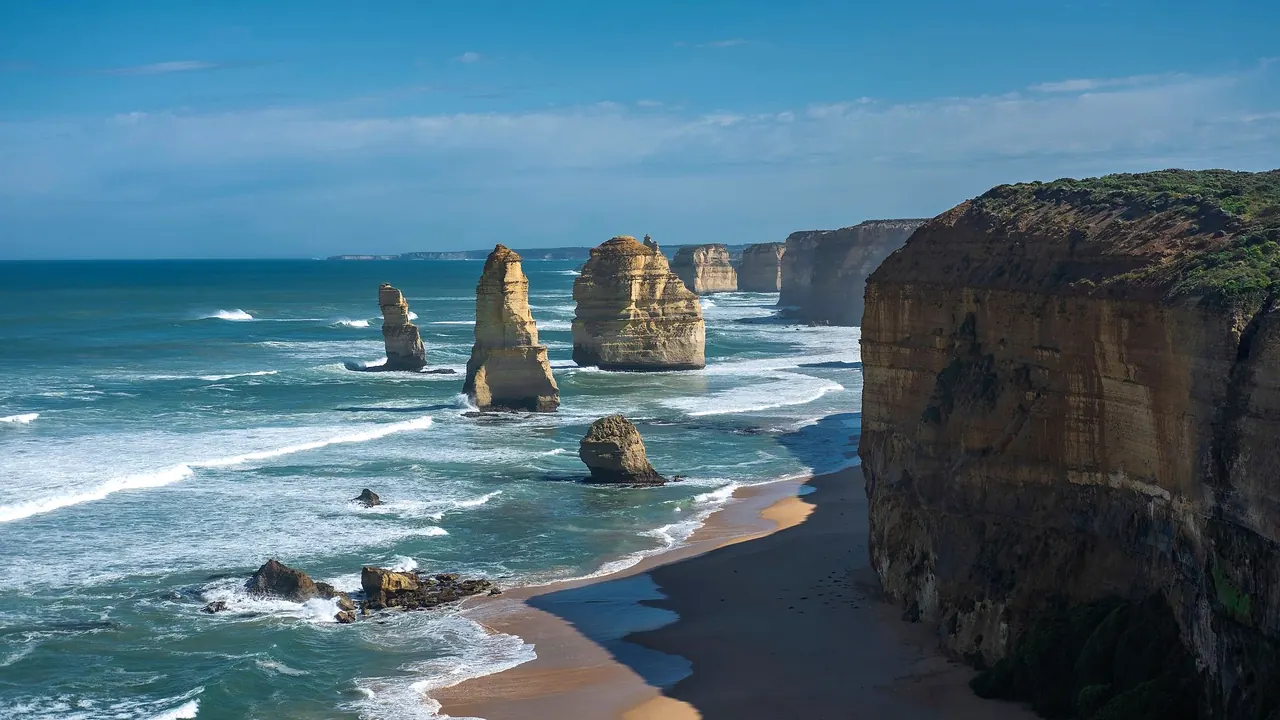
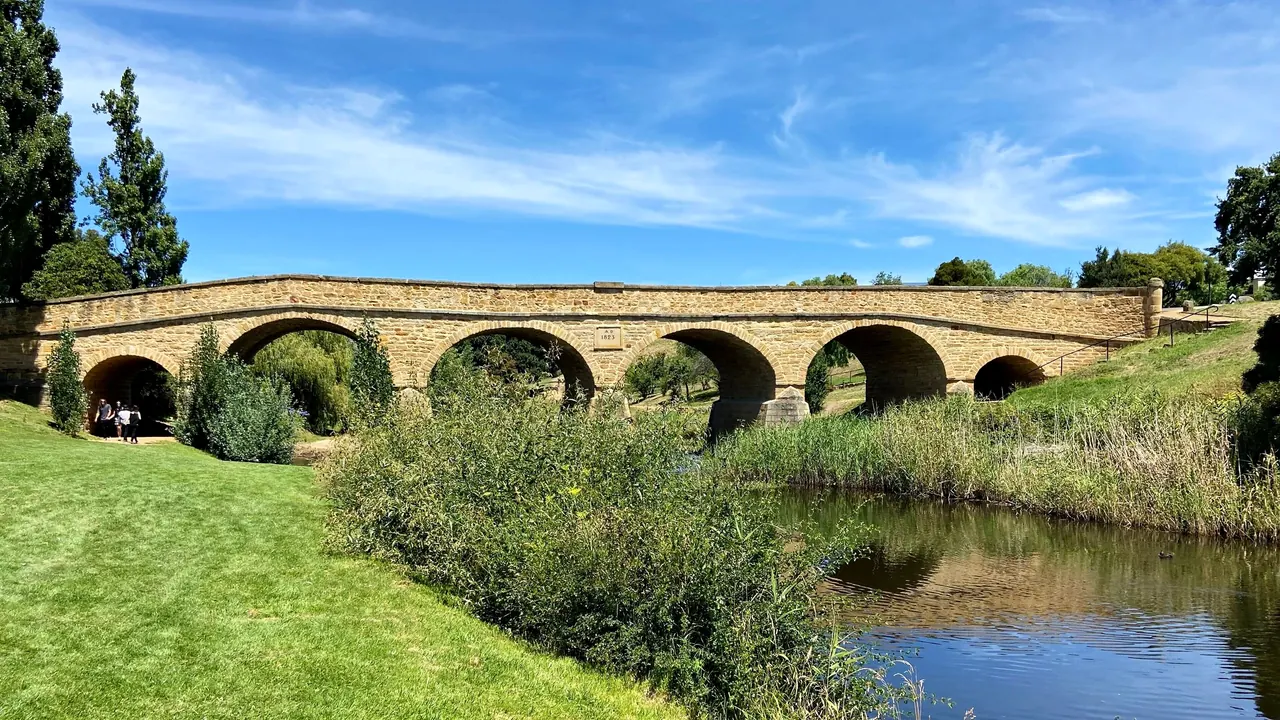
Photos: Great Ocean Road by Joe Kent, Pexels License; Tasmania by jacobharrisau, CC BY-SA 2.0, cropped.
Great Ocean Road or Tasmania?
Our verdict in twelve categories, each scored against the same fixed benchmark cities, and the climate month by month, so you can choose for your trip.
Choose Great Ocean Road for
- beaches
- families
The Great Ocean Road suits a shorter coastal road trip out of Melbourne. That means a few nights split between surf towns such as Torquay, Lorne and Apollo Bay, swimming at patrolled beaches, and the limestone stacks of the Shipwreck Coast at dusk. Pick it if time in the sea matters to you, or if you want it as part of a wider Victoria trip. Expect quiet evenings and little to see indoors.
Choose Tasmania for
- culture and sights
- food and drink
- nightlife
Choose Tasmania for a longer, fuller trip where wilderness, food and history all matter. Cradle Mountain, Freycinet and the Three Capes give it grander walking. MONA and Port Arthur are real sights, and with Hobart's oysters, pinot noir and Salamanca market, every evening is worth planning. The trade-off is distance: there is a whole island to cross by car, and the sea is better for looking at than for swimming in.
Scoreboard
Twelve categories on one fixed scale from 0 to 100. The shaded stretch is the gap between the two.
Your match
Pick a travel style or drag the sliders, and both match scores follow your weighting.
Wins on beaches and families with your weighting.
Wins on culture and sights and food and drink with your weighting.
What matters to you?
Category by category
What the scores mean for a trip.
Beaches & swimming
Both coasts face cold southern water, but the Great Ocean Road is the easier place for an actual beach day. Its towns are built around patrolled sand at Torquay's Front Beach, Anglesea, Lorne and Apollo Bay, where families stay between the flags all day. The surf at Bells Beach and Jan Juc is a draw in its own right.
Tasmania's beaches are the more beautiful: the curve of Wineglass Bay, and the orange-lichened boulders and white sand of the Bay of Fires. But the sea off the east coast is brisk even in February, and cooler still near Hobart. These are beaches for a walk in a fleece rather than an afternoon in the water.
Food & drink
Food is one of the reasons to go to Tasmania, but only a pleasant extra on the Great Ocean Road. The coast has good brunch cafés in Lorne, Torquay and Apollo Bay, fish and chips on the foreshore, and a few farm-driven restaurants and breweries in the Otway hinterland. Choice thins quickly between the towns, and around the Apostles the food is aimed at tour coaches.
Tasmania names the bay its oysters came from and the farm behind its beef, and it has two real dining cities in Hobart and Launceston. Add the Saturday market at Salamanca, cellar doors in the Tamar and Coal River valleys, and a whisky tradition, and meals become a reason for the trip in their own right.
Culture & sights
Tasmania has far more to see. MONA, cut into its sandstone cliff on the Derwent, could fill a day on its own. The penal ruins at Port Arthur and the island's other UNESCO-listed convict sites tell a story told this well nowhere else in Australia, and Battery Point, Richmond and Ross keep their Georgian and colonial streets.
The Great Ocean Road's history is narrower. There is the road itself as a war memorial, Cape Otway Lightstation, the shipwreck stories at Flagstaff Hill and Port Fairy's bluestone cottages. They make enjoyable stops on a drive, but they are not a reason to choose it.
Nightlife
Neither is a place for big nights out, but Tasmania at least has a city. Hobart's sandstone pubs around Salamanca and the bars along Elizabeth Street in North Hobart fill up at weekends until about midnight. On the Great Ocean Road, only Torquay and Lorne get busy, and then only on summer weekends and at New Year. Further west, the local hotel bar is all there is.
Nature & outdoors
Both are among Australia's great landscapes, and the difference is scale. The Great Ocean Road is one superb strip of coast and forest: the Twelve Apostles and Loch Ard Gorge at dawn, the tree ferns and waterfalls of the Otways, koalas at Kennett River, and southern right whales calving off Warrnambool in winter. The Great Ocean Walk links much of it.
Tasmania has more of everything, and wilder versions of it. About a fifth of the island is World Heritage wilderness, from Cradle Mountain and the six-day Overland Track to the pink granite of Freycinet and the sea cliffs of the Three Capes. Devils, wombats, platypus and penguins give it a wider range of wildlife.
Day trips
The Great Ocean Road's outings lead to bigger places, while Tasmania's lead to small ones with plenty of character. From Torquay, Melbourne is about an hour and a half away and Geelong's waterfront less than half an hour, and the Bellarine Peninsula adds Queenscliff's Victorian-era fort and cool-climate wineries. At the western end, the Aboriginal eel traps of Budj Bim, older than the pyramids, are about an hour inland. Between the two ends there is little beyond forest and coast.
Tasmania's day trips mix produce, colonial history and short sea crossings. From Hobart, the ferry to Bruny Island leads to oysters, cheese and a lighthouse, the Huon Valley has orchards and cider, and Maria Island makes a full day of wombats and convict ruins. Around Launceston, the Tamar Valley wine route and the Georgian villages of Evandale and Longford are all within an hour.
Good for families
Both suit families who are happy with beaches, wildlife and short walks rather than theme parks, and both ask children to put up with winding drives and cold water. The Great Ocean Road keeps things simpler: one town such as Anglesea or Apollo Bay, a caravan park or beach house near a patrolled beach, and surf lessons at Torquay.
Tasmania has fewer beach days but more animals. There are devil and wombat sanctuaries, penguins coming ashore at dusk, and Launceston's Cataract Gorge with its pool and chairlift. Easy walks like the one around Dove Lake suit young legs.
Getting around
Both need a hire car, but Tasmania is the easier one to drive. Its roads are well kept and traffic is light, Hobart's centre and Battery Point are easy on foot, and a ferry runs up the Derwent to MONA. The catch is the long drives out to Cradle Mountain or Freycinet.
The Great Ocean Road is a single winding route. The tight bends between Lorne and Apollo Bay and summer queues behind caravans and coaches slow everything down, and the regional coach is too sparse to rely on. Spread it over two or three nights rather than squeezing it into a one-day tour.
Shopping & style
Shopping is a sideline in both places, though Tasmania has more to bring home. The Salamanca Saturday market sells Huon pine woodwork, knitwear and ceramics, and farm gates add leatherwood honey, cheese, wine and whisky. On the Great Ocean Road, the one real draw is the strip of surfwear outlets in Torquay, where several big Australian surf brands began.
Affordability
Walking the Great Ocean Road's lookouts and national park trails costs nothing, while Tasmania's national parks need a pass. Otherwise the bills look much the same: high summer room rates, Australian restaurant prices, and a hire car and fuel that neither trip can do without.
On the coast, caravan parks, campgrounds and roadside motels keep costs down, and so does avoiding Easter and the school vacations, when Lorne and Torquay fill up. In Tasmania, rooms near Freycinet and Cradle Mountain are scarce in summer, so the savings come from self-catering cabins, farm-gate picnics and a visit in spring or autumn.
Live music & performing arts
Tasmania has a modest but real stage, all in Hobart and Launceston. There is the Tasmanian Symphony Orchestra at the Federation Concert Hall, the Theatre Royal (Australia's oldest working theatre), and a winter programme led by the Festival of Voices in July and the midwinter solstice season.
The Great Ocean Road has one notable event, the Port Fairy Folk Festival over a long weekend in March. Otherwise there is a pub band in Torquay or Lorne on summer weekends, and for anything more you go to Geelong or Melbourne.
Wellness & relaxation
The Great Ocean Road has a few day spas in Lorne and Torquay and not much else in the way of treatments. Tasmania adds spas at its upmarket lodges and the only natural warm water in either place, the forest thermal pool at Hastings Caves. On the coast, the real rest comes out of season, with empty beaches, yoga retreats in the Otway hinterland and forest cabins with fires in winter.
Tasmania's slow days combine long walks with good food and early nights, and around Hobart, winter sea swims and wood-fired saunas by the water have a following. Neither place has a bathing tradition to build a trip around.
When should you go?
Pick your month. The climate figures are measured averages, not a forecast.
Great Ocean Road in July
Tasmania in July
Daytime high, °C
Rainfall in the month, mm
Temperature and rainfall are climate normals, averaged over the years shown. Great Ocean Road: 1991-2020 normals, Aireys Inlet (12.2 km from centre). Tasmania: 1991-2020 normals, Hobart (3 km from centre).
Both are at their warmest from January to March. Then the Great Ocean Road reaches about 24°C and its sea peaks near 19°C, which is warm enough for a swim at the patrolled town beaches. Tasmania, measured where most visitors stay, runs about a degree cooler on land and a couple of degrees cooler in the water, so a swim there is a brisk dip. It does have long, bright summer days, with the most sunshine in December and January. April is still mild for walking in both places.
Winter is cool rather than cold, around 13°C by day in July in both. The Great Ocean Road is wetter then, with July and August its rainiest months. Tasmania's rain is spread more evenly through the year and only rises in late winter and early spring, and its winter days are short on sun. Neither place ever gets too hot for walking. The thing to plan for in both is wind and fast-changing weather, and on Tasmania's highlands, snow in any month.
Which traveller are you?
On a beach and sun trip, the Great Ocean Road is the better choice. Lorne, Anglesea and Apollo Bay have patrolled beaches made for a whole day between the flags, the summer sea is slightly warmer, and Bells Beach and Jan Juc are there for surfers.
For a culture and arts trip, Tasmania wins clearly. MONA, the convict ruins at Port Arthur, the Cascades Female Factory and Hobart's Georgian streets fill several days. The Great Ocean Road has a lighthouse, a maritime village and Port Fairy's cottages.
On a food and nightlife trip, Tasmania again. You get oysters and salmon from named bays, cellar doors pouring pinot noir, a single malt tradition, and Hobart's waterfront pubs for the evenings. The Great Ocean Road eats well enough, but it goes quiet after dinner.
Before you go
| Measure | Great Ocean Road | Tasmania |
|---|---|---|
| Official language | English | English |
| Currency | Australian Dollar (AUD) | Australian Dollar (AUD) |
| Sockets | I230 V, 50 Hz | I230 V, 50 Hz |
| Driving side | Left | Left |
| Time zone | UTC+10, UTC+11 in summer | UTC+10, UTC+11 in summer |
| Emergency number | 000 | 000 |
| Main airport | Melbourne Airport (MEL)70 non-stop destinations | Hobart International Airport (HBA)9 non-stop destinations |
| Public holidays this year | 13 days | 9 days |
By the numbers
| Measure | Great Ocean Road | Tasmania |
|---|---|---|
| Population | - | 539,590 |
| Swim season, months above 21 °C | None | None |
Where else could you go?
Every comparison below shares a destination with this one, so you can follow Great Ocean Road or Tasmania somewhere new.
- Kangaroo Islandvs Great Ocean Road
- Blue Mountainsvs Great Ocean Road
- Blue Mountainsvs Tasmania
- Kangaroo Islandvs Tasmania
- South Islandvs Tasmania
- North Islandvs Tasmania