North Island or Tasmania?
Our verdict in twelve categories, each scored against the same fixed benchmark cities, and the climate month by month, so you can choose for your trip.
Choose North Island for
- wellness
- beaches
- families
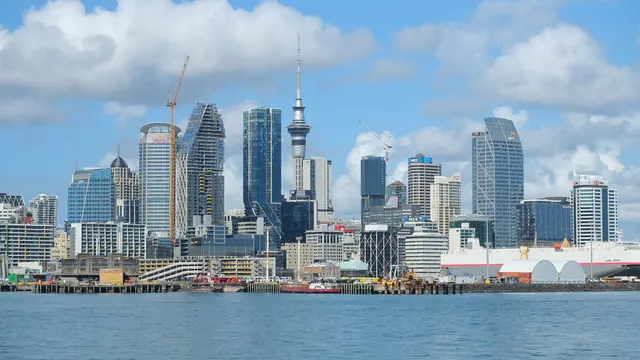
North Island suits travellers who want summer warmth and variety in one trip: swimmable beaches on the Coromandel and in the Bay of Islands, geothermal pools around Rotorua and Taupo, and two real cities with nights out, concerts and Maori culture. It is the easier choice with children and the obvious one if soaking in hot water is part of the plan.
Choose Tasmania for
- food and drink
- culture and sights
- nature and the outdoors
Tasmania is for walkers, wildlife watchers and people who travel to eat well. Its wilderness is wilder, its convict sites and MONA give it a sharper sense of history and art, and its oysters, pinot and whisky are the point of many drives. Come for long days outdoors and slow dinners, not for swimming or late nights.
Scoreboard
Twelve categories on one fixed scale from 0 to 100. The shaded stretch is the gap between the two.
Your match
Pick a travel style or drag the sliders, and both match scores follow your weighting.
Wins on wellness and beaches with your weighting.
Wins on food and drink and culture and sights with your weighting.
What matters to you?
Category by category
What the scores mean for a trip.
Beaches & swimming
North Island is a genuine beach destination in summer. The sheltered coves of the Bay of Islands, Cathedral Cove and Hahei on the Coromandel and the town beach at Mount Maunganui sit in water warm enough to stay in, and the black-sand surf of Piha and Muriwai adds drama for those who swim between the flags.
Tasmania's east coast is arguably as beautiful, with Wineglass Bay and the lichen-red boulders of the Bay of Fires, but the sea there is several degrees colder. These are beaches to walk and photograph, with a brisk dip on a hot day, rather than places to spend an afternoon in the water.
Food & drink
Tasmania eats better, and the reason is the produce. Menus name the bay the oysters came from, the Salamanca market and Hobart's waterfront fish punts are part of a day out, and the Tamar and Coal River valleys add cool-climate pinot, sparkling wine and single malt whisky.
North Island's strength is range rather than depth: Auckland's dumpling houses on Dominion Road and Pacific markets give it the cheap, casual eating Tasmania lacks, Wellington runs on coffee and craft beer, and Hawke's Bay reds and a Rotorua hangi are good reasons to travel. Away from the cities, though, choice thins quickly.
Culture & sights
Tasmania has the more absorbing sights. MONA's cliffside galleries, the ruined penal settlement at Port Arthur and the Georgian streets of Battery Point and Salamanca make convict history and contemporary art the core of a visit, and villages such as Richmond and Ross keep their sandstone bridges.
North Island's heritage is younger and more spread out, but it has Te Papa and the Auckland War Memorial Museum for Maori and Pacific collections, the treaty grounds at Waitangi and Napier's Art Deco centre. Its distinctive offer is Maori culture as a living practice, seen at Whakarewarewa in Rotorua.
Nightlife
North Island gives a better night out, simply because it has two cities with a scene. Karangahape Road in Auckland stays late with bars and small clubs, while Wellington's Cuba Street and Courtenay Place fill up at weekends.
Tasmania's nightlife is essentially Hobart's sandstone pubs and wine bars around Salamanca and North Hobart, and most evenings wind down around midnight. Elsewhere on the island a night out means a winery dinner or the local hotel bar.
Nature & outdoors
Both islands are superb outdoors, but Tasmania's wilderness is larger and wilder. Cradle Mountain, the six-day Overland Track, the dolerite peaks and the sea cliffs of the Three Capes walk feel remote, and wildlife is everywhere, from Tasmanian devils and wombats on Maria Island to platypus and penguins at dusk.
North Island's landscape is volcanic rather than glacial: the Tongariro Alpine Crossing past steaming vents, the caldera lake at Taupo and the glowworm caves at Waitomo. It also has things Tasmania does not, such as diving at the Poor Knights Islands and winter skiing on Ruapehu.
Day trips
Day trips are about equally good, and on both islands they lead to small places rather than major sights. North Island's outings are more varied in kind: a ferry to Waiheke's vineyards, the Hobbiton set near Matamata, Napier's Art Deco streets or Martinborough's wineries from Wellington.
Tasmania's are more about food and old villages. From Hobart, Bruny Island's oysters and cheese, the Huon Valley's orchards and colonial Richmond are all close, and Launceston has the Tamar wine route and the Georgian towns of Evandale and Longford within an hour.
Good for families
North Island is the stronger family choice. Rotorua alone has geysers, bubbling mud, a gondola, luge rides and kiwi, Waitomo and Hobbiton are within reach, and Te Papa and Zealandia make Wellington easy with children. Motels and campgrounds with shared kitchens suit families everywhere.
Tasmania appeals to children mostly through its animals, with sanctuaries for devils and kangaroos, penguins coming ashore at dusk and the chairlift at Launceston's Cataract Gorge. The cold sea and the hours on winding roads make it harder going for younger children.
Getting around
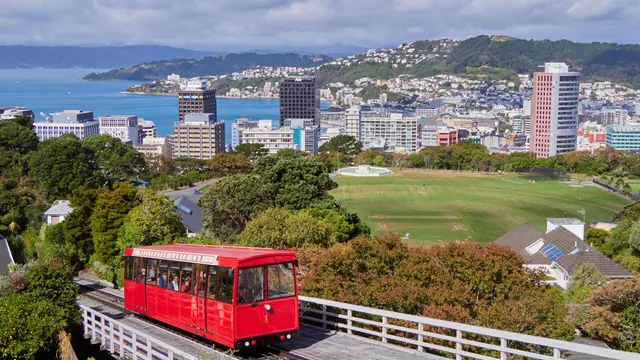
On both islands a hire car is the only practical way to see the country, roads are quiet, and winding routes stretch journeys beyond what the map suggests. The difference is scale: North Island's distances are longer, with Auckland to Wellington a long day, though it has coaches and a scenic train between the two cities and walkable Wellington at one end.
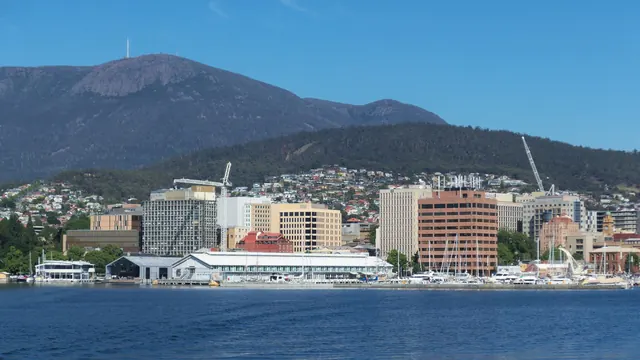
Tasmania is smaller, so Hobart to Freycinet or Launceston takes a couple of hours, but its buses miss almost every national park. Hobart's centre is easy on foot, with a ferry up the Derwent to MONA, and night driving means watching for wallabies and wombats.
Shopping & style
Neither island is a shopping destination, but North Island offers more. Auckland's Britomart, Newmarket and Ponsonby Road have local designer labels and boutiques, and pounamu pendants, Maori carving and merino-possum knitwear are worthwhile things to take home.
Tasmania's shopping comes down to the Saturday market at Salamanca Place, with Huon pine woodwork, ceramics and knitwear, plus leatherwood honey, cheese and whisky bought at farm gates. Beyond that, town-centre shops are ordinary.
Affordability
Both are expensive places to travel, with car hire, eating out and busy summer accommodation adding up on either island. Self-catering in cabins and campgrounds is the main way to save on both.
What differs is the paid extras. On North Island, the caves, the film set and the geothermal parks charge entry, but the big museums, beaches and several hot pools near Taupo are free. Tasmania requires park passes for its national parks, and travelling in spring or autumn eases the cost of rooms.
Live music & performing arts
North Island has the fuller stage. Wellington is home to the national symphony orchestra and the national ballet, Auckland has the national opera company and the restored Civic Theatre, and kapa haka performances in Rotorua and at Waitangi offer a tradition found nowhere else.
Tasmania's programme centres on Hobart, where the Tasmanian Symphony Orchestra plays on the waterfront and the Theatre Royal has staged shows since 1837. Its arts calendar peaks in midwinter, when the Festival of Voices and the solstice season fill the city, while for the rest of the year there is something on most weekends.
Wellness & relaxation
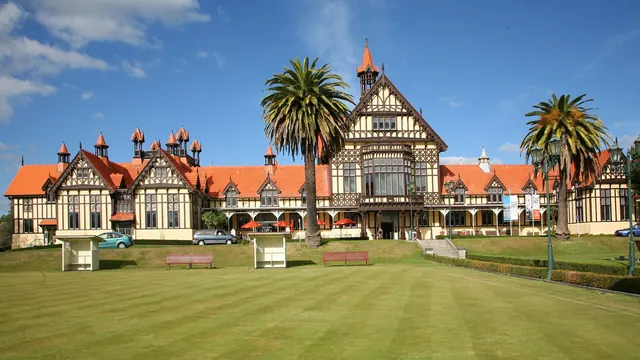
This is where the two differ most. North Island has a true bathing culture: Rotorua's lakeside mineral pools and mud baths, free thermal streams around Taupo, the open-air springs at Waikite Valley and digging your own pool at Hot Water Beach.
Tasmania relaxes through its pace instead, with quiet towns, long walks and good food. Spa treatments are mostly in upmarket lodges at Cradle Mountain and Freycinet, and the only natural warm water is the forest pool at Hastings Caves, while wood-fired saunas by the water around Hobart offer a different kind of soak.
When should you go?
Pick your month. The climate figures are measured averages, not a forecast.
North Island in July
Tasmania in July
Daytime high, °C
Rainfall in the month, mm
Temperature and rainfall are climate normals, averaged over the years shown. North Island: 1961-1990 (sunshine 1981-2010, rainfall 1991-2020) normals, Auckland Aerodrome Aws (17.2 km from centre). Tasmania: 1991-2020 normals, Hobart (3 km from centre).
North Island's summer, from December to March, is the beach season. Days are warm, the sea in the north and east is at its mildest at around 21°C in February and March, and January is the sunniest month. From May to September the island turns wet, with well over 100mm of rain a month, though it rarely gets cold enough to stop a city walk. April and October to November are mild and quieter, fine for hiking and hot pools.
Tasmania is a little cooler all year and much drier, with steady, modest rainfall rather than a wet season. Summer is bright and sunny, ideal for walking, but the sea stays cold, reaching only about 17°C at its warmest. Winter days of around 13°C are cold and short, though still dry enough for touring. Spring and autumn suit walkers well, while North Island is the better bet if swimming matters.
Which traveller are you?
On a relaxing and wellness trip, North Island wins. Days can be built around hot water: a morning soak, a slow lakeside afternoon, another pool at dusk. Tasmania relaxes through quiet towns and early nights, its spas mostly in lodges.
On a family trip with children, North Island is the easier pick. One base can fill most of a week, and summer days can end in the sea. In Tasmania, animal encounters come between long drives, better for older children.
For an outdoors trip, North Island suits a mixed itinerary, a volcano one day, kayaking or diving the next. Tasmania has the edge, though: you can spend days on foot in true wilderness, with animals around camp at dusk.
Before you go
| Measure | North Island | Tasmania |
|---|---|---|
| Official language | English, New Zealand Sign Language, Māori | English |
| Currency | New Zealand Dollar (NZD) | Australian Dollar (AUD) |
| Sockets | I230 V, 50 Hz | I230 V, 50 Hz |
| Driving side | Left | Left |
| Time zone | UTC+12, UTC+13 in summer | UTC+10, UTC+11 in summer |
| Emergency number | 111 | 000 |
| Main airport | Auckland International Airport (AKL)63 non-stop destinations | Hobart International Airport (HBA)9 non-stop destinations |
| Public holidays this year | 12 days | 9 days |
By the numbers
| Measure | North Island | Tasmania |
|---|---|---|
| Population | 3,519,800 | 539,590 |
| Swim season, months above 21 °C | 1 month | None |
Where else could you go?
Every comparison below shares a destination with this one, so you can follow North Island or Tasmania somewhere new.