South Island or Tasmania?
Our verdict in twelve categories, each scored against the same fixed benchmark cities, and the climate month by month, so you can choose for your trip.
Choose South Island for
- families
- wellness
- nature and the outdoors
Choose the South Island for landscape on a grand scale and for a trip built around doing things in it. The Southern Alps, the glaciers, Fiordland and the lakes around Queenstown and Wanaka give it the bigger mountain experience, with skiing in winter, and it is the easier of the two with children and the better for soaking in hot pools at Hanmer Springs or Tekapo. Expect long drives between highlights.
Choose Tasmania for
- culture and sights
- food and drink
- live music and the arts
Tasmania is the better pick for travellers who want wilderness and wildlife with more to see and eat between the walks. MONA, Port Arthur and the Georgian streets of Hobart give it a cultural side the South Island lacks, and its oysters, whisky and cool-climate wines make the food a reason to go. The island is smaller and drier, so a week covers more of it.
Scoreboard
Twelve categories on one fixed scale from 0 to 100. The shaded stretch is the gap between the two.
Your match
Pick a travel style or drag the sliders, and both match scores follow your weighting.
Too close to call, level with your weighting
Wins on families and wellness with your weighting.
Wins on culture and sights and food and drink with your weighting.
What matters to you?
Category by category
What the scores mean for a trip.
Beaches & swimming
Neither island is a beach trip, and the two are close, but they suit different uses. On the South Island the swimming is at the northern tip. Kaiteriteri, the Abel Tasman coves and Golden Bay have sheltered, slightly warmer water, and Nelson's sunshine makes a good base.
Tasmania's beaches are better to look at, with the curve of Wineglass Bay and the white sand and orange boulders of the Bay of Fires. The water off the east coast is colder, though, so expect a quick dip followed by a walk along the sand in a fleece.
Food & drink
Both islands eat from cold, clean water and cool-climate vines, but Tasmania gets more onto the plate. Menus name the farm or bay the food came from, Hobart has the Salamanca market and fish punts on the waterfront, Launceston has serious restaurants, and single malt whisky and cider sit alongside the pinot and sparkling wine.
The South Island's strength is its wine regions more than its restaurants. Lunch at a Marlborough or Central Otago cellar door, roadside crayfish at Kaikoura and Bluff oysters are the highlights. Outside Queenstown and Christchurch, small towns can mean pub meals and fish and chips.
Culture & sights
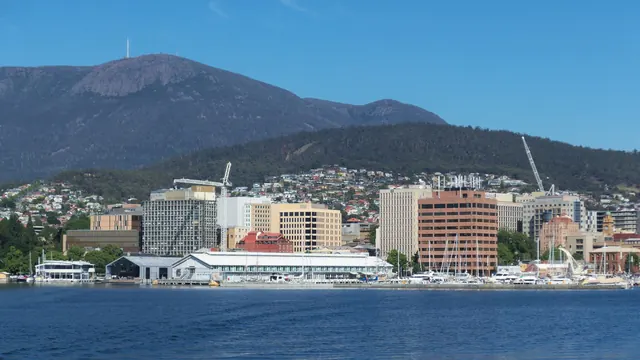
Tasmania is well ahead here. MONA, cut into its cliff above the Derwent, is a reason to fly in by itself, and the convict story runs through Port Arthur, the Cascades Female Factory and the estates near Longford. Hobart's Battery Point and Salamanca warehouses are some of Australia's finest Georgian streets.
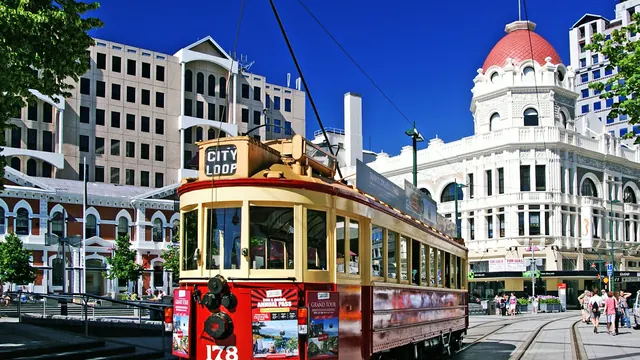
The South Island has pleasant colonial heritage rather than major sights: Dunedin's railway station and university quadrangle, Oamaru's limestone harbour quarter, and Christchurch's museums in a centre reshaped by the earthquakes. These make good stops on a road trip but are not worth planning around.
Nightlife
Both are quiet at night, and the difference is in where the late nights happen. On the South Island it is Queenstown, where skiers, backpackers and adventure-sport visitors keep the lakeside bars busy late in both winter and summer, with Dunedin's student pubs as a smaller second. Tasmania's going out centres on the old sandstone pubs and wine bars of Salamanca and North Hobart, which suit an evening out but mostly close around midnight.
Nature & outdoors
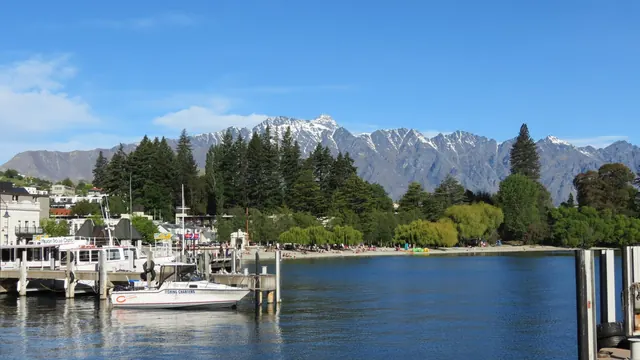
Both are among the world's great wild places, but they feel different. The South Island is about scale: the Southern Alps rising to Aoraki/Mount Cook, the turquoise lakes Tekapo and Pukaki, glaciers on the West Coast, the fiords of Milford and Doubtful Sounds, and skiing from June to October.
Tasmania packs its wilderness closer together. The Overland Track runs through rainforest and beneath dolerite peaks from Cradle Mountain, the Three Capes walk follows high sea cliffs, and Hobart has trails on kunanyi/Mount Wellington right behind the town. Wildlife is plentiful: wombats and pademelons are common, while devils are seen mostly in sanctuaries and platypus take patience at dawn or dusk.
Day trips
On both islands the day trips go to small places, but Tasmania's are closer together and more varied. From Hobart, Richmond is half an hour away, and the Bruny Island ferry, the Huon Valley orchards and Maria Island fill whole days. Launceston has Georgian villages and the Tamar wine route within an hour.
The South Island's day trips cover more ground: Arrowtown and the Gibbston Valley vineyards from Queenstown, or Akaroa and Hanmer Springs from Christchurch. Most of the long drives are to landscapes rather than towns.
Good for families
The South Island is the easier choice with children. It has campgrounds with playgrounds and kitchens, the gondola and luge in Queenstown, boat trips to see dolphins from Kaikoura and Akaroa, and the Antarctic Centre and Orana Wildlife Park in Christchurch.
Tasmania's main draw for children is its animals: the wildlife sanctuaries, penguins coming ashore at dusk, and the chairlift and pool at Cataract Gorge. But it has fewer attractions built for families, and the sea is too cold for long beach days. Neither island has a theme park, and both involve long hours in the car.
Getting around
Both islands need a hire car or campervan, and both have winding roads that take longer than the map suggests. The South Island covers more distance: Christchurch to Queenstown takes most of a day, and Milford Sound is four hours from Queenstown each way. Without a car, its intercity coaches and the TranzAlpine train give you a little more to work with.
Tasmania is more compact, though Cradle Mountain is still four hours or more from Hobart, and buses miss most of the parks. A ferry up the Derwent to MONA is the one easy trip without a car.
Shopping & style
Neither island is a place for serious shopping, and both are best for things made locally. The South Island's buys are merino and possum-merino knitwear, outdoor gear in Queenstown, and pounamu carved in Hokitika's workshops. Tasmania's highlight is the Saturday market at Salamanca Place, with woodwork in Huon pine and ceramics, and its cellar doors and farm gates sell leatherwood honey, cheese and whisky to take home.
Affordability
Both are expensive, and the costs come from similar places: rooms in high season, eating out, and a hire car for the whole trip. On the South Island the bill rises most with the paid excursions, such as fiord cruises, scenic flights and jet boats, and around Queenstown at its peak.
Tasmania adds park passes, and rooms near Freycinet and Cradle Mountain are scarce in summer. On either island, cabins, campsites and self-catering bring costs down, and the scenery is free to walk into.
Live music & performing arts
Neither island is a place to plan around performances, but Tasmania offers a bit more. The Tasmanian Symphony Orchestra plays on Hobart's waterfront, the Theatre Royal has staged shows since 1837, and the arts season peaks in midwinter with choirs and fire-lit performance.
On the South Island, live performance comes mostly from Christchurch's orchestra and the Isaac Theatre Royal, plus Dunedin's indie gigs in the student quarter.
Wellness & relaxation
The South Island has the hot water. Hanmer Springs has been built around its thermal pools since the late nineteenth century, the pools at Tekapo look out over the lake and the night sky, and Franz Josef and Maruia add pools in rainforest and beech forest.
Tasmania's relaxation comes more from its slow pace and lodge spas at Cradle Mountain and Freycinet. Its only thermal pool, at Hastings Caves, is warm rather than hot, though cold sea swims and saunas by the water are popular around Hobart.
When should you go?
Pick your month. The climate figures are measured averages, not a forecast.
South Island in July
Tasmania in July
Daytime high, °C
Rainfall in the month, mm
Where the figures come from
South Island has no weather station within reach, so its figures come from a gridded climate model rather than a measured record, and read a broad area rather than one spot.
Temperature and rainfall are climate normals, averaged over the years shown. South Island: 1991-2020 normals, TerraClimate 4 km grid at the town, no weather station within 90 km. Tasmania: 1991-2020 normals, Hobart (3 km from centre).
The South Island figures come from one measuring point, and the island varies a lot. The West Coast and Fiordland are much wetter, and the mountains are colder. At that point summer is short and cool, with highs of about 20°C in January and February. January to March is the time for the high tracks and a few beach days around Nelson. Rain falls in every month and is heaviest in spring, with close to 200mm in September. June to October is the ski season, and the days are cold for walking around town.
Tasmania's figures also come from one point, where most visitors stay in the south east. There the year is milder at both ends, with highs of about 23°C in January and in the low teens through winter. Rain is lighter than at the South Island point, and the long sunny days run from October to March. The west coast is far wetter, though, and the highlands around Cradle Mountain are colder, with snow possible in any month. Even at its warmest the sea reaches only about 17°C, so summer is for walking with the odd brisk dip. Winter is the greyest season, but around Hobart it is rarely too cold to explore on foot.
Which traveller are you?
On a culture and arts trip, choose Tasmania and spend most nights in Hobart, where the state museum, the Theatre Royal and the symphony are all within easy reach. Then drive north to Launceston through Richmond, Ross and Oatlands, stopping for their sandstone bridges and churches.
On a family trip with young children, the South Island is easier to plan around. Choose two or three bases, perhaps a city and a lake town, and take day outings from each instead of moving on every night. Tasmania suits older children who enjoy walks and spotting animals.
On a relaxing and wellness trip, the South Island lets you plan soaks into the route. Spend a couple of nights in an alpine spa village, and finish long days in the mountains in a hot pool. In Tasmania, slowing down means a quiet lodge, early nights and good food.
Before you go
| Measure | South Island | Tasmania |
|---|---|---|
| Official language | English, New Zealand Sign Language, Māori | English |
| Currency | New Zealand Dollar (NZD) | Australian Dollar (AUD) |
| Sockets | I230 V, 50 Hz | I230 V, 50 Hz |
| Driving side | Left | Left |
| Time zone | UTC+12, UTC+13 in summer | UTC+10, UTC+11 in summer |
| Emergency number | 111 | 000 |
| Main airport | Queenstown Airport (ZQN)7 non-stop destinations | Hobart International Airport (HBA)9 non-stop destinations |
| Public holidays this year | 12 days | 9 days |
By the numbers
| Measure | South Island | Tasmania |
|---|---|---|
| Population | 1,115,800 | 539,590 |
| Swim season, months above 21 °C | - | None |
Where else could you go?
Every comparison below shares a destination with this one, so you can follow South Island or Tasmania somewhere new.