New Zealand
Queenstown
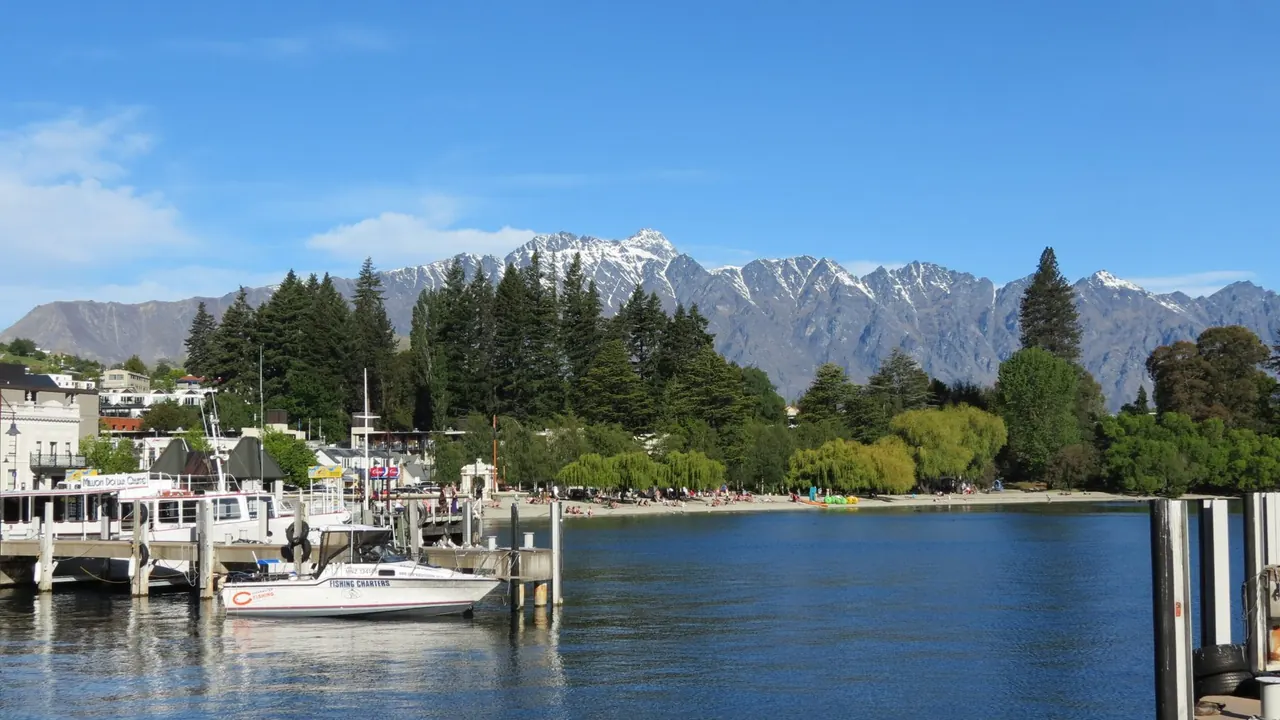
The wharf at Queenstown with the Remarkables behind
- Nature & outdoors97
- Families60
- Day trips50
Photo: Robert Linsdell, CC BY 2.0, cropped
Match
40
Every category weighted equally
- Beach & sun40
- Culture & arts34
- Food & nightlife35
- Family trip43
- Outdoors48
- Relax & unwind42
- Shopping & style37
- On a budget37
Queenstown in twelve categories
Our verdict on each, scored 0 to 100 against the same fixed benchmark cities, so a score means the same thing on every page.
Beaches & swimming. Scores 20 out of 100.
Food & drink. Scores 45 out of 100.
Culture & sights. Scores 12 out of 100.
Nightlife. Scores 42 out of 100.
Nature & outdoors. Scores 97 out of 100.
Day trips. Scores 50 out of 100.
Good for families. Scores 60 out of 100.
Getting around. Scores 45 out of 100.
Shopping & style. Scores 28 out of 100.
Affordability. Scores 20 out of 100.
Live music & performing arts. Scores 14 out of 100.
Wellness & relaxation. Scores 42 out of 100.
Queenstown category by category
Beaches & swimming
20Queenstown has no sea, and its lake is cold. Lake Wakatipu is deep and fed by snowmelt, so even in late summer the water is seldom much above 12°C. People swim, but it is a short, bracing plunge rather than a long swim. On warm days the small shingle beach on Queenstown Bay and the lakeshore at Frankton fill with sunbathers, and jumping off the town jetty is a local habit.
For gentler water, smaller, shallower lakes such as Lake Hayes and Moke Lake warm up more in January and February. Beach life is a pleasant summer extra here. Nobody plans a stay around it.
Food & drink
45For a town this size there are a lot of places to eat, because it lives on visitors all year. The lakefront and the lanes off the Mall have gourmet burger counters, pie shops, bakeries, ramen and Asian kitchens, and smart restaurants with lamb, venison and South Island seafood on the menu. Expect queues at the best-known casual spots, and resort prices nearly everywhere.
Wine is the real draw. Gibbston Valley, a short drive up the Kawarau Gorge, is the heart of Central Otago pinot noir, and its cellar doors and winery restaurants make a long lunch in the vines easy. There is no distinct local cuisine, and the range is narrow beyond comfort food and polished lodge-style dining.
Culture & sights
12Queenstown is a resort town built for the landscape, and there is little to see inside it. The most memorable historic sight is the TSS Earnslaw, a coal-fired steamship from 1912 that still crosses the lake. The centre also has a handful of stone buildings from the 1860s gold rush, the lakeside Queenstown Gardens and the view from the gondola on Bob's Peak. There is no museum of real weight in town. The gold-rush history is told better in nearby Arrowtown, and someone who measures a trip in museums and monuments will be done in a morning.
Nightlife
42Queenstown goes out much more than its size suggests. Young seasonal workers, backpackers and skiers fill the pubs, cocktail bars and dance bars packed into the few blocks around Shotover, Camp and Searle streets, and on a winter Saturday the centre stays loud well past midnight. Après-ski in winter and long light evenings on lakefront terraces in summer give the two seasons different moods.
It is still a small town. The scene is mostly drinking and DJ bars rather than real club culture, and after a couple of nights you have seen most of it. Groups and people in their twenties will enjoy it most.
Nature & outdoors
97This is the reason people come. The town sits on the shore of Lake Wakatipu, a long glacial lake, under the jagged Remarkables, and the outdoors starts at the edge of the streets. Walkers climb Ben Lomond or Queenstown Hill from town, drive the lake road to Glenorchy for the Routeburn Track and the valleys of Mount Aspiring National Park, or ride the cycle trails through the Kawarau and Gibbston gorges. The gondola gives access to steep mountain bike tracks, and jet boats race through the narrow canyons of the Shotover River.
Commercial bungy jumping began at the Kawarau Bridge in 1988, and the paragliding, canyon swinging and skydiving that followed are all based here. In winter Coronet Peak and the Remarkables are a short drive away, with Cardrona and Treble Cone beyond. Autumn brings gold poplars and clear, still days, and Milford Sound is a long but famous day out.
Day trips
50The best short outing is Arrowtown, about twenty minutes away. It is a gold-rush village of tree-lined streets, miners' cottages and a restored Chinese settlement, and it is at its best in autumn colour. Wanaka, about an hour over the Crown Range, is a quieter lake town with its own wineries and cafés. The Gibbston Valley and the orchard and vineyard country around Cromwell and Bannockburn make easy wine days, and the old goldfields towns of Clyde and Alexandra lie a little further on.
Beyond those, the list gets thin. Glenorchy and Fiordland are trips for scenery rather than towns, and Milford Sound is a long day of three to four hours each way.
Good for families
60Queenstown is safe, compact and relaxed, and many of its attractions work for children. The gondola up Bob's Peak and the luge tracks at the top are the classic family outing, and a small wildlife park beside the gondola base shows kiwi and other native birds. Families can also take jet-boat rides, cruise the lake on the old steamship, play in the lakeside gardens and playgrounds, and swim at the indoor pool complex in Frankton. In winter, Coronet Peak and Cardrona both run good ski schools.
The catch is that the bungy jumps, swings and skydives the town is known for have age and weight limits. Long drives to the bigger sights also wear on young children.
Getting around
45The town centre is tiny and easy to walk, with the lakefront, the gondola, the gardens and most restaurants within a few minutes of each other. Local buses run out to Frankton, the airport, Arrowtown and the lakeside suburbs, and a water taxi crosses the lake to Frankton. Ski shuttles and tour pickups cover the mountains and the adventure activities.
Beyond that, a car makes a real difference. Wineries, Glenorchy, Wanaka and the trailheads are spread along winding roads, and an independent visitor will want to drive. The Frankton road is the single route into town and backs up at busy times. Mountain roads in winter call for care and sometimes chains.
Shopping & style
28Shopping in Queenstown means outdoor gear and New Zealand goods. The pedestrian Mall and the lanes around it have specialist ski, bike and hiking shops, merino and possum-wool knitwear, greenstone jewellery, a few art galleries showing local landscape painting, and plenty of souvenir shops. On summer weekends a lakefront craft market sets up beside the wharf. Frankton has the everyday malls and supermarkets. There is little fashion or design beyond this, and nobody comes to shop.
Affordability
20Queenstown is an expensive place to stay. Rooms cost more than elsewhere in the country, especially in the ski season, over Christmas and in late summer, and restaurant meals and drinks carry resort prices. The bigger cost is the activities that are the reason to come: bungy jumps, jet boats, scenic flights, guided walks and lift passes add up quickly.
Hostels, self-catering apartments with kitchens, the supermarkets in Frankton and the many free walks and trails all help. Even so, this is a town to budget for carefully.
Live music & performing arts
14Performing arts play little part in a Queenstown stay. Most evenings, live music means a covers band or acoustic set in a pub or après bar. A modest community hall and an events centre host occasional touring comedians, bands and local productions, and the winter festival brings street performances and concerts for a few days. There is no opera, orchestra or regular theatre season.
Wellness & relaxation
42Queenstown has no geothermal springs and no bathing tradition of its own. The way to unwind here is a private cedar hot tub on a hillside above the Shotover River, a soak after a day on the slopes, or a massage at one of the lodge and resort spas around the lake and out towards Arrowtown. Early mornings on the Wakatipu shore, slow afternoons in Arrowtown's tree-lined streets and the quiet of Glenorchy at the head of the lake all give calm.
The town itself is built around adrenaline. Its streets fill with tour buses and adventure bookings, so anyone wanting a truly slow vacation will be happier staying outside the centre.
When should you go?
Pick a month to see what it is like. The climate figures are measured averages, not a forecast.
Queenstown in July
Daytime high, °C
Rainfall in the month, mm
The whole year
Shaded against this city’s own year: the deepest cell is its best month for that figure and the palest its weakest.
Where the figures come from
Queenstown has no weather station within reach, so its figures come from a gridded climate model rather than a measured record, and read a broad area rather than the city itself.
Temperature and rainfall are climate normals, averaged over the years shown. Queenstown: 1991-2020 normals, TerraClimate 4 km grid at the town, no weather station within 90 km.
Before you go
| Measure | Queenstown |
|---|---|
| Official language | English, New Zealand Sign Language, Māori |
| Currency | New Zealand Dollar (NZD) |
| Sockets | I230 V, 50 Hz |
| Driving side | Left |
| Time zone | UTC+12, UTC+13 in summer |
| Emergency number | 111 |
| Elevation | 324 m |
| Main airport | Queenstown Airport (ZQN)7 km from centre7 non-stop destinations |
| Public holidays this year | 12 days |
By the numbers
| Measure | Queenstown |
|---|---|
| City population | 29,000 |
| Museums within 10 km | 0 |
| UNESCO World Heritage sites within 50 km | 0 |
Compare Queenstown with
Every comparison with a written verdict behind it.