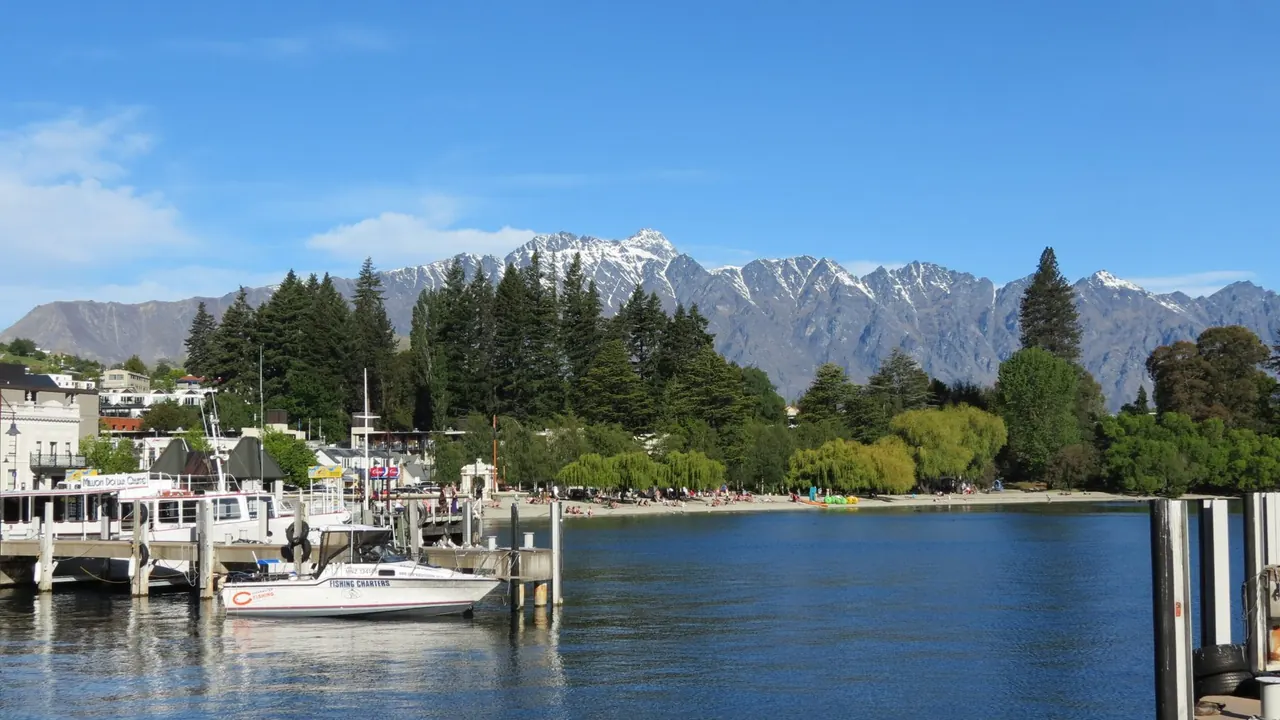
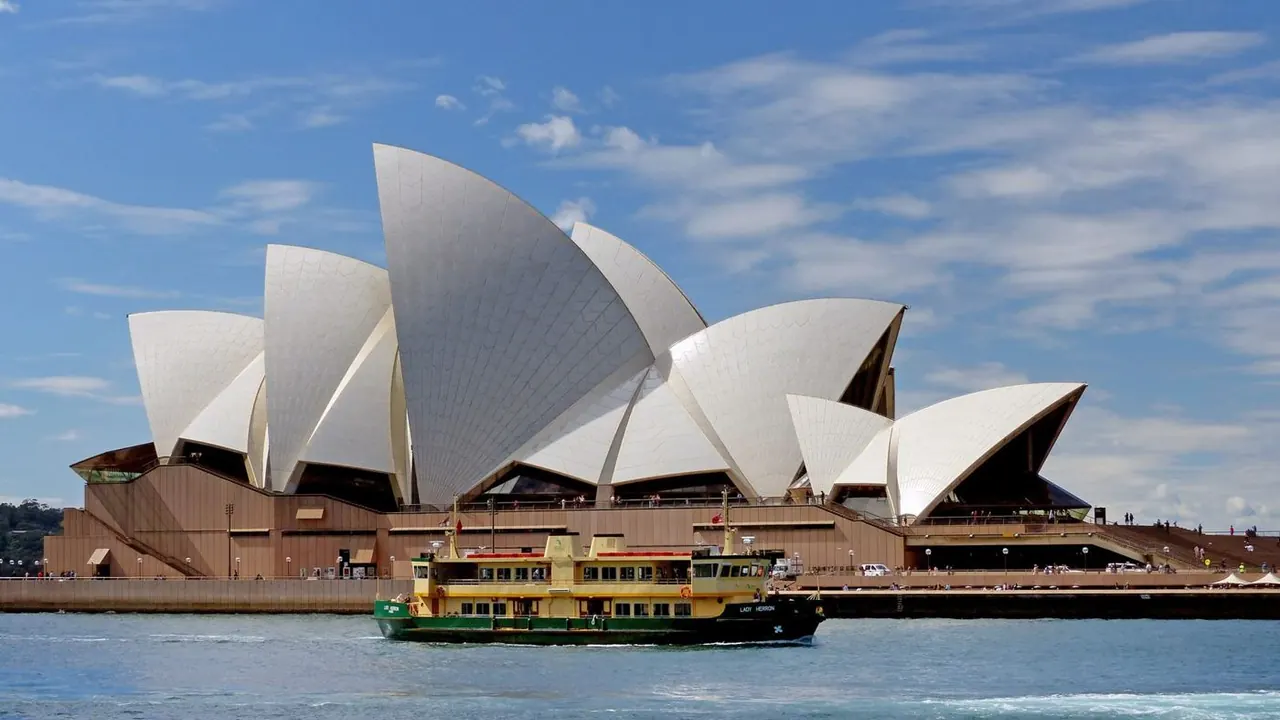
Photos: Queenstown by Robert Linsdell, CC BY 2.0, cropped; Sydney by Bernard Spragg, CC0.
Queenstown or Sydney?
Our verdict in twelve categories, each scored against the same fixed benchmark cities, and the climate month by month, so you can choose for your trip.
Choose Queenstown for
- nature and the outdoors
Queenstown is the choice for a trip built around mountains and adrenaline. The walks start at the edge of town, the Routeburn Track and the valleys of Mount Aspiring are up the Glenorchy road, and bungy and jet boats fill the summer while Coronet Peak and the Remarkables take over in winter. Evenings are lively for a small town and Gibbston's pinot noir is close by. Indoors there is very little to see, and you will see far more of the area with a car.
Choose Sydney for
- beaches
- live music and the arts
- culture and sights
Pick Sydney if you want a city that does several things well at once. It has surf beaches and calm harbour coves, an arts calendar centred on the Opera House, food from many immigrant neighbourhoods, and ferries that make getting about a pleasure. The outdoors is good there too, with clifftop walks and the Royal National Park, but it has no high mountains and nothing like Queenstown's range of adventure sports.
Scoreboard
Twelve categories on one fixed scale from 0 to 100. The shaded stretch is the gap between the two.
Your match
Pick a travel style or drag the sliders, and both match scores follow your weighting.
Wins on nature and the outdoors with your weighting.
Wins on beaches and live music and the arts with your weighting.
What matters to you?
Category by category
What the scores mean for a trip.
Beaches & swimming
Queenstown has a lakeshore rather than a beach. Lake Wakatipu stays so cold that a swim means a quick plunge off the town jetty or from the shingle on Queenstown Bay. Lake Hayes and Moke Lake are warmer in January and February, but sunbathing here is a summer extra, not a reason to go.
Sydney is one of the world's great beach cities. Ocean beaches run from Bondi to Coogee, Manly and the Northern Beaches are a ferry ride away, and harbour coves such as Balmoral and Camp Cove have calmer water. The sea stays warm into autumn, so you can fit a beach day into almost any week of a summer stay.
Food & drink
Queenstown has more places to eat than its size suggests: burger counters, pie shops and lodge-style restaurants serving lamb and venison. Its real strength is Central Otago pinot noir, poured at the cellar doors of Gibbston Valley. Beyond that the choice is narrow.
Sydney offers far more. There are oysters and prawns from the harbour and the Pyrmont fish market, Vietnamese food in Cabramatta, Lebanese in Lakemba, Indian in Harris Park, and serious fine dining in Surry Hills and Potts Point. Neither place has a cuisine of its own and both are dear, but Sydney can keep a keen eater interested for days.
Culture & sights
Queenstown has few sights. There is the 1912 steamship TSS Earnslaw, a handful of stone buildings from the gold rush and the view from the gondola, and Arrowtown tells the gold-rush history better.
Sydney has two world-famous landmarks in the Opera House and the Harbour Bridge. It also has the colonial streets of The Rocks, the convict-era Hyde Park Barracks and the Art Gallery of New South Wales with its Aboriginal collection. It has no dense old centre, but it fills a few days of sightseeing where Queenstown fills a morning.
Nightlife
Queenstown goes out a lot for a small town. Seasonal workers and skiers fill the pubs and DJ bars around Shotover and Camp streets, especially on winter Saturdays, but a couple of nights covers it. Sydney has more range: laneway cocktail bars in the CBD, the harbourside pubs of The Rocks, the LGBTQ scene on Oxford Street and the more alternative inner west around Newtown and Enmore.
Neither is a club city. Sydney's advantage is the choice of districts, each with its own kind of evening.
Nature & outdoors
Both have superb outdoors, but Queenstown is built around it. Lake Wakatipu and the Remarkables are at the end of the street, the Routeburn Track and Mount Aspiring National Park lie up the Glenorchy road, and bungy, jet boating, paragliding and several ski fields are close at hand. That makes it the better base for mountains and adrenaline.
Sydney's outdoors is coastal. It has clifftop walks from Bondi to Coogee, sea trails and waterfalls in the Royal National Park, surfing, kayaking on the harbour and humpback whales passing in winter and spring. The Blue Mountains are two hours west, but nothing near the city matches Queenstown's alpine scenery.
Day trips
Both have a short list of outings, and wine country features in both. From Queenstown the drives are short: Arrowtown is twenty minutes away, Wanaka about an hour, and Gibbston and Cromwell make easy vineyard days. Milford Sound is the exception, a very long day there and back.
From Sydney the drives are longer, to the cellar doors of the Hunter Valley, Katoomba and Leura in the Blue Mountains, and Bowral in the Southern Highlands. Trains cover Newcastle and Wollongong. Queenstown's places are nearer but mostly mean driving beyond Arrowtown.
Good for families
Queenstown suits outdoor families. There is the gondola and luge, kiwi at the wildlife park, jet boats, the old steamer on the lake and good ski schools in winter. But children soon hit the age and weight limits on the town's famous thrills, and long drives tire young ones.
Sydney has more to fill the days. Taronga Zoo is reached by ferry, Darling Harbour has the aquarium and real ships to board, and there are dinosaurs at the Australian Museum, rides at Luna Park and netted harbour beaches for safe swimming. The strong summer sun is the main thing to plan around.
Getting around
You can cross central Queenstown on foot in minutes, and buses reach Frankton and Arrowtown. The wineries, trailheads, Glenorchy and Wanaka really need a car, though, and mountain roads in winter can call for chains.
Sydney has a full network of trains, metro, light rail, buses and ferries on one card, and the ferries from Circular Quay double as sightseeing. The city sprawls and the beaches mean a bus ride, but a visitor staying near the harbour can manage without driving.
Shopping & style
In Queenstown, shopping means outdoor gear, merino and possum-wool knitwear and greenstone jewellery. That is useful before a hike but not a reason to visit.
Sydney has proper shopping streets around Pitt Street Mall, the Victorian arcades of the Queen Victoria Building and the Strand, boutiques in Paddington and weekend markets at Glebe and The Rocks. Australian swimwear is its speciality.
Affordability
Both are expensive, and neither suits a tight budget. In Queenstown the cost builds up through the activities you come for: bungy jumps, jet boats, scenic flights and lift passes on top of resort-priced rooms.
In Sydney most of the money goes on rooms and eating out, while many of the best things are free: the beaches, the coastal walks, the parks and the main galleries. Asian food courts and capped transport fares help keep daily spending down.
Live music & performing arts
Queenstown offers little beyond covers bands in pubs, the odd touring act at the events centre and a few days of street performance during the winter festival.
Sydney is a real arts city. Opera Australia and the Sydney Symphony Orchestra play at the Opera House, Sydney Theatre Company and Belvoir stage drama, and Bangarra performs Aboriginal dance. Musicals run in the theatres on George Street, and the Sydney Festival fills January.
Wellness & relaxation
In Queenstown, unwinding means a cedar hot tub on a hillside above the Shotover River or a lodge spa after a day of skiing. For real quiet you go out to Arrowtown or Glenorchy rather than stay in the busy centre.
Sydney has a bathing habit of its own in its ocean pools, from Bondi to the old-fashioned Wylie's Baths and McIver's Ladies Baths in Coogee, and it also has day spas and Korean-style bathhouses. An early swim in a rock pool followed by a long breakfast makes it the more restful of the two.
When should you go?
Pick your month. The climate figures are measured averages, not a forecast.
Queenstown in July
Sydney in July
Daytime high, °C
Rainfall in the month, mm
Where the figures come from
Queenstown has no weather station within reach, so its figures come from a gridded climate model rather than a measured record, and read a broad area rather than the city itself.
Temperature and rainfall are climate normals, averaged over the years shown. Queenstown: 1991-2020 normals, TerraClimate 4 km grid at the town, no weather station within 90 km. Sydney: 1991-2020 normals, Sydney Airport (3.7 km from centre).
Queenstown has a short warm season. Highs reach about 20°C in January and February, which is good for walking, biking and a quick plunge in the lake, and autumn brings clear, still days and gold poplars. In midwinter the days barely reach 6°C. That is cold for strolling but right for the ski fields. Rain falls all year, and spring is the wettest stretch, with September near 200mm.
Sydney is warmer in every month. With summer highs around 28°C and the sea near 23°C from January to April, late summer and early autumn are the best time for the beach. Winter stays mild enough for walks on the coast and around the city. Late winter and spring are the driest and sunniest part of the year, which makes them a good time for sightseeing on foot.
Which traveller are you?
For an outdoors trip, Queenstown is the clear choice. Lake and alpine walks start from town and the Routeburn Track is up the road. With bungy, jet boats and ski fields close by, mountains and adrenaline can fill every day.
On a beach and sun trip, Sydney wins easily. It has surf beaches from Bondi to Manly, calm harbour coves and sea warm enough to swim in well into autumn. Queenstown has only a cold glacial lake and a small strip of shingle.
For a culture and arts trip, Sydney is far ahead. The Opera House is both a landmark and a working venue, and the art gallery, The Rocks and good theatre and dance companies fill several days. Queenstown's sights take a morning.
Before you go
| Measure | Queenstown | Sydney |
|---|---|---|
| Official language | English, New Zealand Sign Language, Māori | English |
| Currency | New Zealand Dollar (NZD) | Australian Dollar (AUD) |
| Sockets | I230 V, 50 Hz | I230 V, 50 Hz |
| Driving side | Left | Left |
| Time zone | UTC+12, UTC+13 in summer | UTC+10, UTC+11 in summer |
| Emergency number | 111 | 000 |
| Elevation | 324 m | 6 m |
| Main airport | Queenstown Airport (ZQN)7 km from centre7 non-stop destinations | Sydney Kingsford Smith International Airport (SYD)9 km from centre99 non-stop destinations |
| Public holidays this year | 12 days | 11 days |
By the numbers
| Measure | Queenstown | Sydney |
|---|---|---|
| City population | 29,000 | 5,450,496 |
| People per km² | - | 449 |
| Museums within 10 km | 0 | 38 |
| UNESCO World Heritage sites within 50 km | 0 | 2 |
| Swim season, months above 21 °C | - | 6 months |
Where else could you go?
Every comparison below shares a destination with this one, so you can follow Queenstown or Sydney somewhere new.