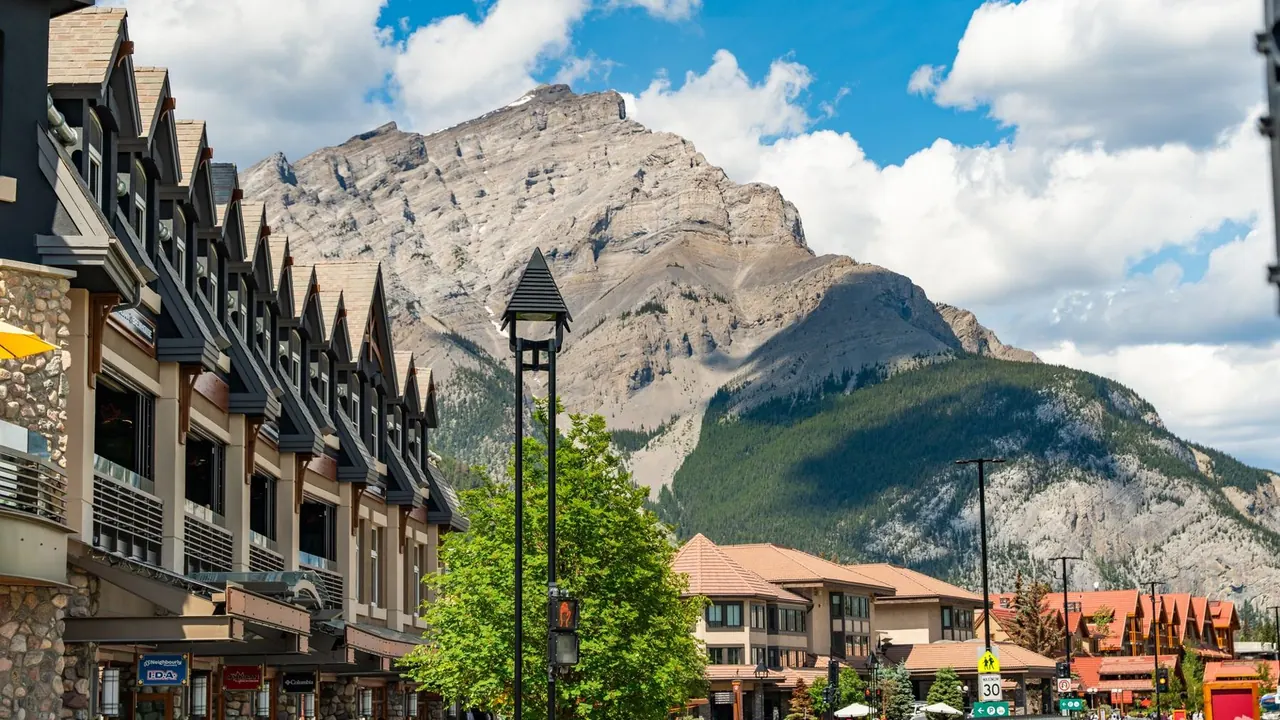
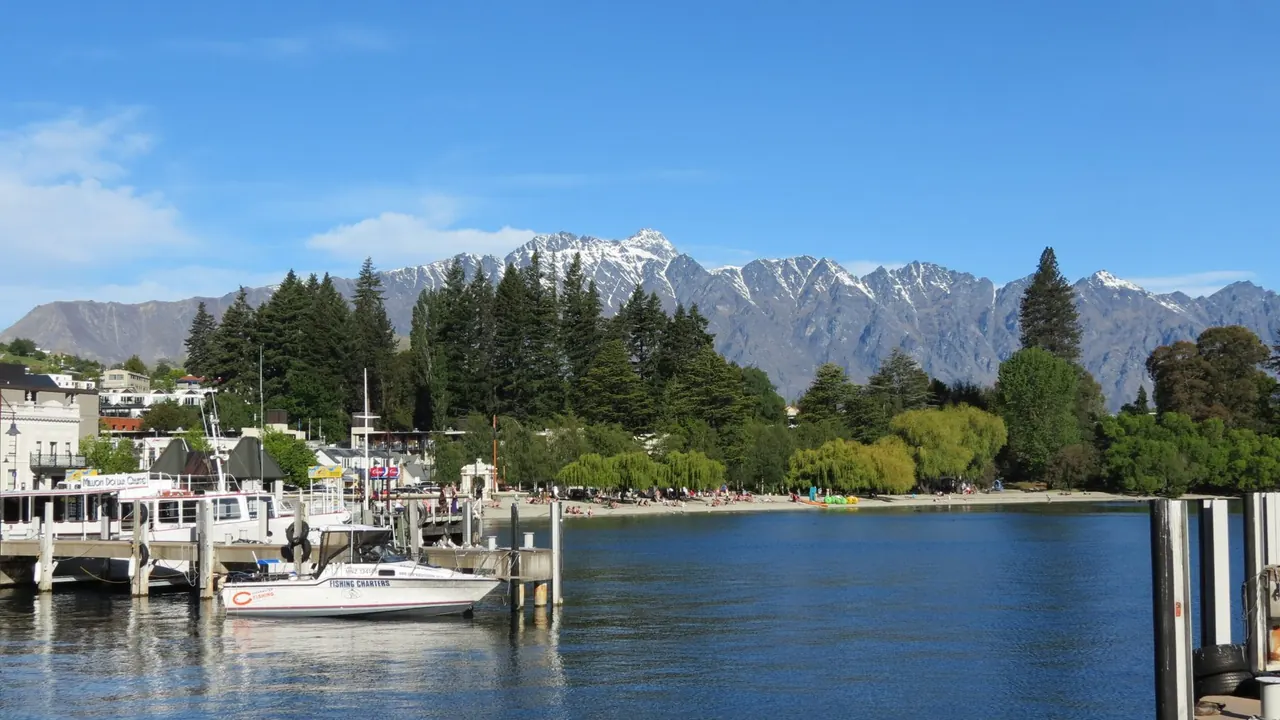
Photos: Banff by bryan pascual, Pexels License; Queenstown by Robert Linsdell, CC BY 2.0, cropped.
Banff or Queenstown?
Our verdict in twelve categories, each scored against the same fixed benchmark cities, and the climate month by month, so you can choose for your trip.
Choose Banff for
- live music and the arts
- wellness
- culture and sights
Banff suits travellers who want their mountains with a bit of history and a slower pace. Wildlife along the roads, glaciers on the Icefields Parkway and a hot-springs soak at the end of the day set its rhythm, and it adds what Queenstown lacks: museums on the park's origins and Indigenous peoples, a serious arts centre and a town you can manage without a car.
Choose Queenstown for
- day trips
- food and drink
- nightlife
Queenstown is the stronger pick for an active, sociable trip. Adrenaline is its trademark, with bungy, jet boats and paragliding, and evenings are livelier too, with more bars, better eating and Central Otago pinot noir a short drive away. Arrowtown and Wanaka also give it the better choice of towns to visit for a day.
Scoreboard
Twelve categories on one fixed scale from 0 to 100. The shaded stretch is the gap between the two.
Your match
Pick a travel style or drag the sliders, and both match scores follow your weighting.
Too close to call, 1 point apart
Wins on live music and the arts and wellness with your weighting.
Wins on day trips and food and drink with your weighting.
What matters to you?
Category by category
What the scores mean for a trip.
Beaches & swimming
Neither town has a sea, and both have snow-fed water, but Queenstown gets a little more out of its lakes. On warm days the shingle shore of Queenstown Bay and the lakefront at Frankton fill with sunbathers, people jump off the town jetty, and Lake Hayes and Moke Lake are milder in January and February.
Banff has less of this. Johnson Lake, a short drive out, is the one place that warms enough for an August afternoon swim. Lake Minnewanka and the Vermilion Lakes are for paddling rather than swimming, and the hot springs are the only warm water.
Food & drink
Queenstown eats better. Its lakefront and the lanes off the Mall run from pie shops and ramen to restaurants serving lamb, venison and South Island seafood, and the Gibbston Valley's pinot noir cellar doors make a long winery lunch the town's real highlight.
Banff's menus centre on meat for hungry hikers: Alberta beef, bison and elk, fondue and pub plates, with more ambitious cooking in the grand hotels. There is good craft beer and coffee, but nothing to compare with a wine region on the doorstep.
Culture & sights
Banff has more to see between walks. The Cave and Basin is where Canada's national parks began, the Banff Springs Hotel is a baronial railway castle from the end of the nineteenth century, and the Whyte Museum and the Buffalo Nations Luxton Museum cover mountain art and the Indigenous peoples of the plains.
Queenstown's sights fit into a morning: the coal-fired steamship TSS Earnslaw, still crossing the lake after more than a century, a few gold-rush stone buildings and the lakeside gardens. Its history is better told in Arrowtown, and no museum in town compares with Banff's.
Nightlife
Both are small towns that stay up late thanks to seasonal workers and skiers, but Queenstown has more going on. The blocks around Shotover, Camp and Searle streets pack in pubs, cocktail bars and dance bars, with lakefront terraces on summer evenings and loud winter Saturdays.
Banff's scene is a handful of pubs and a couple of dance bars along Banff Avenue, cheerful but repetitive. It thins out further in spring and autumn, and its hotel lounges are the main alternative for a quieter drink.
Nature & outdoors
Both are among the world's great mountain bases, and the difference lies in how you spend the day. Banff is a town inside a national park, known for wildlife and ice. Elk graze on its lawns, bears and bighorn sheep appear by the roads, the Icefields Parkway passes glaciers, and Lake Louise and Moraine Lake are the turquoise classics.
Queenstown is about speed. Bungy began at the Kawarau Bridge, and jet boats, paragliding and gondola-served bike trails follow from it. Walkers have the Routeburn Track, and Milford Sound is the long, famous day out. Both have several ski areas within easy reach.
Day trips
Queenstown has more towns within reach. Arrowtown, twenty minutes away, has miners' cottages and a restored Chinese settlement, Wanaka is a quieter lake town over the Crown Range, and the vineyards around Cromwell and Bannockburn lead on to the old goldfields at Clyde and Alexandra.
From Banff the choice is narrower. There is Canmore down the valley, a big-city day in Calgary with Heritage Park and the Stampede grounds, and modest stops at Field and Golden beyond the Continental Divide.
Good for families
Banff entertains children with the landscape itself: spotting elk and bighorn sheep from the car, the Johnston Canyon boardwalk, a canoe on the Bow and tobogganing or skating in winter. It is gentle and safe, but there is nothing built specifically for children, and the zoo and science museum are in Calgary.
Queenstown has more organised fun, with the luge on Bob's Peak, kiwi at the wildlife park, jet-boat rides and an indoor pool at Frankton. Many of its signature thrills have age and weight limits, though, and in both towns the long drives to the big sights test young patience.
Getting around
Banff is the easier place without a car. Roam Transit buses reach the gondola, the hot springs, Lake Minnewanka, Canmore and Lake Louise, and Parks Canada shuttles serve the busiest lakes in summer, so a car is only needed for the Icefields Parkway and remoter trailheads.
Queenstown's centre is just as walkable, and buses and a water taxi reach Frankton and Arrowtown. But the wineries, Glenorchy and Wanaka really call for driving, the single Frankton road backs up at busy times, and winter mountain roads may need chains.
Shopping & style
Shopping is a sideline in both, built around outdoor outfitters and souvenirs. The best things to bring home differ: in Banff it is Indigenous art and Rocky Mountain landscape painting from the galleries off Banff Avenue.
In Queenstown it is merino and possum-wool knitwear and greenstone jewellery, and a summer weekend craft market sets up by the wharf.
Affordability
In Banff it is the beds that cost most. Building limits inside the national park keep rooms scarce and dear, especially in summer and over Christmas, and the park pass, gondola and lift tickets add to it. Budget travellers stay in Canmore or at campgrounds and cook for themselves.
Queenstown's rooms are steep too, but the bigger bill comes from the activities people travel for, as bungy, jet boats and scenic flights quickly add up. Hostels, self-catering apartments and the Frankton supermarkets soften the cost, and the walks and trails around the lake are free.
Live music & performing arts
Banff has the real cultural institution. The Banff Centre for Arts and Creativity on Tunnel Mountain stages concerts, dance and performances, busiest in summer, and the autumn Mountain Film and Book Festival draws filmmakers and adventurers from around the world.
Queenstown offers covers bands in pubs, occasional touring acts at the events centre and a few days of street performance at the winter festival, with no regular theatre or concert season.
Wellness & relaxation
Banff was founded on its hot springs, and the open-air Upper Hot Springs pool in its 1930s bathhouse, with the grand hotels' mineral-pool spas, gives it a proper way to unwind. The town also goes quiet early outside peak summer.
Queenstown has no geothermal water. Relaxing there means a private cedar hot tub above the Shotover, a lodge spa or a slow afternoon in Arrowtown or Glenorchy, away from a centre geared to adventure bookings.
When should you go?
Pick your month. The climate figures are measured averages, not a forecast.
Banff in July
Queenstown in July
Daytime high, °C
Rainfall in the month, mm
Where the figures come from
Queenstown has no weather station within reach, so its figures come from a gridded climate model rather than a measured record, and read a broad area rather than the city itself.
Temperature and rainfall are climate normals, averaged over the years shown. Banff: 1991-2020 normals, Banff (2 km from centre). Queenstown: 1991-2020 normals, TerraClimate 4 km grid at the town, no weather station within 90 km.
The two run on opposite calendars and very different weather. Banff is at its best from June to September, when highs reach about 23°C in July and the trails and lakes are open. From November to March it stays below or near freezing, around -4°C in December, which is ski season rather than walking weather. It is also dry, with no month bringing heavy rain.
Queenstown's summer falls from December to March, with highs near 20°C, the time for lake swims and long evenings outdoors. Winter, June to August, brings highs of about 6°C and the ski season. Rain falls in every month and is heaviest in spring, around 200mm in September, so it is a much wetter place than Banff all year round.
Which traveller are you?
On a culture and arts trip, Banff is the clear choice. The Cave and Basin, the Whyte Museum and the Buffalo Nations Luxton Museum fill a satisfying day, and the Banff Centre puts on concerts and dance, while Queenstown has little beyond a steamship and gold-rush stonework.
For a food and nightlife trip, Queenstown pulls ahead. It has a broader spread of restaurants, wine lunches in the Gibbston Valley and a denser cluster of cocktail and DJ bars, where Banff offers steakhouses, fondue and a few loud pubs.
On a relaxing and wellness trip, Banff suits better. The Upper Hot Springs and the mineral pools in the grand hotels give a proper soak, and the town goes quiet early, whereas Queenstown has no springs and its centre is organised around adrenaline bookings.
Before you go
| Measure | Banff | Queenstown |
|---|---|---|
| Official language | French, English | English, New Zealand Sign Language, Māori |
| Currency | Canadian Dollar (CAD) | New Zealand Dollar (NZD) |
| Sockets | AB120 V, 60 Hz | I230 V, 50 Hz |
| Driving side | Right | Left |
| Time zone | UTC-7, UTC-6 in summer | UTC+12, UTC+13 in summer |
| Emergency number | 911 | 111 |
| Elevation | 1,400 m | 324 m |
| Main airport | Calgary International Airport (YYC)109 km from centre103 non-stop destinations | Queenstown Airport (ZQN)7 km from centre7 non-stop destinations |
| Public holidays this year | 13 days | 12 days |
By the numbers
| Measure | Banff | Queenstown |
|---|---|---|
| City population | 8,305 | 29,000 |
| People per km² | 1,730 | - |
| Museums within 10 km | 4 | 0 |
| UNESCO World Heritage sites within 50 km | 0 | 0 |
Where else could you go?
Every comparison below shares a destination with this one, so you can follow Banff or Queenstown somewhere new.