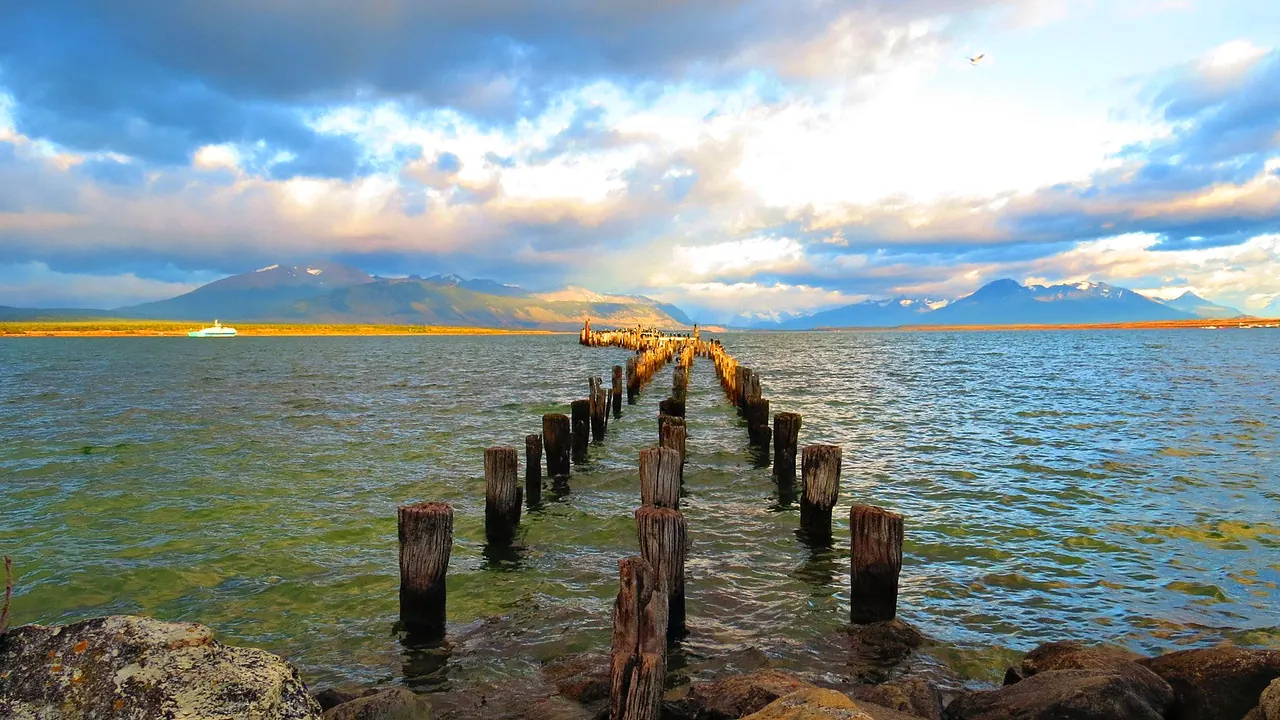
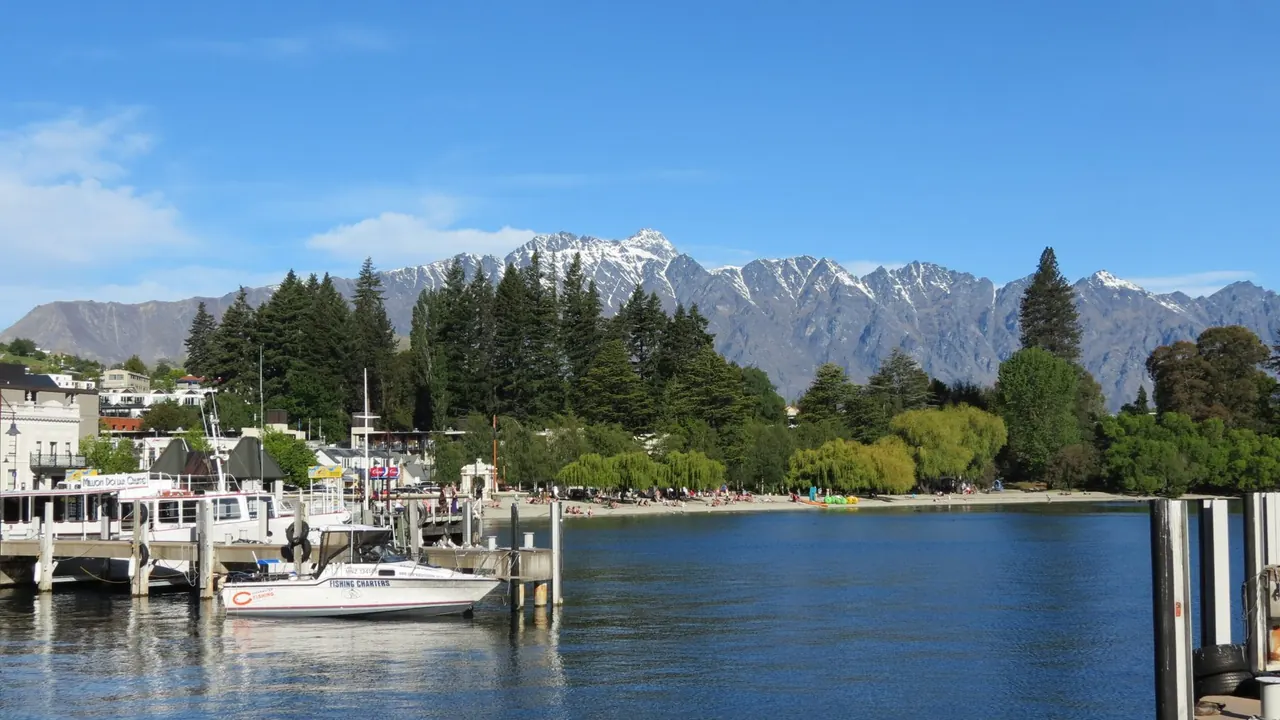
Photos: Puerto Natales by Rosario Nieto Chadwick, CC BY 3.0, cropped; Queenstown by Robert Linsdell, CC BY 2.0, cropped.
Puerto Natales or Queenstown?
Our verdict in twelve categories, each scored against the same fixed benchmark cities, and the climate month by month, so you can choose for your trip.
Choose Puerto Natales for
- prices
Puerto Natales is for the traveller whose whole trip is the wilderness. The town exists to send people into Torres del Paine, with multi-day treks, glaciers off the ice field, pumas on the steppe and a wind that never lets you forget where you are. It suits people who are happy to end the day with a local beer and an early night. Day to day it is also a little easier on the wallet.
Choose Queenstown for
- day trips
- nightlife
- families
Anyone who wants more than one kind of day should lean towards Queenstown. The mountains are just as close, and the town adds adrenaline sports, winter skiing, wine lunches in Gibbston Valley, Arrowtown and Wanaka within easy reach, a lively bar scene and far more for children. That makes it the better all-rounder for families, groups and couples who want variety.
Scoreboard
Twelve categories on one fixed scale from 0 to 100. The shaded stretch is the gap between the two.
Your match
Pick a travel style or drag the sliders, and both match scores follow your weighting.
Wins on prices with your weighting.
Wins on day trips and nightlife with your weighting.
What matters to you?
Category by category
What the scores mean for a trip.
Beaches & swimming
Neither place is for swimming, but Queenstown at least has a summer lakeshore. In Puerto Natales the sound is a cold, windswept fjord edged with gravel and rock, so the waterfront is for walking and the only swim is in a hotel pool.
Lake Wakatipu is also cold with snowmelt. Even so, on warm days the shingle at Queenstown Bay and Frankton fills with sunbathers and people jump off the town jetty. Lake Hayes and Moke Lake give milder water in January and February.
Food & drink
Puerto Natales has the more distinctive food: Patagonian lamb roasted on an iron cross over an open fire, and king crab from the southern channels. It has only a short run of restaurants, though, and many of them shorten their hours or close in winter. Queenstown has far more choice for its size, from pie shops and bakeries to ramen and polished lodge dining, and it serves visitors all year.
Wine settles it. The pinot noir cellar doors of Gibbston Valley are a short drive from Queenstown and make a long vineyard lunch easy. In Natales, Chilean wine comes on the list rather than from the hills around you.
Culture & sights
Neither town is a reason to travel for sights, and either can be seen in a morning or an afternoon. What differs is the story. Puerto Natales tells of the Aónikenk and Kawésqar peoples and the sheep-farming era, through its small museum and the Bories cold-storage plant, set among painted timber and iron houses.
Queenstown's past is the gold rush and the lake. It has a few 1860s stone buildings and the 1912 TSS Earnslaw, a steamship that still crosses the lake, and it leaves the fuller history to Arrowtown.
Nightlife
Puerto Natales goes to bed early. Evenings are a craft beer and a long dinner with other trekkers before the morning bus, there are no clubs, and in winter even that thins out.
Queenstown has a real night out. Backpackers, seasonal workers and skiers pack the cocktail and DJ bars around Shotover, Camp and Searle streets, and on winter weekends the centre stays loud well past midnight. It is drinking rather than serious clubbing, but it gives groups in their twenties several lively nights.
Nature & outdoors
Both are outstanding mountain bases, so the difference is in kind. Puerto Natales is the door to raw wilderness. Torres del Paine is about two hours away, with the W and O treks, glaciers off the Southern Ice Field and pumas and condors on the steppe, and boats go up the fjords to the Balmaceda and Serrano glaciers. The season runs from October to April.
Queenstown puts the mountains at the end of the street and adds man-made thrills: bungy at the Kawarau Bridge, jet boats on the Shotover and gondola-served mountain biking, with the Routeburn Track out past Glenorchy. Its ski fields keep it busy in winter, while Natales is the wilder and more remote place.
Day trips
This is one of the widest gaps between the two. From Puerto Natales the outings are into the park, and the only nearby stops with human interest are the Bories plant and the Milodón Cave. Punta Arenas and El Calafate are far enough away to need an overnight stay.
Queenstown has proper towns within easy reach. Gold-rush Arrowtown is twenty minutes away, Wanaka is about an hour over the Crown Range, and the wine country around Gibbston, Cromwell and Bannockburn makes easy day trips. Milford Sound is the long but famous day out.
Good for families
Puerto Natales is small and safe, and the giant sloth at the Milodón Cave and the guanacos and flamingos along the park road please older children. The main attraction still means long transfers, hard trails and tiring wind, so it suits active families with teenagers rather than toddlers.
Queenstown makes children's days much easier. The gondola and luge on Bob's Peak, the kiwi at the wildlife park, jet boats, the steamship, the lakeside playgrounds, the indoor pool and the winter ski schools can fill a week without long drives. The age limits on bungy and skydiving are the main catch.
Getting around
Both towns have centres you can cross on foot in minutes. In Puerto Natales, getting beyond the centre relies on seasonal coaches to the park entrances and a catamaran and shuttles inside it. Buses become sparse out of season, and seeing more of the park means a tour or a hire car on long gravel roads.
Queenstown is better connected. Local buses run to Frankton, the airport and Arrowtown, a water taxi crosses the lake, and shuttles cover the ski fields and activities. A car still helps for the wineries, Glenorchy and Wanaka.
Shopping & style
Puerto Natales shops for the trail, and Queenstown gives you a little more to browse. In Natales it is mostly trekking gear and supermarkets for stocking up, with some sheep's wool knitwear, sheepskin and lapis lazuli jewellery to take home.
Queenstown's pedestrian Mall adds specialist ski and bike shops, merino and possum-wool knitwear, greenstone jewellery, galleries of local landscape painting and a lakefront craft market on summer weekends. Even so, fashion and design are thin, and nobody goes to either town to shop.
Affordability
Both are expensive for their countries, but Puerto Natales costs a little less day to day. In Natales the real expense comes with Torres del Paine: park entry, transfers, glacier boats and refugio nights.
Queenstown charges resort prices for rooms, meals and drinks, which rise further in the ski season and over Christmas. Its bungy jumps, jet boats, scenic flights and lift passes make it the costlier stay overall. Self-catering and free trails help in both towns.
Live music & performing arts
Queenstown has live music in its pubs most evenings, which is more than Puerto Natales can offer. In Natales you might hear a guitarist or folk band in a bar now and then, or see traditional Chilean dance at a local festival, but there is nothing to plan a night around.
Queenstown's pubs and après bars have covers bands and acoustic sets, the events centre brings in occasional touring comedians and bands, and the winter festival fills the streets with performers for a few days. Neither town has theatre, opera or an orchestra.
Wellness & relaxation
In Puerto Natales, relaxing means a sauna or hot tub at one of the upscale lodges after a long day on the trail, and quiet evenings watching the light on the fjord. Most visitors come to push themselves, not to rest.
Queenstown has more ways to unwind: private cedar hot tubs above the Shotover River, resort spas around the lake and towards Arrowtown, and the quiet of Glenorchy at the head of the lake. Its centre is full of adventure bookings, so anyone after a slow stay should sleep outside town.
When should you go?
Pick your month. The climate figures are measured averages, not a forecast.
Puerto Natales in July
Queenstown in July
Daytime high, °C
Rainfall in the month, mm
Where the figures come from
Puerto Natales has no weather station within reach, so its figures come from a gridded climate model rather than a measured record, and read a broad area rather than the city itself.
Queenstown has no weather station within reach, so its figures come from a gridded climate model rather than a measured record, and read a broad area rather than the city itself.
Temperature and rainfall are climate normals, averaged over the years shown. Puerto Natales: 1991-2020 normals, TerraClimate 4 km grid at the town, no weather station within 90 km. Queenstown: 1991-2020 normals, TerraClimate 4 km grid at the town, no weather station within 90 km.
Both towns lie far south, so both are at their best in the southern summer. In Puerto Natales the trekking months run from about October to April, and December to March is the warmest stretch, with highs near 17°C. Queenstown is a little warmer, reaching about 20°C in January and February, warm enough for sunbathers on the lakeshore though never real beach weather. From June to August both stay cold, with highs in single figures. That is too cold for comfortable trekking in Patagonia, but it is ski season in Queenstown, which gives Queenstown a second season that Natales lacks.
Rain is where they part. Puerto Natales is dry all year, never much above 45mm in a month, and October to December is the driest part of its trekking season. The fierce wind is the weather to plan around there. Queenstown is far wetter, with September near 200mm and October and March also wet. Its driest month is February, at 89mm, with November close behind, so February is Queenstown's best month for summer walking and the lake, and November is the pick in spring.
Which traveller are you?
On a family trip with children, choose Queenstown. Most of what children enjoy is within a short ride of the hotel, so days can be kept short. Puerto Natales means long transfers and exposed, windy trails, and suits only active families with teenagers.
For a food and nightlife trip, Queenstown wins clearly. It has far more places to eat, Central Otago pinot noir a short drive away and bars that stay loud past midnight. Puerto Natales offers slow-roasted lamb, craft beer and an early night.
On a tight budget, Puerto Natales is the slightly kinder of two expensive places. Hostels and self-catering go further there than against Queenstown's resort prices. In both towns the big outings, park transfers or bungy jumps, are what really drain the budget.
Before you go
| Measure | Puerto Natales | Queenstown |
|---|---|---|
| Official language | Spanish | English, New Zealand Sign Language, Māori |
| Currency | Chilean Peso (CLP) | New Zealand Dollar (NZD) |
| Sockets | CL220 V, 50 Hz | I230 V, 50 Hz |
| Driving side | Right | Left |
| Time zone | UTC-3 | UTC+12, UTC+13 in summer |
| Emergency number | Police 133/134, ambulance 131, fire 132 | 111 |
| Elevation | 3 m | 324 m |
| Main airport | President Carlos Ibáñez International Airport (PUQ)181 km from centre7 non-stop destinations | Queenstown Airport (ZQN)7 km from centre7 non-stop destinations |
| Public holidays this year | 16 days | 12 days |
By the numbers
| Measure | Puerto Natales | Queenstown |
|---|---|---|
| City population | 21,477 | 29,000 |
| Museums within 10 km | 0 | 0 |
| UNESCO World Heritage sites within 50 km | 0 | 0 |
Where else could you go?
Every comparison below shares a destination with this one, so you can follow Puerto Natales or Queenstown somewhere new.
- El Calafatevs Puerto Natales
- Dunedinvs Queenstown
- Christchurchvs Queenstown
- Ushuaiavs Puerto Natales
- Wellingtonvs Queenstown
- Rotoruavs Queenstown