Photos: Queenstown by Robert Linsdell, CC BY 2.0, cropped; Victoria Falls by Murray Foubister, CC BY-SA 2.0, cropped.
Queenstown or Victoria Falls?
Our verdict in twelve categories, each scored against the same fixed benchmark cities, and the climate month by month, so you can choose for your trip.
Choose Queenstown for
- nightlife
- day trips
- families
Queenstown suits travellers who want an active trip with comforts around it. You get mountain walks, cycle trails and skiing straight from town, then evenings of wine bars, busy pubs and good restaurants. Gibbston Valley's cellar doors and Arrowtown are close by, and it works far better with young children. Choose it if you want plenty to do between adventures, and in winter as well as summer.
Choose Victoria Falls for
- prices
Victoria Falls is the choice if the trip is about one great natural sight and the wildlife around it. The falls, rafting in the Batoka Gorge, elephants on the edge of town and Chobe within reach add up to a short safari-style stay. Evenings are quiet, the food is mostly lodge dining and young children are a poor fit. Go for the spectacle and the bush, not for town life.
Scoreboard
Twelve categories on one fixed scale from 0 to 100. The shaded stretch is the gap between the two.
Your match
Pick a travel style or drag the sliders, and both match scores follow your weighting.
Wins on nightlife and day trips with your weighting.
Wins on prices with your weighting.
What matters to you?
Category by category
What the scores mean for a trip.
Beaches & swimming
Neither place has a beach worth planning around, but Queenstown at least lets you get in the water on your own terms. The shingle beach on Queenstown Bay, the Frankton shore and the warmer, shallower Lake Hayes and Moke Lake are all open for a cold summer dip.
At Victoria Falls the Zambezi is off limits because of crocodiles, hippos and strong currents, so swimming means a lodge pool. The exception is the guided swim in Devil's Pool at low water, which is a short thrill on the lip of the falls rather than an afternoon in the water.
Food & drink
Queenstown eats much better. A town that lives on visitors all year has far more choice: bakeries, pie shops, ramen, and restaurants serving lamb, venison and South Island seafood. Above all there is Gibbston Valley, where long winery lunches among the pinot noir vines are a highlight of any stay.
At Victoria Falls most meals happen in your lodge or hotel. The local flavour comes from game meat grilled over open fires, sadza with stews, and tea or a sundowner on the Victoria Falls Hotel terrace. There is little to eat beyond that.
Culture & sights
Both are bases for the landscape, and either will satisfy a museum lover in about a morning. What history they have is very different. Queenstown's is the gold rush, seen in a few stone buildings from the mining years and the coal-fired TSS Earnslaw of 1912, and told better in nearby Arrowtown.
Victoria Falls carries colonial railway history: the bridge across the gorge, finished in 1905 and open to walk across, and the Edwardian hotel in its old gardens. For proper collections you cross to the Livingstone Museum in Zambia.
Nightlife
Queenstown has a real night out and Victoria Falls barely has one. Seasonal workers, skiers and backpackers keep the pubs and DJ bars in Queenstown's few central blocks loud past midnight, especially during the ski season, though a couple of nights covers it.
At Victoria Falls the evening peaks at sunset on a river boat or lodge deck. After that come hotel bars and the odd backpacker bar, and you take a taxi between them because elephants roam the streets after dark.
Nature & outdoors
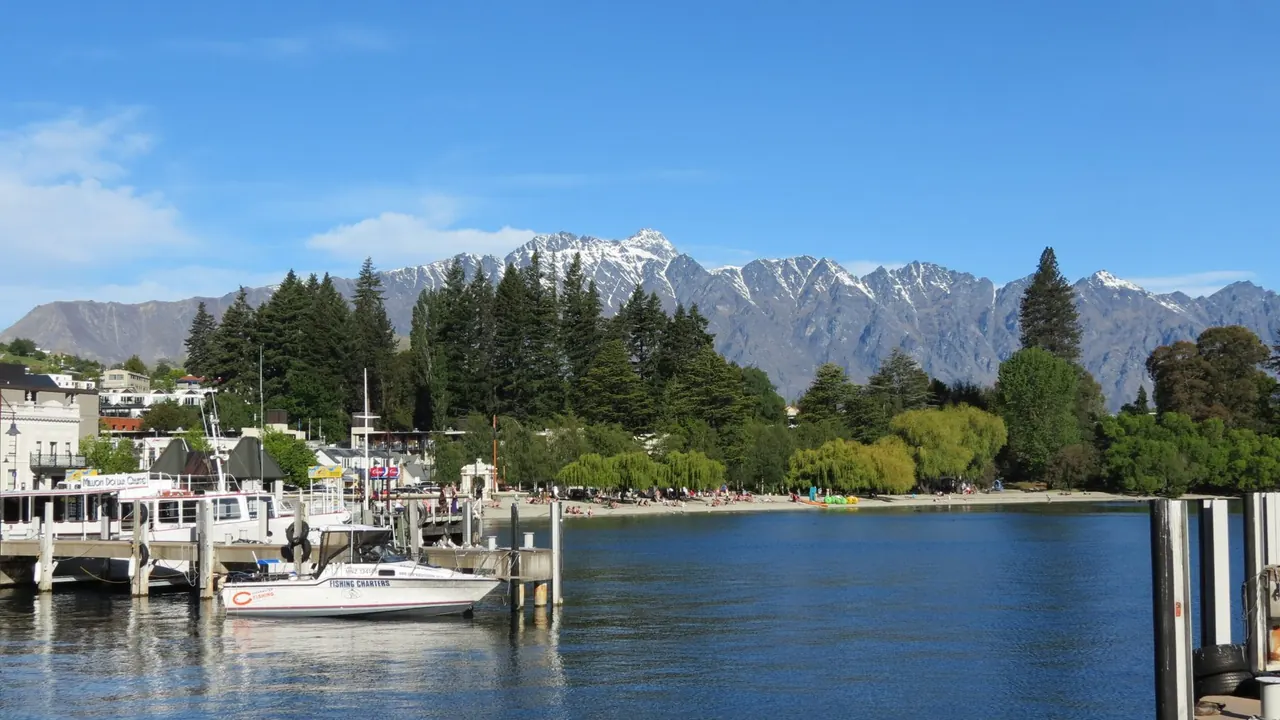
Both are among the great outdoor destinations, and both have bungy jumps off a bridge, but the settings could hardly differ more. Queenstown is alpine: a glacial lake under the Remarkables, tracks up Ben Lomond, the Routeburn and Mount Aspiring valleys, cycle trails, jet boats on the Shotover, and four ski areas in winter.
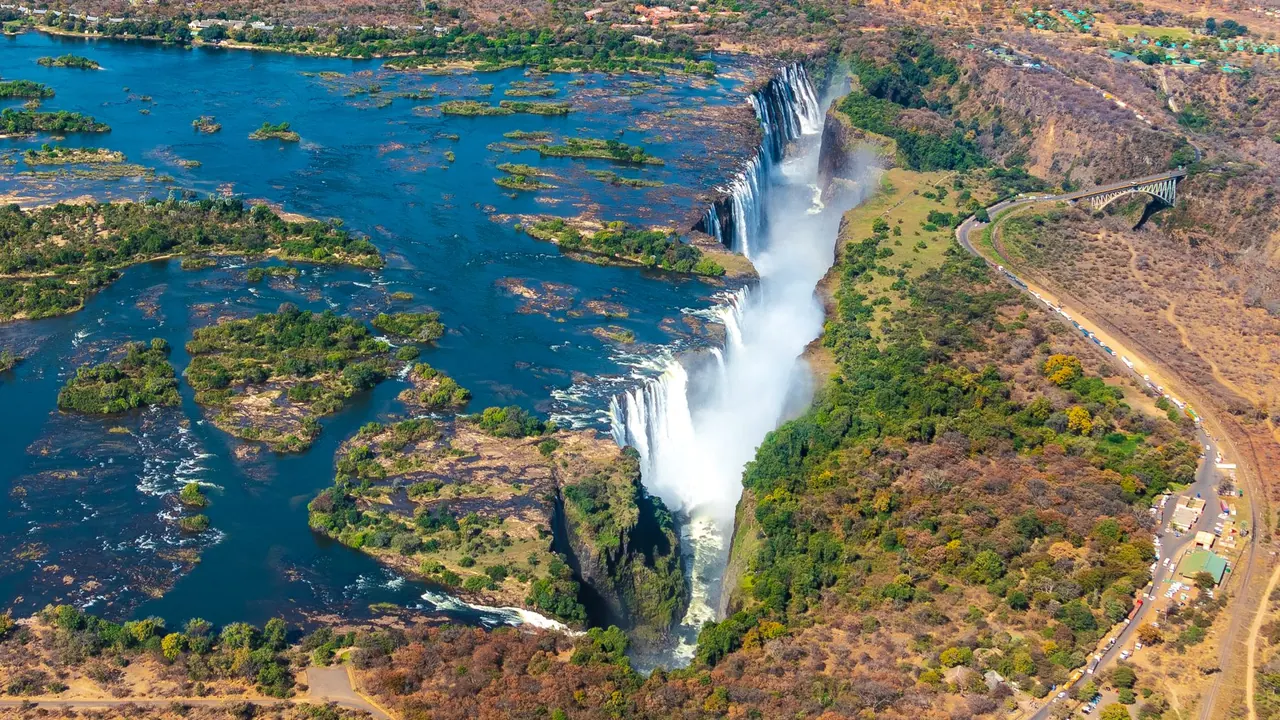
Victoria Falls is built around one immense waterfall and the African bush. You walk through the spray of Mosi-oa-Tunya, raft the Batoka Gorge, and see elephant, lion and hippo in Zambezi National Park, with Chobe's herds about an hour and a half away. Here nature means wildlife watching as much as adrenaline.
Day trips
Queenstown has the better choice of outings to other places. Arrowtown's miners' cottages are twenty minutes away, Wanaka is an hour over the Crown Range, and the wine country around Cromwell and Bannockburn makes easy days out, with Milford Sound as a long scenic trip.
From Victoria Falls, nearly every excursion is a wildlife trip. The one real town nearby is Livingstone across the bridge, with its museum and nearby Mukuni village, and Kasane is mostly a stop on the way into Chobe.
Good for families
Queenstown is the easier place with children of any age. The gondola and luge, the kiwi birds near the gondola base, the steamship cruise and the indoor pool at Frankton all suit small children. Only the big adrenaline jumps have age and weight limits.
Victoria Falls can be unforgettable for children of about eight and up, with game drives, hippos and the walk through the spray. Malaria, basic medical care and lodges that turn away young children on game drives make it hard going with toddlers.
Getting around
Both have a small centre you can cover on foot, and in both places the trouble starts beyond it. Queenstown has local buses and a water taxi to Frankton, but wineries, Glenorchy and trailheads really call for a hire car on winding roads that can need chains in winter.
Victoria Falls has no proper public transport, but you rarely need a car, because activity operators collect you from your lodge. Taxis cover the rest, including the crossing into Zambia. Walking after dusk is unwise because of the wildlife.
Shopping & style
Queenstown offers a bit more, mostly practical buys. There are specialist ski, bike and hiking shops, merino and possum-wool knitwear, greenstone jewellery and a summer craft market by the wharf.
Victoria Falls is all about crafts. You bargain at the curio market for Shona-style stone carvings, baskets and beadwork, or pay fixed prices in a few gallery shops. A serious sculpture is hard to find, and the town has little else to buy.
Affordability
Neither is cheap, but Victoria Falls is easier on the budget. Its backpacker lodges and guesthouses keep the cost of sleeping down, and picking just one or two activities keeps the total sensible. The real costs come from riverside safari lodges, two park entrance fees if you see the falls from both sides, and imported food.
Queenstown is harder to keep down. Rooms are dearer than anywhere else in New Zealand, especially in the ski season and over Christmas, restaurants charge resort prices, and bungy jumps, lift passes and scenic flights add up fast. Self-catering and the free trails help.
Live music & performing arts
Live performance plays a small part in either stay, and the kind on offer differs. In Queenstown it means covers bands and acoustic sets in pubs, plus the occasional touring comedian, with street performances during the winter festival.
At Victoria Falls it means traditional dance troupes, drumming and marimba bands put on at game-meat dinners and hotels. These are often lively but are staged for visitors.
Wellness & relaxation
Queenstown gives more ways to unwind, though both towns are built around adrenaline. You can book a private cedar hot tub above the Shotover River, a spa at a lodge towards Arrowtown, or spend a quiet day at Glenorchy at the head of the lake.
At Victoria Falls, rest means staying out of town in a riverside lodge or private concession. The days settle into an early game drive, hot afternoons by the pool and a marula-oil treatment on a deck above the Zambezi.
When should you go?
Pick your month. The climate figures are measured averages, not a forecast.
Queenstown in July
Victoria Falls in July
Daytime high, °C
Rainfall in the month, mm
Where the figures come from
Queenstown has no weather station within reach, so its figures come from a gridded climate model rather than a measured record, and read a broad area rather than the city itself.
Temperature and rainfall are climate normals, averaged over the years shown. Queenstown: 1991-2020 normals, TerraClimate 4 km grid at the town, no weather station within 90 km. Victoria Falls: 1991-2020 normals, Livingstone (13.1 km from centre).
Both towns are coolest in June and July, but little else about their years lines up. Queenstown is a mild mountain town with rain in every month. December to February brings days around 20°C, the best time for long walks and the only stretch when a quick dip in the lakes is pleasant. Midwinter falls to about 6°C, which is cold for wandering the streets but right for the ski season. There is no dry season to aim for, and September is the wettest month at about 200mm.
Victoria Falls is far hotter and has two sharply different seasons. The rains run from November to March and swell the river, so the spray is heaviest in the months just after. From May to August almost no rain falls. June and July are the mildest months at about 26°C, the most comfortable time for game drives and the rainforest path. The heat then builds to its peak of about 35°C in October, when the river is low enough for Devil's Pool but walking at midday is hard work.
Which traveller are you?
On a food and nightlife trip, Queenstown is the clear pick. Its lanes off the Mall are full of restaurants, Central Otago pinot noir is a short drive away, and the bars around Shotover Street stay busy late, while Victoria Falls is usually in bed after the sundowner.
On a family trip with children, Queenstown is easier. The gondola, the luge, the kiwi enclosure and the lakeside playgrounds suit all ages. Victoria Falls is in a malaria area, has minimum ages for many activities and suits older children best.
For travellers who want big wildlife, Victoria Falls has what Queenstown cannot offer. Elephant, buffalo and lion live in Zambezi National Park on the edge of town, there are canoe trips past hippos, and Chobe's huge elephant herds are close enough for a day trip.
Before you go
| Measure | Queenstown | Victoria Falls |
|---|---|---|
| Official language | English, New Zealand Sign Language, Māori | English, Xhosa, Ndau, Venda, Chewa, Khoisan, Kalanga, Shona, Tonga, Tswana, Tsonga, Sesotho, Northern Ndebele, Nambya, Zimbabwe Sign Language, Barwe |
| Currency | New Zealand Dollar (NZD) | Zimbabwe Gold (ZWG) |
| Sockets | I230 V, 50 Hz | G220 V, 50 Hz |
| Driving side | Left | Left |
| Time zone | UTC+12, UTC+13 in summer | UTC+2 |
| Emergency number | 111 | 999 |
| Elevation | 324 m | 961 m |
| Main airport | Queenstown Airport (ZQN)7 km from centre7 non-stop destinations | Victoria Falls International Airport (VFA)18 km from centre12 non-stop destinations |
| Public holidays this year | 12 days | 13 days |
By the numbers
| Measure | Queenstown | Victoria Falls |
|---|---|---|
| City population | 29,000 | 33,060 |
| Museums within 10 km | 0 | 2 |
| UNESCO World Heritage sites within 50 km | 0 | 0 |
Where else could you go?
Every comparison below shares a destination with this one, so you can follow Queenstown or Victoria Falls somewhere new.