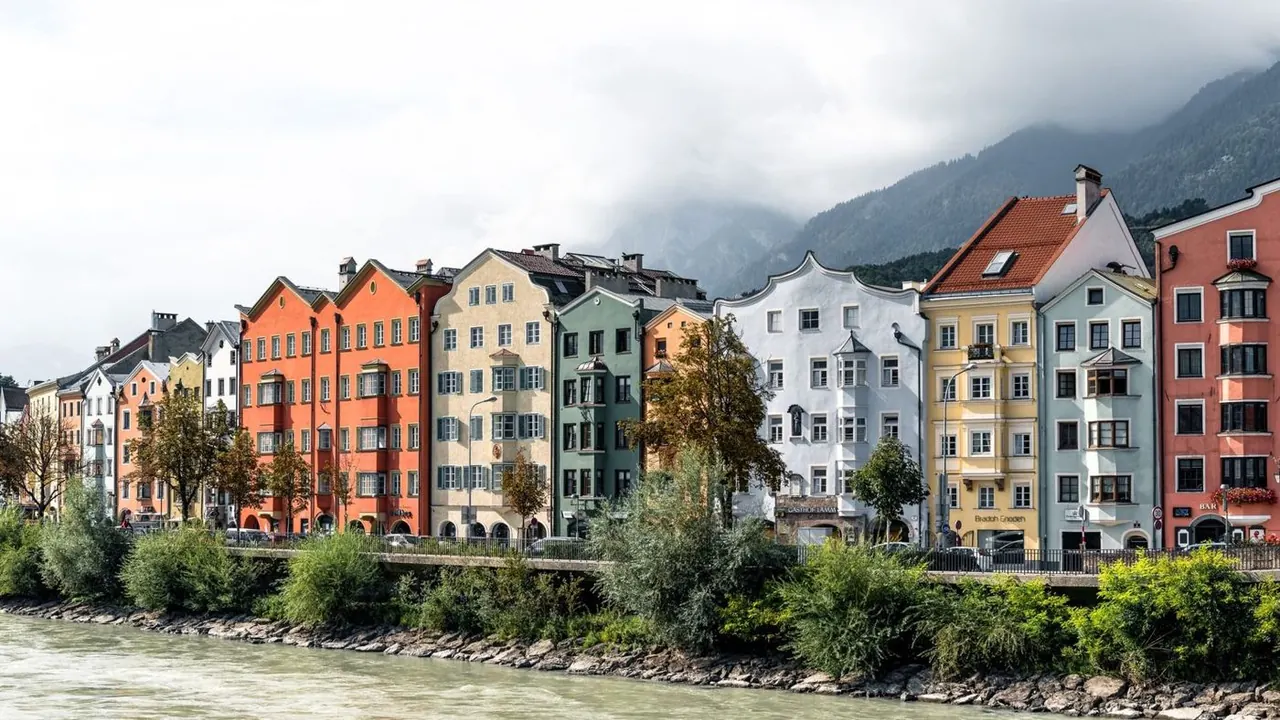
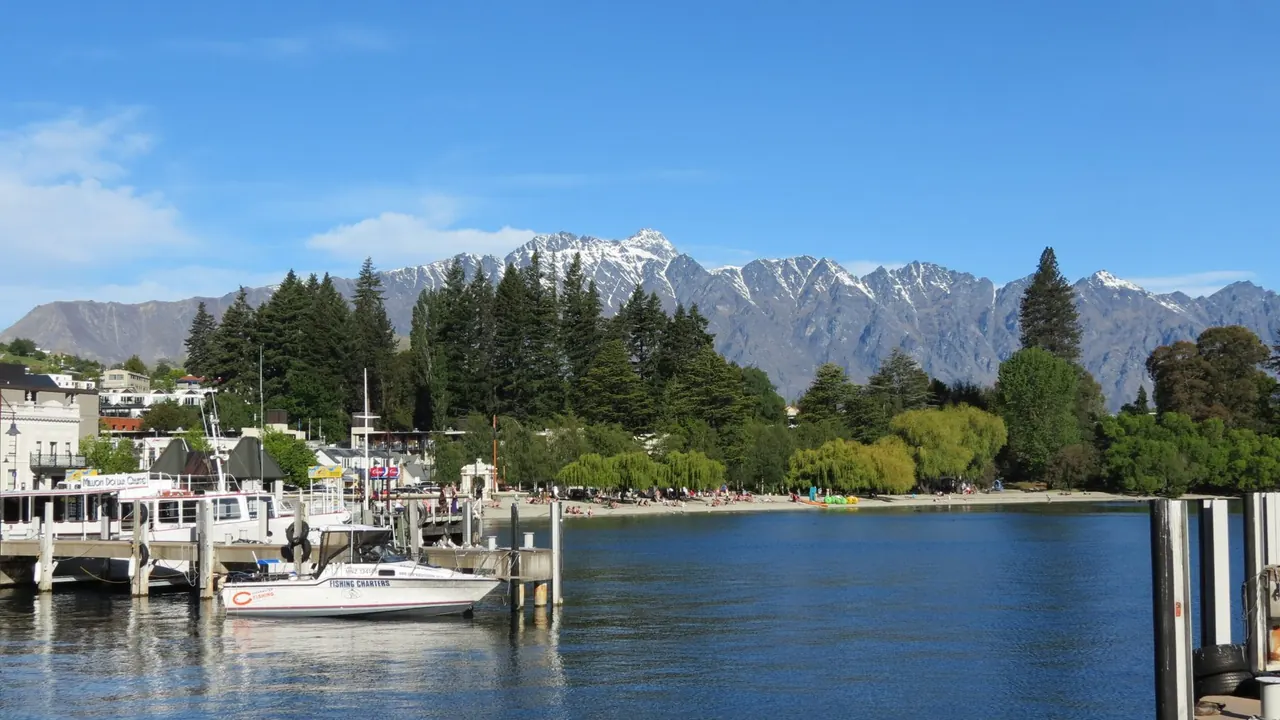
Photos: Innsbruck by Wolfgang Weiser, Pexels License; Queenstown by Robert Linsdell, CC BY 2.0, cropped.
Innsbruck or Queenstown?
Our verdict in twelve categories, each scored against the same fixed benchmark cities, and the climate month by month, so you can choose for your trip.
Choose Innsbruck for
- culture and sights
- getting around
- live music and the arts
Innsbruck suits travellers who want serious mountains without giving up a proper town. The Nordkette rises straight above the old town, but you also get a Habsburg palace, the Hofkirche, an opera house and trains to Munich, Salzburg and South Tyrol, so rest days and wet days fill easily. It is also the simpler place to manage without a car, and the less painful one for your budget.
Choose Queenstown for
- food and drink
- nightlife
- nature and the outdoors
Pick Queenstown if the landscape and the adrenaline are the whole point. Lake Wakatipu, the Remarkables, the Routeburn Track, the jet boats, the bungy jumps and the ski fields make it a superb outdoor base, and the town's evenings are livelier than its size suggests. Expect to spend heavily, to hire a car, and to find little in the way of museums or theatre between adventures.
Scoreboard
Twelve categories on one fixed scale from 0 to 100. The shaded stretch is the gap between the two.
Your match
Pick a travel style or drag the sliders, and both match scores follow your weighting.
Wins on culture and sights and getting around with your weighting.
Wins on food and drink and nightlife with your weighting.
What matters to you?
Category by category
What the scores mean for a trip.
Beaches & swimming
Neither city is a swimming destination. In both, a swim means a lake in a short summer. The real difference is the water temperature. Innsbruck's shallow plateau lakes, the Lanser See and the Natterer See, warm to about 22°C at the height of summer and suit a lazy afternoon. In Queenstown, Lake Wakatipu stays near 12°C and is mainly for a quick jump off the town jetty, while Lake Hayes and Moke Lake are the gentler options.
Food & drink
Innsbruck has a cuisine of its own, and Queenstown has a wine region instead. In Innsbruck you eat Tyrolean food: Gröstl, Kaspressknödel and Kaiserschmarrn in old-town inns and mountain huts, and strudel in Viennese-style coffee houses.
Queenstown has no local cooking to match that. It offers a wider casual spread of burgers, pies and Asian kitchens, plus Central Otago pinot noir at the Gibbston Valley cellar doors nearby. Wine lovers will get more from Queenstown, and anyone after regional dishes will prefer Innsbruck.
Culture & sights
The gap here is wide. Innsbruck was a Habsburg seat, and its compact arcaded old town holds the Golden Roof, the Hofburg and the Hofkirche with Maximilian I's tomb. Ambras Castle and the Ferdinandeum fill the days after that.
Queenstown was built around its landscape. Its sights are the coal-fired TSS Earnslaw, a few stone buildings from the gold rush and the view from Bob's Peak. Arrowtown tells the mining story better, but a museum-minded visitor will be done in a morning with what takes two or three days in Innsbruck.
Nightlife
Innsbruck's nights belong to its students, and Queenstown's to seasonal workers and visitors. The university fills the bars and small clubs in the brick arches under Innsbruck's railway viaduct, and the old town adds quieter pubs and wine bars. Innsbruck's après-ski happens mostly out in the resorts rather than in town.
In Queenstown, backpackers, skiers and young resort staff pack the dance and cocktail bars of a few central blocks. The result is louder and younger, especially on winter weekends, though it is drinking and DJ bars rather than proper clubs.
Nature & outdoors
Both put big mountains at the end of the street, so the choice comes down to character. Innsbruck is classic Alpine country. A funicular from the old town reaches the Nordkette ridge in under half an hour, with the Karwendel behind it, mountain huts linking the trails, and snow on the Stubai Glacier for most of the year.
Queenstown sets the jagged Remarkables above a long glacial lake. Further out are the Routeburn Track, Mount Aspiring National Park and Milford Sound. Its outdoors also leans towards speed, with jet boats in the Shotover canyons and steep bike tracks off the gondola.
Day trips
Innsbruck's rail links give it far more range. Hall in Tirol is ten minutes away, and Munich and Salzburg are each under two hours. Over the Brenner Pass lie Bolzano, Merano and Ötzi the Iceman, so one week can take in three countries.
Queenstown's outings are pleasant but fewer. There are Arrowtown's miners' cottages and Chinese settlement, Wanaka over the Crown Range, and wine days around Gibbston and Cromwell. Milford Sound is the famous one, but it takes three to four hours each way by road.
Good for families
Small children are well looked after in either town. What changes is the kind of day out. In Innsbruck, the funicular stops at the Alpenzoo for ibex, bears and lynx, then carries on to adventure trails and hut playgrounds, and the plateau lakes are warm enough for a proper swim.\n\nQueenstown has more ready-made fun, with the gondola and luge on Bob's Peak, jet-boat rides and kiwi at the wildlife park. Its best-known thrills have age and weight limits, though, and the bigger sights mean long drives.
Getting around
Innsbruck is far easier without a car. The flat centre is walkable, and trams and buses reach Igls and the Stubai valley. The funicular starts at the edge of the old town, and regional trains run along the valley.
Queenstown's centre is tiny and easy on foot too, and buses reach Frankton, the airport and Arrowtown. The wineries, Glenorchy, Wanaka and most trailheads are spread along winding roads, though, so an independent visitor really needs a hire car, sometimes with chains in winter.
Shopping & style
Neither city is worth a trip for the shops, but Innsbruck offers a little more. Maria-Theresien-Strasse has the high-street chains, and the old-town arcades sell loden jackets, dirndls, woodcarvings and crystal next to excellent ski shops. Queenstown's Mall sticks mostly to outdoor gear, merino and possum-wool knitwear, greenstone and souvenirs, with a summer craft market by the wharf.
Affordability
Both are costly, but Queenstown is harder on the wallet. Innsbruck charges Western European prices with an Alpine premium. Still, rooms are cheaper in spring and autumn, and the city cards bundle transport, lifts and sights.
Queenstown's rooms cost more than elsewhere in New Zealand, and its meals carry resort prices. On top of that come the bungy jumps, jet boats, scenic flights and lift passes that are the reason to go. Self-catering and the free trails help, but the budget needs careful planning.
Live music & performing arts
Innsbruck has a real performing arts season, and Queenstown largely does not. The Tiroler Landestheater stages opera, operetta and dance, and the Tyrolean Symphony Orchestra gives concerts. Each summer the Festival of Early Music fills historic rooms such as the Spanish Hall at Ambras.
In Queenstown, live music usually means a covers band in a pub. Touring acts come to the events centre now and then, and the winter festival brings a few days of concerts.
Wellness & relaxation
Neither city has hot springs, so in both, relaxing means a spa and mountain air. In Innsbruck the unhurried town helps, along with the hotel spas in Igls and the plateau villages. The big thermal complexes of the Ötztal and Zillertal are about an hour away.
Queenstown's speciality is a private cedar hot tub above the Shotover River, or a lodge spa. The centre is built around adrenaline, though, so a truly slow stay works better in Arrowtown or Glenorchy.
When should you go?
Pick your month. The climate figures are measured averages, not a forecast.
Innsbruck in July
Queenstown in July
Daytime high, °C
Rainfall in the month, mm
Where the figures come from
Queenstown has no weather station within reach, so its figures come from a gridded climate model rather than a measured record, and read a broad area rather than the city itself.
Temperature and rainfall are climate normals, averaged over the years shown. Innsbruck: 1991-2020 normals, Innsbruck-Flughafen (3.3 km from centre). Queenstown: 1991-2020 normals, TerraClimate 4 km grid at the town, no weather station within 90 km.
The two run on opposite calendars. Innsbruck is warmest from June to August, with highs around 26°C in July. That is the time for the plateau lakes and the high trails, and the sunniest stretch too, but it is also the wettest, with about 144mm of rain in August, so expect showery afternoons. December and January are cold and fairly dry: ski weather, not street-walking weather. May, September and early October are the most comfortable months for both the town and the hills.
Queenstown's warmest months are January and February, when highs reach about 20°C. That is mild rather than hot, and the best time for walking and the shallower lakes. February is also the driest month, at about 89mm, with November not far behind. June to August is the ski season, with chilly days. Rain falls in every month, March is wet as well, and September and October are the wettest, with about 200mm in September, so spring is the least reliable time to visit.
Which traveller are you?
On a culture and arts trip, Innsbruck is the clear choice. You get the Hofkirche and Maximilian's bronze figures, the Hofburg, Ambras Castle and an opera season at the Landestheater. In Queenstown the history is mostly a 1912 steamship and a few gold-rush buildings.
On a trip on a tight budget, Innsbruck is the gentler of two expensive places. Rooms are cheaper in spring and autumn, city cards bundle transport and lifts, and trains replace a hire car. In Queenstown, rooms, resort meals and paid activities add up fast.
For adventure sports, Queenstown is the place. Commercial bungy jumping began at its Kawarau Bridge, and jet boating on the Shotover, canyon swings and skydiving all start from town. Innsbruck has fine hiking, via ferratas and skiing, but nothing like this concentration of thrills.
Before you go
| Measure | Innsbruck | Queenstown |
|---|---|---|
| Official language | German, Austrian Sign Language | English, New Zealand Sign Language, Māori |
| Currency | Euro (EUR) | New Zealand Dollar (NZD) |
| Sockets | CF230 V, 50 Hz | I230 V, 50 Hz |
| Driving side | Right | Left |
| Time zone | UTC+1, UTC+2 in summer | UTC+12, UTC+13 in summer |
| Emergency number | 112 | 111 |
| Elevation | 574 m | 324 m |
| Main airport | Innsbruck Airport (INN)4 km from centre40 non-stop destinations | Queenstown Airport (ZQN)7 km from centre7 non-stop destinations |
| Public holidays this year | 16 days | 12 days |
By the numbers
| Measure | Innsbruck | Queenstown |
|---|---|---|
| City population | 132,499 | 29,000 |
| People per km² | 1,263 | - |
| Museums within 10 km | 28 | 0 |
| UNESCO World Heritage sites within 50 km | 1 | 0 |
Where else could you go?
Every comparison below shares a destination with this one, so you can follow Innsbruck or Queenstown somewhere new.