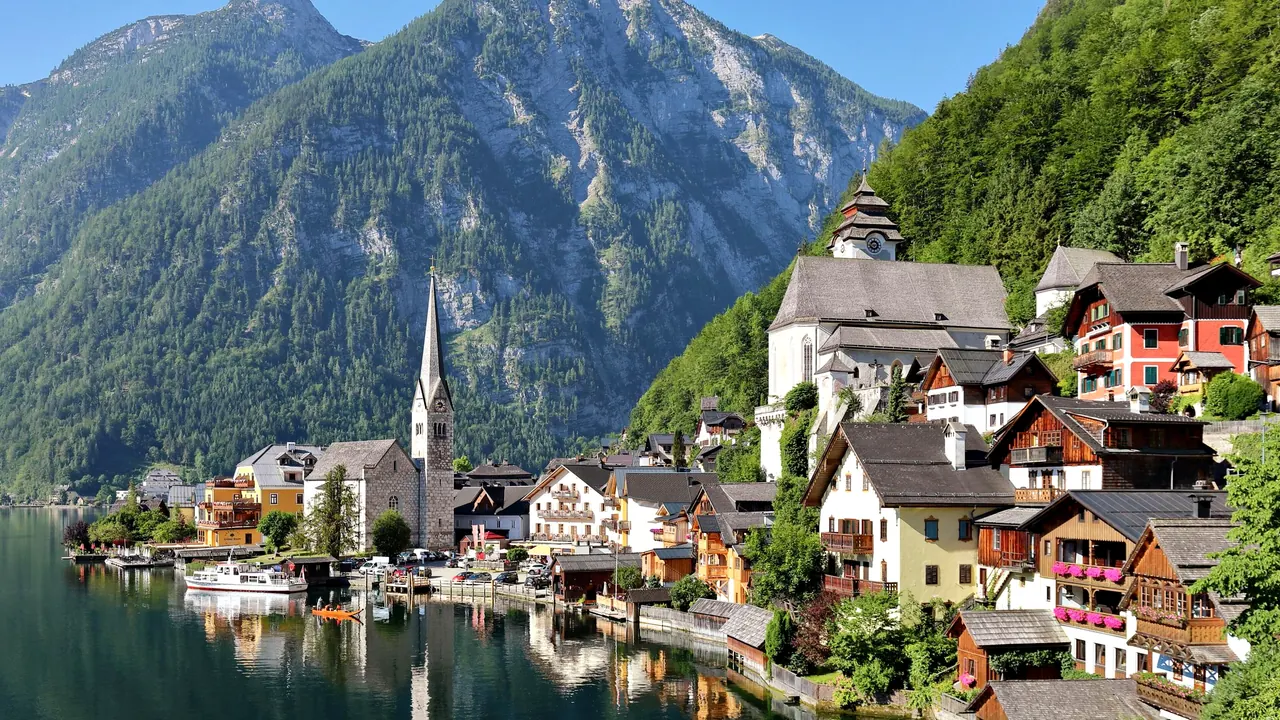
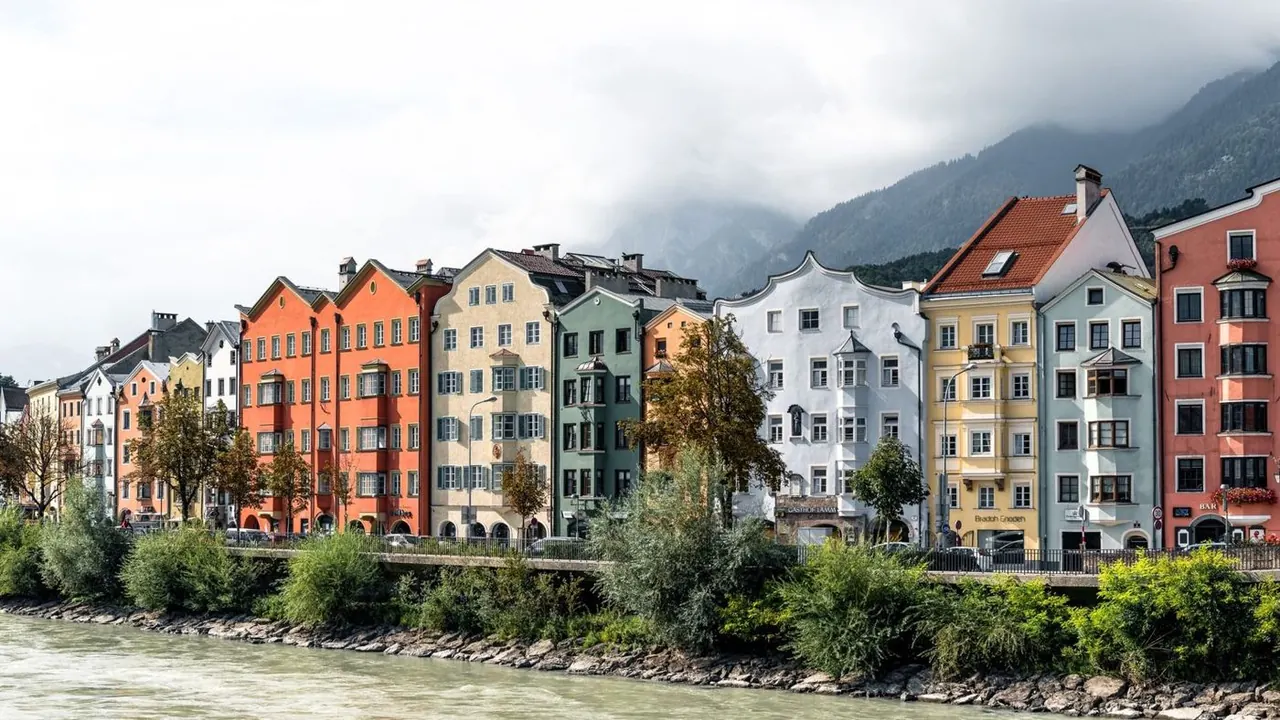
Photos: Hallstatt by C.Stadler/Bwag, CC BY-SA 4.0, cropped; Innsbruck by Wolfgang Weiser, Pexels License.
Hallstatt or Innsbruck?
Our verdict in twelve categories, each scored against the same fixed benchmark cities, and the climate month by month, so you can choose for your trip.
Choose Hallstatt for
- beaches
Hallstatt suits travellers who want a slow night or two in a postcard lakeside village, with the Dachstein, the ice caves and a cold lake swim on the doorstep. It works best if you're happy with simple food, silent evenings and a higher bill, and better still if you have a car to explore the rest of the Salzkammergut.
Choose Innsbruck for
- live music and the arts
- nightlife
- culture and sights
For a fuller trip, Innsbruck is the better base. The mountains are just as close, reached by funicular from the old town, and the city adds Habsburg sights, opera, bars, more varied eating, easy public transport and trains to Munich, Salzburg and South Tyrol. All of that also makes it the easier choice with children.
Scoreboard
Twelve categories on one fixed scale from 0 to 100. The shaded stretch is the gap between the two.
Your match
Pick a travel style or drag the sliders, and both match scores follow your weighting.
Wins on beaches with your weighting.
Wins on live music and the arts and nightlife with your weighting.
What matters to you?
Category by category
What the scores mean for a trip.
Beaches & swimming
Neither is a swimming destination, but Hallstatt has the edge because the lake is right there. Hallstätter See is deep, clear and cold, with a small bathing lawn and jetty in the village and a larger lido at Obertraun on the southern shore, so a plunge after a hike fits easily into any summer day.
In Innsbruck, a swim means an outing up to the plateau lakes such as the Lanser See, which are shallower and a touch warmer, or out to the Achensee, which is beautiful but chilly. It makes a pleasant hot afternoon, but the water is further from your door than in Hallstatt.
Food & drink
Innsbruck gives you much more to choose from. Besides Tyrolean Gröstl and Kaspressknödel, there are coffee houses in the old town, a small fine-dining tier and cheaper international places in the student districts. Best of all are the mountain huts reached by cable car.
Hallstatt's choice is a few guesthouse dining rooms and terraces serving schnitzel and goulash. Smoked or pan-fried char from the lake is the one dish worth seeking out. Kitchens close early once the day visitors leave, so anyone who cares about food soon heads to Bad Ischl's patisseries.
Culture & sights
In Hallstatt the village itself is the sight: painted houses on a ledge above the lake, the salt mine with seven thousand years of history, the Museum Hallstatt and the painted skulls of the Beinhaus. It is remarkable but very compact, and a day covers it.
Innsbruck has enough for a longer stay. Its Habsburg old town gathers the Golden Roof, the Hofburg and the Hofkirche with Maximilian's bronze figures. Add the Ferdinandeum, the Folk Art Museum and Ambras Castle on the edge of town, and two or three days are well filled.
Nightlife
Of the two, only Innsbruck offers a night out. Bars and small clubs fill the brick arches under the railway viaduct, the university streets have pubs and wine bars, and in winter there is après-ski in the surrounding resorts. The scene is small for a city, but Hallstatt has nothing like it: once the day visitors leave, an evening means dinner, a glass on a terrace and a walk by the dark lake.
Nature & outdoors
Both sit in serious mountain country, and the difference is in the kind of landscape. Hallstatt is lake scenery under the Dachstein. You have the Krippenstein cable car to the Five Fingers platform, the Giant Ice Cave, the Echerntal waterfalls and the walk to the Gosausee, with rowing on still water in between.
Innsbruck puts the peaks within easy reach of the city. The funicular from the old town links to the Nordkette ridge, the Karwendel lies behind it, and the Stubai Glacier holds snow most of the year. It offers more for skiers, mountain bikers, paragliders and rafters, while Hallstatt has the lake views and the caves.
Day trips
Innsbruck's rail connections give it much wider reach. Hall in Tirol is ten minutes away, and Munich and Salzburg are under two hours by train. Over the Brenner Pass lie Bolzano and Merano, so a day out can take you into Germany or Italy.
Hallstatt's outings stay closer, among the Salzkammergut lakes: the Kaiservilla in Bad Ischl, St Wolfgang's altarpiece and Gmunden's lake castle. They are charming, but without a car they take planning, and Salzburg by bus and train makes a long day.
Good for families
Innsbruck is easier with children. The Alpenzoo, with its ibex, bears and lynx, is on the funicular line to the Nordkette. In summer the mountain huts have playgrounds and adventure trails and the plateau lakes suit a family swim, while winter brings ski schools on gentle slopes nearby.
Hallstatt has a couple of real hits: the wooden miners' slides in the salt mine, and the ice caves for older children. But its one steep lane is packed at midday and hard going with a pushchair, so families usually stay in Obertraun and visit for a few hours.
Getting around
Innsbruck is far simpler to get around without a car. The flat centre is easy to walk and trams and buses reach Igls and the Stubai valley. The funicular to the mountains starts at the edge of the old town, and regional trains leave from a central station.
Hallstatt itself takes a few minutes to cross on foot, though the streets are steep and stepped. Arriving is harder: a boat crosses from the station on the far shore, and buses to Obertraun, Gosau and Bad Ischl run less often outside summer. Many visitors bring a car.
Shopping & style
Innsbruck has a real shopping street in Maria-Theresien-Strasse, plus jewellers and craft shops in the old town arcades and excellent outdoor and ski shops for kitting out a mountain trip. Hallstatt has a lane of souvenir shops, where the one distinctive buy is salt from the mine in bags, grinders and bath mixes. Neither is a place to come for shopping, but only Innsbruck fills an afternoon.
Affordability
Neither is cheap, but a budget goes further in Innsbruck. Hotels charge less in spring and autumn, the guest and city cards bundle transport with lifts and sights, and student cafés and bakeries help with meals.
Hallstatt has few rooms and visitors from all over the world, so lakeside stays cost well above the Austrian average and fill early in summer. The salt mine, the funicular and the Dachstein cable car soon add up. Budget travellers usually sleep in Obertraun, Bad Goisern or Bad Ischl and come in for the day.
Live music & performing arts
Innsbruck has a regular programme. The Tiroler Landestheater stages opera, operetta, drama and dance, the Tyrolean Symphony Orchestra plays through the season, and in summer the Festival of Early Music uses settings such as the Spanish Hall at Ambras Castle. Hallstatt has only the village brass band on feast days and the odd church concert, so for a musical evening you would look to Bad Ischl's summer operetta or Salzburg's season.
Wellness & relaxation
The two offer calm in different ways. Hallstatt has little more than hotel saunas, but it lies in an old spa region, with the salt-brine baths of Bad Ischl half an hour away and Bad Aussee nearby. Its own calm comes in the misty early mornings and empty evenings, as long as you avoid the midday crowds.
Innsbruck's version is the Alpine hotel spa, especially up in Igls and the plateau villages, with saunas and mountain views. Large thermal complexes in the Ötztal and the Zillertal are about an hour away, and the town stays unhurried all day, which Hallstatt's lane does not.
When should you go?
Pick your month. The climate figures are measured averages, not a forecast.
Hallstatt in July
Innsbruck in July
Daytime high, °C
Rainfall in the month, mm
Where the figures come from
Hallstatt's temperatures are measured 56 km from the centre, at Salzburg.
Hallstatt has no rain gauge within 25 km of the centre, so its rainfall comes from a gridded climate dataset read at the city rather than from a gauge further away.
Temperature and rainfall are climate normals, averaged over the years shown. Hallstatt: 1991-2020 normals, Salzburg (55.5 km from centre). Innsbruck: 1991-2020 normals, Innsbruck-Flughafen (3.3 km from centre).
The two share an Alpine calendar with very similar temperatures. Highs climb to about 25°C in July and August in both, and from December to February days stay only a few degrees above freezing, which is cold but fine for wrapped-up walks in the snow. The real difference is rain. Hallstatt is noticeably wetter all year, peaking at around 178mm in July. Innsbruck's wettest month, August, has 144mm, and the city gets more sunshine in every season.
In Hallstatt, June to September is the window for hiking and a cold lake swim. September is cooler but drier than high summer, and May is already wet. Innsbruck has a longer good spell, from May into early October, and its dry, bright winters suit skiing and city walks.
Which traveller are you?
For a culture and arts trip, Innsbruck is the stronger choice. Its Habsburg old town, the Hofkirche and Ambras Castle fill two or three days. Evenings can go to opera at the Landestheater or the summer Festival of Early Music, which Hallstatt cannot match.
On a food and nightlife trip, Innsbruck wins again. Mountain huts, coffee houses and student places offer far more range than Hallstatt's guesthouse menus. The bars under the railway viaduct stay open late at weekends, long after Hallstatt has gone quiet.
For a relaxing and wellness trip, Hallstatt rewards an overnight stay. You get misty mornings on the lake, empty evenings after the tour groups leave and Bad Ischl's historic brine baths nearby. It stays calm as long as you spend the crowded midday hours in the hills.
Before you go
| Measure | Hallstatt | Innsbruck |
|---|---|---|
| Official language | German, Austrian Sign Language | German, Austrian Sign Language |
| Currency | Euro (EUR) | Euro (EUR) |
| Sockets | CF230 V, 50 Hz | CF230 V, 50 Hz |
| Driving side | Right | Right |
| Time zone | UTC+1, UTC+2 in summer | UTC+1, UTC+2 in summer |
| Emergency number | 112 | 112 |
| Elevation | 511 m | 574 m |
| Main airport | Salzburg Airport (SZG)55 km from centre64 non-stop destinations | Innsbruck Airport (INN)4 km from centre40 non-stop destinations |
| Public holidays this year | 16 days | 16 days |
By the numbers
| Measure | Hallstatt | Innsbruck |
|---|---|---|
| City population | 741 | 132,499 |
| People per km² | 12 | 1,263 |
| Museums within 10 km | 3 | 28 |
| UNESCO World Heritage sites within 50 km | 2 | 1 |
Where else could you go?
Every comparison below shares a destination with this one, so you can follow Hallstatt or Innsbruck somewhere new.
- Salzburgvs Hallstatt
- Munichvs Innsbruck
- Cortina d'Ampezzovs Innsbruck
- Bledvs Hallstatt
- Salzburgvs Innsbruck
- Grazvs Hallstatt