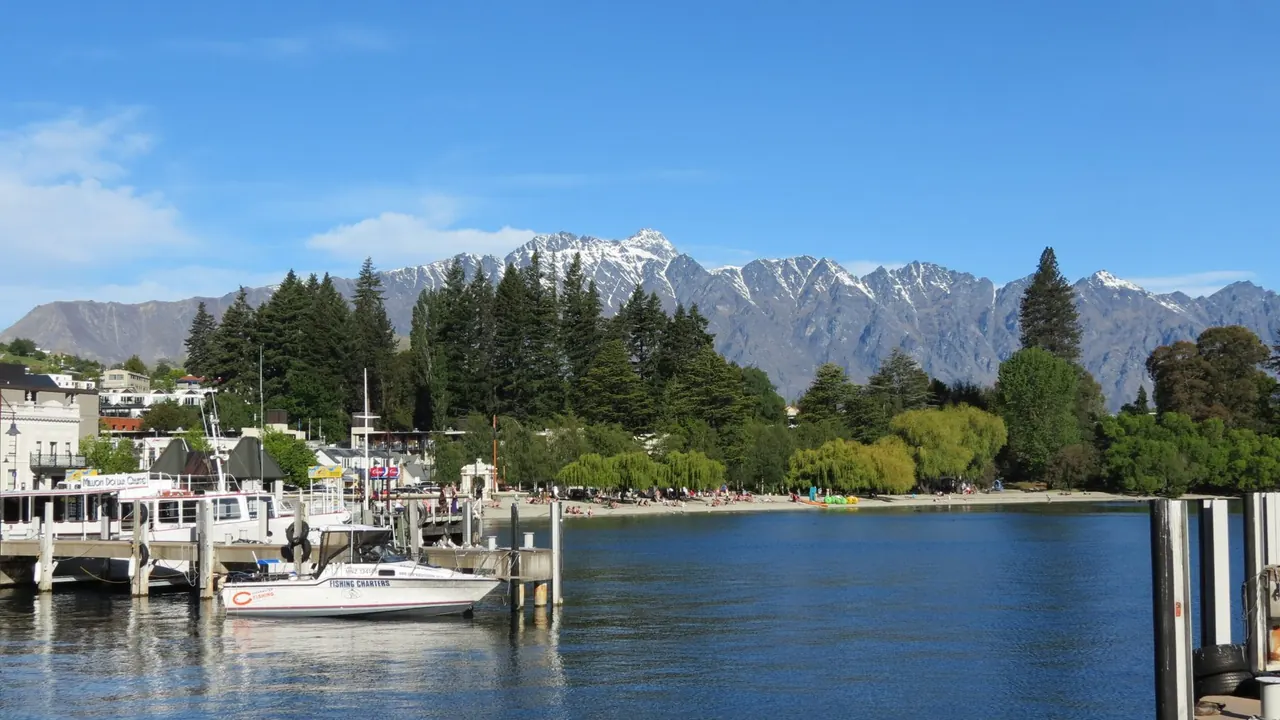
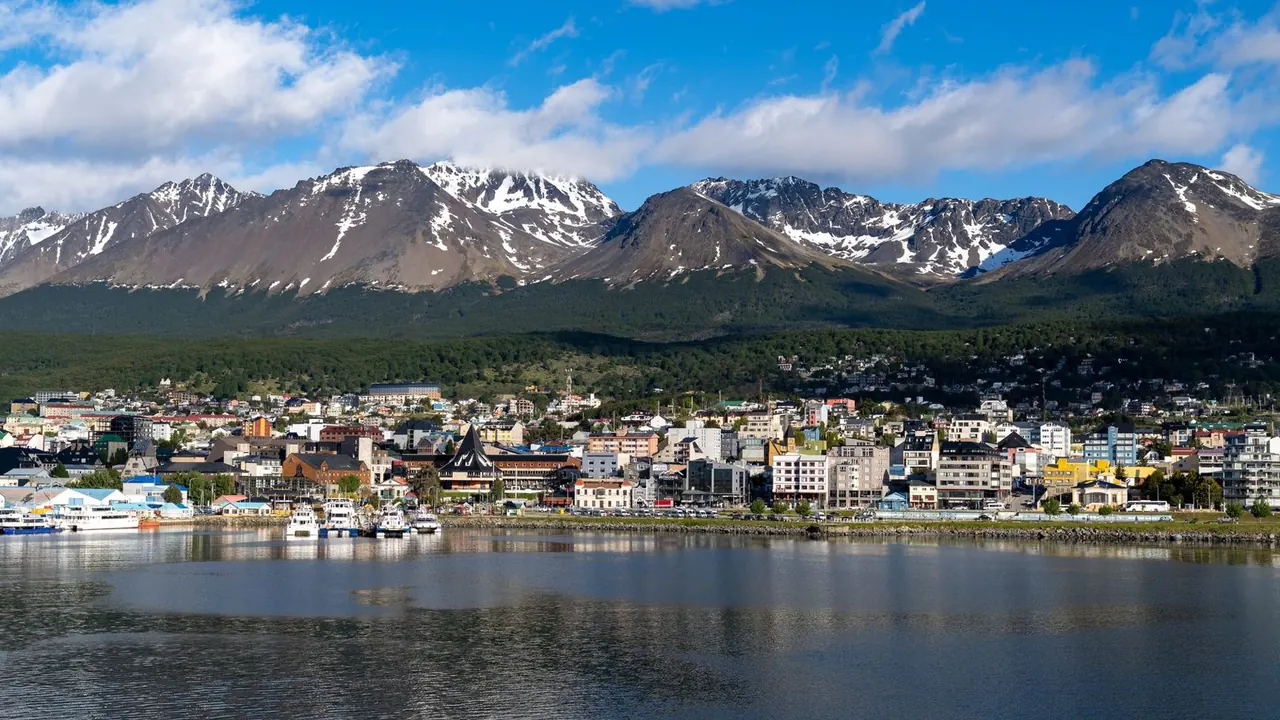
Photos: Queenstown by Robert Linsdell, CC BY 2.0, cropped; Ushuaia by Jan Tang, Pexels License.
Queenstown or Ushuaia?
Our verdict in twelve categories, each scored against the same fixed benchmark cities, and the climate month by month, so you can choose for your trip.
Choose Queenstown for
- day trips
- nightlife
- families
Queenstown is the better pick for an active trip with plenty around it. Bungy, jet boats, mountain biking and four ski fields sit within easy reach, and the town has the bars to fill your evenings. The Gibbston wine country, Arrowtown and Wanaka make easy days out. It also works better for families. The cost is the main drawback: it is a resort town, and the activities you come for add up quickly.
Choose Ushuaia for
- prices
- culture and sights
Travellers drawn to remoteness will find Ushuaia the more memorable place. It has sea lions and penguins on the Beagle Channel, beech forest and glacier walks behind the town, and the sense of standing at the end of the map, with ships leaving for Antarctica. Its old prison museum gives it slightly more to see indoors. The evenings are quieter, the town offers fewer outings, and a stay there costs less.
Scoreboard
Twelve categories on one fixed scale from 0 to 100. The shaded stretch is the gap between the two.
Your match
Pick a travel style or drag the sliders, and both match scores follow your weighting.
Wins on day trips and nightlife with your weighting.
Wins on prices and culture and sights with your weighting.
What matters to you?
Category by category
What the scores mean for a trip.
Beaches & swimming
Neither town is a beach destination, but Queenstown at least offers a swim of sorts in summer. You can jump off the town jetty, lie on the shingle at Queenstown Bay, or take a gentler dip in Lake Hayes or Moke Lake in January and February.
Ushuaia's shore on the Beagle Channel is rock, shingle and kelp, the water is close to polar, and the wind seldom drops. There, the sea is something you watch from a boat.
Food & drink
The two are much alike for food, and both have a narrow range. Queenstown's strength is wine: cellar doors and winery restaurants in the Gibbston Valley, with lamb and venison in town and plenty of burger counters, pie shops and ramen for casual meals.
Ushuaia eats from the cold sea instead. King crab is the dish to try, along with toothfish and channel mussels, and lamb is roasted whole over an open fire. Dinner starts at late Argentine hours and runs long.
Culture & sights
Ushuaia has more to see indoors, mostly because of its old prison. The radial cell blocks now house the Maritime Museum, with exhibits on prison life, navigation and Antarctic exploration. Smaller museums cover the Yámana people, and pioneer houses of wood and corrugated iron stand among the plainer buildings in the streets.
Queenstown's best sight is the 1912 steamship TSS Earnslaw, along with a few gold-rush stone buildings and the lakeside gardens. Its gold-rush history is told better in nearby Arrowtown. Neither town needs more than a day.
Nightlife
Queenstown has a real night out. Seasonal workers, backpackers and skiers crowd the pubs and DJ bars around Shotover, Camp and Searle streets, with après-ski in winter and lakefront terraces on summer evenings. It is bar life rather than club culture, but it is lively.
Ushuaia's evenings are a late dinner followed by a drink in a brewpub, with a casino and the odd late bar for anyone still up. Most visitors turn in early because a boat or trek leaves in the morning.
Nature & outdoors
Both towns have outstanding scenery. Queenstown comes out ahead on the sheer range of things to do. Commercial bungy began at the Kawarau Bridge, jet boats run the Shotover canyons, the Routeburn Track and Mount Aspiring are close by, and four ski fields are within a drive.
Ushuaia feels wilder and emptier, and it has marine life that Queenstown lacks. There are sea lions, cormorants and penguins on the Beagle Channel, beech forest in Tierra del Fuego National Park, and hikes to the Martial Glacier and Laguna Esmeralda. In winter you can ski at Cerro Castor or go dog-sledding.
Day trips
Queenstown has the better choice of places to go. Arrowtown, with its miners' cottages and Chinese settlement, is about twenty minutes away, and Wanaka is an hour over the Crown Range. The vineyards around Cromwell and Bannockburn and the goldfields towns of Clyde and Alexandra are also within reach. Milford Sound is the region's best-known sight, but it is three to four hours away by road in each direction, so it takes a whole day.
From Ushuaia, the main outings are the historic Estancia Harberton with its marine mammal museum, Tolhuin on the way to Lago Fagnano, and a boat across the channel to Puerto Williams in Chile. Most other outings from Ushuaia lead into empty country rather than to another town.
Good for families
Queenstown is the easier town to manage with children. It is compact and relaxed, and the lakeside gardens, playgrounds, steamship wharf and gondola base are all a short walk from one another. The catch is that the thrills the town is famous for don't suit every age. The bungy jumps, canyon swings and skydives have age and weight limits, so younger children often watch while older siblings jump, and long drives to Glenorchy or Milford Sound test their patience.
Ushuaia is also small and safe, but very little in it is made for children, so families who expect entertainment laid on soon run out of things to do. It suits parents whose children are happy walking, watching wildlife and coping with a cold wind. In winter Queenstown stays ahead, with proper ski schools at Coronet Peak and Cardrona. In Ushuaia, winter brings snow to play in and dog-sledding in the valleys near town.
Getting around
Getting around is much the same in both towns. Each has a small centre you can walk, and each needs wheels for the wild country around it. In Queenstown the buses are genuinely useful for Arrowtown, Frankton and the airport, and a water taxi crosses the lake. The wineries and trailheads still call for a car, and the single Frankton road backs up at busy times.
Ushuaia's grid climbs steep hillside streets that can be icy in winter, and its buses are of little use to visitors. Shuttles and taxis cover the trailheads, and boat trips leave from the central pier.
Shopping & style
Neither town is worth a trip for shopping, though Queenstown has a little more to browse. It has merino and possum-wool knitwear, greenstone jewellery, landscape galleries, specialist ski and bike shops, and a lakefront craft market on summer weekends.
Ushuaia's main street sells penguin souvenirs, chocolate, wool and spare fleeces. Tierra del Fuego's special tax regime makes some goods cheaper than elsewhere in Argentina.
Affordability
Ushuaia is the easier town on your budget. It is dear for Argentina, and boat trips, guided treks and taxis to trailheads add up. Hostels and casual meals stay reasonable, though, and spring or autumn bring cheaper rooms.
Queenstown is expensive all round. Rooms cost more than elsewhere in New Zealand, meals carry resort prices, and the bungy jumps, scenic flights and lift passes you came for pile on top. Self-catering and the free trails soften the cost, but not by much.
Live music & performing arts
Both towns are thin on performing arts, and neither has theatre, opera or an orchestra to plan around. Queenstown has a bit more in the evenings: covers bands in the après bars, touring comedians at the events centre, and a few days of street performances and concerts during the winter festival. In Ushuaia it comes down to occasional concerts at the cultural centre and live music in the odd pub.
Wellness & relaxation
Queenstown has more ways to relax, despite its love of adrenaline. You can book a private cedar hot tub above the Shotover River, a lodge spa towards Arrowtown, or a soak after skiing. Glenorchy's quiet at the head of the lake is the place to escape the tour buses in the centre.
In Ushuaia, wellness means the spas in the larger hotels, some of them in the forest above the channel. The rest comes from the town going quiet once the cruise passengers leave.
When should you go?
Pick your month. The climate figures are measured averages, not a forecast.
Queenstown in July
Ushuaia in July
Daytime high, °C
Rainfall in the month, mm
Where the figures come from
Queenstown has no weather station within reach, so its figures come from a gridded climate model rather than a measured record, and read a broad area rather than the city itself.
Temperature and rainfall are climate normals, averaged over the years shown. Queenstown: 1991-2020 normals, TerraClimate 4 km grid at the town, no weather station within 90 km. Ushuaia: 1991-2020 normals, Ushuaia Aerodrome (1 km from centre).
Queenstown is the warmer of the two all year. From December to February it reaches about 20°C, which is good walking weather and just warm enough for a quick plunge in the lake. Ushuaia's warmest months only reach about 14°C, so neither town has a beach climate. Rain works the other way. Queenstown is the wetter town: September is the wettest month at around 200mm, followed by October and March. Ushuaia's rain is light and spread evenly through the year.
Both towns are cold in winter. Queenstown's July highs of about 6°C suit skiers more than people strolling the streets. Ushuaia is colder still, and its sunshine falls to about 44 hours in June. For walks and boat trips, Ushuaia is at its best from November to January, when the days are long and bright. Queenstown is best from December to February, and April is a cooler, drier choice once the March rain has passed.
Which traveller are you?
On a food and nightlife trip, Queenstown is the stronger choice. Its tight blocks of pubs, cocktail bars and après-ski bars stay loud on winter weekends, and Gibbston pinot noir makes a long lunch in the vines easy. In Ushuaia, an evening means dinner and a quiet craft beer.
On a family trip with children, Queenstown has far more ready to go. There is the gondola and luge, kiwi at the wildlife park, jet boats, an indoor pool and ski schools. Ushuaia has penguins and its little steam train, but its wind and cold wear young children down.
On a tight budget, Ushuaia is the easier place to manage. Rooms, excursions and taxis still cost more than elsewhere in Argentina, but casual meals and hostels stay reasonable. In Queenstown, rooms, meals and the activities you came for all carry resort prices.
Before you go
| Measure | Queenstown | Ushuaia |
|---|---|---|
| Official language | English, New Zealand Sign Language, Māori | Spanish |
| Currency | New Zealand Dollar (NZD) | Argentine Peso (ARS) |
| Sockets | I230 V, 50 Hz | CI220 V, 50 Hz |
| Driving side | Left | Left |
| Time zone | UTC+12, UTC+13 in summer | UTC-3 |
| Emergency number | 111 | 117 or 911 |
| Elevation | 324 m | 23 m |
| Main airport | Queenstown Airport (ZQN)7 km from centre7 non-stop destinations | Ushuaia - Malvinas Argentinas International Airport (USH)4 km from centre9 non-stop destinations |
| Public holidays this year | 12 days | 16 days |
By the numbers
| Measure | Queenstown | Ushuaia |
|---|---|---|
| City population | 29,000 | 82,615 |
| People per km² | - | 3,592 |
| Museums within 10 km | 0 | 5 |
| UNESCO World Heritage sites within 50 km | 0 | 0 |
Where else could you go?
Every comparison below shares a destination with this one, so you can follow Queenstown or Ushuaia somewhere new.