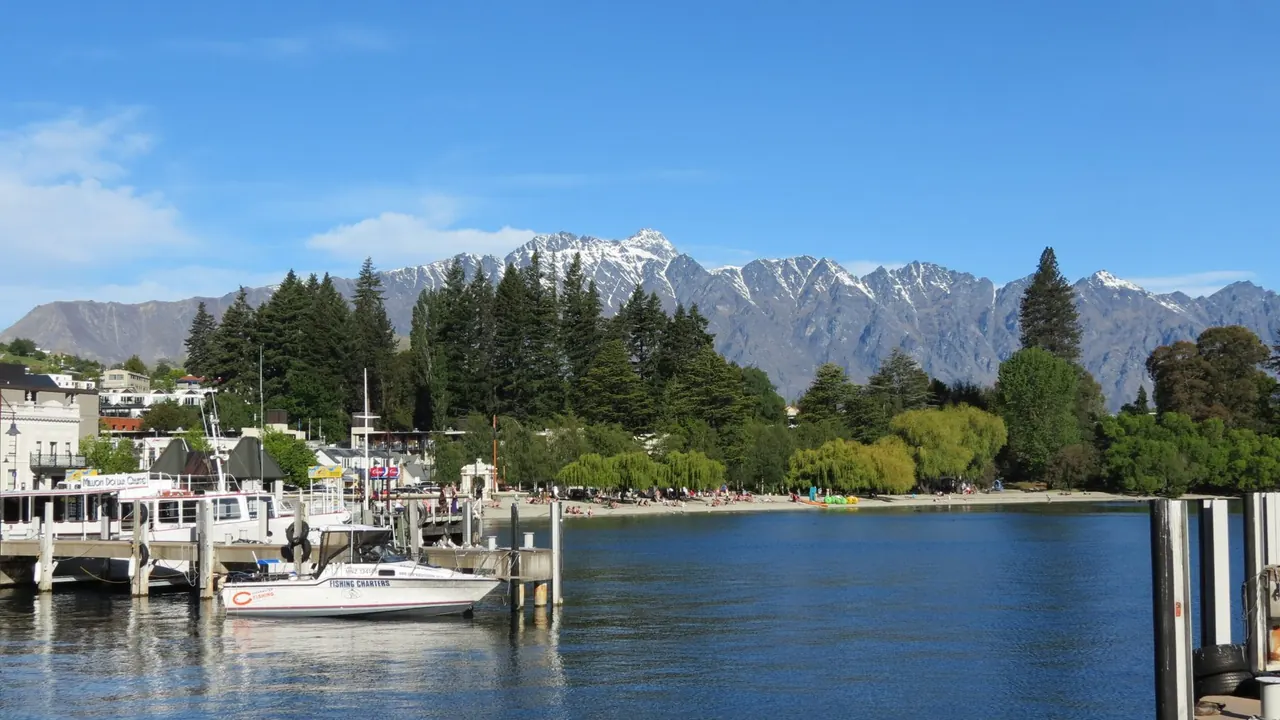
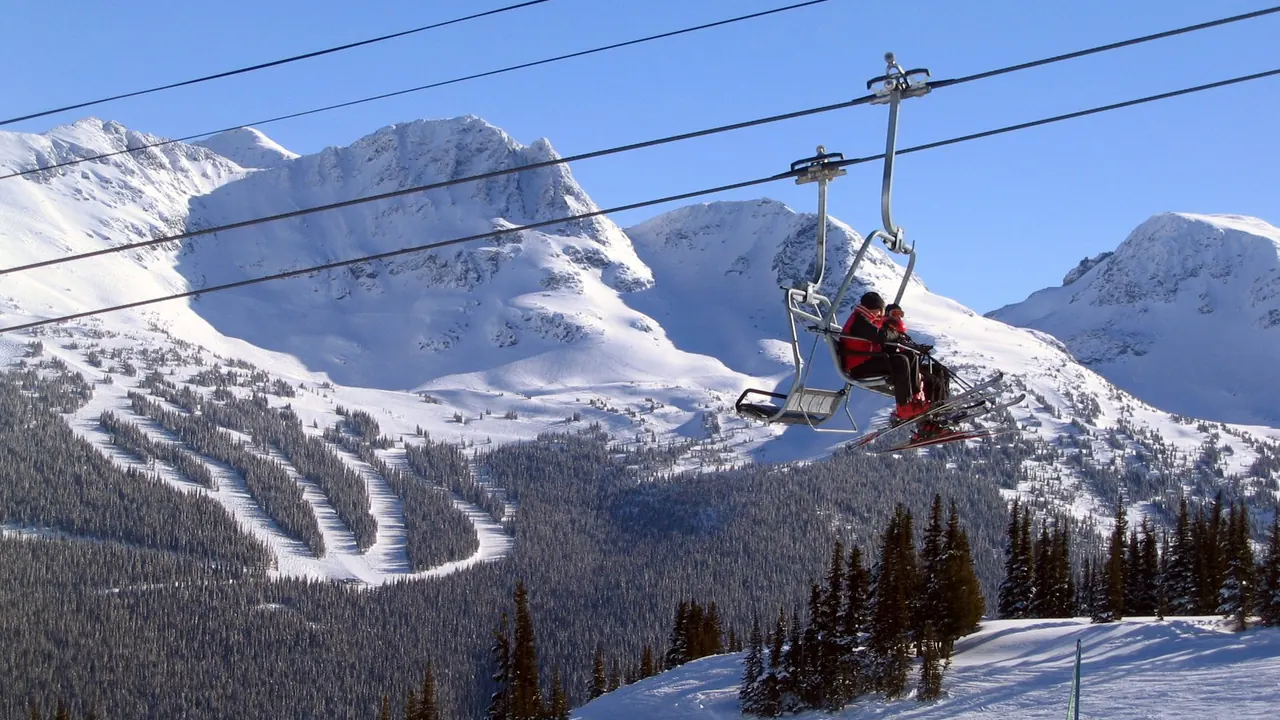
Photos: Queenstown by Robert Linsdell, CC BY 2.0, cropped; Whistler by Ruth Hartnup, CC BY 2.0, cropped.
Queenstown or Whistler?
Our verdict in twelve categories, each scored against the same fixed benchmark cities, and the climate month by month, so you can choose for your trip.
Choose Queenstown for
- day trips
- prices
- food and drink
Queenstown suits travellers who want adrenaline and a road trip. Bungy jumping, jet boats on the Shotover and long walks into Mount Aspiring National Park start at the edge of town. Arrowtown, Wanaka and the Gibbston pinot noir cellar doors are easy drives away. It is also a little easier on the budget than Whistler, though it is still not cheap.
Choose Whistler for
- getting around
- wellness
- beaches
Whistler is the better pick for a ski week or a family trip that never leaves the resort. Two huge linked mountains rise straight from a car-free village, the ski schools and summer activities keep children busy, and a silent forest spa makes the evenings easy. The Audain Art Museum and the Squamish Lil'wat Cultural Centre also give it more to see on a day off the slopes.
Scoreboard
Twelve categories on one fixed scale from 0 to 100. The shaded stretch is the gap between the two.
Your match
Pick a travel style or drag the sliders, and both match scores follow your weighting.
Wins on day trips and prices with your weighting.
Wins on getting around and wellness with your weighting.
What matters to you?
Category by category
What the scores mean for a trip.
Beaches & swimming
Neither town has the sea, but Whistler's lakes are much better for a real swim. In July and August, Lost Lake's sandy shore lies within walking distance of the village, Alta and Alpha lakes have rafts and grassy parks, and the shallower water warms to about 20°C.
In Queenstown the deep, snow-fed Wakatipu stays cold enough that a swim means a quick jump off the town jetty. For gentler water you have to drive to Lake Hayes or Moke Lake.
Food & drink
The two towns eat about equally well, but they lean different ways. In Queenstown, wine leads. A long lunch among the Gibbston Valley pinot noir vines is the best meal of the trip, and back in town there are lamb and venison, pies and famous burger queues.
Whistler's best tables cook Pacific Northwest produce such as BC salmon and spot prawns, backed by serious cellars. Its daily food ritual is nachos and craft beer on the après patios. Both towns run out of variety within a week.
Culture & sights
Whistler has more to fill a day off the slopes. The Audain Art Museum holds Emily Carr paintings and Northwest Coast First Nations masks, and the Squamish Lil'wat Cultural Centre shows the carving and weaving of the two nations whose land this is.
Queenstown has no museum of weight. Its sights are the 1912 TSS Earnslaw steamship, a few gold-rush stone buildings and the view from Bob's Peak. Its history is better told in Arrowtown.
Nightlife
Both towns party harder than their size suggests, and both crowds are young seasonal workers. Queenstown's few central blocks are full of pubs, cocktail bars and DJ bars rather than true clubs. Its nightlife also keeps going in summer, with long light evenings on the lakefront terraces.
Whistler has a handful of real clubs, and after the lifts close the après crowd moves straight there from the patios. Outside the ski season and the summer bike festivals, though, the village goes quiet early.
Nature & outdoors
Both are world-class mountain bases, so the choice is about the kind of outdoors you want. Queenstown's appeal is variety and thrill. Commercial bungy jumping began at the Kawarau Bridge, and there are jet boats in the Shotover canyons, the Routeburn Track and a day out to Milford Sound. Its skiing is spread over several separate fields.
Whistler is built on scale. Whistler and Blackcomb are joined by the Peak 2 Peak Gondola, with glaciers and deep Coast Mountains snow. In summer the town has a famous downhill bike park, Garibaldi's turquoise lakes and black bears on the slopes.
Day trips
Queenstown has far more towns within easy reach. Gold-rush Arrowtown is twenty minutes away, Wanaka is an hour over the Crown Range, and the vineyards of Cromwell, Bannockburn and old Clyde make relaxed outings.
Around Whistler there is mostly wilderness. You can visit farming Pemberton, Squamish with its gondola, and the Britannia mining museum. The one big outing is Vancouver, two hours down the Sea to Sky Highway, and it is better done with an overnight stay.
Good for families
Whistler is the easier family base. Children can walk safely through the car-free village, and lodgings with kitchens are common. Large ski schools, tubing, mini-golf and summer lake beaches mean little time in a car.
Queenstown has good set pieces: the gondola and luge, kiwi at the wildlife park and a cruise on the old steamship. But its famous jumps and swings have age and weight limits, and long drives to the bigger sights tire young children.
Getting around
Whistler is much easier without a car. The gondolas to both mountains leave from the edge of its pedestrian village, free shuttles run along the valley, and the paved Valley Trail links lakes and parks on foot or by bike.
Queenstown's centre is tiny and easy to walk, and buses run to Arrowtown and Frankton. Beyond that, the wineries, Glenorchy and the trailheads really call for a hire car, and the single Frankton road backs up at busy times.
Shopping & style
Both towns are mostly places to buy outdoor gear, and neither is a fashion destination. Queenstown adds merino and possum-wool knitwear, greenstone jewellery and a summer craft market by the wharf. Whistler adds specialist ski tuning shops, Indigenous prints and carvings, and a summer farmers' market in the Upper Village.
Affordability
Both towns are expensive, but Whistler is harder on the wallet. Its lift passes are among the world's costliest, and slopeside rooms climb steeply over Christmas and New Year.
In Queenstown the bills come mostly from the activities: bungy jumps, jet boats and scenic flights. Hostels, Frankton supermarkets and the free trails go further there.
Live music & performing arts
Neither is a place for a concert or a play. In Queenstown, live music mostly means a covers band in a pub, plus a few days of street performance during the winter festival. Whistler's free summer concerts on Olympic Plaza and its buskers give the village a little more outdoor music. For anything bigger, Vancouver is two hours away.
Wellness & relaxation
Whistler takes wellness more seriously. Its Nordic-style spa beside the river, with hot pools, saunas and a rule of silence, is an evening many visitors remember, and the big hotels have full spas for sore ski legs.
Queenstown has no bathing tradition. Unwinding there means a private cedar tub above the Shotover or a lodge massage, and the calm is easier to find in Arrowtown or Glenorchy than in the busy centre.
When should you go?
Pick your month. The climate figures are measured averages, not a forecast.
Queenstown in July
Whistler in July
Daytime high, °C
Rainfall in the month, mm
Where the figures come from
Queenstown has no weather station within reach, so its figures come from a gridded climate model rather than a measured record, and read a broad area rather than the city itself.
Whistler has no rain gauge within 25 km of the centre, so its rainfall comes from a gridded climate dataset read at the city rather than from a gauge further away.
Temperature and rainfall are climate normals, averaged over the years shown. Queenstown: 1991-2020 normals, TerraClimate 4 km grid at the town, no weather station within 90 km. Whistler: 1991-2020 normals, Whistler - Nesters (1.1 km from centre).
The two towns have opposite seasons, so Queenstown's summer falls in Whistler's ski season. Queenstown is at its best from December to March, when days reach about 20°C. That is good weather for walking, cycling and wine lunches, but the lake stays cold. Autumn turns cool and clear. Winter highs drop to single figures, which suits skiing at Coronet Peak and the Remarkables. Rain is spread through the year, and September and October are the wettest months, with up to 200mm.
Whistler swings much further. July and August are warm at about 25°C and the driest months, so they are the time for the valley lakes, hiking and the bike park. From November to January heavy rain and snow set in, and December highs sit around 0°C. That is perfect for the slopes but cold for anything else. Late spring and September are mild and quieter between the two seasons.
Which traveller are you?
On a family trip with children, Queenstown has the gondola and luge and kiwi at the wildlife park, though its bungy and swings carry age limits. Whistler is easier still, with a car-free village, gentle beginner runs and summer gondola rides to spot bears.
For a relaxing and wellness trip, Queenstown's calm comes mostly from scenery, such as still mornings on Wakatipu. Whistler offers more: a soak under falling snow in winter, or a slow week of valley walks and long dinners in late spring.
On a trip on a tight budget, Queenstown goes a little further if you skip the paid thrills. Queenstown Hill and Ben Lomond are free climbs straight from the streets. In Whistler, come in spring or autumn and stay further down the valley.
Before you go
| Measure | Queenstown | Whistler |
|---|---|---|
| Official language | English, New Zealand Sign Language, Māori | French, English |
| Currency | New Zealand Dollar (NZD) | Canadian Dollar (CAD) |
| Sockets | I230 V, 50 Hz | AB120 V, 60 Hz |
| Driving side | Left | Right |
| Time zone | UTC+12, UTC+13 in summer | UTC-8, UTC-7 in summer |
| Emergency number | 111 | 911 |
| Elevation | 324 m | 670 m |
| Main airport | Queenstown Airport (ZQN)7 km from centre7 non-stop destinations | Vancouver International Airport (YVR)104 km from centre109 non-stop destinations |
| Public holidays this year | 12 days | 11 days |
By the numbers
| Measure | Queenstown | Whistler |
|---|---|---|
| City population | 29,000 | 13,982 |
| People per km² | - | 58 |
| Museums within 10 km | 0 | 1 |
| UNESCO World Heritage sites within 50 km | 0 | 0 |
Where else could you go?
Every comparison below shares a destination with this one, so you can follow Queenstown or Whistler somewhere new.