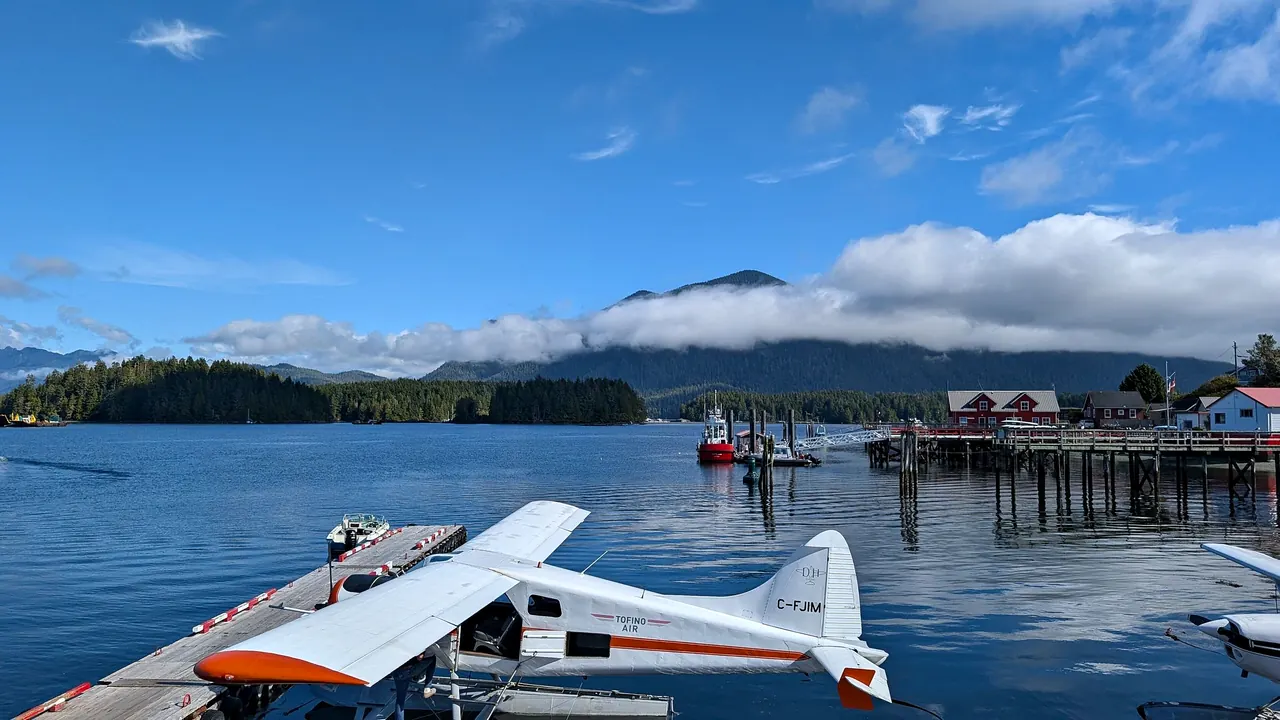
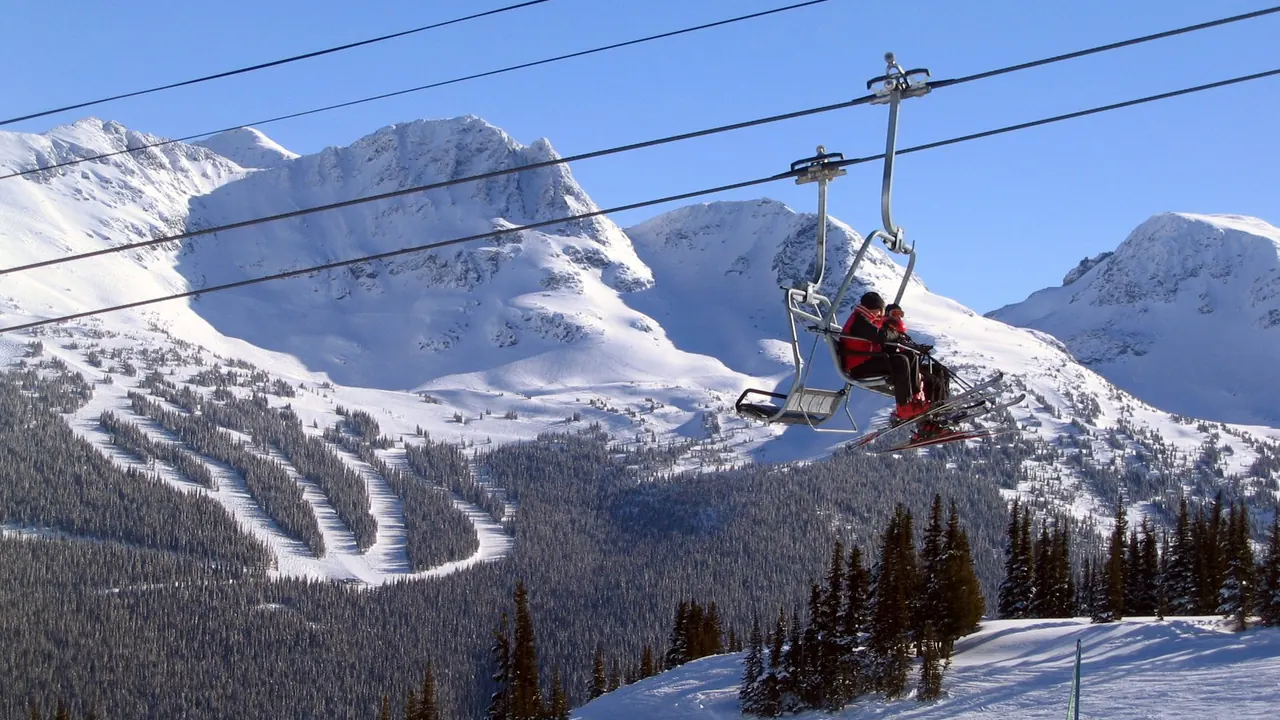
Photos: Tofino by গীতাশ্ৰী গগৈ আপ্তে, CC0; Whistler by Ruth Hartnup, CC BY 2.0, cropped.
Tofino or Whistler?
Our verdict in twelve categories, each scored against the same fixed benchmark cities, and the climate month by month, so you can choose for your trip.
Choose Tofino for
- beaches
- prices
- food and drink
Tofino is for travellers who want the ocean and the rainforest, and very little else. It suits couples and friends who like to walk long beaches at low tide, learn to surf in a thick wetsuit, watch whales and bears from a boat, and end the day by a fire. It is quiet, remote and slow, and in the wet winter months that becomes the point, with storm watching from a cabin.
Choose Whistler for
- getting around
- nightlife
- day trips
Whistler has more to fill a week. The car-free village, two huge mountains and big ski schools make it the easier choice for families and for anyone who wants skiing in winter or mountain biking and alpine hiking in summer. It also has the livelier evenings, a couple of museums worth a few hours, and Vancouver within a day's reach.
Scoreboard
Twelve categories on one fixed scale from 0 to 100. The shaded stretch is the gap between the two.
Your match
Pick a travel style or drag the sliders, and both match scores follow your weighting.
Wins on beaches and prices with your weighting.
Wins on getting around and nightlife with your weighting.
What matters to you?
Category by category
What the scores mean for a trip.
Beaches & swimming
Neither is a place for a warm swim, and they fall short in opposite ways. Tofino has the real coastline: Long Beach running about 16km through the national park, Chesterman's sandbar out to Frank Island and the surf at Cox Bay. But the open Pacific stays cold and has rip currents, so you go in to surf rather than to bathe.
Whistler's beaches are lakeshores. Lost Lake, Alta Lake and Alpha Lake have docks, rafts and grassy banks, and in a July heatwave they warm enough for a comfortable dip. It makes a good afternoon after a hike, but the season is short.
Food & drink
The two eat about equally well for small resort towns, but from different larders. Tofino cooks from Clayoquot Sound, with spot prawns, Dungeness crab and oysters, fish tacos from food trucks and a few ambitious West Coast tasting menus.
Whistler's strengths are its BC wine lists and deep cellars, together with the after-ski ritual of nachos and craft beer at the foot of the gondolas. Both run out of new places within a week, and Tofino's choice shrinks further in the wet winter.
Culture & sights
Whistler has more for a rainy afternoon. The Audain Art Museum holds Emily Carr paintings and Northwest Coast masks, and the Squamish Lil'wat Cultural Centre adds carving, weaving and guided talks. The Olympic venues are a pleasant extra.
In Tofino, culture means Nuu-chah-nulth galleries, carving you may see in progress and the Kwisitis Visitor Centre at Wickaninnish Beach. That fills an afternoon at most.
Nightlife
Whistler is the only one of the two with a night out. After-ski drinks start on the patios as the lifts close, and on winter weekends a handful of clubs and late bars stay loud into the early hours. The crowd is young and beery, though, and outside the ski season the village goes quiet early.
Tofino has a pub or two and a brewery taproom, and nothing stays open late. Most evenings end at a beach fire or in a hot tub before an early start for the tide.
Nature & outdoors
Both are among Canada's great outdoor bases. Whistler edges ahead for scale and variety: two huge mountains joined by the Peak 2 Peak Gondola, a famous downhill bike park, and alpine trails up to the turquoise lakes of Garibaldi Provincial Park.
Tofino's outdoors is the sea and the old-growth forest. It has the boardwalks through giant cedars, Meares Island's ancient trees, kayaking among the islands of the sound, grey whales and sea otters, and winter storms breaking on the headlands. Your choice comes down to mountains or ocean.
Day trips
Whistler has more within reach. Squamish and its gondola, the Britannia mine museum on the drive south and farming Pemberton to the north all make easy outings, and Vancouver is about two hours away along the Sea to Sky Highway.
From Tofino, quieter Ucluelet with its lighthouse loop is a pleasant half day. Beyond that there is only the long mountain road east, so most outings are boat trips into the sound.
Good for families
Whistler is the more practical choice with children. It has a car-free village, large ski schools with gentle beginner runs, tubing and sledding, and in summer lake beaches, mini-golf and an adventure park at the base of Blackcomb.
Tofino suits children who are happy outdoors, building driftwood forts, poking around tide pools and taking surf lessons in small wetsuits. It has nothing built for children, though, and on wet days there is little to do indoors.
Getting around
At Whistler you can leave the car behind. The village is pedestrian-only, the gondolas leave from its edge, free shuttles run along the valley, and the Valley Trail links the lakes for walking or cycling. Most visitors arrive by airport coach from Vancouver.
Tofino's beaches, trailheads and resorts are spread along the highway south of town, so most visitors drive in over the mountains and keep the car. The paved path to the national park is good for cycling, and the best outings go by water taxi or floatplane.
Shopping & style
Whistler is better for one thing, gear. Its village is full of ski, board and bike shops with tuning and rental, and a farmers' market runs in summer.
Tofino's best shopping is in its galleries, which sell Nuu-chah-nulth carving, silver jewellery and prints. Otherwise there are surf shops and a few beach boutiques. In both towns, anything more means a trip to a city.
Affordability
Both are expensive, and in different ways. In Tofino the cost is mostly the room: beds are scarce, summer rates are steep, and food and boat trips carry a premium for the remote location. Campgrounds and the stormy months from November to March bring the cost down.
At Whistler, lift passes, rentals and lessons pile on top of resort lodging, and Christmas and New Year are the dearest weeks. Kitchens, free shuttles and spring or autumn dates help. The cheap seasons fall at opposite ends of the year: winter is the bargain in Tofino and the most expensive time at Whistler.
Live music & performing arts
Neither is a place to plan evenings around a show. Whistler has a little more: free summer concerts in Olympic Plaza, buskers in the village, and local theatre and touring acts at a small community arts centre.
In Tofino, live music means an occasional local band at a pub or brewery and a few community festivals in summer.
Wellness & relaxation
Whistler has the stronger spa scene. Its large Nordic-style outdoor spa beside the river has hot pools, saunas and cold plunges among the cedars, kept in silence, and the big hotels and many massage studios cater to sore skiers. Peak winter weekends are noisy, though.
Tofino relaxes you mostly through its pace, with days set by the tides and evenings in a cabin hot tub. Resort spas use seaweed and cedar in their treatments. The special soak is Hot Springs Cove, a full day out by boat or floatplane, with rock pools that run into the sea.
When should you go?
Pick your month. The climate figures are measured averages, not a forecast.
Tofino in July
Whistler in July
Daytime high, °C
Rainfall in the month, mm
Where the figures come from
Whistler has no rain gauge within 25 km of the centre, so its rainfall comes from a gridded climate dataset read at the city rather than from a gauge further away.
Temperature and rainfall are climate normals, averaged over the years shown. Tofino: 2011-2024 (rainfall 1991-2020) normals, Lennard Island (4.9 km from centre). Whistler: 1991-2020 normals, Whistler - Nesters (1.1 km from centre).
Tofino is mild and very wet. Summer highs reach only about 18°C, and July and August are the driest months, so June to September is the time for beach walks, kayaking and whale trips. The rain builds from October and is heaviest from November to January, with around 506mm falling in January alone. The sea never gets warmer than about 14°C, so surfers wear thick wetsuits all year. Winter never freezes, though, and if you come to watch storms from a cabin, the wettest months are the reason to come.
Whistler has proper seasons. July and August are warm at about 25°C, which suits hiking, biking and swimming in the lakes. In December daytime highs sit around 0°C, and snow covers the mountains from late November into spring. Between the two seasons, October and early November are wet and grey, with no snow on the slopes and no summer warmth, so they are Whistler's least rewarding weeks. Both towns are at their best in summer. In winter they part ways: Whistler becomes a ski resort and Tofino becomes a place to watch the storms.
Which traveller are you?
On a food and nightlife trip, Whistler is clearly better. After-ski drinks on the patios, late bars and clubs in the pedestrian village and serious BC wine cellars give the evenings far more going on than Tofino's pub, taproom and beach fires.
On a family trip with children, Whistler is easier. The village is car-free, the ski schools are large, and summer brings lake beaches and an adventure park. Tofino's tide pools are lovely, but rainy days leave little to do indoors.
Surfers should choose Tofino. Cox Bay and the long beaches of the national park get Pacific swell all year round, with lessons on every bay. Whistler is a long way from the sea, and its water is all lakes and rivers.
Before you go
| Measure | Tofino | Whistler |
|---|---|---|
| Official language | French, English | French, English |
| Currency | Canadian Dollar (CAD) | Canadian Dollar (CAD) |
| Sockets | AB120 V, 60 Hz | AB120 V, 60 Hz |
| Driving side | Right | Right |
| Time zone | UTC-8, UTC-7 in summer | UTC-8, UTC-7 in summer |
| Emergency number | 911 | 911 |
| Elevation | 10 m | 670 m |
| Main airport | Tofino / Long Beach Airport (YAZ)12 km from centre1 non-stop destination | Vancouver International Airport (YVR)104 km from centre109 non-stop destinations |
| Public holidays this year | 11 days | 11 days |
By the numbers
| Measure | Tofino | Whistler |
|---|---|---|
| City population | - | 13,982 |
| People per km² | - | 58 |
| Museums within 10 km | 0 | 1 |
| UNESCO World Heritage sites within 50 km | 0 | 0 |
| Swim season, months above 21 °C | None | - |
Where else could you go?
Every comparison below shares a destination with this one, so you can follow Tofino or Whistler somewhere new.
- Vancouvervs Whistler
- Victoriavs Whistler
- Victoriavs Tofino
- Vancouvervs Tofino
- Kelownavs Whistler
- Seattlevs Whistler