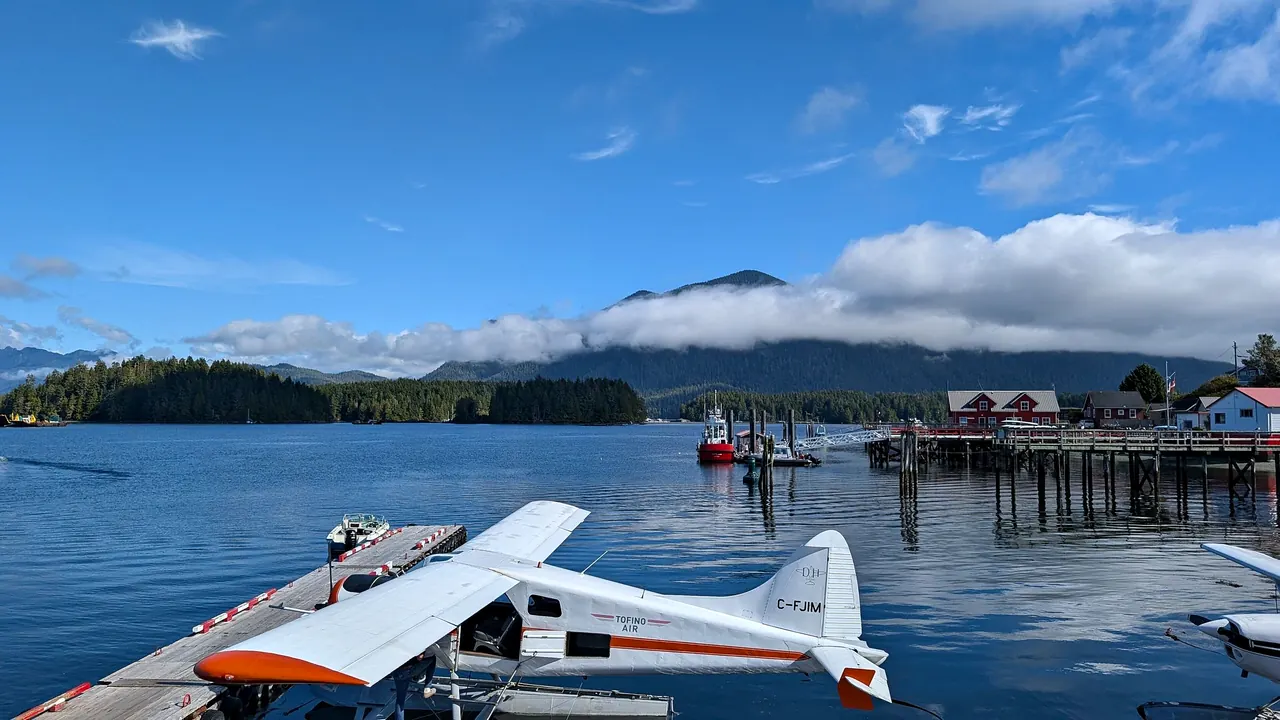
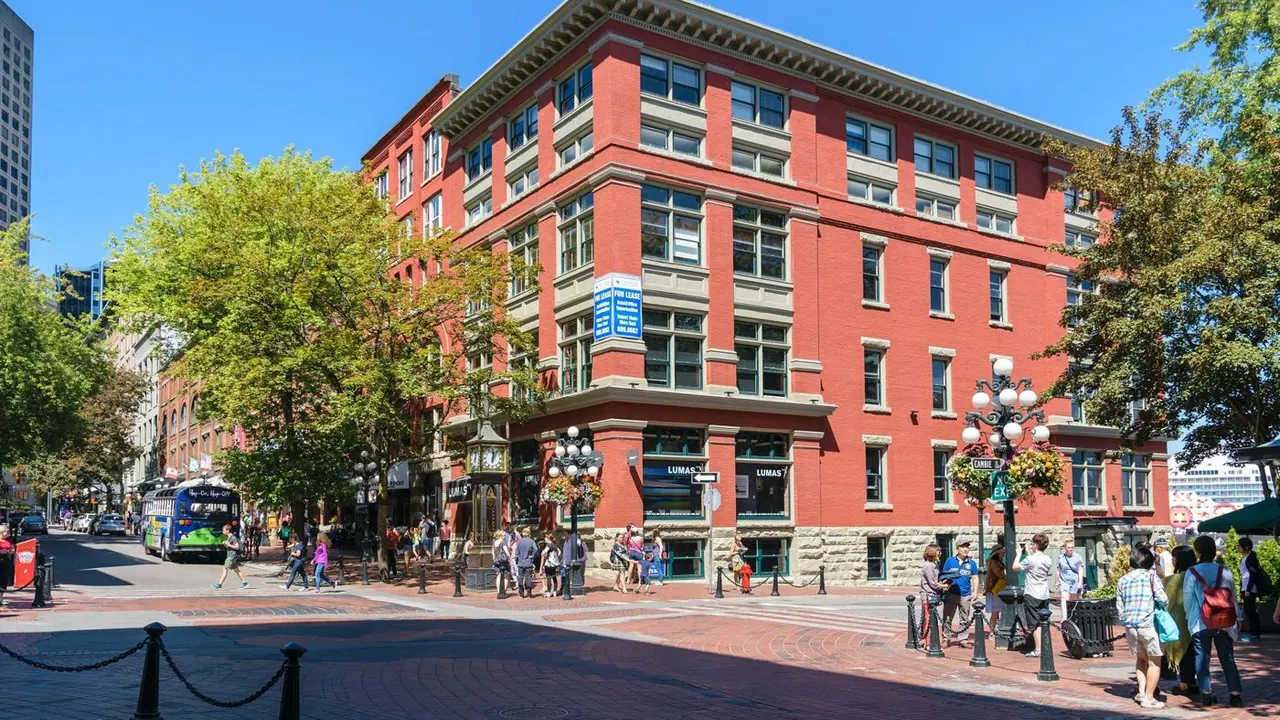
Photos: Tofino by গীতাশ্ৰী গগৈ আপ্তে, CC0; Vancouver by Xicotencatl, CC BY-SA 4.0, cropped.
Tofino or Vancouver?
Our verdict in twelve categories, each scored against the same fixed benchmark cities, and the climate month by month, so you can choose for your trip.
Choose Tofino for
- wellness
Tofino suits travellers who want to be out on the wild edge of the Pacific and little else. It is a place for surfing, rainforest boardwalks, whale and bear trips into Clayoquot Sound, storm watching in winter and early nights in a cabin. You give up museums, varied restaurants, evenings out and easy transport, and you pay remote-resort prices. In return the coast and the forest are right outside the door from morning to night.
Choose Vancouver for
- live music and the arts
- getting around
- day trips
Vancouver is the better pick for almost any trip that mixes the outdoors with city life. The mountains, the seawall and the forest of Stanley Park are just as close at hand, and alongside them come excellent Asian food, a proper museum of Northwest Coast art, theatre and summer festivals, things for children to do and a SkyTrain that gets you about. It is the easier and more varied choice for families, first visits to the region and anyone who wants their evenings to count as well.
Scoreboard
Twelve categories on one fixed scale from 0 to 100. The shaded stretch is the gap between the two.
Your match
Pick a travel style or drag the sliders, and both match scores follow your weighting.
Wins on wellness with your weighting.
Wins on live music and the arts and getting around with your weighting.
What matters to you?
Category by category
What the scores mean for a trip.
Beaches & swimming
Tofino's beaches are open Pacific shoreline: the long sweep of Long Beach in the national park, the tide flats at Chesterman and the surf at Cox Bay. They are wonderful for walking, beach fires and surfing in a thick wetsuit, but the water is too cold and the rips too strong for a casual swim.
Vancouver does a little better for an ordinary beach day. English Bay, Kitsilano and Spanish Banks sit inside the city, face the mountains and fill with picnics and volleyball in July and August. The sheltered water is a few degrees warmer, and the saltwater pool at Kitsilano gives a proper swim.
Food & drink
Tofino eats well for its size, with crab, spot prawns and Clayoquot oysters from food trucks, ocean-view seafood rooms and a few tasting-menu kitchens. Still, it comes down to a few dozen places, and many shorten their hours through the wet winter.
Vancouver is in another league, above all for Asian food. Cantonese dim sum in the city and Richmond, ramen, Korean barbecue and cheap sushi add up to a range Tofino cannot match. The same Pacific seafood shows up on its better menus, and Granville Island's market is good for grazing.
Culture & sights
The two share a theme, the art of the Northwest Coast peoples, but at very different depths. In Tofino it means Nuu-chah-nulth galleries, carving you might watch in progress and the Kwisitis Visitor Centre, which fill an afternoon.
Vancouver has the Museum of Anthropology, with its glass hall of totem poles and canoes, and adds Gastown's Victorian brick streets, the Dr Sun Yat-Sen Garden and Emily Carr at the Vancouver Art Gallery. It is still a short list, but it gives you two or three days of real sightseeing.
Nightlife
Nobody goes to either place to party, but Vancouver at least gives you choices. There are cocktail and wine bars in Gastown, taprooms around Main Street, summer patios in Yaletown and Kitsilano, weekend clubs on Granville Street and the gay bars of Davie Village. In Tofino an evening means a brewery taproom, a pub or a fire on the beach, and the town is quiet early because everyone is up for the morning tide.
Nature & outdoors
Both are superb, so the difference is in kind. In Tofino the wild is the whole stay: old-growth cedar on Meares Island, bears on the shore at low tide, grey whales offshore, sea kayaking through Clayoquot Sound and winter swells crashing on the headlands.
Vancouver offers more variety from a city base. You can ski the lit runs on Grouse, Cypress and Seymour, walk the canyons at Lynn and Capilano, cycle the seawall around Stanley Park or drive the Sea-to-Sky to the granite walls at Squamish and the high country at Whistler. It is less remote, but you can cover more ground.
Day trips
Tofino is a place you stay put. Ucluelet's lighthouse loop fills a half day, the island communities are reached by boat, and everything else is over a long, winding mountain road.
Vancouver has a short but real list of places to go. A ferry takes you to Victoria's harbour and Parliament Buildings, and closer by are the fishing village of Steveston, the old fort at Fort Langley, Bowen Island and the resort village at Whistler.
Good for families
Children have a happy outdoor time in Tofino, with tide pools, driftwood forts, beginner surf lessons and whale trips. The trouble comes on rainy days, when there is almost nothing indoors to fall back on, and the mountain drive in can be hard on young passengers.
Vancouver has plenty more to hold their interest. The aquarium, miniature train and water park are all in Stanley Park, Science World sits on False Creek, the little ferries go to Granville Island's children's market, and the North Shore has suspension bridges and the Grouse gondola. Wet weather is far easier to manage here.
Getting around
In Tofino you really need a car. The village is only a few blocks, and the beaches and trailheads are strung out along the highway. A paved path makes cycling to the park pleasant in dry weather, and the best outings go by water taxi or floatplane.
Vancouver needs no car for most stays. The downtown districts are close enough to walk, the SkyTrain runs in from the airport, the SeaBus crosses to the North Shore and one card covers all of them. Kitsilano and the mountains depend more on buses.
Shopping & style
Shopping in Tofino is a short browse along the main street: surf and outdoor shops, a few boutiques with a beach-town look and the usual souvenir stores. The galleries are what make it worth the time. They sell Nuu-chah-nulth carving, silver jewellery and prints alongside West Coast painting and photography. For almost anything else you have to wait until you are back in the towns on the east side of the island.
Vancouver is clearly the better place to shop. Robson Street has the flagship stores, the luxury houses are on Alberni, and an underground mall gives you somewhere to go on wet days. If you want more original finds, there are the studios and glassblowers of Granville Island, the vintage and design shops of Main Street and Gastown and the Asian malls of Richmond. You can buy Northwest Coast prints and carvings here too, and the city's own outdoor and athleisure brands are easy to pick up.
Affordability
Neither is cheap, but Tofino is harder on the budget. A small supply of rooms, groceries trucked over the mountains and boat tours all add a remote premium. Camping and the stormy months from November to March are the main ways to save.
Vancouver's hotels are expensive too, yet the city leaves you more ways to spend less. Noodle shops, dim sum and casual sushi are good and fairly cheap, public transport is reasonably priced, and the seawall, Stanley Park and the beaches cost nothing.
Live music & performing arts
In Tofino there is little more than the odd band at the pub and a few small summer festivals, so evenings are not built around performances. Vancouver has a full calendar. The symphony plays in the 1927 Orpheum, opera and Ballet BC appear at the Queen Elizabeth Theatre, and in summer there is Bard on the Beach in Vanier Park, the Fringe on Granville Island and the folk festival on Jericho Beach.
Wellness & relaxation
Both are good places to slow down, but in different ways. Tofino's calm comes from the whole place: days set by the tides, cabins with hot tubs, resort spas using local seaweed and cedar, and a day out by boat to the natural hot pools of Hot Springs Cove.
Vancouver finds its calm inside a city. There is a long yoga tradition, there are good hotel day spas and plenty of reflexology in Chinatown and Richmond, and a quiet seawall walk is never far away. There are no hot springs, though, and the big outdoor spas are a drive away near Whistler.
When should you go?
Pick your month. The climate figures are measured averages, not a forecast.
Tofino in July
Vancouver in July
Daytime high, °C
Rainfall in the month, mm
Temperature and rainfall are climate normals, averaged over the years shown. Tofino: 2011-2024 (rainfall 1991-2020) normals, Lennard Island (4.9 km from centre). Vancouver: 1991-2020 normals, Vancouver Harbour CS (4.4 km from centre).
Both are at their best from June to September, but they feel different. Vancouver warms to about 23°C in July and August and gets plenty of sunshine, nearly 300 hours in July, so this is the time for its city beaches, patios and long seawall rides. Tofino stays cooler, around 18°C at the height of summer, and even then its open Pacific is colder than Vancouver's sheltered bays. Summer is also the only stretch when Tofino is reasonably dry, with about 72mm of rain in July.
From October to March the two separate further. Both are mild and grey, rarely too cold for walking, but Tofino takes the full force of Pacific storms and rain, over 500mm in January. That is exactly what storm watchers come for, but it makes walking and boat trips hard work. Vancouver's winters are wet as well, though far less so, and the city has the North Shore ski slopes and indoor sights to fill the shorter days.
Which traveller are you?
For a food and nightlife trip, Vancouver wins easily. Tofino offers fine seafood and a pub or two that wind down early, while Vancouver adds Richmond's Cantonese dim sum, cheap sushi counters, Gastown's cocktail bars and weekend clubs on Granville Street.
On a relaxing and wellness trip, Tofino suits people who want to switch off entirely, with no sights to tick off and the tides setting the day. Vancouver suits those who like their calm with a city close at hand.
For a surfing trip, Tofino is the obvious place. Cox Bay takes the full Pacific swell, lessons run on every bay and the surf lasts all year, while Vancouver's sheltered city beaches have no real waves.
Before you go
| Measure | Tofino | Vancouver |
|---|---|---|
| Official language | French, English | French, English |
| Currency | Canadian Dollar (CAD) | Canadian Dollar (CAD) |
| Sockets | AB120 V, 60 Hz | AB120 V, 60 Hz |
| Driving side | Right | Right |
| Time zone | UTC-8, UTC-7 in summer | UTC-8, UTC-7 in summer |
| Emergency number | 911 | 911 |
| Elevation | 10 m | 2 m |
| Main airport | Tofino / Long Beach Airport (YAZ)12 km from centre1 non-stop destination | Vancouver International Airport (YVR)9 km from centre109 non-stop destinations |
| Public holidays this year | 11 days | 11 days |
By the numbers
| Measure | Tofino | Vancouver |
|---|---|---|
| City population | - | 662,248 |
| People per km² | - | 5,759 |
| Museums within 10 km | 0 | 26 |
| UNESCO World Heritage sites within 50 km | 0 | 0 |
| Swim season, months above 21 °C | None | None |
Where else could you go?
Every comparison below shares a destination with this one, so you can follow Tofino or Vancouver somewhere new.
- Victoriavs Vancouver
- Whistlervs Vancouver
- Seattlevs Vancouver
- Victoriavs Tofino
- Whistlervs Tofino
- Kelownavs Vancouver