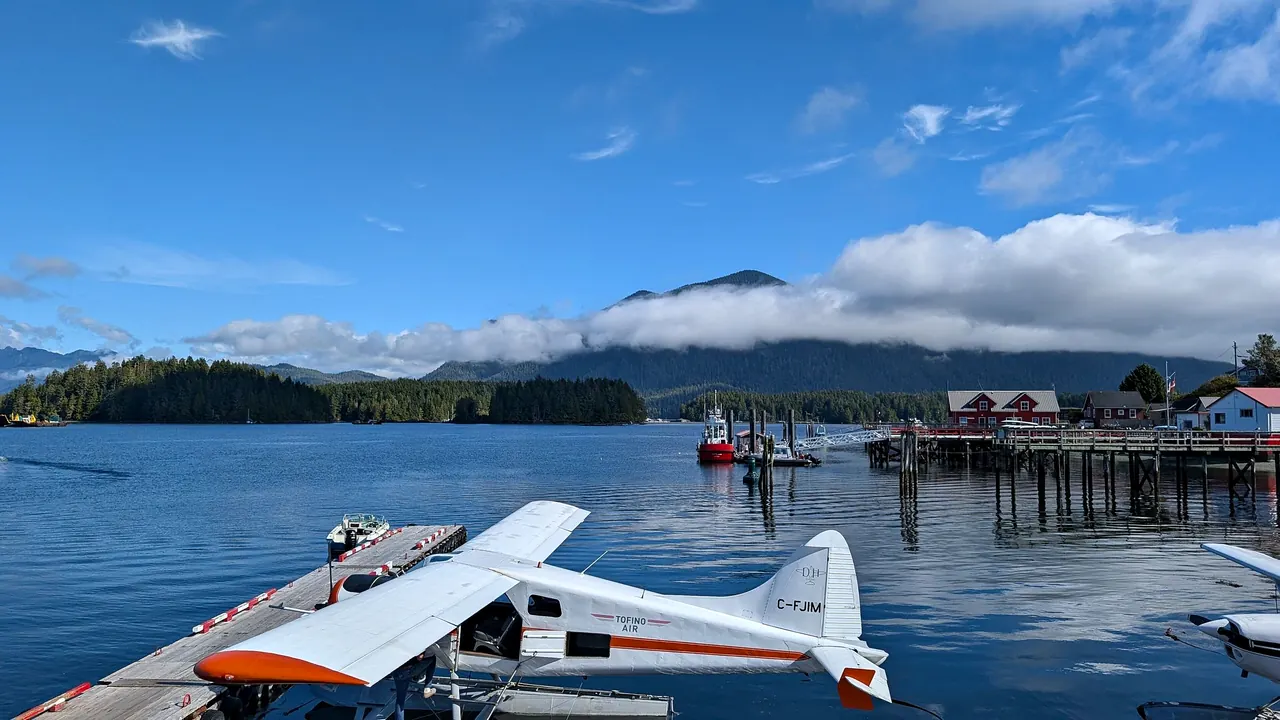
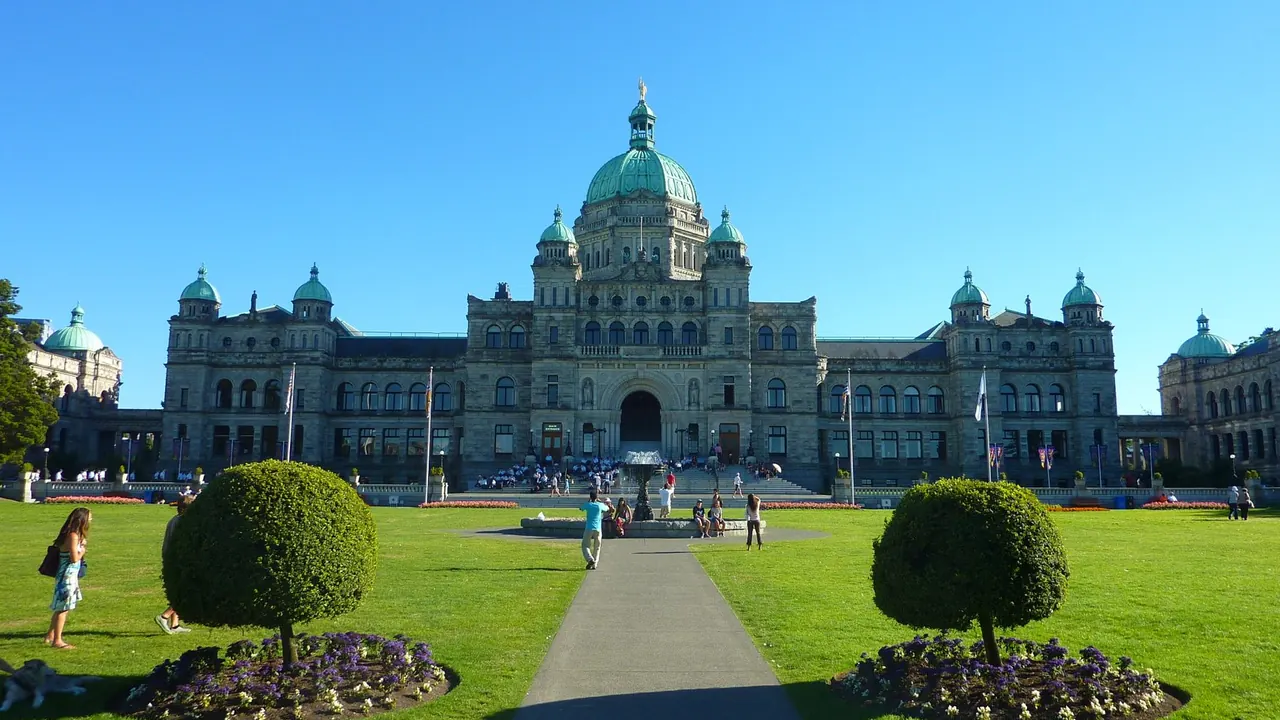
Photos: Tofino by গীতাশ্ৰী গগৈ আপ্তে, CC0; Victoria by Guilice, CC BY-SA 3.0, cropped.
Tofino or Victoria?
Our verdict in twelve categories, each scored against the same fixed benchmark cities, and the climate month by month, so you can choose for your trip.
Choose Tofino for
- nature and the outdoors
- beaches
- wellness
Tofino is for travellers who want the landscape to be the whole trip. You come for old-growth cedars on Meares Island and in Pacific Rim National Park Reserve, surf at Cox Bay, whales and bears seen from a boat, and winter storms breaking on the headlands. In return you accept quiet evenings, almost nothing to see indoors and the cost of staying somewhere this remote.
Choose Victoria for
- day trips
- live music and the arts
- culture and sights
Victoria suits anyone who wants a proper small city with the coast close at hand. It has the Inner Harbour and the Royal BC Museum, a night at the Royal Theatre, and day trips to Butchart Gardens or the Cowichan Valley, so a stay here has far more variety. It is also easy to get around on foot, by bike and on the harbour ferries. The outdoors is gentler and closer to town, with sheltered kayaking and long cycle trails rather than wild Pacific coast.
Scoreboard
Twelve categories on one fixed scale from 0 to 100. The shaded stretch is the gap between the two.
Your match
Pick a travel style or drag the sliders, and both match scores follow your weighting.
Wins on nature and the outdoors and beaches with your weighting.
Wins on day trips and live music and the arts with your weighting.
What matters to you?
Category by category
What the scores mean for a trip.
Beaches & swimming
Tofino has much the better shoreline. The 16km of Long Beach, the sandbar out to Frank Island at Chesterman and the steady surf at Cox Bay make the beach the centre of each day, even if you only walk it. Victoria has pleasant strolls at Willows Beach and Gonzales Bay, but Dallas Road is pebble and driftwood.
Neither is a place for swimming. In Tofino you go into the water in a thick wetsuit with a surfboard. In Victoria, locals who want a swim on a hot day head inland to Thetis Lake or the Sooke Potholes.
Food & drink
Both kitchens draw on the same cold-water seafood: spot prawns, Dungeness crab, salmon and oysters. Victoria has more depth. Produce from the Saanich Peninsula and the Cowichan Valley, a serious brunch habit, afternoon tea at the Empress, fish and chips at Fisherman's Wharf and Canada's oldest Chinatown give you far more choice over several days.
Tofino's food trucks, ocean-view seafood rooms and West Coast tasting menus are impressive for a village, but there are only a few dozen places to eat, and many cut their hours sharply in the wet winter.
Culture & sights
In Tofino, culture means the living Nuu-chah-nulth presence: carving and print galleries, totem and canoe carving you may see in progress, and the Kwisitis Visitor Centre at Wickaninnish Beach. An afternoon covers it.
Victoria has enough for two or three full days. The domed Parliament Buildings and the Empress face each other across the Inner Harbour, the Royal BC Museum and Thunderbird Park cover First Nations history in depth, and Craigdarroch Castle, Fan Tan Alley and the Emily Carr House fill in the rest.
Nightlife
Neither town is a place for late nights, but Victoria at least gives you a night out. Its British-style pubs, taprooms and a few good cocktail bars sit in old brick buildings around Wharf Street and Lower Johnson, and students keep a small club scene going at weekends.
In Tofino the evening is a brewery taproom, a restaurant bar or a fire on the beach, with an early night before the morning tide.
Nature & outdoors
Tofino is the wilder of the two and the stronger by some way. Clayoquot Sound is a UNESCO biosphere reserve of islands and ancient rainforest, and from town you can kayak among its islands, watch bears on the shoreline at low tide, surf all year and watch Pacific storms in winter.
Victoria's outdoors is gentler and starts at the edge of downtown. You can walk the Dallas Road clifftops facing the Olympic Mountains, cycle the Galloping Goose trail, see the autumn salmon run and its eagles at Goldstream, and hike the coast at East Sooke. Kayaking in its sheltered waters is easy for beginners, and the drier climate means you get wet far less often.
Day trips
Tofino is a place you stay put in. Ucluelet's lighthouse loop fills half a day, the boat trips are outings into the landscape rather than to other towns, and everything else lies over a long, winding mountain road.
Victoria has plenty within reach. You can visit Butchart Gardens, the bookshops of Sidney, the wineries and cideries of the Cowichan Valley, the murals at Chemainus and the Saturday market on Salt Spring Island, and the floatplane puts Vancouver a short hop away. Ferries make most outings longer than the map suggests.
Good for families
Victoria is the easier city with children. Beacon Hill Park has a petting farm and playgrounds, the replica old town at the Royal BC Museum and Miniature World help on wet days, and the seaplanes and harbour ferries keep children entertained without trying.
Tofino suits active children in summer, with tide pools, driftwood forts, beginner surf lessons and beach cabins. It has very little to fall back on when the rain sets in, though, and the mountain road in is hard on young passengers.
Getting around
In Tofino a car is close to essential. The beaches, trailheads and resorts are strung along the highway south of the village, and the best outings to Meares Island or Hot Springs Cove go by water taxi or floatplane. The paved path towards the national park is a pleasure to cycle in dry weather.
Victoria's sights sit within a twenty-minute walk of each other, with protected bike lanes and little harbour ferries to fill the gaps. You only need a car for Sooke, the Juan de Fuca coast or the Cowichan Valley.
Shopping & style
Both towns are good for Northwest Coast First Nations carving, prints and silver jewellery, and in Tofino the Nuu-chah-nulth galleries are really the only reason to shop. Beyond them you find surf shops and a few beach-town boutiques.
Victoria has more to explore. Lower Johnson Street's heritage storefronts hold local labels and design shops, Market Square and Chinatown add small shops and tea and curio stores, and the second-hand bookshops and Cowichan sweaters give you things to take home.
Affordability
Neither is cheap, but Tofino is the harder on your budget. Rooms are scarce, and groceries, meals and boat tours all cost more because everything comes in over the mountains. Campgrounds and the free beaches and trails are the main ways to save.
In Victoria the summer hotel rates hurt, but meals cost about what they do in other Canadian cities and the compact centre means you spend little on transport. Pub food and Chinatown's cheaper restaurants also help. In both places, rooms cost much less from November to March.
Live music & performing arts
Tofino has no theatre or regular venue. You might catch the odd band at a pub or brewery, or a performance at a small community festival in summer.
Victoria fills its evenings properly for a city of its size. The historic Royal Theatre and McPherson Playhouse host the symphony, opera and ballet, the Belfry stages contemporary Canadian theatre in a converted church, and summer brings the jazz and Fringe festivals and the symphony's free concert on a barge in the harbour.
Wellness & relaxation
Tofino has a slight edge, mainly because of Hot Springs Cove, where geothermal water runs through rock pools into the sea at the end of a boat ride and a forest boardwalk. Resort spas use local seaweed and cedar, and an evening in a cabin hot tub is a normal end to the day.
Victoria's calm is that of a polite, garden-filled city: afternoon tea, morning walks along the seafront and quiet days in Oak Bay or James Bay. It has no thermal water, so for spa treatments you go to the harbour hotels or a few day spas.
When should you go?
Pick your month. The climate figures are measured averages, not a forecast.
Tofino in July
Victoria in July
Daytime high, °C
Rainfall in the month, mm
Where the figures come from
Victoria's sunshine is measured 87 km from the centre, at Vancouver International Airport.
Temperature and rainfall are climate normals, averaged over the years shown. Tofino: 2011-2024 (rainfall 1991-2020) normals, Lennard Island (4.9 km from centre). Victoria: 1991-2020 normals, Victoria Gonzales CS (3.6 km from centre).
Tofino is one of the wettest places a traveller is likely to visit. From October to March the rain is relentless, peaking around 506mm in January, which suits storm watching but little else. July and August are the dependable months, with highs near 18°C and much drier days, and May, June and September are good if you bring waterproofs. The sea stays cold all year, so surfers need wetsuits whatever the month.
Victoria has the same mild winters but is much drier and a little warmer in summer. July reaches about 21°C with only around 11mm of rain and close to 300 hours of sunshine, so from May to September it is ideal for walking and cycling. Winters are grey and damp but rarely too cold to explore the streets. The water here is even colder than at Tofino, so swimming happens in the lakes rather than the sea.
Which traveller are you?
On an outdoors trip, Tofino is the clear choice. Clayoquot Sound's rainforest and islands, year-round surf at Cox Bay, bears foraging at low tide and winter storm watching offer a wilder coast than Victoria's gentler trails and sheltered kayaking.
For a culture and arts trip, Victoria wins easily. The Royal BC Museum, Craigdarroch Castle and the Emily Carr House fill the days, and the Royal Theatre, the Belfry and the summer Fringe fill the evenings. Tofino has its galleries and little more.
For a short city break, Victoria makes far more sense. The compact centre puts the harbour, the museum, Chinatown and the Old Town pubs within a short walk of each other. Tofino means a long mountain drive and rewards a slower stay planned around the tides.
Before you go
| Measure | Tofino | Victoria |
|---|---|---|
| Official language | French, English | French, English |
| Currency | Canadian Dollar (CAD) | Canadian Dollar (CAD) |
| Sockets | AB120 V, 60 Hz | AB120 V, 60 Hz |
| Driving side | Right | Right |
| Time zone | UTC-8, UTC-7 in summer | UTC-8, UTC-7 in summer |
| Emergency number | 911 | 911 |
| Elevation | 10 m | 23 m |
| Main airport | Tofino / Long Beach Airport (YAZ)12 km from centre1 non-stop destination | Victoria International Airport (YYJ)25 km from centre16 non-stop destinations |
| Public holidays this year | 11 days | 11 days |
By the numbers
| Measure | Tofino | Victoria |
|---|---|---|
| City population | - | 91,867 |
| People per km² | - | 4,711 |
| Museums within 10 km | 0 | 6 |
| UNESCO World Heritage sites within 50 km | 0 | 0 |
| Swim season, months above 21 °C | None | None |
Where else could you go?
Every comparison below shares a destination with this one, so you can follow Tofino or Victoria somewhere new.
- Vancouvervs Victoria
- Seattlevs Victoria
- Whistlervs Victoria
- Vancouvervs Tofino
- Whistlervs Tofino
- Seattlevs Tofino