Photos: Victoria by Guilice, CC BY-SA 3.0, cropped; Whistler by Ruth Hartnup, CC BY 2.0, cropped.
Victoria or Whistler?
Our verdict in twelve categories, each scored against the same fixed benchmark cities, and the climate month by month, so you can choose for your trip.
Choose Victoria for
- live music and the arts
- day trips
- culture and sights
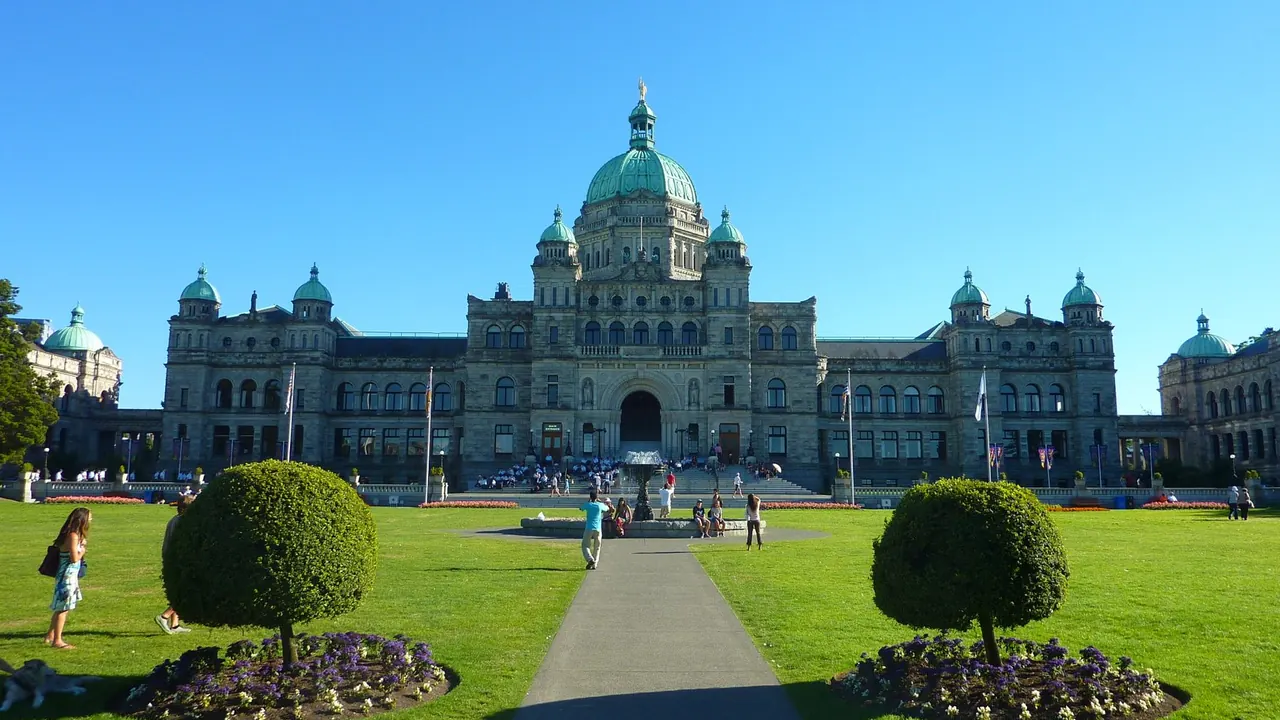
Victoria suits a slower, more urban stay. It has a harbour front framed by grand buildings, a fine provincial museum, a symphony and theatre season, Pacific Northwest seafood, and outings by ferry to gardens, wine country and islands. It is also the easier of the two on the wallet, and the mild climate means a walking vacation works in any season, even if the winters are grey.
Choose Whistler for
- nature and the outdoors
- nightlife
- wellness
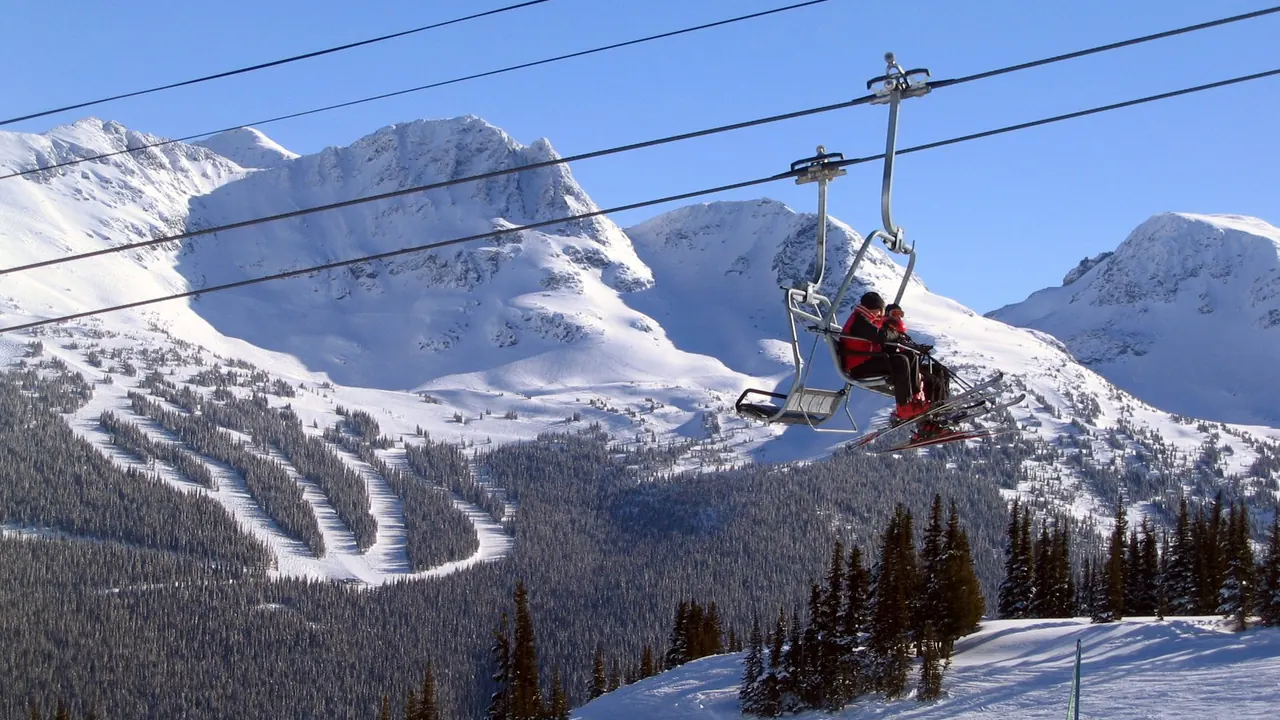
Whistler is for trips where the mountains are the point. It has two huge ski mountains, a downhill bike park, alpine hiking and a forest spa for tired legs at the end of the day. That makes it the place for an active vacation, and its car-free village makes life easy for families. Expect resort prices, a young après-ski crowd and very little to see beyond the slopes.
Scoreboard
Twelve categories on one fixed scale from 0 to 100. The shaded stretch is the gap between the two.
Your match
Pick a travel style or drag the sliders, and both match scores follow your weighting.
Wins on live music and the arts and day trips with your weighting.
Wins on nature and the outdoors and nightlife with your weighting.
What matters to you?
Category by category
What the scores mean for a trip.
Beaches & swimming
Neither place is a beach destination, and in both the summer swim happens in a lake. Victoria's shoreline along Dallas Road is pebble and driftwood, and Willows Beach has sheltered sand for paddling in a strait that is too cold to stay in. The real swims are at Thetis Lake or the river pools of the Sooke Potholes, both a drive out of town.
Whistler has no sea at all, but Lost Lake's sandy shore and the rafts on Alta and Alpha lakes are an easy walk or bike ride from the village, and they warm up properly in July and August. So the choice is a seaside walk in Victoria or a lake swim on Whistler's doorstep.
Food & drink
Victoria has more to offer at the table. Wild salmon, Dungeness crab and spot prawns come with produce from the Saanich Peninsula and the Cowichan Valley. On top of that there is afternoon tea at the Empress, fish and chips at Fisherman's Wharf, Canada's oldest Chinatown and a long-standing craft beer scene.
Whistler cooks from the same Pacific Northwest larder in a handful of ambitious village restaurants with deep British Columbia wine cellars. Around them it is mostly pubs, sushi counters and après-ski nachos, and over a week you end up eating along the same few streets.
Culture & sights
Victoria has the sights of a real city. The Parliament Buildings and the Empress face each other across the Inner Harbour, the Royal BC Museum sits next to the totem poles of Thunderbird Park, and there is Craigdarroch Castle on the hill and Fan Tan Alley in Chinatown. Together they fill two or three days.
Whistler is a purpose-built resort, and its sights take an afternoon. The Audain Art Museum and the Squamish Lil'wat Cultural Centre are both very good, and Emily Carr's paintings link the two places. Beyond those and the 2010 Olympic sites, there is little to see.
Nightlife
Whistler has the livelier evenings, at least in winter. Après-ski fills the patios as the lifts close. Later on, the clubs and late bars of the pedestrian village stay loud into the early hours with seasonal workers and visiting groups.
Victoria's nights are quieter and older: a pint in a British-style pub or a taproom around Wharf Street and Lower Johnson, perhaps a cocktail, then bed before midnight. Outside the ski season and the big bike festivals Whistler goes almost as quiet, so the gap is mostly a winter one.
Nature & outdoors
Both towns are good for the outdoors, but Whistler works on another scale. Whistler and Blackcomb are linked by the Peak 2 Peak Gondola and have glaciers, open alpine bowls and deep snow in winter. In summer there is a downhill bike park and high trails up to the turquoise lakes of Garibaldi.
Victoria's outdoors is gentler and on the coast: whale watching from the Inner Harbour, easy sea kayaking around Discovery Island, the car-free Galloping Goose trail and old-growth cedar at Goldstream. It is mild enough to enjoy all year, but there are no high mountains nearby.
Day trips
Victoria has far more places to go. Butchart Gardens is half an hour north, the Cowichan Valley has small wineries and the murals of Chemainus, Salt Spring Island is a ferry ride away, and Vancouver is a short floatplane hop. Ferries do make most outings slower than the map suggests.
Around Whistler there is mostly wilderness. Squamish with its gondola, farming Pemberton and the Britannia mining museum are modest stops. Vancouver is two hours down the Sea to Sky Highway, which makes it more of an overnight trip than a day out.
Good for families
Whistler has a slight edge for families, because the resort is built with them in mind. The village is car-free and the ski schools are large. Winter brings tubing and sledding, and summer brings lake beaches, mini-golf and gondola rides to spot marmots and bears.
Victoria is calmer and shaped like a small city, with the petting farm in Beacon Hill Park, the Royal BC Museum's replica old town, and seaplanes and whale-watching boats in the harbour. Neither town has a zoo. Whistler's winter cold and late crowds are harder on very young children, and Victoria has fewer options on wet winter days.
Getting around
Whistler is the easier place to get about once you arrive. The village is pedestrian-only, the gondolas leave from its edge, the shuttles are free and the Valley Trail links the lakes and neighbourhoods. Getting there means a coach or a car from Vancouver, with winter tyres when it snows.
Victoria's downtown is compact and walkable too, with little harbour ferries and good bike lanes. Buses are its only public transport, though, and they are slow beyond the city, so the Cowichan Valley and the Juan de Fuca coast really need a car.
Shopping & style
Victoria gives you more to browse. Lower Johnson Street has restored storefronts full of local labels and design shops, and Market Square, Chinatown's tea shops, second-hand bookshops and galleries of Northwest Coast First Nations art add to the mix.
Whistler's village mostly sells skis, boards, bikes and technical outerwear. It is excellent for gear and thin for anything else, apart from a few galleries and a summer farmers' market. Neither town has luxury brands.
Affordability
Neither is cheap, but Victoria is easier on the budget. Summer rooms are expensive and tax and tip push up every meal. Still, the parks and waterfront are free, the walkable centre saves on transport, and winter room rates fall a long way.
Whistler is expensive at almost every turn. Its lift passes are among the costliest anywhere, slopeside lodging climbs over Christmas, and village dining, rentals and lessons add up. Cooking for yourself, staying further down the valley and coming in spring or autumn all help, but it never becomes a budget choice.
Live music & performing arts
Victoria has a real arts season for a city of its size. The Victoria Symphony, Pacific Opera Victoria and touring shows play the historic Royal Theatre and McPherson Playhouse, and the Belfry stages contemporary theatre. There is also a jazz club, plus jazz and Fringe festivals in summer.
Whistler's offer is mostly free summer concerts in Olympic Plaza, buskers, a small community arts centre and pub bands. Anyone who wants an orchestra or a play has to go down to Vancouver.
Wellness & relaxation
Whistler is the better place to unwind, largely thanks to its Nordic-style outdoor spa among the cedars. Guests keep silent as they move between hot pools, saunas and cold plunges, and there are hotel spas and massage studios for sore legs as well. Peak winter weekends are loud, though, so the calm belongs to spring, autumn and quiet mornings by the lakes.
Victoria has no bathing culture of its own and relies on the spas in its harbour hotels. Its rest comes from its slow pace: flower gardens, long afternoon teas and seafront walks in Oak Bay or James Bay.
When should you go?
Pick your month. The climate figures are measured averages, not a forecast.
Victoria in July
Whistler in July
Daytime high, °C
Rainfall in the month, mm
Where the figures come from
Victoria's sunshine is measured 87 km from the centre, at Vancouver International Airport.
Whistler has no rain gauge within 25 km of the centre, so its rainfall comes from a gridded climate dataset read at the city rather than from a gauge further away.
Temperature and rainfall are climate normals, averaged over the years shown. Victoria: 1991-2020 normals, Victoria Gonzales CS (3.6 km from centre). Whistler: 1991-2020 normals, Whistler - Nesters (1.1 km from centre).
Victoria is at its best from May to September. The days are mild, around 21°C at the peak, and July and August are the sunniest and driest months of the year. The sea never gets above 12°C, so summer swimming happens in the lakes. Rain returns in October and the winters are wet and dull, but rarely cold, so the streets stay pleasant for walking all year.
Whistler swings much harder between the seasons. July and August are warmer, around 25°C, which is ideal for hiking, biking and swimming in the lakes. By December daytime highs sit near 0°C, and November is the wettest month at 196mm. That falls as deep snow on the mountains and carries skiing through into spring. October falls between the two seasons and is wet and cooling, too late for summer and too early for the snow.
Which traveller are you?
On a culture and arts trip, Victoria is the clear choice. The Royal BC Museum, Craigdarroch Castle, the Emily Carr House and the season of symphony, opera and theatre fill several days, while Whistler has mainly the Audain Art Museum.
For an outdoors trip, Whistler wins easily. Whistler and Blackcomb give skiing from late November into spring, and in summer there is a downhill bike park, singletrack and hiking to the lakes of Garibaldi Provincial Park, all reached from the village edge.
On a tight budget, Victoria is the more forgiving choice. Its parks and waterfront are free, the centre is walkable and winter rooms are much cheaper. Whistler's lift passes, resort lodging and village dining keep it expensive even in quieter months.
Before you go
| Measure | Victoria | Whistler |
|---|---|---|
| Official language | French, English | French, English |
| Currency | Canadian Dollar (CAD) | Canadian Dollar (CAD) |
| Sockets | AB120 V, 60 Hz | AB120 V, 60 Hz |
| Driving side | Right | Right |
| Time zone | UTC-8, UTC-7 in summer | UTC-8, UTC-7 in summer |
| Emergency number | 911 | 911 |
| Elevation | 23 m | 670 m |
| Main airport | Victoria International Airport (YYJ)25 km from centre16 non-stop destinations | Vancouver International Airport (YVR)104 km from centre109 non-stop destinations |
| Public holidays this year | 11 days | 11 days |
By the numbers
| Measure | Victoria | Whistler |
|---|---|---|
| City population | 91,867 | 13,982 |
| People per km² | 4,711 | 58 |
| Museums within 10 km | 6 | 1 |
| UNESCO World Heritage sites within 50 km | 0 | 0 |
| Swim season, months above 21 °C | None | - |
Where else could you go?
Every comparison below shares a destination with this one, so you can follow Victoria or Whistler somewhere new.