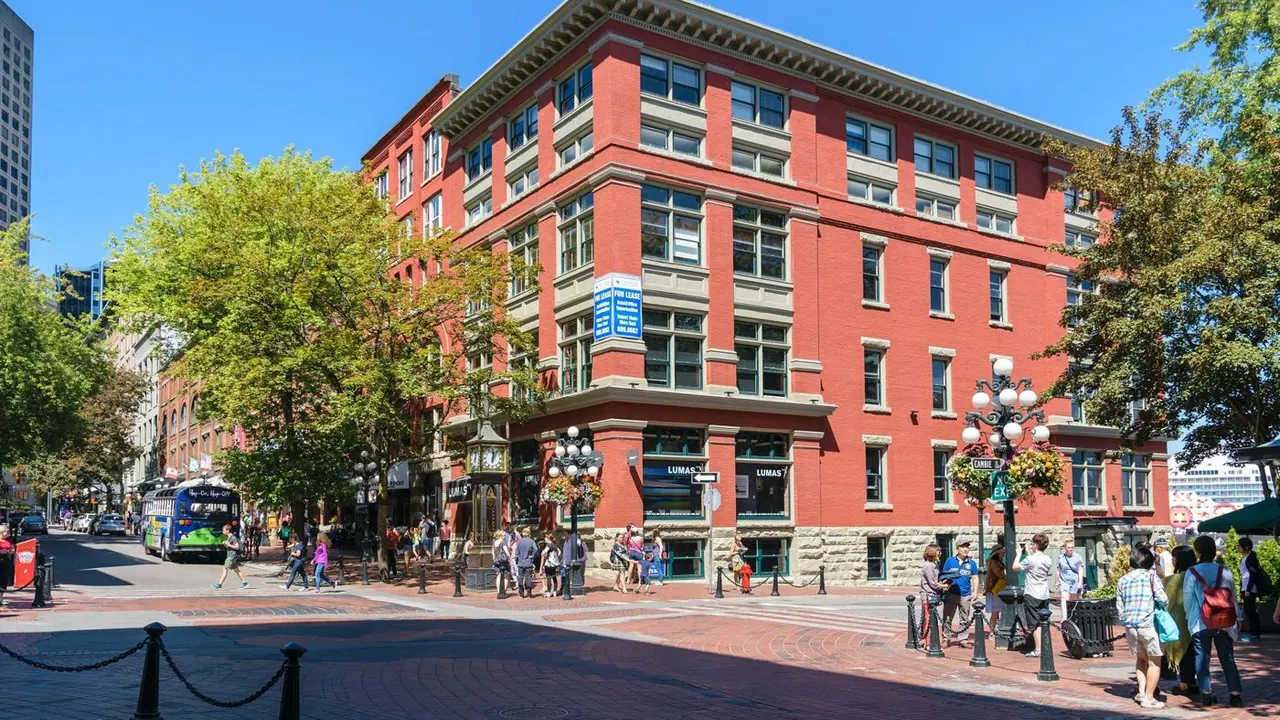
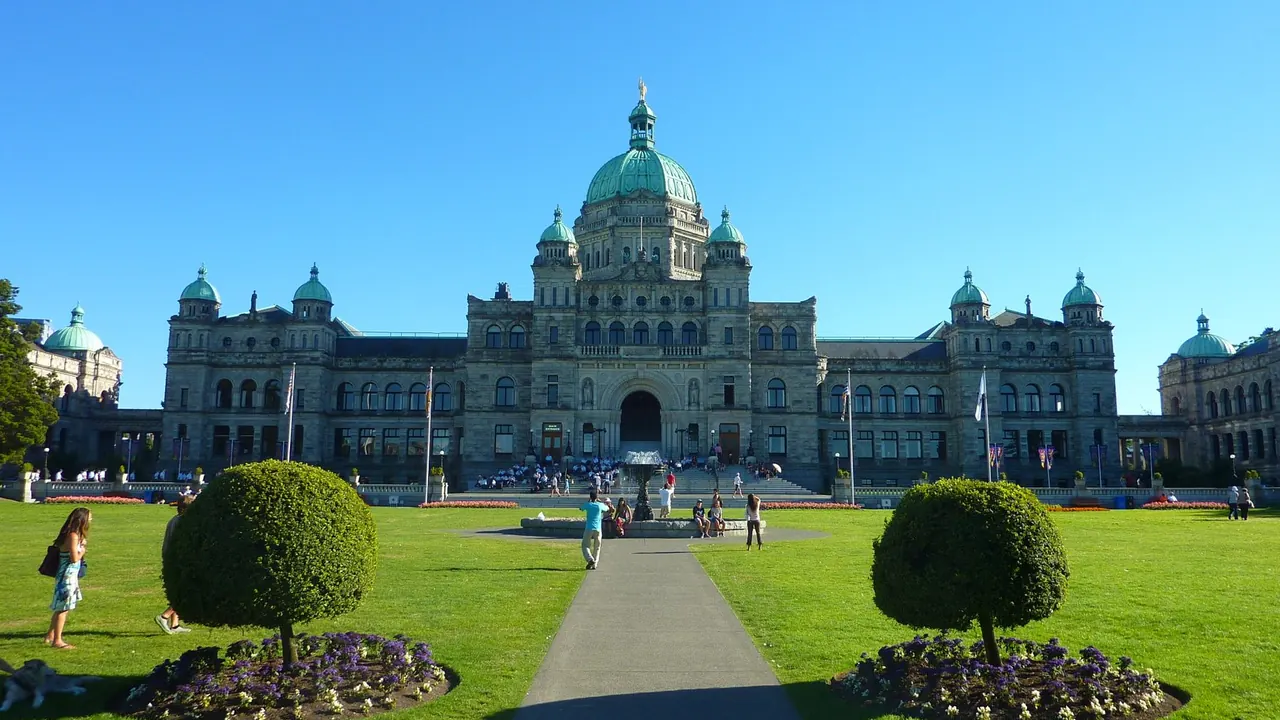
Photos: Vancouver by Xicotencatl, CC BY-SA 4.0, cropped; Victoria by Guilice, CC BY-SA 3.0, cropped.
Vancouver or Victoria?
Our verdict in twelve categories, each scored against the same fixed benchmark cities, and the climate month by month, so you can choose for your trip.
Choose Vancouver for
- food and drink
- nature and the outdoors
- shopping
Vancouver is the choice for travellers who want a proper city with wild country on the doorstep. The North Shore mountains rise across the harbour, Whistler is a drive up the Sea-to-Sky Highway, and back in town there is the best Asian food in North America outside a few rival cities, a working nightlife and a full arts season. It suits active couples, food lovers and families who want plenty to fill the days.
Choose Victoria for
- day trips
- prices
Victoria rewards a slower, gentler trip. Its graceful Inner Harbour, gardens, afternoon tea and pubs make a small, walkable base, and it has the better day trips, from Butchart Gardens to the wineries of the Cowichan Valley and the Gulf Islands. Summers are drier, the bills run a little lower, and it suits older travellers, garden lovers and anyone happy to be in bed before midnight.
Scoreboard
Twelve categories on one fixed scale from 0 to 100. The shaded stretch is the gap between the two.
Your match
Pick a travel style or drag the sliders, and both match scores follow your weighting.
Wins on food and drink and nature and the outdoors with your weighting.
Wins on day trips and prices with your weighting.
What matters to you?
Category by category
What the scores mean for a trip.
Beaches & swimming
Vancouver is the better of the two for a day by the water. English Bay, Kitsilano and the long sands of Jericho and Spanish Banks are part of the city, with volleyball, picnics and the mountains across the bay, and the saltwater pool at Kitsilano gives a real swim when the sea is too cold.
Victoria's shore is better for walking than for lying on. Dallas Road is pebble and driftwood, Willows Beach suits paddling at the edge, and the strait stays colder still, so on a hot day locals head inland to Thetis Lake or the Sooke Potholes instead.
Food & drink
Vancouver eats at a different level, mainly because of its Asian cooking: Cantonese dim sum and seafood houses in the city and Richmond, Taiwanese snacks, Korean barbecue, ramen and cheap, good sushi. Main Street and Commercial Drive add breweries and bakeries, and the choice runs deep.
Victoria shares the same Pacific salmon, crab and spot prawns but works with a smaller range. Its strengths are farm produce from the Saanich Peninsula and Cowichan Valley, serious brunches, brewpubs and afternoon tea at the Empress, with fish and chips at Fisherman's Wharf as the casual standby. Late-night eating and street food are thin.
Culture & sights
The two are evenly matched and draw on the same threads, Northwest Coast First Nations art and the painter Emily Carr, but they show them differently. Vancouver's highlight is a single great museum, the Museum of Anthropology, with its glass hall of totem poles and canoes, backed by Gastown's Victorian warehouses and the Dr Sun Yat-Sen Garden in Chinatown.
Victoria's strength is the whole ensemble. The domed Parliament Buildings and the Empress frame the Inner Harbour, the Royal BC Museum and Thunderbird Park sit beside them, and Craigdarroch Castle and Fan Tan Alley are a short walk away. It feels more like a heritage town, and in both cities two or three days covers the sights.
Nightlife
Vancouver is no late city, but it has far more to offer after dark than Victoria. Gastown's cocktail and wine bars, the brewery taprooms east of downtown, the busy club strip on Granville Street at weekends and the gay bars of the Davie Village give real choice.
Victoria's evenings centre on the pub. British-style pubs, taprooms and a few cocktail bars around Wharf Street and Lower Johnson make for a pleasant pint, but the student clubs are small and close early, and most of the town is quiet well before midnight.
Nature & outdoors
Both live close to the outdoors, but Vancouver's setting is in another league. Grouse, Cypress and Seymour rise across the harbour with forest trails in summer and lit ski runs in winter, Stanley Park's cedar forest and seawall sit beside downtown, and the Sea-to-Sky Highway leads to Squamish's climbing walls and Whistler's alpine terrain.
Victoria's nature is coastal and gentler. The Dallas Road clifftops look across to the Olympic Mountains, sheltered waters suit beginner kayakers, Goldstream has old-growth cedar and an autumn salmon run, and the Juan de Fuca coast is wild. Whale watching is easy from both, but Victoria has no high mountains nearby.
Day trips
Victoria has the better list of outings, and they are closer to hand. Butchart Gardens is about half an hour away, and within an hour or so lie the bookshops of Sidney, the wineries and cideries of the Cowichan Valley, the totem poles of Duncan and the murals of Chemainus, with Salt Spring Island a ferry ride off.
From Vancouver, the best day out is Victoria itself, but with the ferry crossing and terminal journeys it makes a long day. Otherwise there is Steveston's fishing harbour, the old fort at Fort Langley and Whistler's village, a shorter and thinner choice.
Good for families
Vancouver gives children more to do. Stanley Park alone holds the aquarium, a miniature train, a water park and the flat seawall for scooters, and Science World, the little False Creek ferries, the suspension bridges over North Shore canyons and the Grouse gondola fill further days.
Victoria is calm and easy, with short distances, the petting farm in Beacon Hill Park, the Royal BC Museum's replica old town and seaplanes landing in the harbour. Whale watching delights older children, but options run out sooner, especially on wet winter days.
Getting around
Vancouver is the easier of the two for a car-free trip. The SkyTrain runs from the airport to downtown, the SeaBus crosses to North Vancouver, and one card covers the SkyTrain, buses and SeaBus. Kitsilano and the mountains still mean buses, though.
Victoria's centre is smaller and very easy to walk, with the harbour, museum, Chinatown and Beacon Hill Park all close together and good bike lanes. Beyond it there are only slow buses, and Sooke or the Cowichan Valley really need a car.
Shopping & style
Vancouver has the wider range. Robson Street's flagships, the luxury houses on Alberni Street and the underground mall cover the mainstream, outdoor and athleisure clothing is a local speciality, and Main Street, Gastown and Richmond's Asian malls add independents and variety.
Victoria is small-scale and independent: the heritage storefronts of Lower Johnson Street, Market Square, second-hand bookshops and Cowichan sweaters on Government Street, with no luxury brands. In both, Northwest Coast First Nations prints and carvings are the best thing to take home.
Affordability
Neither is a cheap place, but Victoria is somewhat easier on the wallet. Its compact centre keeps transport spending low, the waterfront and parks are free, and rooms get much cheaper from November to March, though whale watching, Butchart Gardens and ferries add up.
Vancouver's downtown hotels are dear, with few cheap beds near the centre, and tax and tips push meals up. The savings lie in its noodle shops, dim sum and casual sushi, and in the free pleasures of Stanley Park and the seawall.
Live music & performing arts
Vancouver has the fuller calendar. The symphony plays in the ornate Orpheum, opera and Ballet BC share the Queen Elizabeth Theatre, and summer brings Bard on the Beach in Vanier Park and the folk festival on Jericho Beach, alongside touring musicals and big concerts.
Victoria offers a smaller version: the symphony and Pacific Opera at the historic Royal Theatre and McPherson Playhouse, new Canadian plays at the Belfry, and the free summer concert on a barge in the Inner Harbour. Both have a jazz festival and a Fringe, and Victoria's are on a smaller scale.
Wellness & relaxation
The two are much alike here: neither has hot springs or a bathing tradition, so rest comes from pace and setting more than from spas. Vancouver offers calm within a large city, with yoga studios, massage and reflexology in Chinatown and Richmond, and Nordic-style outdoor spas a drive away near Whistler.
Victoria is slow by nature, a town of gardens, long afternoon teas and seafront walks through Oak Bay and James Bay. Its waterfront resorts in Sooke and on the Saanich Peninsula suit a quieter retreat.
When should you go?
Pick your month. The climate figures are measured averages, not a forecast.
Vancouver in July
Victoria in July
Daytime high, °C
Rainfall in the month, mm
Where the figures come from
Victoria's sunshine is measured 87 km from the centre, at Vancouver International Airport.
Temperature and rainfall are climate normals, averaged over the years shown. Vancouver: 1991-2020 normals, Vancouver Harbour CS (4.4 km from centre). Victoria: 1991-2020 normals, Victoria Gonzales CS (3.6 km from centre).
Both cities are at their best from June to September, when the days are long and sunny and the rain eases off. Vancouver is a touch warmer, reaching about 23°C in July and August against 21°C across the water, but neither ever gets too hot for walking. The sea stays cold in both, and colder still around Victoria, so summer beach days mean sitting on the shore with only a brief dip in the water.
The real difference is rain. Vancouver turns very wet from October to January, with around 245mm in November. Victoria sits in the rain shadow of the mountains and gets less than half that even in its wettest month, about 116mm, also in November. Winters are mild in both, cool enough for a coat but rarely freezing. Victoria is the better choice for walking and cycling out of season, and Vancouver is best kept for summer or for skiing.
Which traveller are you?
On a food and nightlife trip, Vancouver is the clear pick. Its Cantonese dim sum, Richmond's Asian restaurants and its sushi counters go far beyond Victoria's range, and Gastown cocktail bars, the Granville clubs and the Davie Village keep evenings going well past Victoria's pub closing time.
For an outdoors trip, Vancouver has the edge. Victoria has fine coastal paths, kayaking and whale watching, but Vancouver adds real mountains: forest trails and skiing on Grouse, Cypress and Seymour, rainforest canyons, and Squamish and Whistler up the Sea-to-Sky Highway.
On a trip on a tight budget, Victoria is slightly the safer bet. Neither city is cheap, so it comes down to how you spend: a slow stay in Victoria, cycling the Galloping Goose with one treat such as Butchart Gardens, costs less overall. Vancouver costs more to sleep in, though it feeds budget travellers better, thanks to its cheap Asian food.
Before you go
| Measure | Vancouver | Victoria |
|---|---|---|
| Official language | French, English | French, English |
| Currency | Canadian Dollar (CAD) | Canadian Dollar (CAD) |
| Sockets | AB120 V, 60 Hz | AB120 V, 60 Hz |
| Driving side | Right | Right |
| Time zone | UTC-8, UTC-7 in summer | UTC-8, UTC-7 in summer |
| Emergency number | 911 | 911 |
| Elevation | 2 m | 23 m |
| Main airport | Vancouver International Airport (YVR)9 km from centre109 non-stop destinations | Victoria International Airport (YYJ)25 km from centre16 non-stop destinations |
| Public holidays this year | 11 days | 11 days |
By the numbers
| Measure | Vancouver | Victoria |
|---|---|---|
| City population | 662,248 | 91,867 |
| People per km² | 5,759 | 4,711 |
| Museums within 10 km | 26 | 6 |
| UNESCO World Heritage sites within 50 km | 0 | 0 |
| Swim season, months above 21 °C | None | None |
Where else could you go?
Every comparison below shares a destination with this one, so you can follow Vancouver or Victoria somewhere new.