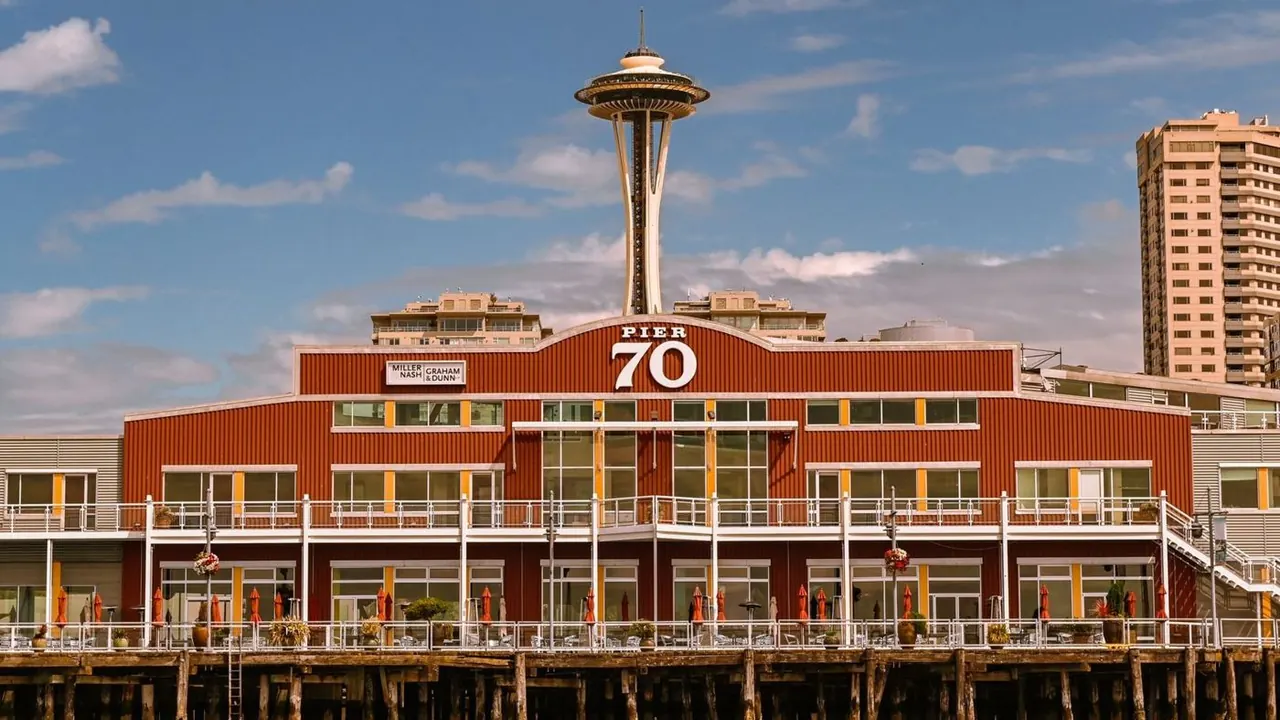
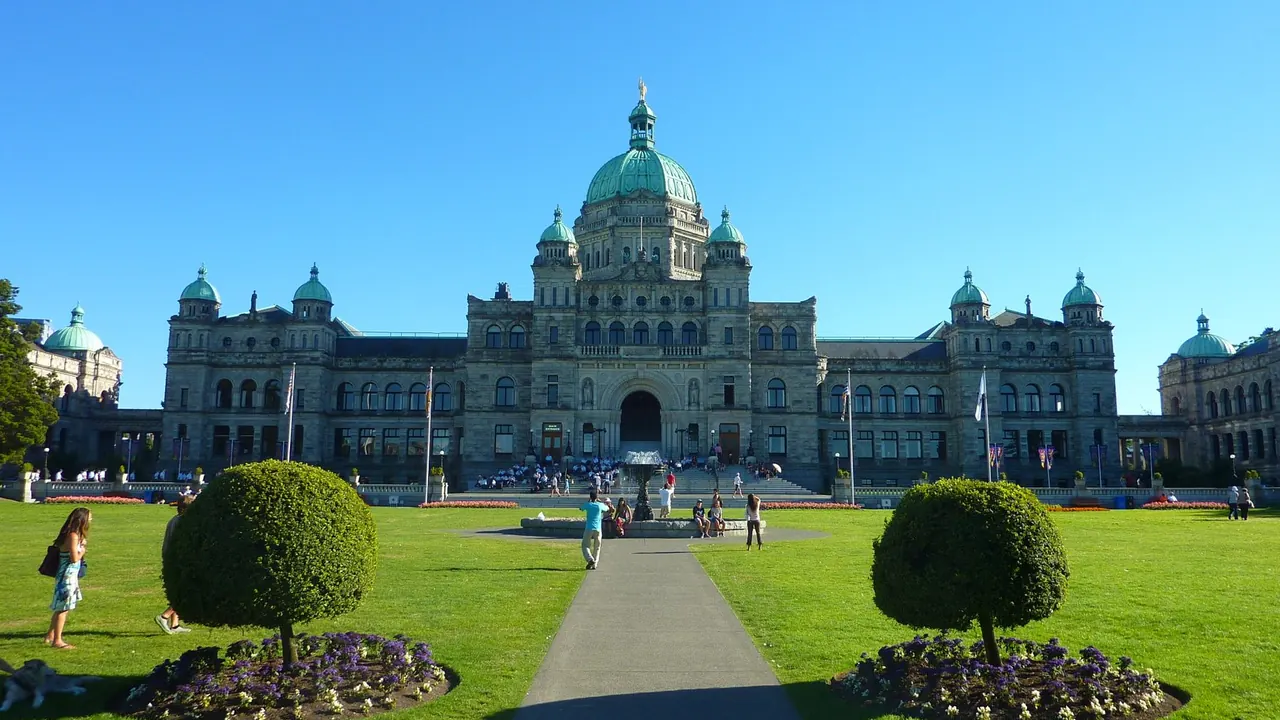
Photos: Seattle by Caio, Pexels License; Victoria by Guilice, CC BY-SA 3.0, cropped.
Seattle or Victoria?
Our verdict in twelve categories, each scored against the same fixed benchmark cities, and the climate month by month, so you can choose for your trip.
Choose Seattle for
- live music and the arts
- nightlife
- food and drink
Seattle is the choice for a fuller city trip. It has the bigger food scene, from Pike Place Market to the Asian kitchens of the Chinatown-International District. Capitol Hill gives you a real night out, and there is ballet, opera or a live band on most evenings. It also suits active travellers who want mountains, with the Cascades and Mount Rainier close enough for summer hiking and winter skiing.
Choose Victoria for
- prices
- wellness
For a slower, gentler stay, Victoria is the better choice. Its centre is small enough to walk, the Inner Harbour is one of the prettiest waterfronts in Canada, and evenings end with a pint or a glass of local wine rather than a club. Travellers who like gardens, whale watching, easy sea kayaking and coastal cycling will find it restful, and it costs a little less than Seattle.
Scoreboard
Twelve categories on one fixed scale from 0 to 100. The shaded stretch is the gap between the two.
Your match
Pick a travel style or drag the sliders, and both match scores follow your weighting.
Wins on live music and the arts and nightlife with your weighting.
Wins on prices and wellness with your weighting.
What matters to you?
Category by category
What the scores mean for a trip.
Beaches & swimming
Neither city is a place for sea swimming, because the water off both stays around 13°C in August. The difference is in the shore. Seattle's Alki Beach and Golden Gardens are proper sandy strips with volleyball and evening bonfires, and Lake Washington has lifeguarded city beaches that are warm enough for a summer swim.
Victoria's shore is better for walking than lying on. Willows Beach and Gonzales Bay are small and sheltered, Dallas Road is pebble and driftwood, and the real swimming is a short drive out at Thetis Lake, Elk/Beaver Lake or the Sooke Potholes.
Food & drink
Both cities cook from the same cold waters, with salmon, Dungeness crab and oysters, but Seattle offers far more and with more range. Pike Place Market alone can fill a morning of eating. The Vietnamese, Korean and Japanese cooking in the Chinatown-International District and the eastern suburbs adds a depth Victoria cannot match.
Victoria eats well for its size, with produce from the Saanich Peninsula and Cowichan Valley, serious brunches and a long-standing craft beer culture. Afternoon tea and fish and chips at Fisherman's Wharf are its classics, but there is little late-night or street food.
Culture & sights
Seattle has more to see, though nearly all of it is modern. Seattle Center groups the Space Needle, the Chihuly glass and the Museum of Pop Culture, the Museum of Flight is one of the world's largest, and the Burke covers Northwest Coast Indigenous art. Victoria has the more graceful setting, with the domed Parliament Buildings and the Empress framing the Inner Harbour beside the Royal BC Museum and the totem poles of Thunderbird Park.
Each city fills two or three days. Seattle's sights are bigger institutions spread across town, while Victoria's sit within a walk of the harbour, and Craigdarroch Castle and the Emily Carr House are the main reasons to go further.
Nightlife
Seattle gives you a proper night out. The Pike and Pine strip on Capitol Hill has cocktail bars, dive bars, dance floors and the city's LGBTQ+ scene, Belltown adds a younger club crowd, and Ballard's taprooms make for an easier evening. The 2am last call stops the night running very late.
In Victoria, a night out mostly means the pub. There are British-style pubs and brewery taprooms in the old brick streets around Wharf Street and Lower Johnson, and a small student club scene at weekends. The town is mostly quiet well before midnight.
Nature & outdoors
Both cities are good bases for the outdoors, but Seattle has the mountains. The Cascades begin within an hour, with trails and winter ski areas near Snoqualmie Pass. Mount Rainier's glaciers and meadows are about two hours away, and the Olympic Peninsula's rainforest lies across the Sound.
Victoria's outdoors is lower and closer to the water: whale watching from the Inner Harbour, beginner sea kayaking around Discovery Island, Goldstream's old-growth cedar and the wild coast beyond Sooke. The Galloping Goose and Lochside trails make excellent car-free cycling, but there are no high peaks within easy reach.
Day trips
The two are evenly matched here, and in both the best outings involve a ferry. From Seattle, Bainbridge Island is half an hour across the water and Whidbey Island and Port Townsend are further out. The Woodinville tasting rooms and Tacoma's Museum of Glass need no boat at all.
Victoria has one headline outing, Butchart Gardens, plus the wineries and cideries of the Cowichan Valley, seaside Sidney and Salt Spring Island's Saturday market. The two cities are linked by water, but each is better as an overnight stay than as a day trip from the other.
Good for families
Both work about equally well for children, in different ways. Seattle has the bigger attractions: Woodland Park Zoo, the waterfront aquarium, the Pacific Science Center and the aircraft at the Museum of Flight. The steep climb from the waterfront to downtown is hard going with a pushchair.
Victoria is smaller and easier to manage, with the petting farm in Beacon Hill Park, the Royal BC Museum's replica old town, seaplanes landing in the harbour and whale watching for older children, but it has no zoo. Neither city has a theme park, and both need indoor plans in the wet months.
Getting around
The two are equally easy to get around, by different means. Seattle has Link light rail from the airport through downtown to Capitol Hill, and one card covers the buses, the monorail and the ferries. Hills and water make the trips out to Ballard or Alki slower than the map suggests.
Victoria has only buses but hardly needs more. The harbour, Old Town, Chinatown and Beacon Hill Park are all a short walk apart, little ferries hop between the docks, and protected bike lanes make cycling the natural way round. In both, the wilder country is far easier with a car.
Shopping & style
Seattle has more to offer shoppers. Downtown has department stores, chain flagships and large outdoor gear stores, Capitol Hill has vintage clothing and record shops, and the malls of Bellevue across the lake add luxury brands.
Victoria's shopping is small and independent: the restored heritage storefronts of Lower Johnson Street, the old warehouses of Market Square and a good run of second-hand bookshops. The best things to buy are First Nations prints and carvings and Cowichan sweaters, but there are no luxury brands or serious department stores.
Affordability
Neither city is cheap, but Seattle costs more. Downtown hotels are expensive through the summer, the main attractions charge high admissions, and tax and tips push every restaurant bill up, so the usual way to save is to stay further out near the light rail.
Victoria is also expensive in summer, and whale watching, Butchart Gardens and ferries add up. Still, the compact centre means little spent on transport, the parks and waterfront are free, and room rates fall a long way between November and March.
Live music & performing arts
Seattle offers far more on stage. Pacific Northwest Ballet and Seattle Opera at McCaw Hall, the symphony at Benaroya Hall and touring musicals at the Paramount and the 5th Avenue make a full season. The city of Hendrix and grunge also has bands playing in Belltown, Capitol Hill and Ballard most nights.
Victoria keeps a steady small-city calendar at the Royal Theatre and McPherson Playhouse, with the Belfry for contemporary Canadian theatre. Summer brings the jazz and Fringe festivals and the symphony's concert on a barge in the harbour, but most live music happens in pubs and one small jazz club.
Wellness & relaxation
Neither city has a bathing tradition, so the difference comes down to pace, and Victoria is the easier place to unwind. It has gardens everywhere, seafront walks in James Bay and Oak Bay, long afternoon teas and quiet waterfront resorts with spas in Sooke and on the Saanich Peninsula.
Seattle does have something Victoria lacks: Korean-style bathhouses in the suburbs with steam rooms and scrubs. It also has calm corners such as the Japanese Garden, but the city moves faster, and its nearest hot springs are a long drive away.
When should you go?
Pick your month. The climate figures are measured averages, not a forecast.
Seattle in July
Victoria in July
Daytime high, °C
Rainfall in the month, mm
Where the figures come from
Victoria's sunshine is measured 87 km from the centre, at Vancouver International Airport.
Temperature and rainfall are climate normals, averaged over the years shown. Seattle: 1991-2020 normals, Seattle-Tacoma Airport (17.3 km from centre). Victoria: 1991-2020 normals, Victoria Gonzales CS (3.6 km from centre).
The two cities follow the same Pacific Northwest pattern, a dry, bright summer and a long, wet winter, and July and August are the best months in both. Seattle is warmer, with highs of about 25°C in high summer against Victoria's 21°C. That makes Seattle better for an afternoon at the lakes and Victoria more comfortable for long days on foot. The sea stays near 12°C even at its warmest in both, so on the beach you will only paddle.
From October the rain returns, and it falls harder in Seattle, which gets around 160mm in November. Victoria is noticeably drier all year, and its summers are very sunny, with close to 300 hours of sunshine in July. Winters in both are mild but grey, fine for museums and for walks in a raincoat. May, June and September are good shoulder months in either city.
Which traveller are you?
For a food and nightlife trip, Seattle is the clear pick. Its oysters, crab, salmon and Asian cooking give far more range than Victoria's brunch and pub food. The bars and dance floors on Capitol Hill stay busy long after Victoria has gone quiet.
On a culture and arts trip, Seattle also comes out ahead. Its museums are larger, from the Museum of Flight to the Burke, and its ballet, opera, symphony and band clubs make an evening programme that Victoria's smaller theatres and summer festivals cannot match.
For a relaxing and wellness trip, Victoria is the better place to slow down. Gardens, seafront walks and afternoon tea set the pace. You can walk everywhere in the centre, and waterfront spa retreats near Sooke offer a quiet that Seattle's busier streets lack.
Before you go
| Measure | Seattle | Victoria |
|---|---|---|
| Official language | - | French, English |
| Currency | US Dollar (USD) | Canadian Dollar (CAD) |
| Sockets | AB120 V, 60 Hz | AB120 V, 60 Hz |
| Driving side | Right | Right |
| Time zone | UTC-8, UTC-7 in summer | UTC-8, UTC-7 in summer |
| Emergency number | 911 | 911 |
| Elevation | 40 m | 23 m |
| Main airport | Seattle–Tacoma International Airport (SEA)18 km from centre135 non-stop destinations | Victoria International Airport (YYJ)25 km from centre16 non-stop destinations |
| Public holidays this year | 11 days | 11 days |
By the numbers
| Measure | Seattle | Victoria |
|---|---|---|
| City population | 737,015 | 91,867 |
| People per km² | 1,996 | 4,711 |
| Museums within 10 km | 27 | 6 |
| UNESCO World Heritage sites within 50 km | 0 | 0 |
| Swim season, months above 21 °C | None | None |
Where else could you go?
Every comparison below shares a destination with this one, so you can follow Seattle or Victoria somewhere new.