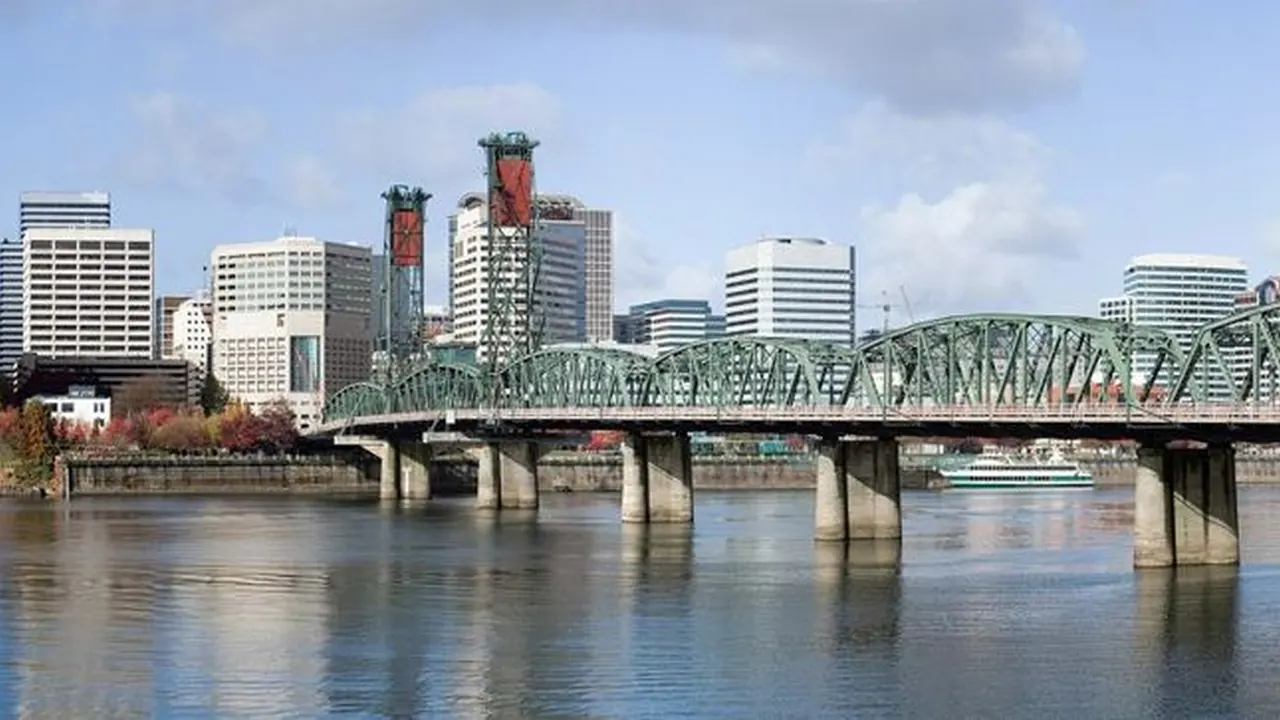
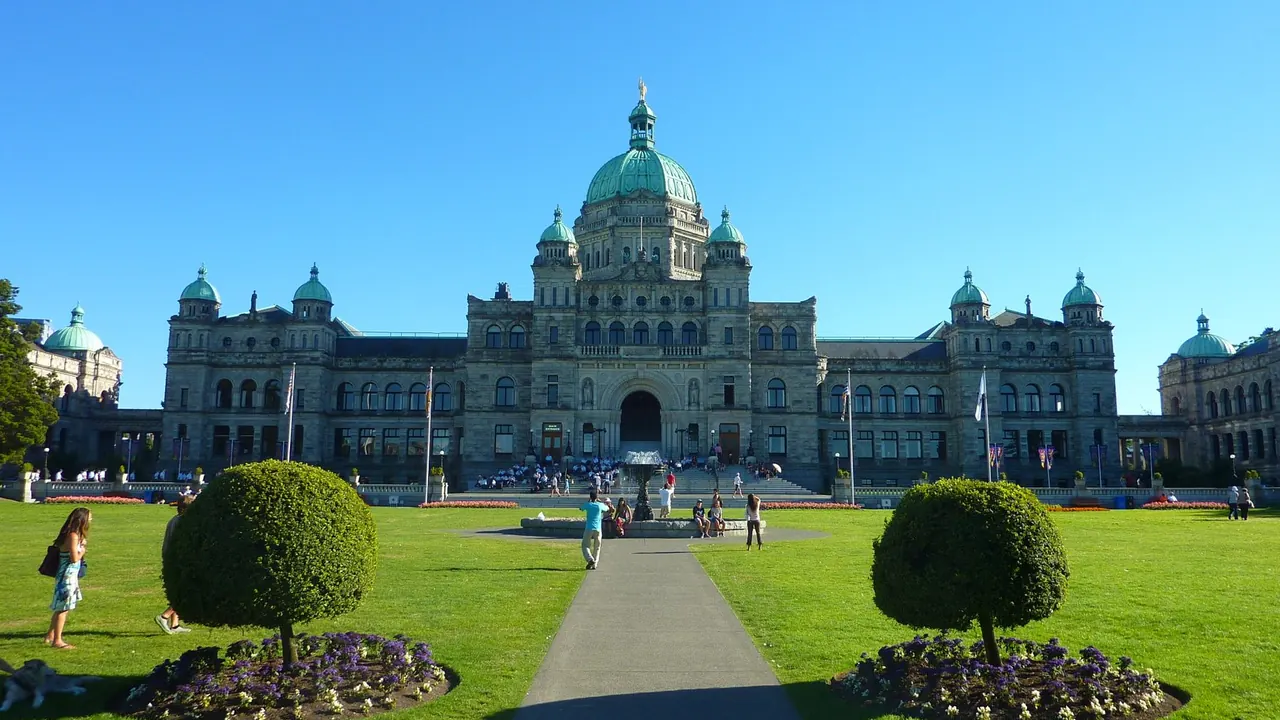
Photos: Portland by Cacophony, CC BY-SA 4.0, cropped; Victoria by Guilice, CC BY-SA 3.0, cropped.
Portland or Victoria?
Our verdict in twelve categories, each scored against the same fixed benchmark cities, and the climate month by month, so you can choose for your trip.
Choose Portland for
- nightlife
- food and drink
- live music and the arts
Portland is the better pick for travellers who want to eat, drink and get out into big country. In town that means food cart pods, brewery taprooms and serious coffee. Within a short drive are the waterfalls of the Columbia River Gorge and the slopes of Mount Hood. Evenings run longer too, with a bar strip in almost every east-side neighbourhood and bands playing small rooms most nights. It suits an active, sociable trip, ideally with a car for the days out.
Choose Victoria for
- beaches
- families
- wellness
Victoria is for a gentler, smaller stay built around the water. The main sights sit within a short walk of the Inner Harbour, and whale-watching boats and sea kayaks leave from the doorstep. The calm pace and many gardens make it easy with children or for simply unwinding. Nights end early and the food choice is narrower, so it rewards travellers who care more about ease and scenery than about going out.
Scoreboard
Twelve categories on one fixed scale from 0 to 100. The shaded stretch is the gap between the two.
Your match
Pick a travel style or drag the sliders, and both match scores follow your weighting.
Wins on nightlife and food and drink with your weighting.
Wins on beaches and families with your weighting.
What matters to you?
Category by category
What the scores mean for a trip.
Beaches & swimming
Neither city is a beach destination, but Victoria comes off a little better because its shoreline is right in town. Willows Beach and the bay at Gonzales are fine for a walk and paddling at the edge. In summer, Thetis Lake, Elk/Beaver Lake and the Sooke Potholes, all a short drive away, are warm enough for a real swim.
Portland's ocean beaches at Cannon Beach and Seaside are an hour and a half away and too cold and rough for most swimmers. Swimming here means a summer dip in the Willamette or the Columbia, from the small sandy patches in Sellwood or the river beaches on Sauvie Island.
Food & drink
Portland is the stronger food city by some way. The food cart pods give you Thai, Georgian, barbecue and more in one parking lot, and there is a thick layer of produce-led neighbourhood restaurants. Drinking is just as strong, with a very dense brewery scene, serious coffee roasters and Oregon pinot on every list.
Victoria draws on the same Northwest larder of salmon, crab and spot prawns, and adds its own touches: afternoon tea at the Empress, fish and chips at Fisherman's Wharf and Canada's oldest Chinatown. Beyond that the range is limited, and there is little to eat late at night.
Culture & sights
The two are about even, and each needs two or three days, but the sights are different in kind. Victoria has the stronger set piece. The Parliament Buildings and the Empress face each other across the Inner Harbour, with the Royal BC Museum and the totem poles of Thunderbird Park next door, all within walking distance of Craigdarroch Castle and Fan Tan Alley.
Portland's best sights are its gardens: the walled Lan Su Chinese Garden and the Japanese Garden in Washington Park. Add the Art Museum's Native American collection and the view from Pittock Mansion to Mount Hood, and the sights are more spread out and less grand than Victoria's harbour front.
Nightlife
Portland gives you far more to do after dark. Bars are everywhere, from taprooms and dives with pinball machines to careful cocktail bars, and each neighbourhood has its own strip, so a night out can stay local and still run to 2.30am.
Victoria's evenings centre on British-style pubs and taprooms around Wharf Street and Lower Johnson, with only a small student club scene at weekends. Most visitors finish with a drink by the harbour and are in bed before midnight. Neither city has much in the way of big clubs.
Nature & outdoors
Portland has the bigger landscapes. Forest Park's 110km of trails start in the city's northwest streets, and the Columbia River Gorge, with Multnomah Falls and dozens of waterfall hikes, begins within half an hour. Mount Hood adds skiing, even on its glacier into summer, and alpine hiking that Victoria cannot match.
Victoria's outdoors is about the sea. Whale-watching boats look for orcas from the Inner Harbour, beginners can kayak in sheltered water around Discovery Island, and Goldstream's old-growth cedars and autumn salmon run are thirty minutes away. Its milder winters also make walking and cycling possible all year.
Day trips
Both have a good range of days out, and the difference is how you get there. From Portland you drive. The Willamette Valley wineries are under an hour away, then there is Astoria's Victorian river port, the coast at Cannon Beach, and Hood River's orchards beside the Gorge.
From Victoria, Butchart Gardens is a short trip and the Cowichan Valley's cideries and totem poles are an hour over the Malahat. Many other outings mean a ferry, to Salt Spring Island's market or by floatplane to Vancouver. That adds charm, but it also adds time.
Good for families
Victoria is the easier city with children. It is compact and calm, and Beacon Hill Park has a petting farm and ponds. The harbour keeps young ones busy with seaplanes and little ferries, and whale watching is a highlight for older children.
Portland has bigger attractions Victoria lacks: the Oregon Museum of Science and Industry with its submarine, the Oregon Zoo and the old-fashioned rides of Oaks Amusement Park. But the city is more spread out, and visible homelessness in parts of downtown bothers some families.
Getting around
Both are easy without a car in town and hard without one beyond it, but they work differently. Portland has rail: the MAX light rail from the airport and a streetcar through the Pearl District. Its short downtown blocks are pleasant to walk, but the east-side neighbourhoods where much of the fun is are reached by slower buses.
Victoria has only buses, and it needs little more because the harbour, Chinatown, Old Town and Beacon Hill Park are all within about 20 minutes of each other on foot. Little harbour ferries and protected bike lanes cover the rest.
Shopping & style
Portland offers more and better shopping. Powell's City of Books fills a whole block, and Mississippi, Alberta and Hawthorne are lined with vintage clothing, record shops and makers' studios. Oregon's lack of sales tax and its home-grown outdoor gear add to the appeal.
Victoria's shopping is smaller but has its own specialities. The heritage storefronts of Lower Johnson Street and Market Square hold local labels, and specialist galleries sell Northwest Coast First Nations prints, carvings and jewellery, the best things to bring home. Neither city has luxury brands.
Affordability
Neither is cheap, and the cost of a stay is similar. They differ in where the money goes. In Portland the savings are built into daily life: food carts are some of the best eating, transit is inexpensive and Forest Park is free. The big extra cost is car hire for the Gorge or the coast.
Victoria's room rates climb sharply in summer, and whale watching, Butchart Gardens and ferries add up. In return, the compact centre costs almost nothing to get around, and the November to March off-season brings much lower hotel prices.
Live music & performing arts
Portland has more to see on a given night. The Oregon Symphony plays in a restored 1920s movie palace, and opera, ballet and resident theatre companies keep a full season. Its real character is the indie rock and folk circuit in small east-side rooms and the sprung floor of the Crystal Ballroom.
Victoria's stages are the historic Royal Theatre and McPherson Playhouse, with the Belfry for new Canadian plays. Live music is mostly pub bands and a jazz club. Summer is its best season, with the jazz and Fringe festivals and the symphony's free concert on a barge in the Inner Harbour.
Wellness & relaxation
Victoria is slightly better for rest, mostly because of its pace. It is quiet and full of flowers, and seafront walks, long afternoon teas and mild weather out of season make slowing down easy. For pampering there are harbour hotel spas and waterfront retreats in Sooke.
Portland actually has more bathing, with soaking houses offering saunas and cold plunges, and Cascade hot springs about two hours' drive away. But the city itself is livelier, and restful days there come from its gardens and café mornings rather than from the general pace.
When should you go?
Pick your month. The climate figures are measured averages, not a forecast.
Portland in July
Victoria in July
Daytime high, °C
Rainfall in the month, mm
Where the figures come from
Victoria's sunshine is measured 87 km from the centre, at Vancouver International Airport.
Temperature and rainfall are climate normals, averaged over the years shown. Portland: 1991-2020 normals, Portland International Airport (9.8 km from centre). Victoria: 1991-2020 normals, Victoria Gonzales CS (3.6 km from centre).
Both cities are at their best from June to September, when the rain almost stops. Portland has the warmer summer, reaching about 28°C in August. That suits river swimming and the Gorge trails, but it can feel hot on the pavement in the middle of the day. Victoria stays mild, topping out near 21°C, with close to 300 hours of sunshine in July, so you can walk and cycle all day. Its sea stays cold all year, around 12°C at best, so sea swimming is out even in high summer.
From October the rain returns, and both winters are grey and cool, with highs near 8°C. Portland is slightly warmer in spring but much wetter for most of the year, with its heaviest rain in November and December. Victoria gets roughly a third less rain over the year, and its spring dries out early. By April it is far drier than Portland, so walking weather starts there in April, while in Portland May is the better time to begin.
Which traveller are you?
On a food and nightlife trip, Portland is the clear choice. Stay on the inner east side and lunch at a cart pod, then walk to dinner and a late bar. Keep one day for a wine tour in the Willamette Valley. Victoria would fill a weekend like this, not a week.
On a family trip with young children, Victoria makes the simpler plan. From a base near the Inner Harbour, almost every outing is a short stroll, so naps and early nights fit in easily. Butchart Gardens and the replica old town in the Royal BC Museum make good bigger days.
For a relaxing and wellness trip, Victoria suits a stay with no schedule: a room with a harbour view, a spa treatment, then a few nights at a quiet waterfront resort on the Saanich Peninsula. Rest in Portland takes more planning, with a soaking house booked ahead or a drive to the hot springs.
Before you go
| Measure | Portland | Victoria |
|---|---|---|
| Official language | - | French, English |
| Currency | US Dollar (USD) | Canadian Dollar (CAD) |
| Sockets | AB120 V, 60 Hz | AB120 V, 60 Hz |
| Driving side | Right | Right |
| Time zone | UTC-8, UTC-7 in summer | UTC-8, UTC-7 in summer |
| Emergency number | 911 | 911 |
| Elevation | 152 m | 23 m |
| Main airport | Portland International Airport (PDX)10 km from centre88 non-stop destinations | Victoria International Airport (YYJ)25 km from centre16 non-stop destinations |
| Public holidays this year | 12 days | 11 days |
By the numbers
| Measure | Portland | Victoria |
|---|---|---|
| City population | 652,503 | 91,867 |
| People per km² | 1,736 | 4,711 |
| Museums within 10 km | 17 | 6 |
| UNESCO World Heritage sites within 50 km | 0 | 0 |
| Swim season, months above 21 °C | - | None |
Where else could you go?
Every comparison below shares a destination with this one, so you can follow Portland or Victoria somewhere new.