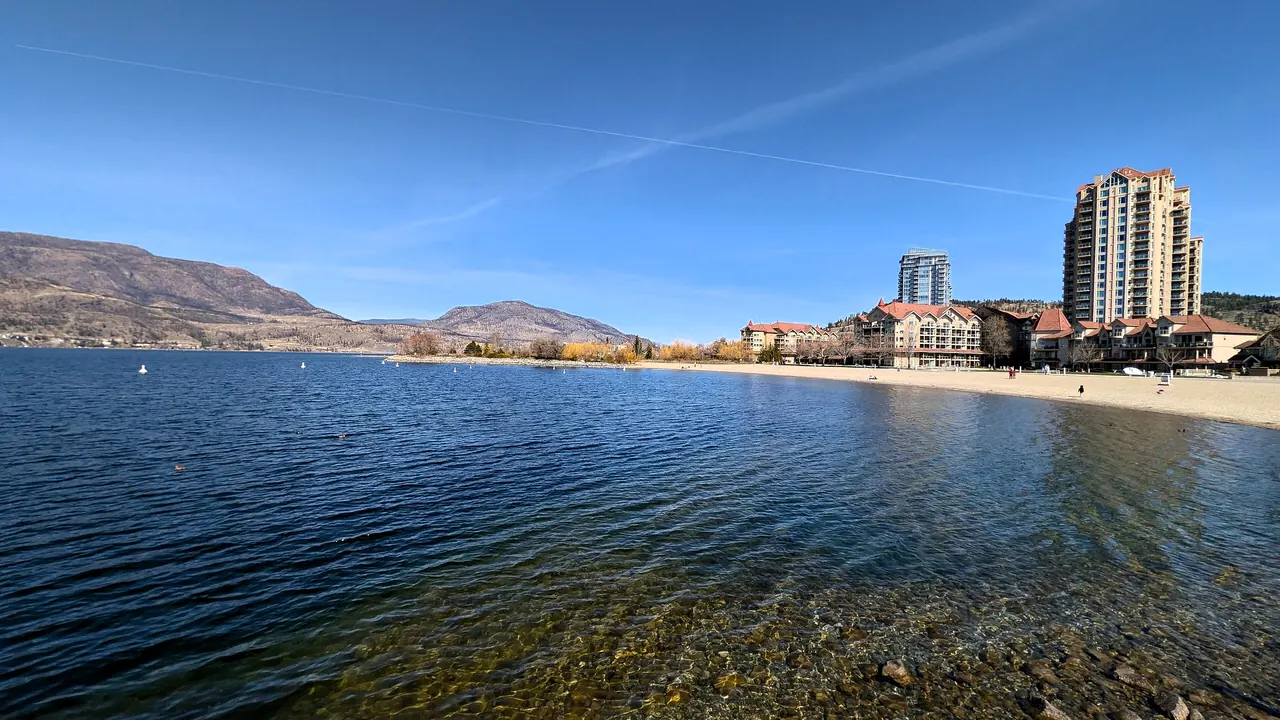
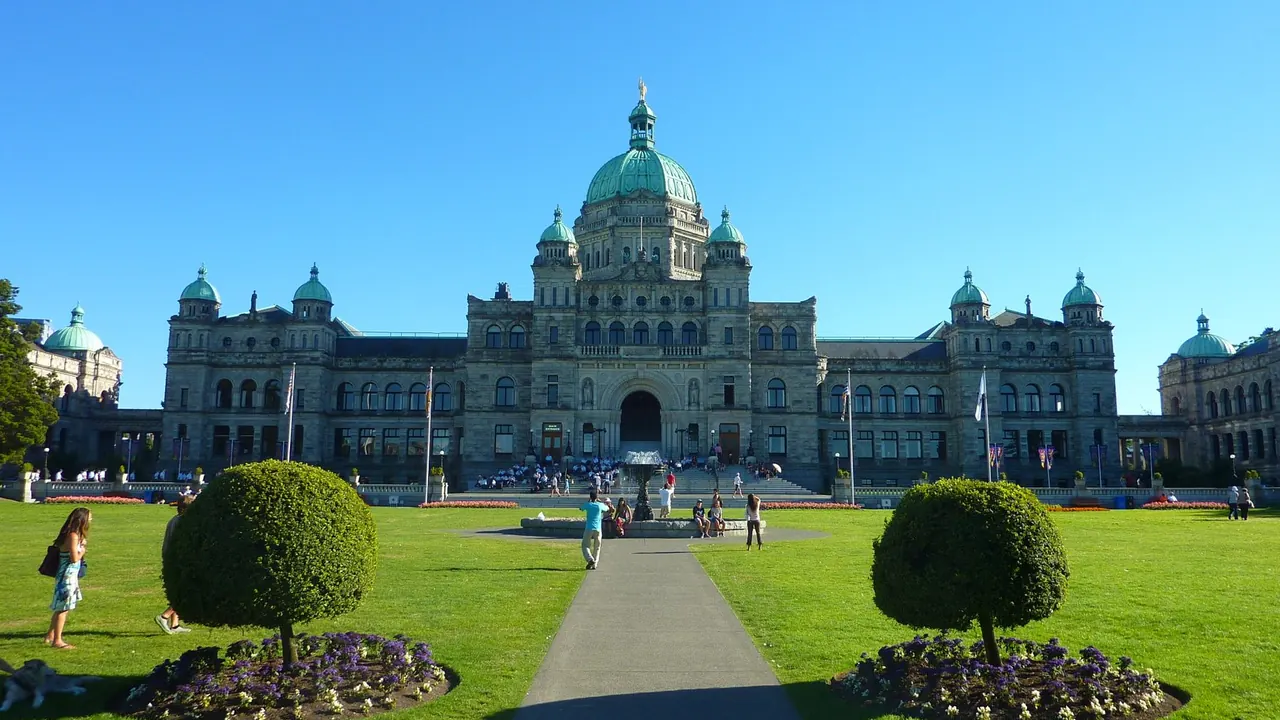
Photos: Kelowna by Joli Rumi, CC BY-SA 4.0, cropped; Victoria by Guilice, CC BY-SA 3.0, cropped.
Kelowna or Victoria?
Our verdict in twelve categories, each scored against the same fixed benchmark cities, and the climate month by month, so you can choose for your trip.
Choose Kelowna for
- beaches
- food and drink
- nature and the outdoors
Kelowna is the pick for a summer vacation built around warm water and wine. Okanagan Lake is warm enough for long swims in high summer, sandy beaches begin at the edge of downtown, and vineyard terraces fill the afternoons. It suits travellers who will hire a car and spend their days on the lake, on the trestle trail at Myra Canyon or touring cellar doors. In winter it also works as a base for skiing at Big White.
Choose Victoria for
- getting around
- culture and sights
- shopping
Victoria is the better choice for a walkable city with more to see between outdoor outings. The Inner Harbour, the Royal BC Museum, the historic theatres and the independent shops of Lower Johnson Street are all a short stroll apart, and whale watching, coastal trails and Butchart Gardens are close by. You can manage without a car, and the mild climate keeps it pleasant well beyond summer, though the sea is never really for swimming.
Scoreboard
Twelve categories on one fixed scale from 0 to 100. The shaded stretch is the gap between the two.
Your match
Pick a travel style or drag the sliders, and both match scores follow your weighting.
Wins on beaches and food and drink with your weighting.
Wins on getting around and culture and sights with your weighting.
What matters to you?
Category by category
What the scores mean for a trip.
Beaches & swimming
Kelowna's beaches are a real draw and Victoria's are not. Hot Sands in City Park, Gyro Beach and Rotary Beach are sandy, and in July and August the freshwater lake is warm enough to spend whole afternoons swimming and paddleboarding. The season is short, though, and on summer weekends the beaches nearest downtown get crowded.
Victoria's shoreline is for walking along. Willows Beach and Gonzales Bay are pleasant for paddling at the edge, but the strait stays cold all summer and Dallas Road is pebble and driftwood. For a real swim, locals drive out to Thetis Lake or the Sooke Potholes.
Food & drink
The two eat about equally well, but in different ways. In Kelowna, food means the countryside: winery terraces above the lake, cherries and peaches from the farm stands, and cideries and distilleries. Once you are past the downtown restaurants, the choice quickly turns to highway chains.
Victoria cooks from the sea. Its strengths are spot prawns, Dungeness crab and oysters, along with serious brunches, a long-established craft beer culture, afternoon tea at the Empress and fish and chips at Fisherman's Wharf. Chinatown gives it a little more range than Kelowna, though neither city has much street food or late-night eating.
Culture & sights
Victoria has much more to see. The Parliament Buildings and the Empress face each other across the Inner Harbour, the Royal BC Museum covers First Nations cultures and natural history, and Craigdarroch Castle, Fan Tan Alley and the Emily Carr House fill two or three days.
In Kelowna, one afternoon covers it: the Okanagan Heritage Museum, a small art gallery and the log buildings of Father Pandosy Mission. People come for the lake and the vineyards, not the sights.
Nightlife
Both are early-to-bed places, and the difference is in the mood. Kelowna's Bernard Avenue fills in summer with students, stag and hen parties and lake-weekend crowds on the patios, and goes quiet once the season ends. Victoria's evenings revolve around British-style pubs, taprooms and a few good cocktail bars in old brick buildings, with a small student club scene that closes early.
Nature & outdoors
Kelowna sits among dry, pine-dotted hills above a long glacial lake, while Victoria looks out on a cold green coast of cliffs and cedar forest. Around Kelowna the lake is the playground for wakeboarding, kayaking and paddleboarding, Myra Canyon gives an easy ride over its wooden trestles, and mountain bike trails climb the hills. In winter the dry powder at Big White is about an hour's drive away.
Victoria's outdoors start on the Dallas Road clifftops, with the Olympic Mountains across the strait. Boats leave the Inner Harbour to look for orcas and humpbacks, sheltered water around Discovery Island suits beginners in sea kayaks, and Goldstream's old-growth cedar and the rainforest coast beyond Sooke are within reach. There are no high mountains or ski slopes nearby, but walking and cycling carry on all year.
Day trips
Victoria has the more varied outings. Butchart Gardens is half an hour away, and further afield are the Cowichan Valley with the totem poles of Duncan, Salt Spring Island's market by ferry and even Vancouver by floatplane. Ferry crossings make some of these trips slower than they look on the map.
From Kelowna, almost every outing is more of the Okanagan wine country: the Naramata Bench by Penticton, the vineyards around Oliver and Osoyoos, and O'Keefe Ranch near Vernon. It makes a lovely circuit for wine lovers, but every stop needs a car and none of the towns is a historic place.
Good for families
In Kelowna a family day means the lake and the car. Children paddle in shallow, warm water off the city beaches, pick fruit in the orchards and cycle the flat Myra Canyon trail, and in winter Big White has ski-in, ski-out lodgings. The attractions are spread along the highway, so expect to drive between them.
Victoria keeps everything within a short walk. Beacon Hill Park has a petting farm and playgrounds, the Royal BC Museum has a full-size replica old town, and seaplanes land in the harbour. Whale watching suits older children, but the cold sea leaves little room for beach play.
Getting around
Victoria is much easier without a car. The harbour, the museum, Chinatown and Beacon Hill Park are within about 20 minutes of each other on foot, harbour ferries link the docks and protected bike lanes lead out onto car-free trails. For Sooke or the Cowichan Valley you still want a car.
In Kelowna only the downtown waterfront and the lakeside path are walkable. The city spreads out along Highway 97, and wineries, trails and ski slopes all call for a car or an organised tour.
Shopping & style
Victoria gives shoppers more reason to browse. The heritage storefronts of Lower Johnson Street hold local labels, and there are Market Square, Chinatown's tea and curio shops, second-hand bookshops and galleries selling Northwest Coast First Nations art.
Kelowna has a few boutiques on Bernard Avenue and a chain mall. Its best buys come from the cellar doors and fruit stands.
Affordability
Neither is cheap, and both are at their most expensive in summer. In Kelowna the extra cost is car hire, along with tastings and boat rentals. In Victoria the compact centre saves on transport, but whale watching, Butchart Gardens and ferries add up. Both get much easier on the budget out of season, although Kelowna's ski weeks at Big White are the exception.
Live music & performing arts
Victoria has the fuller calendar. The symphony, Pacific Opera Victoria and ballet play the historic Royal Theatre and McPherson Playhouse, the Belfry stages Canadian theatre in a converted church, and summer brings the jazz and Fringe festivals.
Kelowna's programme is regional: community theatre, the Okanagan Symphony, touring acts at the arena and free summer concerts by the lake. It will fill an evening, but it is not something to plan a trip around.
Wellness & relaxation
Neither city has thermal springs, so in both the rest comes from the pace, with Victoria slightly the easier place to unwind. Its gardens, seafront walks and long afternoon teas stay pleasant out of season, and Sooke has quiet waterfront resorts. Kelowna's version is long vineyard lunches and calm mornings on the lake, which are best enjoyed outside the busiest summer weeks.
When should you go?
Pick your month. The climate figures are measured averages, not a forecast.
Kelowna in July
Victoria in July
Daytime high, °C
Rainfall in the month, mm
Where the figures come from
Victoria's sunshine is measured 87 km from the centre, at Vancouver International Airport.
Temperature and rainfall are climate normals, averaged over the years shown. Kelowna: 1991-2020 normals, Kelowna Mws0 (8.4 km from centre). Victoria: 1991-2020 normals, Victoria Gonzales CS (3.6 km from centre).
Kelowna swings hard between the seasons. July and August reach about 30°C and stay dry, which makes them the months for the lake and the beaches, although midday heat makes street walking hard going and smoke can drift in late in the summer. May, June and September are the comfortable months for trails and wineries. From November to February daytime highs sit close to freezing, so this is ski season and not lakeshore weather.
Victoria is never hot and never properly cold. Summer highs stay around 21°C, with long sunny days and almost no rain, which is ideal for walking and cycling, but even at its warmest the sea only reaches about 12°C. The rain returns in October and peaks at around 116mm in November, and winters are mild but grey. Go to Kelowna for summer heat. For a city stay in spring or autumn, Victoria is the gentler choice.
Which traveller are you?
On a beach and sun trip, Kelowna is the clear choice. Okanagan Lake warms up for proper swimming in high summer, the sandy beach in City Park sits beside downtown and Rotary Beach adds paddleboarding. In Victoria the cold strait sends swimmers inland to the lakes.
For a culture and arts trip, Victoria offers far more. The Royal BC Museum, the totem poles in Thunderbird Park, Craigdarroch Castle and evenings at the Royal Theatre or the Belfry fill several days. Kelowna's heritage museum and small gallery take one afternoon.
For a short city break, Victoria is easier and fuller. The harbour, Old Town, Chinatown and Beacon Hill Park are all within walking distance, little ferries hop between the docks and no car is needed. In Kelowna the wineries and trails are spread out along the highway.
Before you go
| Measure | Kelowna | Victoria |
|---|---|---|
| Official language | French, English | French, English |
| Currency | Canadian Dollar (CAD) | Canadian Dollar (CAD) |
| Sockets | AB120 V, 60 Hz | AB120 V, 60 Hz |
| Driving side | Right | Right |
| Time zone | UTC-8, UTC-7 in summer | UTC-8, UTC-7 in summer |
| Emergency number | 911 | 911 |
| Elevation | 344 m | 23 m |
| Main airport | Kelowna International Airport (YLW)10 km from centre24 non-stop destinations | Victoria International Airport (YYJ)25 km from centre16 non-stop destinations |
| Public holidays this year | 11 days | 11 days |
By the numbers
| Measure | Kelowna | Victoria |
|---|---|---|
| City population | 144,576 | 91,867 |
| People per km² | 683 | 4,711 |
| Museums within 10 km | 0 | 6 |
| UNESCO World Heritage sites within 50 km | 0 | 0 |
| Swim season, months above 21 °C | - | None |
Where else could you go?
Every comparison below shares a destination with this one, so you can follow Kelowna or Victoria somewhere new.
- Vancouvervs Victoria
- Seattlevs Victoria
- Whistlervs Victoria
- Tofinovs Victoria
- Whistlervs Kelowna
- Vancouvervs Kelowna