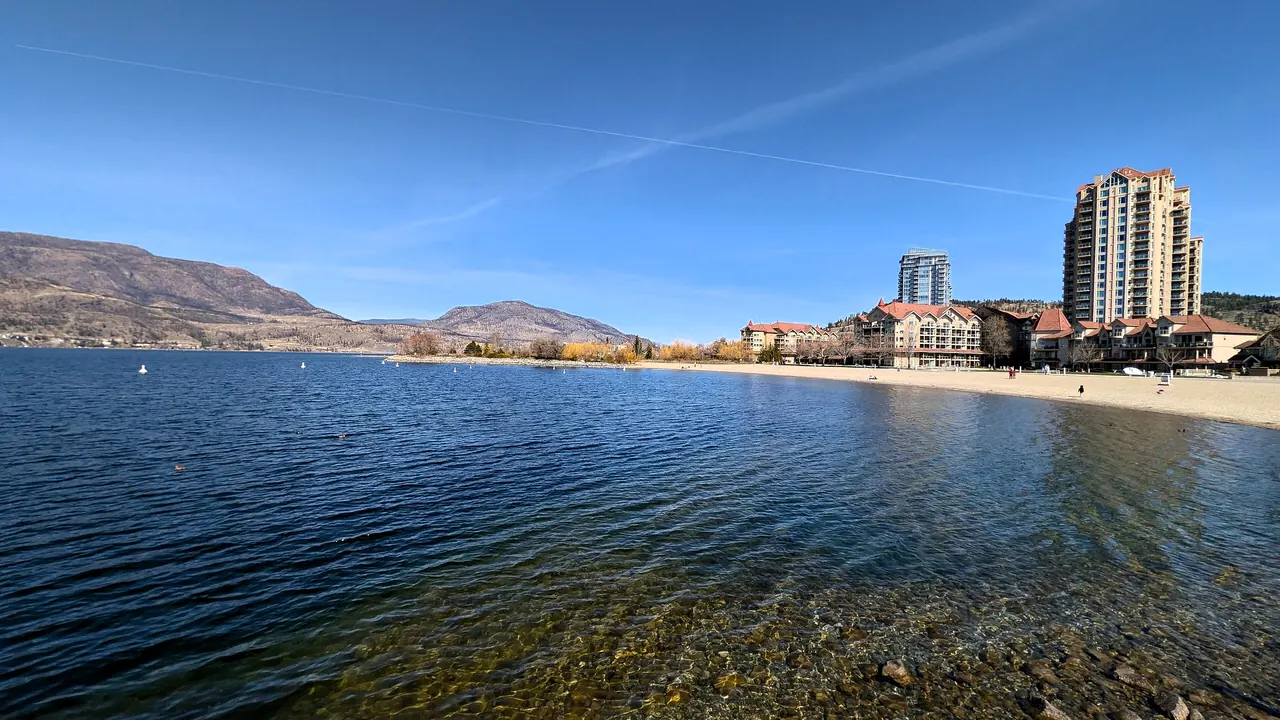
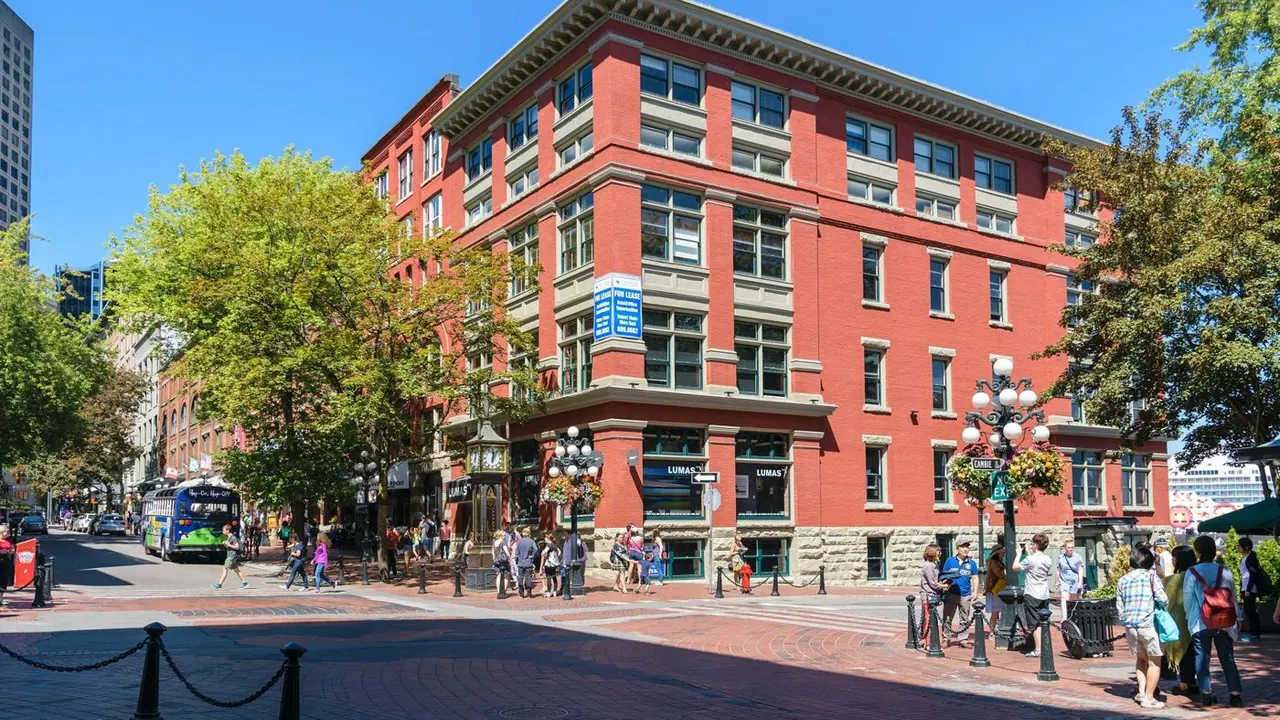
Photos: Kelowna by Joli Rumi, CC BY-SA 4.0, cropped; Vancouver by Xicotencatl, CC BY-SA 4.0, cropped.
Kelowna or Vancouver?
Our verdict in twelve categories, each scored against the same fixed benchmark cities, and the climate month by month, so you can choose for your trip.
Choose Kelowna for
- beaches
- prices
Kelowna suits a summer vacation spent mostly in and around the water. Okanagan Lake warms up enough for long swims off sandy town beaches, and the vineyards on the slopes above give the afternoons and evenings their shape. It works best for couples and groups who are happy to hire a car, spend slow days between the shore and the wineries, and don't need museums or a busy night out.
Choose Vancouver for
- getting around
- shopping
- live music and the arts
Vancouver is the stronger choice for almost every other kind of trip. The mountains, rainforest and seawall are right on the city's doorstep, the Asian food is first class, and the city is easy to get around without a car. It also has more for children, more culture and a fuller evening programme. What it lacks is warm water. The sea here is for a quick dip, not a day of swimming.
Scoreboard
Twelve categories on one fixed scale from 0 to 100. The shaded stretch is the gap between the two.
Your match
Pick a travel style or drag the sliders, and both match scores follow your weighting.
Wins on beaches and prices with your weighting.
Wins on getting around and shopping with your weighting.
What matters to you?
Category by category
What the scores mean for a trip.
Beaches & swimming
For swimming, Kelowna clearly wins. In high summer Okanagan Lake is several degrees warmer than the sea at Vancouver. Hot Sands in City Park, then Gyro and Rotary further south, give you sand, clear fresh water and room for paddleboards and windsurfing, all close to downtown.
Vancouver's beaches are more about the city's life than the water. People go to English Bay and Kitsilano for picnics, volleyball and the sunsets, and to the long sweep from Jericho to Spanish Banks for the mountain views. If you want a proper swim, the saltwater pool at Kitsilano is the warm option.
Food & drink
Vancouver is the more rewarding place to eat. Its Cantonese dim sum and seafood in the city and Richmond, the sushi counters and Korean and Taiwanese cooking give it a range that Kelowna cannot match. Salmon, spot prawns and Dungeness crab add a local Pacific character.
In Kelowna, eating centres on the wine country rather than the town. The best meals are on winery terraces above the lake, with summer fruit from the farm stands. Downtown has a modest set of restaurants, and beyond it there are mostly chains. Vancouver's better wine lists often come from the Okanagan anyway.
Culture & sights
Neither city is a sightseeing destination, but Vancouver has much more to see. The Museum of Anthropology, with its hall of Northwest Coast totem poles and canoes, is worth the trip on its own. Add Gastown's Victorian warehouses, the Dr Sun Yat-Sen Garden in Chinatown and the Emily Carr paintings at the Vancouver Art Gallery, and you have a couple of full days.
Kelowna's culture fits into a single afternoon. You can see the Okanagan Heritage Museum's Syilx and settler history, the small Kelowna Art Gallery and the log buildings at Father Pandosy Mission.
Nightlife
Vancouver is known as an early-to-bed city, but it still has the wider night out. There are cocktail and wine bars in Gastown's brick buildings, brewery taprooms around Main Street, clubs on the Granville strip and gay nightlife in Davie Village, and they keep going outside summer.
Kelowna's evenings mostly happen along Bernard Avenue, with pubs, taprooms, patios and a couple of clubs. In July and August they fill with students and stag and hen parties. Once the season ends, the town goes quiet.
Nature & outdoors
Both are outdoor destinations, but Vancouver's setting is in a different class. The North Shore mountains rise across the harbour, with forest trails and lit ski runs less than half an hour from downtown. You also have Stanley Park's cedar forest, the canyons at Lynn and Capilano, whale watching, and the Sea-to-Sky Highway running up to Squamish and Whistler.
Kelowna's landscape is drier and gentler: pine-dotted hills, vineyards and a long lake made for wakeboarding and kayaking. Its standout outing is the trestle ride through Myra Canyon. Big White's dry powder is about an hour's drive away in winter.
Day trips
The two are about level on day trips, but the trips themselves are very different. From Kelowna, almost every outing is a drive through more wine country. You can go south to Penticton and the Naramata Bench, further on to Oliver and Osoyoos with the Nk'Mip desert cultural centre, or north to Vernon and the O'Keefe Ranch.
From Vancouver, most outings go into the landscape. The one real city trip is Victoria, a long day that includes a ferry crossing to its harbour and Parliament Buildings. Steveston, Fort Langley, Bowen Island and Whistler make shorter options.
Good for families
Vancouver has more for children to do. Stanley Park alone gives you the aquarium, a miniature train, playgrounds and a water park. Science World and the little ferries to Granville Island's children's market are central, and the suspension bridges and Grouse Mountain gondola make easy outings. The catch is rain on many days outside summer.
Kelowna is better suited to a summer family vacation on the water. It has shallow, warm beaches, paddleboards, pick-your-own orchards and the flat Myra Canyon trail. In winter, Big White's ski-in, ski-out lodgings work well for families. There is no aquarium or zoo, though, and you will be driving between attractions.
Getting around
Vancouver is far easier without a car. The central neighbourhoods are walkable, the seawall makes for a lovely bike ride, and one tap-on card covers the SkyTrain from the airport, the buses and the SeaBus to North Vancouver.
In Kelowna, the stretch from downtown to the waterfront is compact, and a lakeside path leads south to the beaches. Beyond that, the city spreads out along Highway 97, and the wineries, Myra Canyon and Big White all need a car or a tour.
Shopping & style
Vancouver has much more shopping, though few people visit for it. Robson Street has the flagship stores and Alberni Street the luxury names. Granville Island's studios, Main Street's vintage shops and the Asian malls in Richmond add variety. Northwest Coast Indigenous prints and carvings are the most distinctive things to take home.
Kelowna's shops amount to a few boutiques around Bernard Avenue and a regional mall. The best things to buy there are wine from the cellar doors and preserves from the farm stands.
Affordability
Both are expensive, but Kelowna costs a little less. Outside July and August its rooms get noticeably cheaper, apart from ski weeks, and the beaches and trails are free. Car hire, tastings and boat rentals still add up.
Vancouver's downtown hotels are steep, especially in summer and the cruise season, and tax and tips push up restaurant bills. You can save with noodle shops, dim sum, reasonably priced public transport and a free day on the seawall.
Live music & performing arts
Vancouver has a proper performing arts calendar. The symphony plays in the ornate 1927 Orpheum, and the opera and Ballet BC perform at the Queen Elizabeth Theatre. In summer there is Bard on the Beach in Vanier Park, the Fringe on Granville Island, and the jazz and folk festivals.
Kelowna's programme is regional. The Okanagan Symphony and local companies perform at the Community Theatre, touring acts play the arena, and in summer there is music on winery patios. It makes a pleasant evening, but not a reason to go.
Wellness & relaxation
Vancouver is slightly better for unwinding, though neither city has hot springs or a bathing tradition. Vancouver offers a long-standing yoga scene, good hotel day spas, massage and reflexology in Chinatown and Richmond, and forest walks close at hand.
In Kelowna, relaxing means long lunches on vineyard terraces and quiet mornings on the lake, plus spas at the larger lakeside resorts. It is easiest outside the busy peak weeks of summer.
When should you go?
Pick your month. The climate figures are measured averages, not a forecast.
Kelowna in July
Vancouver in July
Daytime high, °C
Rainfall in the month, mm
Temperature and rainfall are climate normals, averaged over the years shown. Kelowna: 1991-2020 normals, Kelowna Mws0 (8.4 km from centre). Vancouver: 1991-2020 normals, Vancouver Harbour CS (4.4 km from centre).
Kelowna's year is short and sharp. From June to early September the valley is properly hot, with highs around 30°C in July, and it stays dry, so this is the season for the lake and the beaches. May and late September are warm shoulder months, good for walking and wine touring. May brings the most rain of Kelowna's year, but even that is only light showers. High summer can be too hot for a long day on foot. From November to February daytime temperatures stay close to freezing, which suits skiing at Big White and little else.
Vancouver is milder at both ends of the year, but much wetter. Summer peaks at about 23°C, which keeps walking comfortable, and July and August are the sunniest months. Even then the sea only reaches about 16°C. From October the rain sets in hard, peaking at around 245mm in November, and winter is grey and damp rather than cold. From May to September Kelowna is the warmer and drier of the two, so it is the better choice for summer and the months either side. Vancouver comes out ahead in winter, when daytime temperatures stay above freezing. It also suits the hottest weeks of summer if you want a cooler city to explore on foot.
Which traveller are you?
On a beach and sun trip, choose Kelowna. Its summers are hotter and drier, and Okanagan Lake gets warm enough for long swims from sandy beaches such as Hot Sands in City Park. Vancouver's sea stays cold enough that most people only take a quick dip.
For a short city break, Vancouver works much better. Gastown, Chinatown, Stanley Park and the seawall are all within easy reach on foot, by SkyTrain or by bike. In Kelowna, a single afternoon covers the sights, and the wineries need a car or a tour.
On a food and nightlife trip, Vancouver comes out ahead. You get dim sum and seafood in Richmond, sushi and ramen everywhere, and Gastown cocktail bars or Granville Street clubs afterwards, all year round. Kelowna offers winery terraces and summer patios on Bernard Avenue, but evenings end early.
Before you go
| Measure | Kelowna | Vancouver |
|---|---|---|
| Official language | French, English | French, English |
| Currency | Canadian Dollar (CAD) | Canadian Dollar (CAD) |
| Sockets | AB120 V, 60 Hz | AB120 V, 60 Hz |
| Driving side | Right | Right |
| Time zone | UTC-8, UTC-7 in summer | UTC-8, UTC-7 in summer |
| Emergency number | 911 | 911 |
| Elevation | 344 m | 2 m |
| Main airport | Kelowna International Airport (YLW)10 km from centre24 non-stop destinations | Vancouver International Airport (YVR)9 km from centre109 non-stop destinations |
| Public holidays this year | 11 days | 11 days |
By the numbers
| Measure | Kelowna | Vancouver |
|---|---|---|
| City population | 144,576 | 662,248 |
| People per km² | 683 | 5,759 |
| Museums within 10 km | 0 | 26 |
| UNESCO World Heritage sites within 50 km | 0 | 0 |
| Swim season, months above 21 °C | - | None |
Where else could you go?
Every comparison below shares a destination with this one, so you can follow Kelowna or Vancouver somewhere new.
- Victoriavs Vancouver
- Whistlervs Vancouver
- Seattlevs Vancouver
- Tofinovs Vancouver
- Whistlervs Kelowna
- Lake Louisevs Kelowna