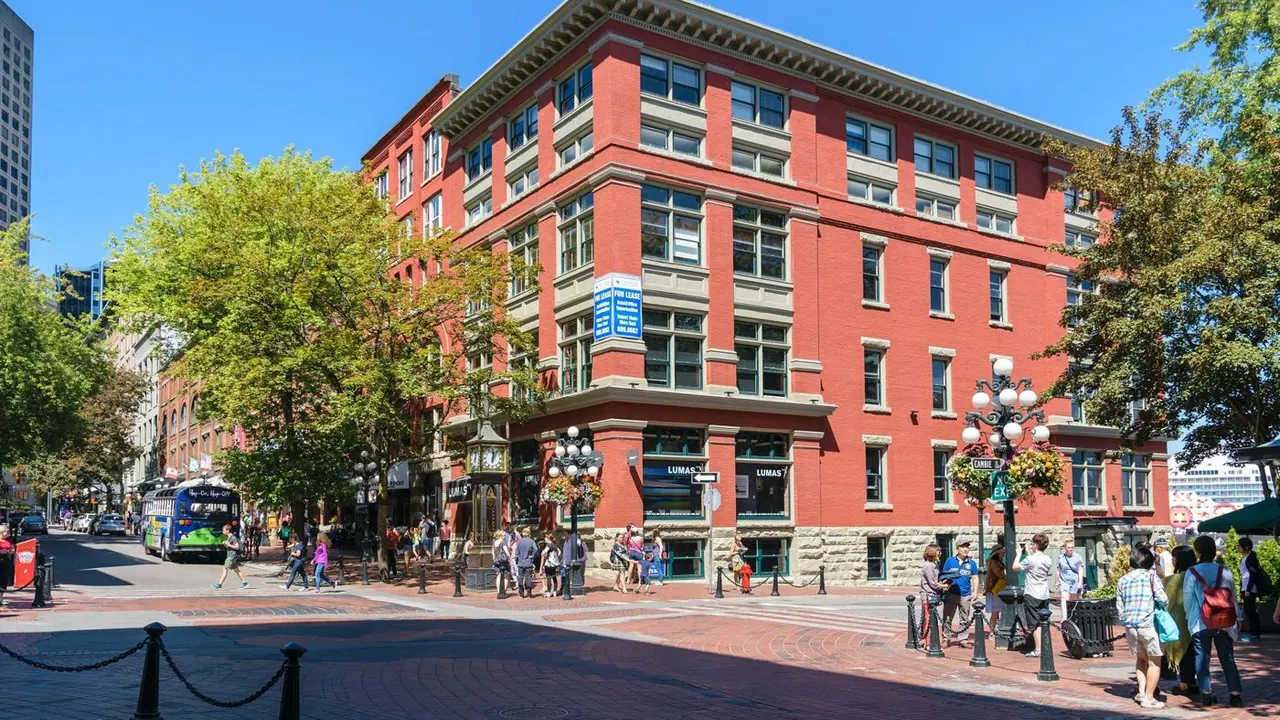
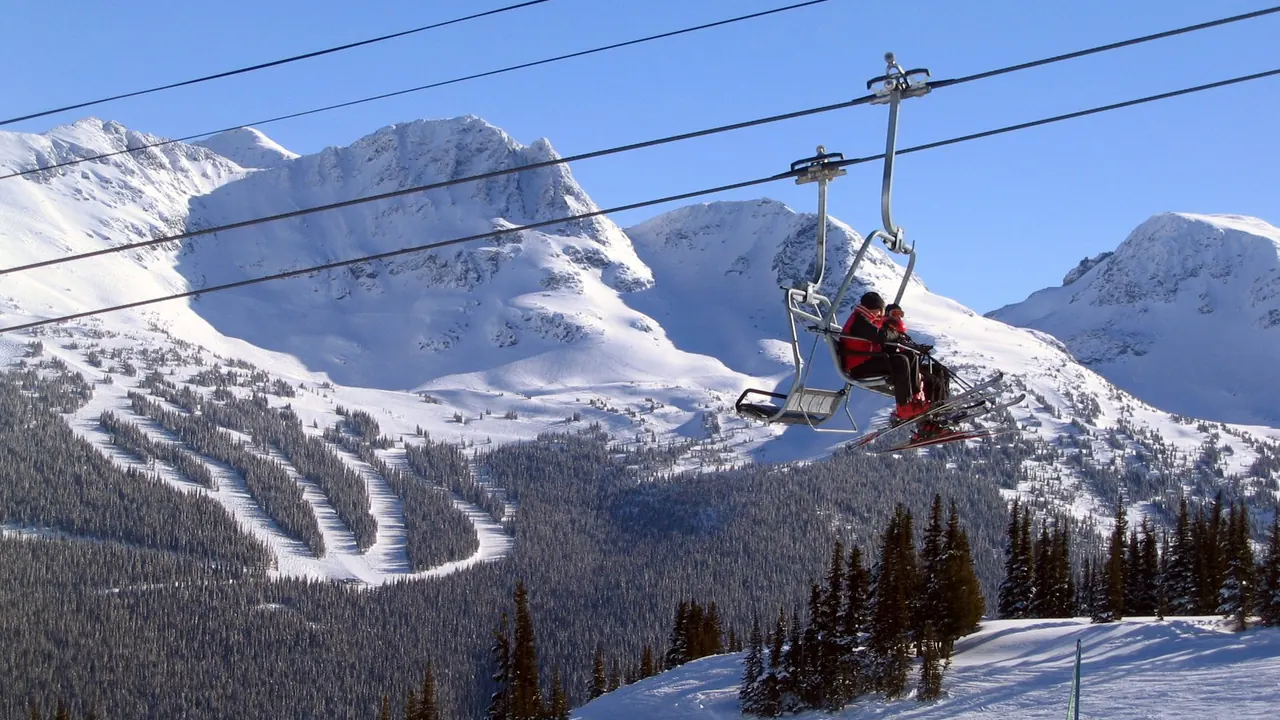
Photos: Vancouver by Xicotencatl, CC BY-SA 4.0, cropped; Whistler by Ruth Hartnup, CC BY 2.0, cropped.
Vancouver or Whistler?
Our verdict in twelve categories, each scored against the same fixed benchmark cities, and the climate month by month, so you can choose for your trip.
Choose Vancouver for
- live music and the arts
- food and drink
- shopping
Vancouver suits travellers who want a full city with wild country at its edge. You eat far better here, especially dim sum, sushi and Pacific seafood. There is a real arts calendar and a handful of distinctive museums, and the North Shore trails, the seawall and the beaches are all close by. It is also the easier of the two on the wallet, though neither is cheap.
Choose Whistler for
- wellness
Whistler is the choice when the mountains themselves are the trip. In winter, skiers and snowboarders get two huge mountains straight from a car-free village. In summer, mountain bikers and hikers get the same. A forest spa and long dinners round off the day. Expect little in the way of sights, shows or shopping, and an even higher bill.
Scoreboard
Twelve categories on one fixed scale from 0 to 100. The shaded stretch is the gap between the two.
Your match
Pick a travel style or drag the sliders, and both match scores follow your weighting.
Wins on live music and the arts and food and drink with your weighting.
Wins on wellness with your weighting.
What matters to you?
Category by category
What the scores mean for a trip.
Beaches & swimming
Neither is a beach destination, but Vancouver has the better shoreline. English Bay, Kitsilano, Jericho and Spanish Banks offer real sand, mountain views and long summer evenings, and the Kitsilano saltwater pool makes up for the cold sea.
Whistler's answer is its lakes: the small sandy shore at Lost Lake, and the rafts and jetties on Alta and Alpha. The shallow lakes can match the sheltered bays on the coast in a warm spell. Still, this is a park beside a lake rather than a beach, and the season is only July and August.
Food & drink
Vancouver is by far the better place to eat. Cantonese dim sum and seafood, Taiwanese snacks, Korean barbecue and countless sushi counters give you a week of meals spread across many neighbourhoods. Granville Island's market and the Main Street breweries fill the gaps.
Whistler draws on the same BC salmon, spot prawns and wines, and its best village restaurants and cellars are serious. Beyond them, though, it is pubs, ramen and après-ski nachos on the gondola patios. There are no markets or street food, and the choices start to repeat within days.
Culture & sights
Vancouver has more to see, though it is no museum capital. The totem poles and canoes in the Museum of Anthropology, Gastown's cobbles, the Dr Sun Yat-Sen Garden and the Vancouver Art Gallery fill two or three days.
Whistler has no old town, and its sights take a few hours: the Audain Art Museum with its Emily Carr paintings and First Nations masks, the Squamish Lil'wat Cultural Centre and the 2010 Olympic rings. Northwest Coast Indigenous art runs through both places, but only Vancouver has enough of it to fill a full day.
Nightlife
Nobody chooses either place for its nights, and they are about equally lively, but in different ways. Vancouver spreads its evenings across Gastown's cocktail and wine bars, the Main Street taprooms, summer patios, the Granville Street clubs and the gay bars of Davie Village.
Whistler has one scene. Après-ski starts on the patios as the lifts close, and later the village clubs fill with seasonal workers on winter weekends. Outside the ski season and the summer bike festivals it goes quiet early, while Vancouver's bars do not depend on the ski calendar.
Nature & outdoors
Both sit in exceptional mountain country, and the difference is one of focus. Vancouver gives you forest, sea and peaks together. There is Stanley Park and the seawall, the canyons at Lynn Canyon and Capilano, kayaking at Deep Cove and whale watching. Grouse, Cypress and Seymour offer night skiing under half an hour from downtown.
Whistler is the big-mountain base. Winter brings the 200-plus runs, glaciers and alpine bowls of Whistler and Blackcomb. Summer brings the downhill bike park, the singletrack and the turquoise lakes of Garibaldi. Serious skiers and riders belong here. If you want the ocean as well as the mountains, stay on the coast, which is only two hours away.
Day trips
Vancouver has the better choice, though neither is strong here. Victoria, with its harbour and Parliament Buildings, is a long but worthwhile day by ferry. Steveston, Fort Langley, Bowen Island and Whistler itself are easier outings.
From Whistler, most of what is within reach is wilderness. Pemberton, the Squamish gondola and the Britannia mining museum are modest stops. The one big outing is Vancouver, two hours down the Sea to Sky Highway, and it works better with a night there.
Good for families
Both work well with children, but for different kinds of family trip. Vancouver has city attractions that Whistler lacks: the aquarium and miniature train in Stanley Park, Science World, the little False Creek ferries to Granville Island's children's market, and the canyon suspension bridges.
Whistler is built for a family ski week, with a car-free village, large ski schools, gentle runs, tubing and condos with kitchens. In summer there are lakes, mini-golf and gondola rides. Rain outside summer is the trial in Vancouver, while the cold and the noisy après-ski evenings are the drawbacks in Whistler.
Getting around
Both are easy to get around, but on very different scales. Vancouver has a real transit system: the driverless SkyTrain from the airport, the SeaBus to the North Shore and one card for trains and buses. Even so, Kitsilano, the beaches and the mountains mean bus rides.
Whistler is a car-free village with the gondolas at its edge, free shuttles and the paved Valley Trail, so inside the resort you need nothing else. Leaving it is harder. There is no railway, most people arrive by coach from Vancouver airport, and the highway needs winter tyres in snow.
Shopping & style
Vancouver gives you more to browse. Together, these make a decent spread: Robson Street's flagship stores, the luxury houses on Alberni, the underground mall for wet days, vintage and independent shops on Main Street and in Gastown, Granville Island's studios and Richmond's Asian malls.
Whistler's village is mostly gear: skis, boards, bikes and technical outerwear, which it does very well. There are also a few galleries of Indigenous prints and a summer farmers' market. Both are good for outdoor clothing, but only Vancouver works for a wider afternoon of shopping.
Affordability
Both are expensive, and Whistler more so. Vancouver's downtown hotels and restaurant bills are high. Still, cheap noodle shops, dim sum and sushi, the free parks, seawall and beaches, and fairly priced transit give you room to save.
In Whistler the costs pile up: lift passes, slopeside lodging, rentals and lessons, with Christmas and New Year pushing prices higher still. Kitchens, free shuttles, a bed further down the valley and the spring and autumn shoulder seasons help, but there is little cheap to fall back on.
Live music & performing arts
Of the two, only Vancouver has a real arts calendar. The symphony plays in the 1927 Orpheum, opera and Ballet BC perform at the Queen Elizabeth Theatre, and several theatre companies run full seasons. In summer, festivals run from Bard on the Beach to the folk festival on Jericho Beach.
Whistler offers free summer concerts in Olympic Plaza, buskers, cover bands in the pubs and the odd show at its community arts centre. Anyone staying there who wants a proper concert or a play has to go down to Vancouver for it.
Wellness & relaxation
Whistler is the better place to unwind. Its large Nordic-style spa in the cedars by the river is a highlight in its own right, with hot pools, saunas and cold plunges where guests keep silent. Hotel spas and massage studios cater to tired legs.
Vancouver relaxes you through its pace instead: seawall walks, forest paths, yoga studios, hotel day spas and reflexology in Chinatown and Richmond. It has no baths or hot springs of its own, and the nearest large outdoor spas are up near Whistler.
When should you go?
Pick your month. The climate figures are measured averages, not a forecast.
Vancouver in July
Whistler in July
Daytime high, °C
Rainfall in the month, mm
Where the figures come from
Whistler has no rain gauge within 25 km of the centre, so its rainfall comes from a gridded climate dataset read at the city rather than from a gauge further away.
Temperature and rainfall are climate normals, averaged over the years shown. Vancouver: 1991-2020 normals, Vancouver Harbour CS (4.4 km from centre). Whistler: 1991-2020 normals, Whistler - Nesters (1.1 km from centre).
Vancouver is mild all year and at its best from June to September. Highs then reach about 23°C, the rain thins out and July and August are by far the sunniest months. That is also the only time for the beaches, and even then the sea peaks at around 16°C, so a swim is a quick one. From October to March the rain sets in, heaviest in November at about 245mm, though it rarely gets too cold to walk the streets.
Whistler has two clear seasons. Summer is a little warmer than on the coast, with July and August highs near 25°C for hiking, biking and lake swims. Winter turns properly cold, around 0°C by day in December, with snow from late November into spring. Late autumn is wet and falls between the seasons, so it is the weakest time to visit either place, and Whistler most of all.
Which traveller are you?
For a culture and arts trip, Vancouver is the clear pick. The Museum of Anthropology, Gastown and Chinatown fill the days. Symphony, opera and summer Shakespeare in Vanier Park fill the evenings. Whistler offers the Audain museum and very little on stage.
On a relaxing and wellness trip, Whistler pulls ahead. Its silent Nordic-style spa among the cedars, its hotel spas and masseurs used to sore legs make soaking a core part of the stay. Vancouver relies instead on seawall walks, yoga studios and day spas.
For a food and nightlife trip, choose Vancouver. Its Cantonese seafood, Richmond dim sum, ramen and sushi go far beyond Whistler's few village streets. Evenings out are similarly lively in both, but Gastown cocktail bars and Main Street taprooms offer more variety than après-ski and beery clubs.
Before you go
| Measure | Vancouver | Whistler |
|---|---|---|
| Official language | French, English | French, English |
| Currency | Canadian Dollar (CAD) | Canadian Dollar (CAD) |
| Sockets | AB120 V, 60 Hz | AB120 V, 60 Hz |
| Driving side | Right | Right |
| Time zone | UTC-8, UTC-7 in summer | UTC-8, UTC-7 in summer |
| Emergency number | 911 | 911 |
| Elevation | 2 m | 670 m |
| Main airport | Vancouver International Airport (YVR)9 km from centre109 non-stop destinations | Vancouver International Airport (YVR)104 km from centre109 non-stop destinations |
| Public holidays this year | 11 days | 11 days |
By the numbers
| Measure | Vancouver | Whistler |
|---|---|---|
| City population | 662,248 | 13,982 |
| People per km² | 5,759 | 58 |
| Museums within 10 km | 26 | 1 |
| UNESCO World Heritage sites within 50 km | 0 | 0 |
| Swim season, months above 21 °C | None | - |
Where else could you go?
Every comparison below shares a destination with this one, so you can follow Vancouver or Whistler somewhere new.