Photos: Vancouver by Xicotencatl, CC BY-SA 4.0, cropped; Vancouver Island by Michal Klajban, CC BY-SA 4.0, cropped.
Vancouver or Vancouver Island?
Our verdict in twelve categories, each scored against the same fixed benchmark cities, and the climate month by month, so you can choose for your trip.
Choose Vancouver for
- getting around
- food and drink
- shopping
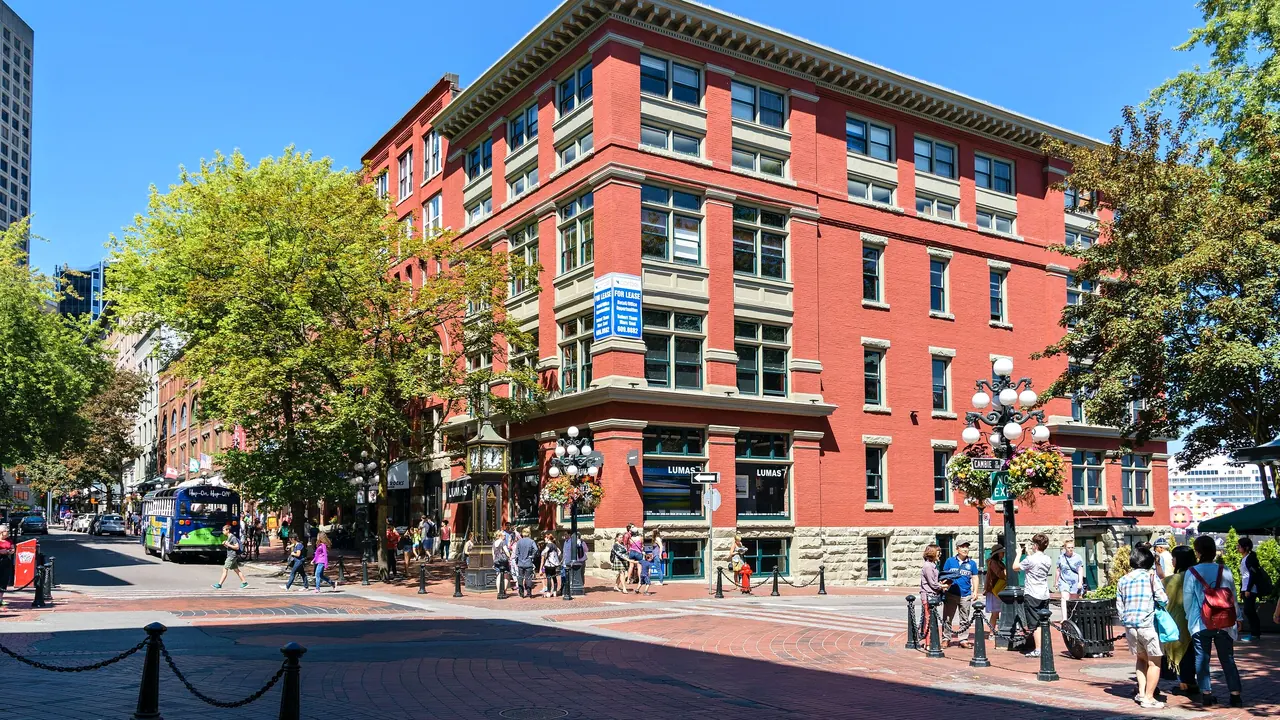
Vancouver is the better pick if you want everything from one base. Mountains, rainforest canyons and a seawall around Stanley Park are a short ride from a downtown you can walk, and the SkyTrain and SeaBus link it all together. In the evenings you get the best Asian food in the region, a fuller arts calendar and more going on after dark. It suits travellers who want wild country by day without giving up city comforts at night.
Choose Vancouver Island for
- day trips
- wellness
- culture and sights
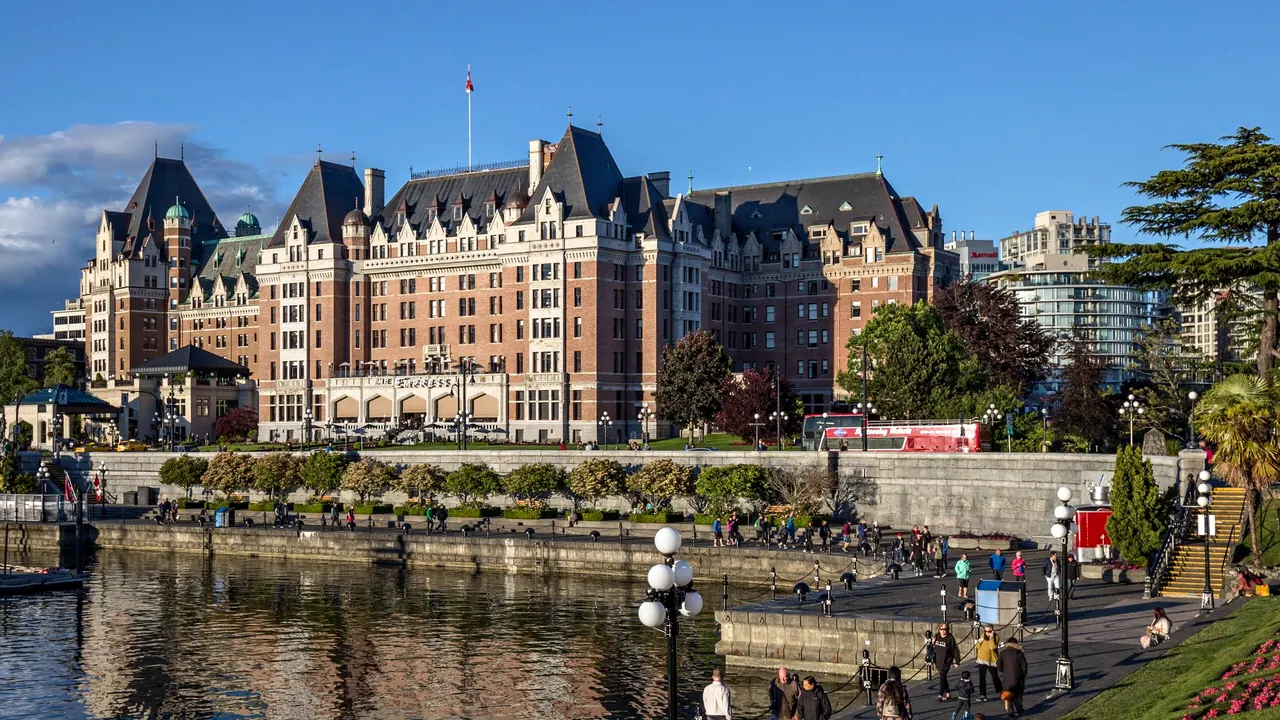
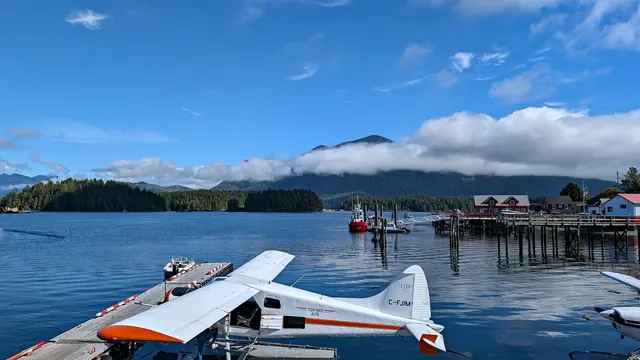
Vancouver Island is a different kind of trip, a region to drive through rather than a city to stay in. You trade convenience for remoteness: Victoria's harbour and gardens, the Cowichan Valley's wineries, Tofino's surf beaches and old-growth forest, and a boat out to Hot Springs Cove. It rewards travellers with a car, time to spare and a taste for slow days, quiet evenings and empty coastline. The cost is long drives and ferry queues.
Scoreboard
Twelve categories on one fixed scale from 0 to 100. The shaded stretch is the gap between the two.
Your match
Pick a travel style or drag the sliders, and both match scores follow your weighting.
Wins on getting around and food and drink with your weighting.
Wins on day trips and wellness with your weighting.
What matters to you?
Category by category
What the scores mean for a trip.
Beaches & swimming
Vancouver's beaches are part of the city. English Bay, Kitsilano, Jericho and Spanish Banks are a bus ride or a walk away, with mountain views, volleyball and sunsets, and the saltwater pool at Kitsilano gives a warmer swim. Even so, the sea is only good for a quick dip.
The island's most famous sands, Long Beach and Chesterman near Tofino, are wild surf beaches where people wear wetsuits. The best swimming is on the tidal flats around Parksville and Qualicum, which are lovely in high summer but a long way from anywhere else you might stay.
Food & drink
Vancouver eats much better, mostly thanks to its Asian kitchens. You'll find dim sum and Cantonese seafood here and in Richmond, along with Korean barbecue, Taiwanese snacks and sushi at every price, and the Granville Island market is good for grazing.
The island shares the same oysters, spot prawns and crab, but it is more a place for farm stands, Cowichan Valley wineries and cideries, and afternoon tea in Victoria. Tofino has a handful of ambitious kitchens. Outside the towns, the choice drops off quickly and there's little to eat late at night.
Culture & sights
The two are about level, but the sights are of a different kind. Vancouver's one great draw is the Museum of Anthropology, with its hall of Northwest Coast carvings and canoes. Gastown's brick warehouses and the Sun Yat-Sen Garden fill out a short list.
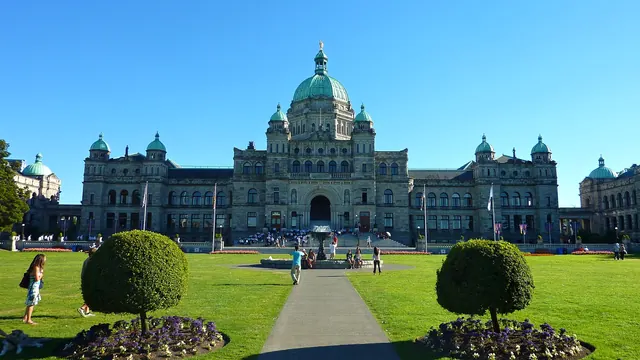
Victoria offers more of a set piece: the Parliament Buildings and the Empress around the Inner Harbour, the Royal BC Museum and Thunderbird Park, Craigdarroch Castle and the Butchart Gardens. The potlatch collection at Alert Bay is worth the long trip north.
Nightlife
Neither is a party place, but Vancouver gives you more options. You can choose between Gastown cocktail bars, brewery taprooms around Main Street, summer patios in Yaletown, a weekend club strip on Granville Street and the gay bars of Davie Village. On the island, a night out means Victoria's brewpubs and a few student clubs, and elsewhere the evening ends after dinner.
Nature & outdoors
Both are superb, but Vancouver puts wild country closer to hand. Grouse, Cypress and Seymour rise across the harbour, Lynn Canyon and Indian Arm are close by, and the Sea-to-Sky Highway reaches Squamish's granite and Whistler's alpine terrain in about two hours. You can do all of it and still sleep in town.
The island's nature is more remote and needs more effort to reach. It has the old-growth forest and surf of Pacific Rim, kayaking in the Broken Group Islands, the multi-day West Coast Trail and bears feeding on the shore at low tide. All of it lies at the end of long drives.
Day trips
The island has more to see within a day. From Victoria you can reach the Cowichan Valley's vineyards, Cowichan Bay's stilt houses, the murals of Chemainus and the farms and market on Salt Spring by a short ferry. A floatplane can even get you to Vancouver for the day.
From Vancouver, the best outing is Victoria itself, but the ferry and terminal transfers make it a long day. Steveston, Fort Langley and Bowen Island are pleasant but short trips.
Good for families
Vancouver is easier with children because so much is close together. Stanley Park has the aquarium, a miniature train and the flat seawall, and Science World and the False Creek ferries to Granville Island are central. The Grouse gondola and the canyon suspension bridges are only a bus ride away.
The island is gentler but more spread out. The shallow, warm tidal flats at Parksville suit toddlers well, and older children enjoy whale boats and surf lessons at Tofino. The long drives between those places are the hard part.
Getting around
Vancouver works well without a car. Trains, buses and the harbour ferry cover most journeys, and the compact core and the seawall suit anyone happy to walk or cycle. Only the far beaches, the university and the mountain trailheads take a little more planning.
On Vancouver Island, a car is close to essential. Victoria is easy on foot, but almost everything beyond it, from the Cowichan Valley to Tofino, depends on long hours behind the wheel. Even getting to the island means a sea crossing, so the travel becomes part of the trip.
Shopping & style
Vancouver has more range. There are chains and flagship stores on Robson Street, luxury labels on Alberni Street and an underground mall for wet days. Outdoor and athleisure brands that started in the city are easy to find, and Richmond's Asian malls are something different. Granville Island's studios and the vintage shops on Main Street cover the independent side.
Victoria's old town is smaller, with mostly independent shops around Government Street and Market Square. Some things there do come from the island itself: hand-knitted Cowichan sweaters from the valley, and pottery and woodwork from the summer craft fairs on Salt Spring.
Affordability
Both are expensive, especially in summer, and the costs come from different places. In Vancouver, it is downtown hotel rooms, restaurant bills and paid North Shore attractions, offset by cheap noodles and dim sum, free parks and reasonably priced transit.
On the island, it is Tofino's lodges, ferry fares, car hire and fuel. You can save by basing yourself in the east coast towns around Parksville, Nanaimo and Comox, or by coming in spring or autumn.
Live music & performing arts
Vancouver has the fuller calendar. The symphony plays in the ornate Orpheum, opera and Ballet BC perform at the Queen Elizabeth Theatre, and touring shows stop on their way along the coast. In summer there's Bard on the Beach in Vanier Park and the folk festival on Jericho Beach.
Victoria has its own symphony and opera at the Royal Theatre and contemporary plays at the Belfry. Beyond that, the island has little more than summer repertory theatre in Chemainus.
Wellness & relaxation
Neither has a public bathing culture, and the two are fairly even here, with different ways to unwind. Vancouver offers yoga studios, hotel day spas, massage and reflexology in Chinatown and Richmond, and forest walks close to the centre. The nearest big outdoor spas are up near Whistler.
The island has the more memorable experience: a boat or floatplane from Tofino to Hot Springs Cove, where you soak in rock pools at the edge of the sea. Add the island's slow pace, fireside spa stays in storm season and retreats on Salt Spring.
When should you go?
Pick your month. The climate figures are measured averages, not a forecast.
Vancouver in July
Vancouver Island in July
Daytime high, °C
Rainfall in the month, mm
Where the figures come from
Vancouver Island's sunshine is measured 86 km from the centre, at Vancouver International Airport.
Temperature and rainfall are climate normals, averaged over the years shown. Vancouver: 1991-2020 normals, Vancouver Harbour CS (4.4 km from centre). Vancouver Island: 1991-2020 normals, Victoria Gonzales CS (4.3 km from centre).
Both are at their best from late June to early September, when days are warm rather than hot and the sun stays out for long stretches. Vancouver peaks at about 23°C in July and August. Around Victoria, where most island visitors stay, it is a degree or two cooler but far drier, with only about 11mm of rain in July. The sea is cold in both places all year. Vancouver's sheltered bays reach about 16°C at best, and the island's open water stays near 12°C, so swimming there means the warmer tidal flats and lakes of high summer.
From October the two pull apart. Vancouver turns very wet, with around 245mm in November and grey, short days until March, though it never gets too cold to walk the streets. The island's south-east is mild and much drier through the same months. Spring and early autumn are pleasant for walking and hiking in both, and drier on the island side.
Which traveller are you?
For a food and nightlife trip, Vancouver wins clearly. It has Cantonese dim sum in Richmond, ramen and sushi counters, plus the cocktail bars of Gastown and the clubs on Granville Street. The island's evenings rarely go beyond a brewpub in Victoria or a pint after dinner in Tofino.
For a short city break, choose Vancouver. The downtown peninsula, Gastown, Stanley Park and Granville Island are all close together and linked by SkyTrain, SeaBus and little ferries. The island needs ferries and a car before its best places even come within reach.
On a relaxing and wellness trip, Vancouver Island has the edge. You can soak in the seaside rock pools at Hot Springs Cove, book a spa at a Tofino lodge with storm views, or join a retreat on Salt Spring. Vancouver mostly offers seawall walks and hotel day spas.
Before you go
| Measure | Vancouver | Vancouver Island |
|---|---|---|
| Official language | French, English | French, English |
| Currency | Canadian Dollar (CAD) | Canadian Dollar (CAD) |
| Sockets | AB120 V, 60 Hz | AB120 V, 60 Hz |
| Driving side | Right | Right |
| Time zone | UTC-8, UTC-7 in summer | UTC-8, UTC-7 in summer |
| Emergency number | 911 | 911 |
| Elevation | 2 m | - |
| Main airport | Vancouver International Airport (YVR)9 km from centre109 non-stop destinations | Victoria International Airport (YYJ)16 non-stop destinations |
| Public holidays this year | 11 days | 11 days |
By the numbers
| Measure | Vancouver | Vancouver Island |
|---|---|---|
| Population | 662,248 | 864,864 |
| People per km² | 5,759 | - |
| Museums within 10 km | 26 | - |
| UNESCO World Heritage sites within 50 km | 0 | - |
| Swim season, months above 21 °C | None | None |
Where else could you go?
Every comparison below shares a destination with this one, so you can follow Vancouver or Vancouver Island somewhere new.
- Olympic National Parkvs Vancouver Island
- Victoriavs Vancouver
- Whistlervs Vancouver
- Seattlevs Vancouver
- Tofinovs Vancouver
- Mount Rainiervs Vancouver Island