Canada
Vancouver Island
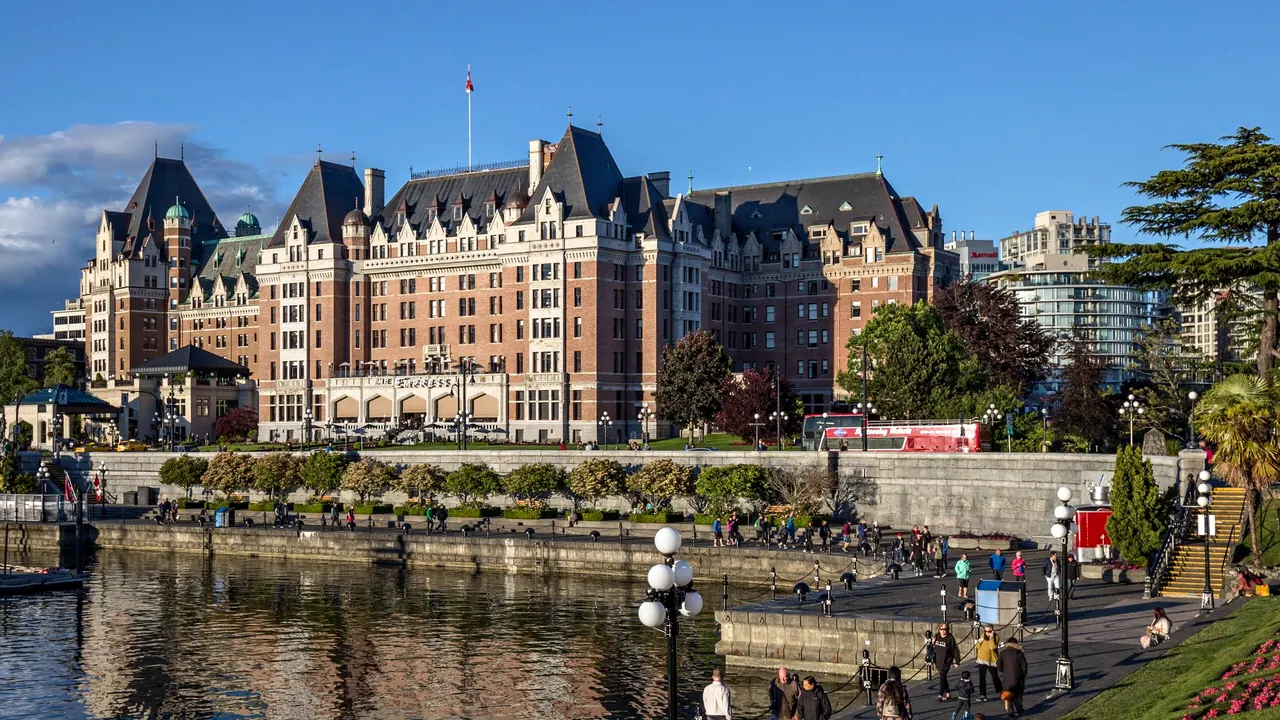
The Empress hotel above Victoria's Inner Harbour
- Nature & outdoors90
- Families62
- Food & drink55
Photo: Michal Klajban, CC BY-SA 4.0, cropped
Match
49
Every category weighted equally
- Beach & sun48
- Culture & arts46
- Food & nightlife44
- Family trip51
- Outdoors55
- Relax & unwind52
- Shopping & style46
- On a budget46
Vancouver Island in twelve categories
Our verdict on each, scored 0 to 100 against the same fixed benchmark cities, so a score means the same thing on every page.
Beaches & swimming. Scores 35 out of 100.
Food & drink. Scores 55 out of 100.
Culture & sights. Scores 45 out of 100.
Nightlife. Scores 30 out of 100.
Nature & outdoors. Scores 90 out of 100.
Day trips. Scores 55 out of 100.
Good for families. Scores 62 out of 100.
Getting around. Scores 45 out of 100.
Shopping & style. Scores 40 out of 100.
Affordability. Scores 30 out of 100.
Live music & performing arts. Scores 40 out of 100.
Wellness & relaxation. Scores 55 out of 100.
Vancouver Island category by category
Beaches & swimming
35The island's beaches are some of the most beautiful on the Pacific coast, but they are mostly for walking. Long Beach and Chesterman Beach near Tofino are wide, wild and backed by rainforest. The open ocean stays around 12-14°C even in August, so people go in with wetsuits and surfboards rather than to swim.
For real swimming, head to the east coast around Parksville and Qualicum Beach. At low tide the sea pulls back across huge sandy flats, the sun warms them, and the incoming tide can come in close to 20°C. These beaches are calm and shallow, with tide pools, and suit small children. Warm summer lakes such as Cowichan Lake and Thetis Lake near Victoria are the other option. Swimming season runs from July to early September.
Food & drink
55Food here is built on the coast and the farms: Fanny Bay and Baynes Sound oysters, wild salmon, spot prawns and Dungeness crab, plus produce from the Cowichan and Comox valleys. Victoria has the most variety, with seafood restaurants, bakeries, a serious coffee habit, a strong craft brewery scene and a long-standing taste for afternoon tea. Tofino adds a small but ambitious group of restaurants cooking West Coast ingredients.
The Cowichan Valley north of Victoria has cool-climate wineries, cideries and farm stands, and Saturday farmers' markets run up and down the island in summer. What it lacks is street food, late-night eating and a cuisine of its own. Outside the main towns, choice thins out quickly.
Culture & sights
45Most of the sights are in Victoria. The Inner Harbour is framed by the domed Parliament Buildings and the grand old Empress hotel. The Royal BC Museum covers natural history and First Nations history, with a fine totem pole collection in Thunderbird Park next door. Craigdarroch Castle is a Victorian mansion built on coal money, Fisgard Lighthouse and the Fort Rodd Hill batteries guard the harbour mouth, and Canada's oldest Chinatown sits around narrow Fan Tan Alley. The Butchart Gardens, laid out in an old quarry, are the island's best-known sight.
Up the island, Indigenous heritage is what stands out: the totem poles of Duncan and the potlatch collection at Alert Bay. Elsewhere, history means modest small-town museums.
Nightlife
30Going out here means Victoria, and even there it is low-key. Downtown and the streets around the Inner Harbour have brewpubs, cocktail bars and a few clubs, mostly full of university students, and the busiest nights are on summer weekends. Nanaimo has a handful of pubs. In Tofino and the smaller towns, evenings end with a pint after dinner. The island suits a sociable drink, not a late night out.
Nature & outdoors
90This is one of the great temperate rainforest coasts. Around Tofino and Ucluelet, Pacific Rim National Park Reserve has old-growth cedar and hemlock, surf breaks, and winter storms that people come specially to watch. Boats leave in season to see grey and humpback whales, orcas and black bears feeding on the shore at low tide. The Broken Group Islands in Barkley Sound are among the finest sea kayaking areas in the country.
The West Coast Trail and the Juan de Fuca Marine Trail are serious multi-day coastal hikes. Strathcona Provincial Park, in the middle of the island, has lakes, waterfalls and peaks over 2,000m, with skiing at Mount Washington in winter. On the road west you pass Cathedral Grove's giant firs, and orcas pass Telegraph Cove in the north in summer.
Day trips
55From Victoria, the easiest outings go north into the Cowichan Valley. There are vineyards and cideries, the wooden stilt village of Cowichan Bay, and Chemainus, a former mill town covered in murals. Salt Spring Island and the other southern Gulf Islands are a short ferry ride away, with artists' studios, farms and the Saturday market at Ganges. Sooke and the coast road west make a gentler day.
The region's main city is across the water. Vancouver is about half an hour by floatplane from harbour to harbour. By bus and ferry it is about three and a half to four hours each way from downtown to downtown, so it is a long day but a possible one. Port Angeles in Washington State is about an hour and a half by ferry. Further up the island, the towns are small and far apart.
Good for families
62The island is safe, relaxed and easy with children, though the appeal is the outdoors rather than attractions built for kids. Victoria has the natural history galleries of the Royal BC Museum, a children's petting farm in Beacon Hill Park, a small marine aquarium at Sidney, and harbour ferries that children love. The Butchart Gardens are easy to manage with a pushchair.
For young families, the best base is Parksville and Qualicum Beach. The shallow, warm tidal flats, sandcastle beaches and calm water suit small children well, and goats graze on a rooftop at nearby Coombs. Older children get more from whale-watching boats, tide-pooling, easy rainforest boardwalks and surf lessons at Tofino. The long drives between regions are the main strain.
Getting around
45Victoria's downtown and Inner Harbour are compact and pleasant to walk, with city buses and small harbour ferries for the rest. Beyond the capital you need a car. The main highway runs up the sheltered east coast through Nanaimo to Campbell River without trouble. The road west to Tofino is a slow, winding mountain drive of several hours, and the north island is a long way further. Intercity buses exist but run thinly.
Getting to the island is part of the trip. BC Ferries cross from the mainland to Victoria and Nanaimo in about an hour and a half, and queues build on summer weekends. Floatplanes and short flights are quicker.
Shopping & style
40Most of the shopping is in Victoria's old town. Government Street, Lower Johnson Street and Market Square have independent clothing shops, bookshops, outdoor gear and plenty of souvenir shops. The things worth carrying home are Northwest Coast Indigenous art and prints, hand-knitted Cowichan sweaters from the valley, and local food such as smoked salmon and sea salt. Craft fairs and summer markets, especially on Salt Spring Island, add pottery and woodwork. There is little luxury or big-name fashion shopping.
Affordability
30This is an expensive place to visit in summer. Rooms in Victoria cost a lot in high season, and Tofino's lodges and cabins are among the dearest in the country in July and August. Restaurant meals are priced high, and ferry crossings, car hire and fuel add a lot to the cost. The east coast towns around Parksville, Nanaimo and Comox are noticeably easier on the wallet, and the parks, trails and beaches cost little to use. Travelling in spring or autumn, or for winter storm watching, brings prices down sharply.
Live music & performing arts
40Victoria has a real if modest arts calendar. The Victoria Symphony and Pacific Opera Victoria perform at the historic Royal Theatre. The Belfry Theatre, in a former church, stages contemporary plays, and the McPherson Playhouse hosts touring shows. Summer brings a jazz festival, a fringe festival and free outdoor concerts. There are local bands in a few pubs, and Chemainus has a summer repertory theatre. Beyond that, the island has little regular performance to go to, so few visitors plan their trip around it.
Wellness & relaxation
55Most of the island moves at a slow pace, and many people come simply to rest. On the west coast, Hot Springs Cove is reached by boat or floatplane from Tofino and then a boardwalk through the rainforest. Hot water spills down a gully into rock pools at the edge of the sea, and soaking there is one of the island's most memorable experiences. Tofino's lodges pair spa treatments with winter storm watching from the fireside.
The resort spas around Parksville and Victoria's grand hotels cover the conventional side. Salt Spring and the Gulf Islands add yoga and retreat stays among farms and forest. There is no public bathing culture beyond this, so wellness here means quiet and the outdoors more than bathhouses.
Where to stay in Vancouver Island
Victoria is the natural first base. Its compact old town and Inner Harbour are easy to explore on foot, and most of the island's sights, restaurants, theatres and evening drinks are here. The Butchart Gardens, the Cowichan Valley and the southern Gulf Islands are all within a day out. It suits a first visit, food lovers and anyone without a car, though rooms are expensive in summer.
For young families and beach days, Parksville and Qualicum Beach on the sheltered east coast are the better choice. At low tide the sea pulls back across shallow sandy flats, and the incoming tide comes in warm. The towns are quiet, and a stay costs noticeably less. Comox, further north, is a calm base for walking in Strathcona Provincial Park and for winter skiing at Mount Washington.
Tofino, with Ucluelet just down the road, is the place for surfing, rainforest trails, whale-watching boats and winter storm watching. It is a slow, winding drive of several hours from the east coast, so plan on at least three nights. Most first trips pair Victoria with Tofino, perhaps with a night around Parksville on the way. The far north island, with Telegraph Cove and its summer orcas, is better left for a second visit by car.
When should you go?
Pick a month to see what it is like. The climate figures are measured averages, not a forecast.
Vancouver Island in July
Daytime high, °C
Rainfall in the month, mm
The whole year
Shaded against this destination’s own year: the deepest cell is its best month for that figure and the palest its weakest.
Where the figures come from
Vancouver Island's sunshine is measured 86 km from the centre, at Vancouver International Airport.
Temperature and rainfall are climate normals, averaged over the years shown. Vancouver Island: 1991-2020 normals, Victoria Gonzales CS (4.3 km from centre).
Before you go
| Measure | Vancouver Island |
|---|---|
| Official language | French, English |
| Currency | Canadian Dollar (CAD) |
| Sockets | AB120 V, 60 Hz |
| Driving side | Right |
| Time zone | UTC-8, UTC-7 in summer |
| Emergency number | 911 |
| Main airport | Victoria International Airport (YYJ)16 non-stop destinations |
| Public holidays this year | 11 days |
By the numbers
| Measure | Vancouver Island |
|---|---|
| Population | 864,864 |
| Swim season, months above 21 °C | None |
Compare Vancouver Island with
Every comparison with a written verdict behind it.