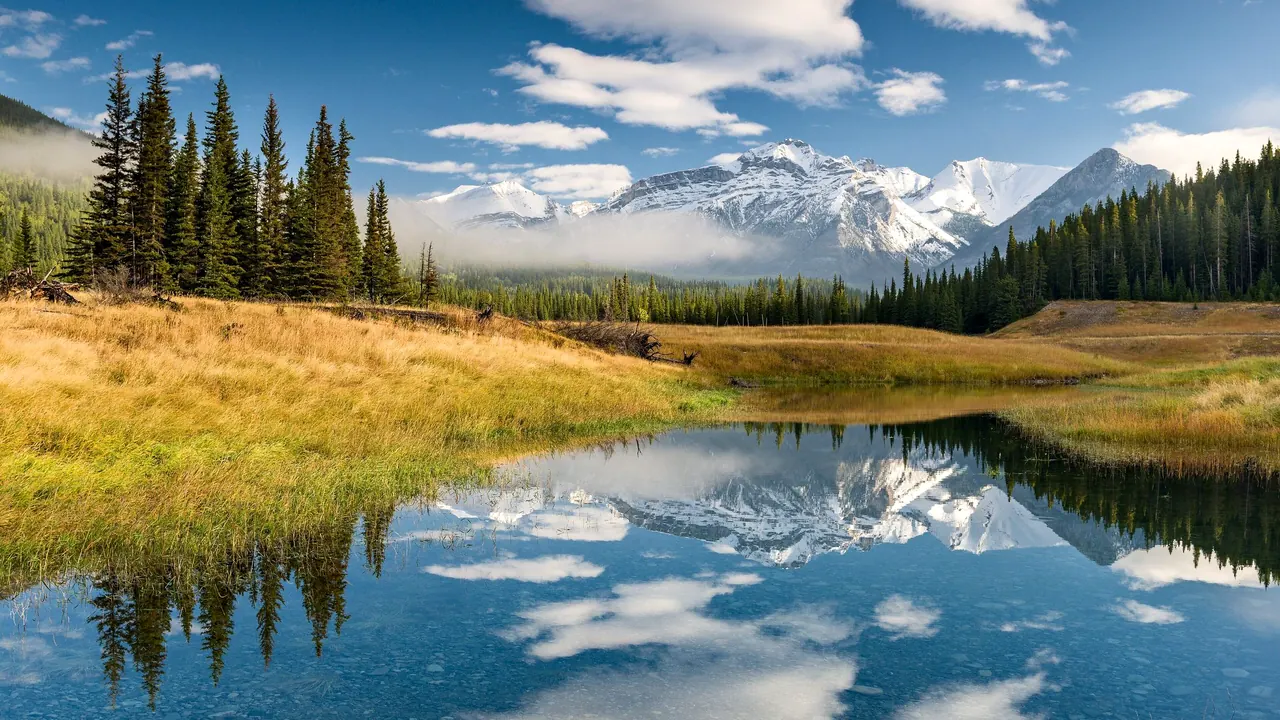
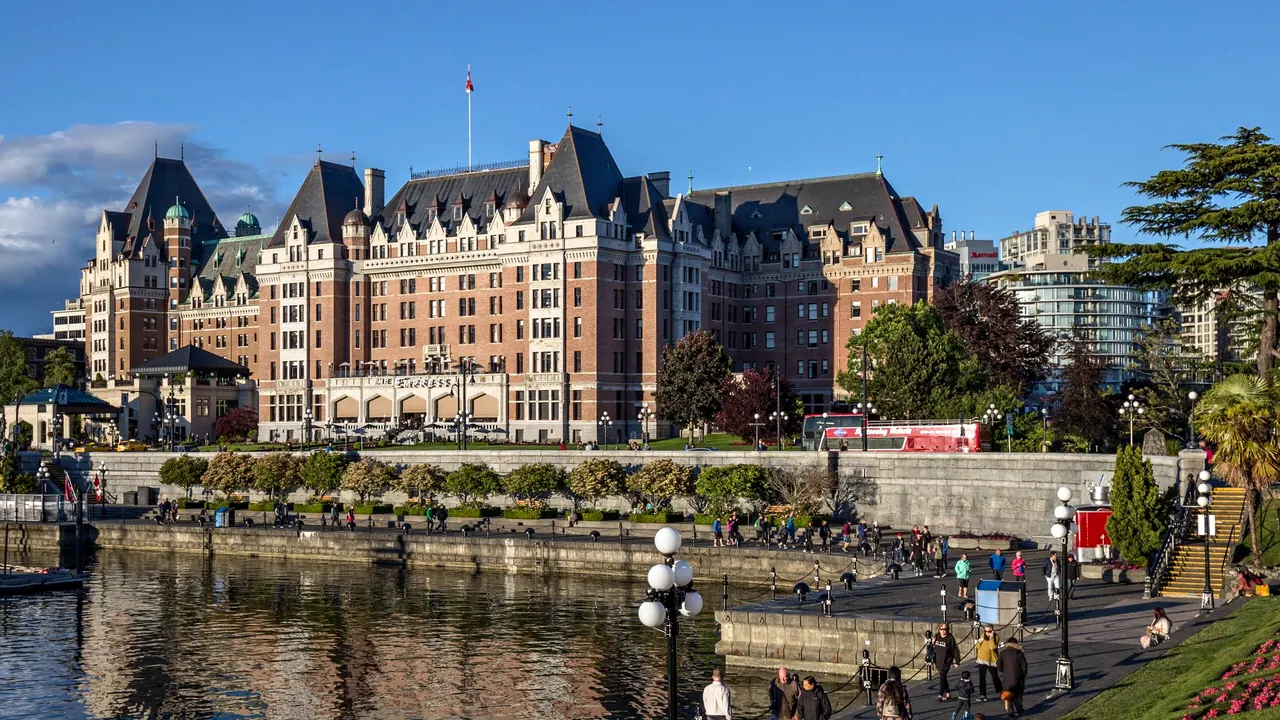
Photos: Canadian Rockies by Sergey Pesterev, CC BY-SA 4.0, cropped; Vancouver Island by Michal Klajban, CC BY-SA 4.0, cropped.
Canadian Rockies or Vancouver Island?
Our verdict in twelve categories, each scored against the same fixed benchmark cities, and the climate month by month, so you can choose for your trip.
Choose Canadian Rockies for
- wellness
- nature and the outdoors
- families
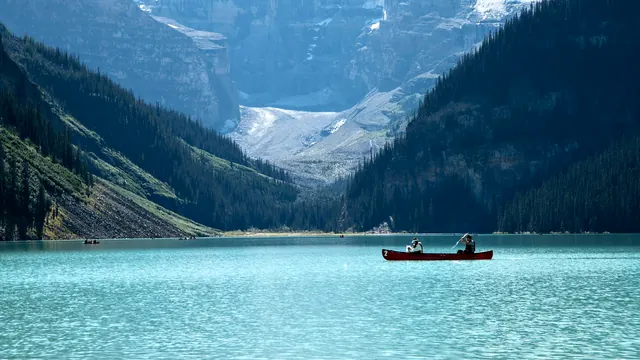
Choose the Canadian Rockies if the landscape is the whole point. The peaks, glaciers and turquoise lakes of Banff, Jasper and Yoho are on a grander scale than anything on the island, wildlife turns up beside the road, and a hot-spring soak ends most days. It suits hikers, skiers and road-trippers who are happy to eat simply and spend their evenings quietly in a small mountain town.
Choose Vancouver Island for
- food and drink
- day trips
- shopping
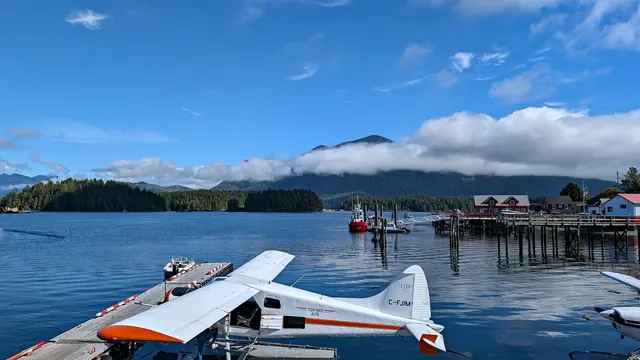
Vancouver Island gives a more varied trip that mixes coast and town. Victoria brings museums, gardens, theatre and a proper food scene built on oysters, salmon and valley wine, while Tofino adds rainforest, surf and whale-watching boats. It is the better pick for travellers who want nature alongside good meals, culture and day outings, and for anyone who would rather have mild, damp weather than a mountain winter.
Scoreboard
Twelve categories on one fixed scale from 0 to 100. The shaded stretch is the gap between the two.
Your match
Pick a travel style or drag the sliders, and both match scores follow your weighting.
Wins on wellness and nature and the outdoors with your weighting.
Wins on food and drink and day trips with your weighting.
What matters to you?
Category by category
What the scores mean for a trip.
Beaches & swimming
Neither destination is a beach trip, but Vancouver Island gets closer. The Rockies' famous lakes are glacier-fed and far too cold for more than a quick paddle, so swimming means the shallower lakes near Jasper, Johnson Lake by Banff or Lake Windermere down in the Columbia Valley on a summer afternoon.
The island has the actual seashore. Long Beach and Chesterman near Tofino are wild, surf-washed sands for walking and wetsuit surfing, while the east coast around Parksville and Qualicum Beach offers wide tidal flats where the incoming water warms enough for children to splash about properly.
Food & drink
Vancouver Island eats noticeably better. Its cooking draws on the sea and the farms: Baynes Sound oysters, spot prawns, Dungeness crab, Cowichan Valley wine and cider, summer farmers' markets, and in Victoria everything from craft breweries to afternoon tea.
The Rockies serve hearty resort food, with Alberta beef, bison and elk in steakhouses and lodge dining rooms, and Canmore's bakeries and brewpubs as the most relaxed option. Once you leave Banff and Canmore, dinner choices shrink fast, and on the trail lunch is whatever you carried up.
Culture & sights
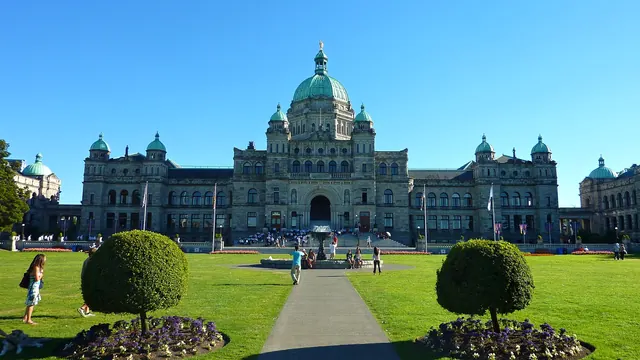
Vancouver Island has more to see indoors, and nearly all of it is in Victoria: the Parliament Buildings on the Inner Harbour, the Royal BC Museum with its First Nations galleries, Craigdarroch Castle, the narrow lanes of Chinatown and the Butchart Gardens. Further north, the totem poles of Duncan and the potlatch collection at Alert Bay add Indigenous heritage.
The Rockies tell one narrower story, how the railway and the national parks opened up the mountains. Cave and Basin, the Whyte Museum and the castle-like Banff Springs hotel are worth an afternoon, but they make a few hours of sightseeing rather than a trip's worth.
Nightlife
Both are quiet after dark, but in different ways. Banff is the one place in the Rockies that stays up late, with seasonal ski-hill and hotel workers filling a few pubs and small dance clubs on Banff Avenue, busiest in winter.
On the island the evening action is in Victoria, where brewpubs and cocktail bars around the harbour and a few student-heavy clubs come alive mainly on summer weekends. Tofino, like Canmore and Jasper, ends the day with a pint after dinner.
Nature & outdoors
Both are among Canada's great outdoor destinations, but the Rockies have the bigger stage. Four national parks of limestone peaks, hanging glaciers and silt-blue lakes, the Icefields Parkway past the Columbia Icefield, bears and bighorn sheep seen from the road, and three major ski areas in winter make the landscape the reason to go.
Vancouver Island's wilderness is the ocean and the rainforest. Old-growth cedar in Pacific Rim, grey whales and orcas from boats, sea kayaking among the Broken Group Islands and the West Coast Trail make it a superb coast, just less overwhelming in scale than the mountains.
Day trips
Vancouver Island has the better range of outings. From Victoria you can tour the wineries and the stilt village at Cowichan Bay, take a ferry to Salt Spring's Saturday market, or fly by floatplane into downtown Vancouver for the day.
In the Rockies the day out is into the mountains rather than to somewhere else. Field, Golden and Canmore fill half-days, and Calgary, about an hour and a half from Banff, is the only city within easy reach. Jasper is too far for a return trip and works better as a second base.
Good for families
For children, the difference is mountains against seashore, and neither has theme parks to fall back on. The Rockies offer more spectacle: gondola rides up Sulphur Mountain, elk by the roadside, Johnston Canyon's catwalks and warm hot-spring pools. On a wet day, though, the choice is a pool or the drive to Calgary's zoo, and bear safety means keeping little ones close on trails.
The island is gentler with toddlers. The tidal flats of Parksville and Qualicum Beach are shallow and warm, the goats on the roof at Coombs are a sure hit, and Victoria has the Royal BC Museum and a petting farm for rainy days. Older children can go whale-watching or take surf lessons in Tofino, though the long drives between regions test patience.
Getting around
You will want a car in either place, but the journeys feel different. In the Rockies, Banff and Canmore are compact enough to walk, local buses link them to Lake Louise and Lake Minnewanka, and park shuttles spare you the summer scramble for parking at the busiest lakes. Beyond that it is two great roads, the Trans-Canada and the Icefields Parkway, with few fuel stops and winter driving that needs proper tyres.
Vancouver Island begins with a ferry crossing of about an hour and a half, with queues on summer weekends. Victoria's centre is easy on foot and by harbour ferry, and the east coast highway to Campbell River is straightforward. The road west to Tofino, though, is a slow mountain drive of several hours, and intercity buses run too thinly to rely on.
Shopping & style
Vancouver Island gives you more to browse. Victoria's old town, around Government Street and Market Square, has independent clothing shops and bookshops, and the best things to bring home are Cowichan sweaters, Northwest Coast prints and smoked salmon.
In the Rockies, shopping means Banff Avenue, with outdoor gear, souvenirs and landscape galleries. It is handy for a forgotten fleece but not worth a morning.
Affordability
Vancouver Island is the cheaper of the two, though neither comes cheap in summer. In the Rockies, rooms in Banff, Lake Louise and Jasper are scarce and priced to match, restaurants charge resort rates, and nearly every trip adds a hire car and park passes. Staying in Canmore or Golden, or camping, is how budgets survive.
On the island, Victoria and Tofino are dear in July and August too, and ferry fares add up. But Parksville, Nanaimo and Comox make noticeably cheaper bases, and coming in spring, autumn or the winter storm season brings costs down sharply.
Live music & performing arts
Vancouver Island has a real if small arts calendar, centred on Victoria: the symphony and Pacific Opera at the Royal Theatre, contemporary plays at the Belfry in its old church, and summer jazz and fringe festivals.
The Rockies have one notable venue, the Banff Centre on Tunnel Mountain, with summer concerts, opera and dance and the Banff Mountain Film and Book Festival each autumn. Otherwise it is a pub band or the drive to Calgary.
Wellness & relaxation
The Rockies are the better place to unwind, mainly because of their hot springs. Banff's Upper Hot Springs, Radium in its canyon, Miette near Jasper and Fairmont make soaking after a hike or a ski day a regular habit, and the railway hotels and the Nordic spa in Kananaskis add pampering.
Vancouver Island's slow pace is restful in its own way. Its single natural spring, Hot Springs Cove, is a boat ride and rainforest walk from Tofino and well worth the effort, and storm watching by a lodge fire or a retreat on the Gulf Islands are the other ways people rest there.
When should you go?
Pick your month. The climate figures are measured averages, not a forecast.
Canadian Rockies in July
Vancouver Island in July
Daytime high, °C
Rainfall in the month, mm
Where the figures come from
Vancouver Island's sunshine is measured 86 km from the centre, at Vancouver International Airport.
Temperature and rainfall are climate normals, averaged over the years shown. Canadian Rockies: 1991-2020 normals, Banff (1.9 km from centre). Vancouver Island: 1991-2020 normals, Victoria Gonzales CS (4.3 km from centre).
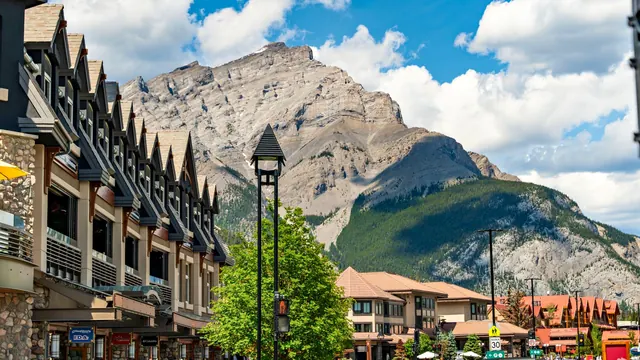
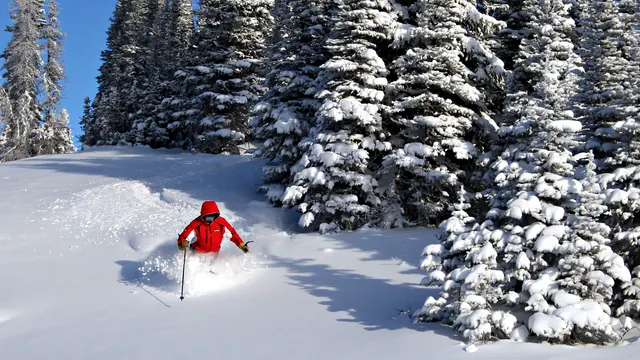
The Rockies have a short, sharp summer. From late June to September the trails are open and July days reach about 23°C, though June brings the most rain and the weather can turn quickly at altitude. From November to March days stay around or below freezing, which is cold for walking around town but right for skiing at Lake Louise, Sunshine Village and Marmot Basin. Spring and late autumn fall in between, often too snowy up high and too cool for lake days.
Vancouver Island, measured on the mild south coast, never gets that cold and never gets that hot. July and August are dry and sunny, with as little as 11mm of rain in July and the most sunshine of the year, the best stretch for beaches and coastal hikes. The sea stays cool all year, no warmer than about 12°C, so open-water swimming means a wetsuit. From October to January the rain sets in heavily, up to 116mm in November, which is grey for sightseeing but the season people come for storm watching on the west coast.
Which traveller are you?
On an outdoors trip, the Canadian Rockies are the stronger choice. The Icefields Parkway, the alpine passes of Yoho, the glaciers, bears and elk give hiking and skiing on a scale that the island's coastal trails and Strathcona's peaks cannot quite match.
For a culture and arts trip, Vancouver Island clearly wins. Victoria has the Royal BC Museum, Thunderbird Park's totem poles, Craigdarroch Castle and a symphony and opera season at the Royal Theatre, where the Rockies offer mainly the Whyte Museum and the Banff Centre.
On a relaxing and wellness trip, the Rockies have the edge. Banff's Upper Hot Springs, Radium and Miette make an evening soak after hiking or skiing easy to fit into any day, while the island's one natural spring, Hot Springs Cove, needs a boat to reach.
Before you go
| Measure | Canadian Rockies | Vancouver Island |
|---|---|---|
| Official language | French, English | French, English |
| Currency | Canadian Dollar (CAD) | Canadian Dollar (CAD) |
| Sockets | AB120 V, 60 Hz | AB120 V, 60 Hz |
| Driving side | Right | Right |
| Time zone | UTC-7, UTC-6 in summer | UTC-8, UTC-7 in summer |
| Emergency number | 911 | 911 |
| Main airport | Calgary International Airport (YYC)102 non-stop destinations | Victoria International Airport (YYJ)16 non-stop destinations |
| Public holidays this year | 13 days | 11 days |
By the numbers
| Measure | Canadian Rockies | Vancouver Island |
|---|---|---|
| Population | - | 864,864 |
| Swim season, months above 21 °C | - | None |
Where else could you go?
Every comparison below shares a destination with this one, so you can follow Canadian Rockies or Vancouver Island somewhere new.
- Olympic National Parkvs Vancouver Island
- Mount Rainiervs Vancouver Island
- Glacier National Parkvs Canadian Rockies
- Alaskavs Canadian Rockies
- Nova Scotiavs Vancouver Island
- Swiss Alpsvs Canadian Rockies