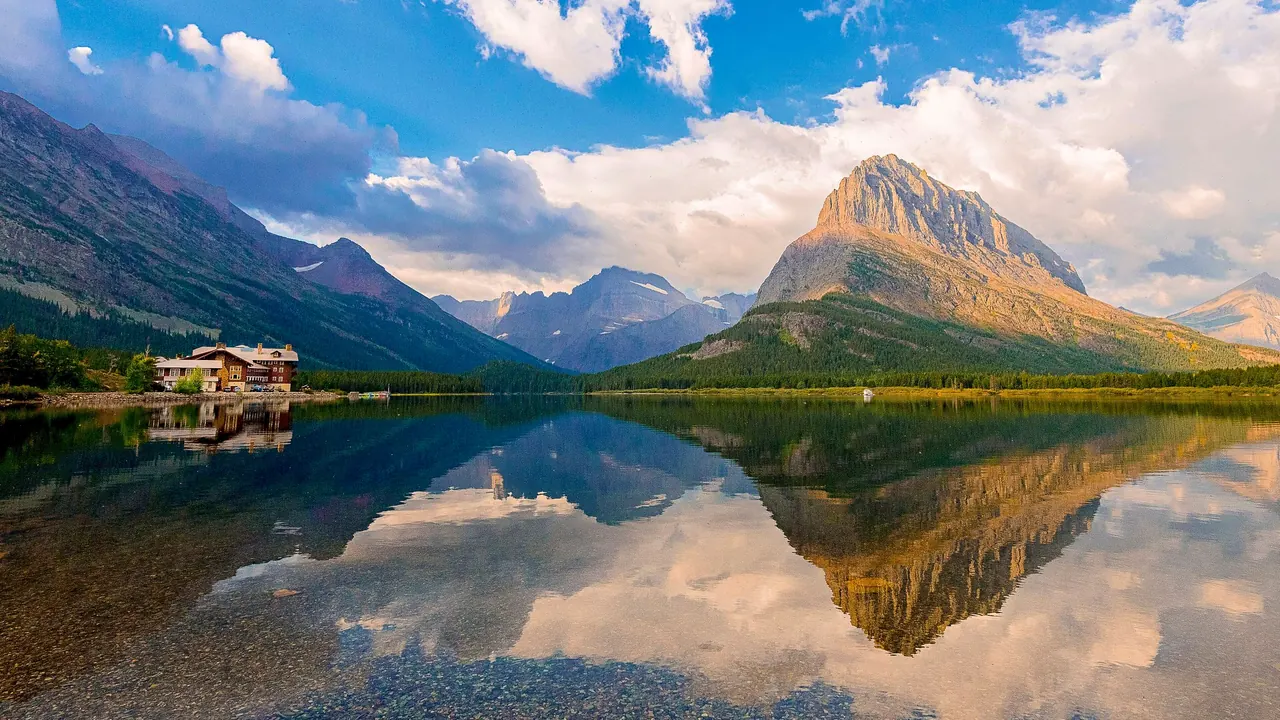
Photos: Glacier National Park by Viveksk1, CC BY-SA 4.0, cropped.
Canadian Rockies or Glacier National Park?
Our verdict in twelve categories, each scored against the same fixed benchmark cities, and the climate month by month, so you can choose for your trip.
Choose Canadian Rockies for
- wellness
- families
- nightlife
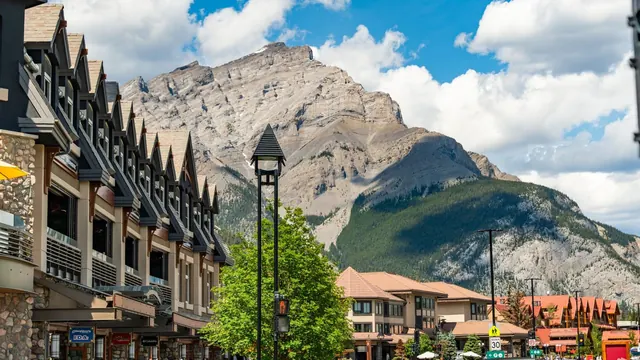
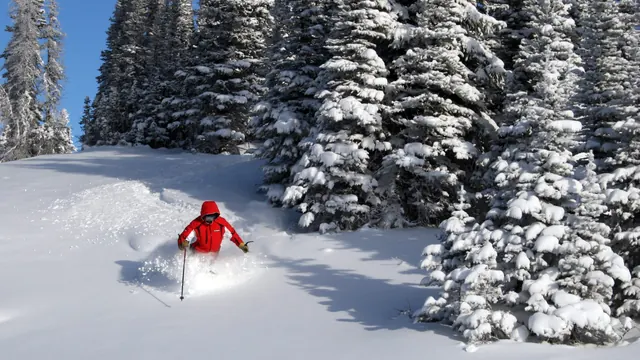
The Canadian Rockies suit travellers who want mountain grandeur with some comfort around it. Banff and Canmore give you towns to come back to, hot-spring pools for the end of a hiking day, a gondola or two for children, and enough pubs and restaurants to fill the evenings. The region also works in winter, with ski hills at Lake Louise, Sunshine Village and Marmot Basin, so it is a choice for more than one season.
Choose Glacier National Park for
- prices
- beaches
Glacier National Park is for the traveller who wants the wilderness itself and very little else. Its lodges are quieter, its evenings shorter, and the days revolve around trailheads at Many Glacier, Logan Pass and Two Medicine. It costs a little less to do well if you camp or stay in Kalispell, and its high-summer weather is warmer and drier. Accept a short season and simpler surroundings in return.
Scoreboard
Twelve categories on one fixed scale from 0 to 100. The shaded stretch is the gap between the two.
Your match
Pick a travel style or drag the sliders, and both match scores follow your weighting.
Wins on wellness and families with your weighting.
Wins on prices and beaches with your weighting.
What matters to you?
Category by category
What the scores mean for a trip.
Beaches & swimming
Neither place is for a beach trip, and both offer much the same thing: glacier-fed lakes that are beautiful but painfully cold. Glacier has a slight edge, because Lake McDonald's coloured pebbles at Apgar make a lovely shore for a paddle, and Whitefish Lake and Flathead Lake, which warms to around 20°C, are a short drive away.
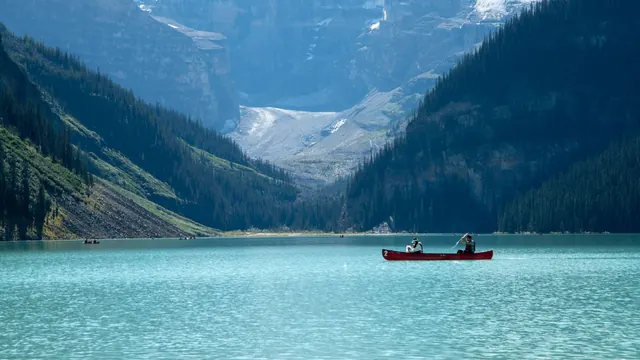
In the Rockies, the turquoise lakes at Lake Louise and Moraine Lake are for looking at, not swimming. Real swimming means the sandy shallows of Lake Annette and Lake Edith near Jasper, Johnson Lake near Banff, or Lake Windermere further south.
Food & drink
Neither is a food destination, and both serve mountain fare. The Rockies lean on Alberta beef, elk and lake trout in Banff steakhouses and grand hotel dining rooms, with Canmore's bakeries and small breweries the more relaxed choice. Glacier's signature is huckleberry in everything from pie to cocktails. Inside the park, meals are serviceable lodge food, so the better eating is down in Whitefish, with its farmers' market, or at the Flathead Lake cherry stands.
Culture & sights
Both tell much the same story, of railways that brought the first tourists to the mountains, and neither has much indoors. The Rockies have a little more to see: Cave and Basin, where Canada's park system began, the Whyte Museum's mountain art, and the castle-like Banff Springs.
Glacier answers with the engineering of the Going-to-the-Sun Road and the log-lobby lodges of the Great Northern Railway. On its east side, the Museum of the Plains Indian in Browning holds the deeper First Nations collection of the two.
Nightlife
The Rockies have the only real going out of the two. In Banff, ski-hill and hotel workers fill the pubs, sports bars and small dance clubs on Banff Avenue late into the night, especially in winter. It soon gets repetitive, but it exists.
Around Glacier, evenings mostly end with a drink in a lodge lounge at sunset. Whitefish's few saloons and taprooms are the only lively spot, and there are no clubs at all.
Nature & outdoors
This is the reason to visit either place, and both are among the finest mountain landscapes in North America. The Rockies offer more of it, over more seasons. Banff, Jasper, Yoho and Kootenay national parks lie side by side, and the Icefields Parkway between Lake Louise and Jasper runs past the Columbia Icefield. Winter adds ski hills, frozen canyon walks and Jasper's dark skies.
Glacier is more compact and feels wilder. It has the Highline Trail along the Garden Wall and the trails from Many Glacier to Grinnell Glacier and Iceberg Lake, with cedar rainforest on its west side and prairie on its east. Its high country, though, is open only from July to September.
Day trips
In both places most days are spent out in the landscape rather than visiting other towns. The Rockies have the advantage of a real city within reach: Calgary, with its museums and the July Stampede, is about an hour and a half from Banff, and Field, Golden and the Columbia Valley hot-spring towns fill shorter outings. Glacier's best outing crosses the border to Waterton and its old railway hotel. On the other side of the park, Bigfork and the Flathead Lake orchards make a gentler drive.
Good for families
The Rockies are the easier choice with children. Gondolas up Sulphur Mountain and at Lake Louise, canoeing on calm lakes, hot-spring pools and the catwalks of Johnston Canyon give variety. Safe, compact Banff and Canmore are simple places to stay, and Calgary's zoo and science centre cover a rainy day.
Glacier rewards school-age children with the Trail of the Cedars, the historic boat tours and the Junior Ranger programme. Beyond that it offers little else for them, along with long narrow roads and basic rooms, which makes it harder going with toddlers.
Getting around
You will want a car in both places, but the Rockies are kinder to drivers and to those without a car. The Trans-Canada Highway and the Icefields Parkway are wide, scenic roads. Local buses link Banff, Canmore, Lake Louise and Lake Minnewanka, and shuttles serve the busiest lakes.
Glacier depends on the slow, cliff-edge Going-to-the-Sun Road, open only in summer, and its east-side valleys are reached by long detours outside the park. In its favour, the airport near Kalispell is close, the cross-country train stops at both East and West Glacier, and a free summer shuttle runs along the Sun Road.
Shopping & style
Neither place is worth a shopping trip. Banff Avenue has more choice, with outdoor gear, landscape galleries and some Indigenous art. Glacier offers lodge gift shops and Whitefish's Western-wear stores, though Blackfeet beadwork from around Browning makes the most meaningful souvenir of either trip.
Affordability
Both are expensive in summer, but Glacier is the easier of the two to do for less. Its campgrounds and the plain motels of Kalispell and Columbia Falls cut costs well, as long as you are happy to drive in each day.
In the Rockies, rooms in Banff, Lake Louise and Jasper are scarce and priced to match, and park passes come on top of the car hire. Canmore, Golden and the campgrounds are the ways to save money there.
Live music & performing arts
The Rockies have one serious venue, the Banff Centre for Arts and Creativity on Tunnel Mountain. It offers summer concerts, opera and dance, plus the Banff Mountain Film and Book Festival in autumn, and Calgary is close enough for theatre. Around Glacier, the summer musicals at the Bigfork playhouse and a regional symphony are the extent of it. Inside the park itself, the entertainment is ranger talks and Blackfeet speakers around the campfire.
Wellness & relaxation
The Rockies have something Glacier lacks entirely: natural hot water to sit in when the day is done. An hour in an open-air pool on Sulphur Mountain or down in the Radium canyon, with steam rising around you and stiff legs easing after a long climb or a day on the skis, makes a real evening out. It works in January as well as July. The pools are sociable rather than hushed, so anyone after silence and treatments will do better in a railway hotel spa or at the Kananaskis spa.
Glacier offers a different kind of rest. With no springs and little pampering nearby, relaxing there means an empty evening by a lake after a dawn start, with nothing to do but watch the light leave the peaks. That suits walkers who want to unplug completely. Anyone who counts a soak or a massage as part of the vacation should head north.
When should you go?
Pick your month. The climate figures are measured averages, not a forecast.
Canadian Rockies in July
Glacier National Park in July
Daytime high, °C
Rainfall in the month, mm
Where the figures come from
Glacier National Park's temperatures are measured 33 km from the centre, at Glacier Park International Airport.
Glacier National Park has no rain gauge within 25 km of the centre, so its rainfall comes from a gridded climate dataset read at the destination rather than from a gauge further away.
Temperature and rainfall are climate normals, averaged over the years shown. Canadian Rockies: 1991-2020 normals, Banff (1.9 km from centre). Glacier National Park: 1991-2020 normals, Glacier Park International Airport (32.7 km from centre).
Both are summer destinations, but they behave differently. In the Canadian Rockies, July and August are mild rather than hot, with highs around 23°C. June is the wettest month at about 66mm. The hiking season runs from late June into September, when the larches turn gold. Winter is a second season here. From December to February daytime highs stay below freezing, at around -4°C in December, and that cold brings snow for skiing, frozen canyon walks and skating.
Glacier is warmer and drier in high summer. July and August reach about 28°C with little rain, which suits long hikes and a quick dip at Lake McDonald. June is wetter, at around 78mm, and the high country is generally clear of snow only from July to September. Outside that window the Sun Road is closed and the winters are wetter than in the Rockies, so Glacier is a much narrower choice through the year.
Which traveller are you?
For a relaxing and wellness trip, the Canadian Rockies are the better choice. Hiking days can end in warm mineral water or a hotel spa. Glacier's idea of rest is simply switching off, which suits some travellers but offers nothing to soak in.
On a family trip with children, the Canadian Rockies ask less of you. Easy outings and a town to return to make it manageable even with toddlers. Glacier is better saved for when the children can handle long days on the trail and in the car.
On a tight budget, Glacier is the easier of the two. There is a cheap way to see the park without giving anything up, because the trails are free once you drive in. In the Rockies, the most-visited lakes are also where rooms cost the most.
Before you go
| Measure | Canadian Rockies | Glacier National Park |
|---|---|---|
| Official language | French, English | - |
| Currency | Canadian Dollar (CAD) | US Dollar (USD) |
| Sockets | AB120 V, 60 Hz | AB120 V, 60 Hz |
| Driving side | Right | Right |
| Time zone | UTC-7, UTC-6 in summer | UTC-7, UTC-6 in summer |
| Emergency number | 911 | 911 |
| Main airport | Calgary International Airport (YYC)102 non-stop destinations | Glacier Park International Airport (FCA)17 non-stop destinations |
| Public holidays this year | 13 days | 12 days |
Where else could you go?
Every comparison below shares a destination with this one, so you can follow Canadian Rockies or Glacier National Park somewhere new.
- Banffvs Glacier National Park
- Yellowstonevs Glacier National Park
- Mount Rainiervs Glacier National Park
- Olympic National Parkvs Glacier National Park
- Redwood National Parkvs Glacier National Park
- Alaskavs Canadian Rockies