Canada
Banff
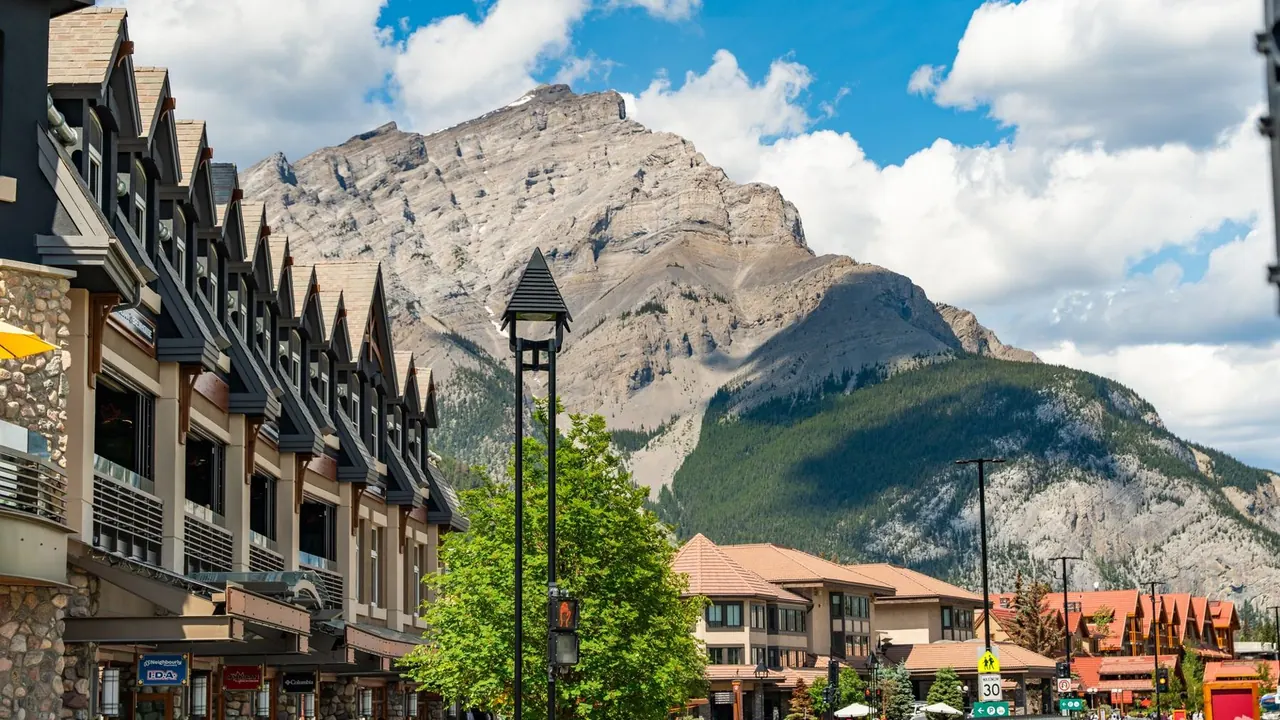
Banff Avenue below Cascade Mountain
- Nature & outdoors98
- Families60
- Getting around55
Photo: bryan pascual, Pexels License
Match
39
Every category weighted equally
- Beach & sun38
- Culture & arts35
- Food & nightlife33
- Family trip42
- Outdoors45
- Relax & unwind41
- Shopping & style37
- On a budget37
Banff in twelve categories
Our verdict on each, scored 0 to 100 against the same fixed benchmark cities, so a score means the same thing on every page.
Beaches & swimming. Scores 12 out of 100.
Food & drink. Scores 32 out of 100.
Culture & sights. Scores 22 out of 100.
Nightlife. Scores 30 out of 100.
Nature & outdoors. Scores 98 out of 100.
Day trips. Scores 25 out of 100.
Good for families. Scores 60 out of 100.
Getting around. Scores 55 out of 100.
Shopping & style. Scores 28 out of 100.
Affordability. Scores 18 out of 100.
Live music & performing arts. Scores 32 out of 100.
Wellness & relaxation. Scores 54 out of 100.
Banff category by category
Beaches & swimming
12Banff is a mountain town, and swimming here means a quick, cold dip. Most of the lakes are fed by glaciers or snowmelt and stay bracingly cold even in July. Johnson Lake, a short drive east of town, is shallow and warms up the most, so on hot August afternoons locals bring towels and inflatables to its small grassy shore. Lake Minnewanka and the Vermilion Lakes are for looking at and paddling on rather than swimming in. The pleasure of warm water here comes from the hot springs, not from any beach.
Food & drink
32Eating in Banff is mostly hearty food for people coming in hungry from a day outdoors: Alberta beef, bison and elk, steakhouses, fondue, pub plates and a lot of comfort food along Banff Avenue. The grand hotels and a few independent dining rooms offer more ambitious menus built on Rocky Mountain and prairie produce, and there is decent craft beer and coffee in town. The range is still limited for a place that sees so many visitors. There is no market culture, little street food and not much regional cooking beyond the meat. You will eat well enough, but the food is not a reason to come.
Culture & sights
22Banff's sights tell the story of how the town and the park came to be. The Cave and Basin National Historic Site, a warm spring in a cave, is where Canada's national parks began. The Banff Springs Hotel, a baronial railway castle from the end of the 19th century, is the town's great landmark. The Whyte Museum of the Canadian Rockies covers mountain art and early climbers, the Banff Park Museum is a Victorian log building full of mounted wildlife, and the Buffalo Nations Luxton Museum looks at the Indigenous peoples of the plains and foothills. All of it fits into a day, and the mountains are what everyone comes for.
Nightlife
30Banff goes out more than its size suggests. The town runs on young seasonal workers, and the ski crowd adds to them in winter, so a few pubs and a couple of dance bars on and just off Banff Avenue stay loud late into the night, with après-ski filling the early evening. Everything is within a few minutes' walk, and the scene is cheerful, casual and repetitive. There are good hotel lounges for a quieter drink. Anyone after cocktail culture, clubs with a reputation or real variety will find it thin, and in the quiet weeks of spring and autumn it is thinner still.
Nature & outdoors
98Banff is a town inside a national park, and the landscape starts at the end of every street. Cascade Mountain closes off the view down Banff Avenue, a gondola climbs Sulphur Mountain, and the Bow River, Vermilion Lakes and Lake Minnewanka are minutes away. Elk graze on the town's lawns, and bears, bighorn sheep and mountain goats are common sights along the roads. Further out are the turquoise lakes of Lake Louise and Moraine Lake, Johnston Canyon's catwalks and the Icefields Parkway running north past glaciers.
In summer there are hundreds of kilometres of trails, from lakeshore strolls to high alpine passes, plus canoeing, rafting, climbing and cycling. Winter brings three ski areas, Sunshine Village, Lake Louise and Mt Norquay, along with frozen waterfalls, skating and snowshoeing. Autumn turns the larches gold, and any season works.
Day trips
25Almost every outing from Banff is into the mountains, and those count as nature rather than places to visit. For towns there are fewer choices. Canmore, about twenty minutes down the valley, is a relaxed mountain town with a historic mining past. Calgary, about an hour and a half east, offers a big-city day with its museums, the Heritage Park historic village and the Stampede grounds. Over the Continental Divide, the railway hamlet of Field in Yoho and the town of Golden make modest stops. If you want a varied list of heritage towns, this is the wrong base.
Good for families
60Banff is an easy, safe town for children, and the outdoors does most of the entertaining. Spotting elk and bighorn sheep from the car, riding the gondola up Sulphur Mountain, the boardwalk through Johnston Canyon, a canoe on the Bow River and a soak in the hot springs all suit young families. Winter adds ski schools, tobogganing and skating on frozen lakes. What it lacks is anything made specifically for children, such as a zoo, aquarium or science museum. Calgary's are about an hour and a half away. Long drives between viewpoints and the need for warm layers in every season take some planning.
Getting around
55The town itself is compact and flat, and you can walk across it in about twenty minutes, with Banff Avenue as its spine. Local Roam Transit buses run up to the gondola and hot springs, out to Lake Minnewanka and along the valley to Canmore and Lake Louise. In summer Parks Canada shuttles serve the busiest lakes, where parking fills early. There is no passenger railway, and visitors arrive by shuttle or car from Calgary's airport. Day-to-day life without a car is perfectly possible, but the Icefields Parkway, Yoho and the quieter trailheads are far easier with your own wheels or a tour.
Shopping & style
28Shopping in Banff means Banff Avenue and the short streets around it. There are plenty of outdoor outfitters, well suited to anyone who arrives without proper boots or a warm shell, along with Canadian clothing labels, sweet and fudge shops, and a lot of moose-and-maple souvenirs. A few galleries sell Indigenous art and Rocky Mountain landscape painting, which is the most interesting thing to bring home. There is nothing in the way of luxury, design or markets, so treat shopping as something to do on a rainy afternoon.
Affordability
18Banff is an expensive place to stay. Building is restricted inside the national park, so there are only so many rooms, and hotel prices are steep in summer and over Christmas and New Year. Restaurants charge resort prices, and the gondola, guided tours, lift passes and the park entry pass all add to the bill. The best things here, the trails, lakes and viewpoints, cost nothing beyond the park pass, and spring and late autumn are noticeably cheaper. Many visitors on a budget stay in Canmore or at campgrounds and cook their own meals.
Live music & performing arts
32Banff's cultural life centres on the Banff Centre for Arts and Creativity, a long-established arts school on the slopes of Tunnel Mountain. Its theatres put on concerts, dance and performances by visiting and resident artists, with the busiest programme in summer. Each autumn the Banff Mountain Film and Book Festival draws adventurers and filmmakers from around the world, and its touring screenings carry the town's name abroad. Beyond that, live music mostly means bands in pubs. Check what's on before you go, because there's no theatre district or nightly concert life here.
Wellness & relaxation
54Banff began as a hot-springs resort, and a soak is still part of many visits. The Banff Upper Hot Springs, a 1930s bathhouse on Sulphur Mountain, has an open-air pool of mineral water looking across the valley, and it is at its best after a day's skiing with snow falling. It is a single pool, though, and it fills up on busy days, so this is a pleasant evening out rather than a bathing culture. The grand mountain hotels have large spas with mineral pools and treatments, and there are a few day spas in town. Outside the peak summer weeks the town is quiet and evenings end early.
When should you go?
Pick a month to see what it is like. The climate figures are measured averages, not a forecast.
Banff in July
Daytime high, °C
Rainfall in the month, mm
The whole year
Shaded against this city’s own year: the deepest cell is its best month for that figure and the palest its weakest.
Temperature and rainfall are climate normals, averaged over the years shown. Banff: 1991-2020 normals, Banff (2 km from centre).
Before you go
| Measure | Banff |
|---|---|
| Official language | French, English |
| Currency | Canadian Dollar (CAD) |
| Sockets | AB120 V, 60 Hz |
| Driving side | Right |
| Time zone | UTC-7, UTC-6 in summer |
| Emergency number | 911 |
| Elevation | 1,400 m |
| Main airport | Calgary International Airport (YYC)109 km from centre103 non-stop destinations |
| Public holidays this year | 13 days |
By the numbers
| Measure | Banff |
|---|---|
| City population | 8,305 |
| People per km² | 1,730 |
| Museums within 10 km | 4 |
| UNESCO World Heritage sites within 50 km | 0 |
Compare Banff with
Every comparison with a written verdict behind it.