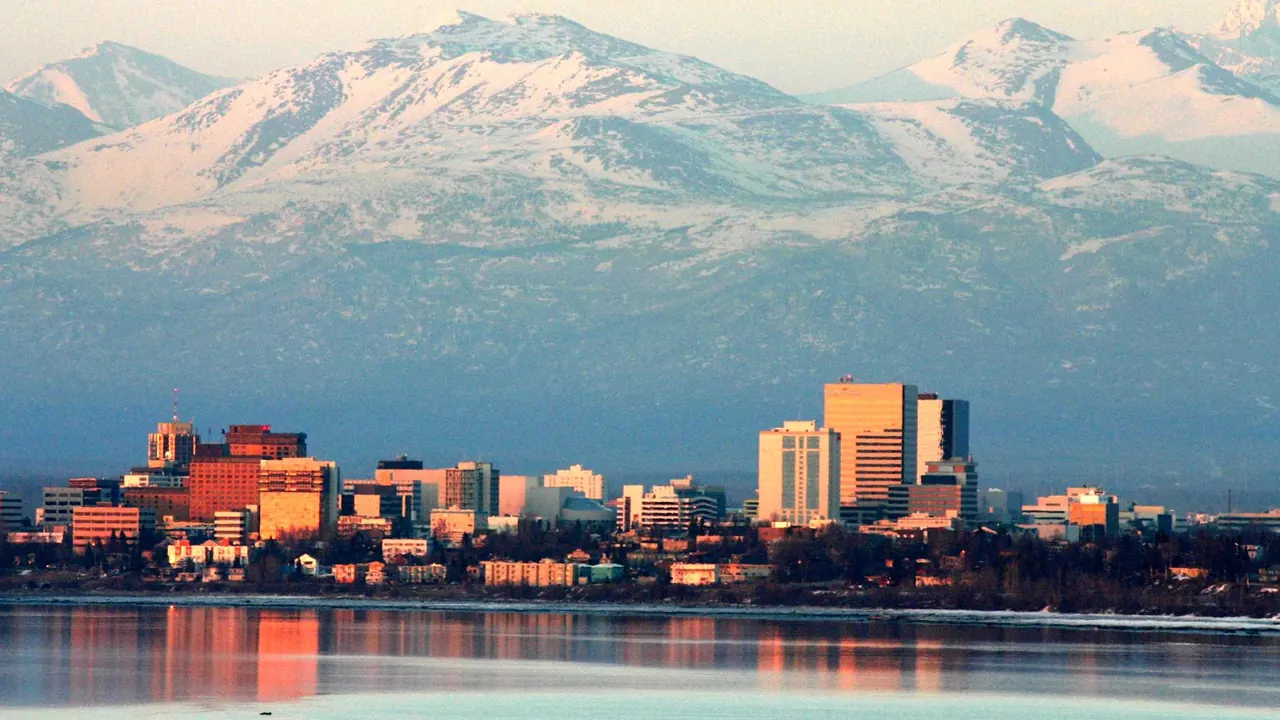
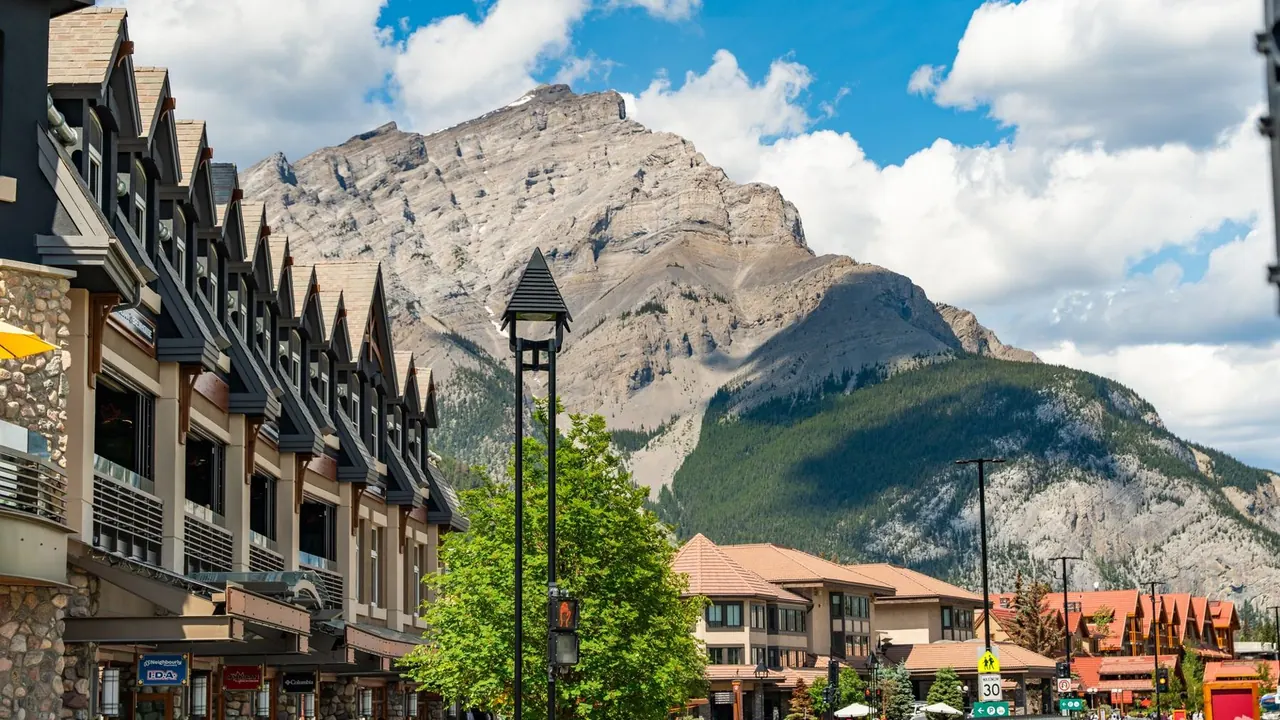
Photos: Anchorage by Frank K., CC BY 2.0, cropped; Banff by bryan pascual, Pexels License.
Anchorage or Banff?
Our verdict in twelve categories, each scored against the same fixed benchmark cities, and the climate month by month, so you can choose for your trip.
Choose Anchorage for
- culture and sights
- prices
- food and drink
Anchorage suits the traveller who wants Alaska itself, not only its scenery. It is a real city with the state's best museums, a seafood table built on salmon, halibut and king crab, and a spread of excursions to old colony farms, a Russian Orthodox church and a gold-mining camp. It costs a little less than Banff, but you will need a car, and you should come for wilderness drives and wildlife rather than a resort.
Choose Banff for
- getting around
- wellness
- nature and the outdoors
Banff is the better pick for a mountain vacation that runs smoothly on foot. The town is small, the buses reach the gondola, hot springs and lakes, and a soak in mineral water ends the day in a way Anchorage cannot easily match. It is pricier and thinner on museums and food, but for lakes, trails, skiing and an easy base, it is hard to beat.
Scoreboard
Twelve categories on one fixed scale from 0 to 100. The shaded stretch is the gap between the two.
Your match
Pick a travel style or drag the sliders, and both match scores follow your weighting.
Too close to call, 2 points apart
Wins on culture and sights and prices with your weighting.
Wins on getting around and wellness with your weighting.
What matters to you?
Category by category
What the scores mean for a trip.
Beaches & swimming
Swimming is not the point of either trip. Anchorage's shore is a silty tidal inlet with dangerous mudflats, so locals cool off at city lakes such as Goose Lake and Jewel Lake, which have small sandy swim areas.
Banff's equivalent is Johnson Lake, a shallow, grassy-shored lake that warms up on August afternoons. The rest of its glacier-fed lakes are for paddling. Its real warm water comes from the hot springs.
Food & drink
Anchorage eats better, because the seafood is the draw: wild salmon, halibut, king crab and spot prawns in summer, reindeer sausage from carts, and a stronger craft beer scene around midtown and Spenard. There is some good Asian and Pacific Islander cooking too.
Banff feeds you heartily but narrowly, with Alberta beef, bison, elk and fondue along Banff Avenue, plus a few more ambitious hotel dining rooms. Expect to refuel there rather than to seek out meals.
Culture & sights
Anchorage has more depth. The Anchorage Museum and the Alaska Native Heritage Center are serious introductions to Alaskan art, Arctic science and Indigenous life, and the floatplanes at Lake Hood and Earthquake Park round out two or three days.
Banff's sights are charming but brief: the Cave and Basin, where Canada's national parks began, the Banff Springs Hotel and a handful of small museums. All of it fits into a single day.
Nightlife
The two go out in different ways. Anchorage's pubs, taprooms and dive bars are scattered between downtown and Spenard Road, kept lively by the midnight sun in summer and much quieter in the winter dark.
Banff packs its pubs and a couple of dance bars into a few walkable streets, filled with young seasonal workers and, in winter, the après-ski crowd. It feels livelier but repetitive.
Nature & outdoors
Both are outstanding, and the difference lies in the kind of wilderness. Anchorage pairs a city with the wild: the Chugach trails start behind the suburbs, moose walk through neighbourhoods, and the Seward Highway brings beluga whales, the tidal bore and the Portage glaciers. Salmon fishing and glacier cruises from Whittier are also within reach, and Alyeska in Girdwood is its one major ski resort.
Banff sits inside a national park, with turquoise Lake Louise and Moraine Lake, Johnston Canyon and the Icefields Parkway close by. In winter it has three big ski resorts within easy reach, Sunshine Village, Lake Louise and Mt Norquay, and in autumn the larches turn gold.
Day trips
Anchorage has the more varied list of outings to actual places. Eklutna's spirit houses, the 1930s colony barns at Palmer, the Independence Mine camp and the tunnel-reached oddity of Whittier each tell a different part of Alaska's story.
Banff's choices among towns are few: Canmore down the valley, a big-city day in Calgary, or small stops at Field and Golden over the Divide. Its outings are mostly into the mountains themselves.
Good for families
Both work well for outdoor-minded families. Anchorage has attractions built for children, such as the Alaska Zoo with its bears and musk oxen, a hands-on science gallery and the wildlife centre near Portage.
Banff has none of those but is easier to handle as a town, with the gondola, the Johnston Canyon boardwalk, canoeing and hot springs all close by. It also has ski schools in winter. In Anchorage, the endless summer light makes bedtimes hard.
Getting around
Banff is far easier without a car. The flat town can be crossed on foot, Roam Transit buses reach the gondola, Lake Minnewanka, Canmore and Lake Louise, and summer shuttles serve the busiest lakes.
Anchorage has a walkable downtown grid, but the city sprawls beyond it and the buses are not built for visitors. The scenic Alaska Railroad helps in summer, but a rental car is close to essential.
Shopping & style
Neither is a shopping destination, and the best buys in both are Indigenous art. Anchorage adds distinctly Alaskan things such as ulu knives and qiviut scarves, with a big summer weekend market downtown.
Banff offers a single tidy strip of outfitters, Canadian labels and fudge shops along Banff Avenue, along with galleries of Rocky Mountain landscape painting.
Affordability
Both are costly, but Anchorage is the gentler of the two. Shipped-in food and pricey glacier cruises and flightseeing push the bill up, yet the trails are free and winter is noticeably cheaper.
Banff is dearer still, because building limits inside the park keep rooms scarce, and lift passes, the gondola and the park pass all add up. Many budget travellers sleep in Canmore or at campgrounds.
Live music & performing arts
The two are much alike, but their focus differs. Anchorage has a conventional city programme at the Alaska Center for the Performing Arts, with symphony, opera and touring Broadway shows, though it runs mostly in winter, when visitors are fewest.
Banff's life revolves around the Banff Centre for Arts and Creativity, which is busiest in summer, and the autumn Mountain Film and Book Festival.
Wellness & relaxation
Banff is the more restorative choice, because it was born as a hot-springs resort. The Upper Hot Springs pool on Sulphur Mountain is especially fine with snow falling, and the grand hotels have large spas with mineral pools.
Anchorage has no bathing tradition of its own. The best soak is the Nordic-style spa in Girdwood, about forty minutes south, so its calm comes mainly from quiet trails and space.
When should you go?
Pick your month. The climate figures are measured averages, not a forecast.
Anchorage in July
Banff in July
Daytime high, °C
Rainfall in the month, mm
Temperature and rainfall are climate normals, averaged over the years shown. Anchorage: 1991-2020 normals, Anchorage Air Force Base (7 km from centre). Banff: 1991-2020 normals, Banff (2 km from centre).
Neither city has a beach season, and both are at their best from late spring to early autumn, when the days are mild enough for long walks and hikes. Anchorage peaks at about 20°C in July and is a little cooler than Banff through high summer. Its rain comes late, with August and September the wettest months at around 80mm, so June and early July are the most reliable time to go. Cook Inlet never gets warmer than about 14°C, so it is for looking at, not for swimming.
Banff is slightly warmer, reaching around 23°C in July and August. Its wettest month is June at about 66mm. From July to September the rain is moderate and fairly even, so July and August give you the warmest days with steadier weather, and September is cooler but no wetter than August. From December to February daytime highs stay below freezing in both cities, which is fine for skiing and snow but hard going for walking the streets. Banff stays a touch milder in March and November.
Which traveller are you?
On a culture and arts trip, Anchorage gives you more to see. The Anchorage Museum and the Alaska Native Heritage Center explain Indigenous Alaska in depth, while Banff's small museums and its railway castle hotel fill only a single day.
For a relaxing and wellness trip, Banff is the clear choice. The Upper Hot Springs pool looks across the valley, and the grand hotels have large mineral-pool spas. Anchorage's nearest proper soak is a drive away in Girdwood.
On a trip on a tight budget, Anchorage stretches the money slightly further. Both are expensive, but Banff's limited park rooms, resort-priced meals and park pass add up faster. In Anchorage, free trails and a cheaper winter season soften the bill.
Before you go
| Measure | Anchorage | Banff |
|---|---|---|
| Official language | - | French, English |
| Currency | US Dollar (USD) | Canadian Dollar (CAD) |
| Sockets | AB120 V, 60 Hz | AB120 V, 60 Hz |
| Driving side | Right | Right |
| Time zone | UTC-9, UTC-8 in summer | UTC-7, UTC-6 in summer |
| Emergency number | 911 | 911 |
| Elevation | 31 m | 1,400 m |
| Main airport | Ted Stevens Anchorage International Airport (ANC)7 km from centre49 non-stop destinations | Calgary International Airport (YYC)109 km from centre103 non-stop destinations |
| Public holidays this year | 12 days | 13 days |
By the numbers
| Measure | Anchorage | Banff |
|---|---|---|
| City population | 291,247 | 8,305 |
| People per km² | 58 | 1,730 |
| Museums within 10 km | 5 | 4 |
| UNESCO World Heritage sites within 50 km | 0 | 0 |
| Swim season, months above 21 °C | None | - |
Where else could you go?
Every comparison below shares a destination with this one, so you can follow Anchorage or Banff somewhere new.