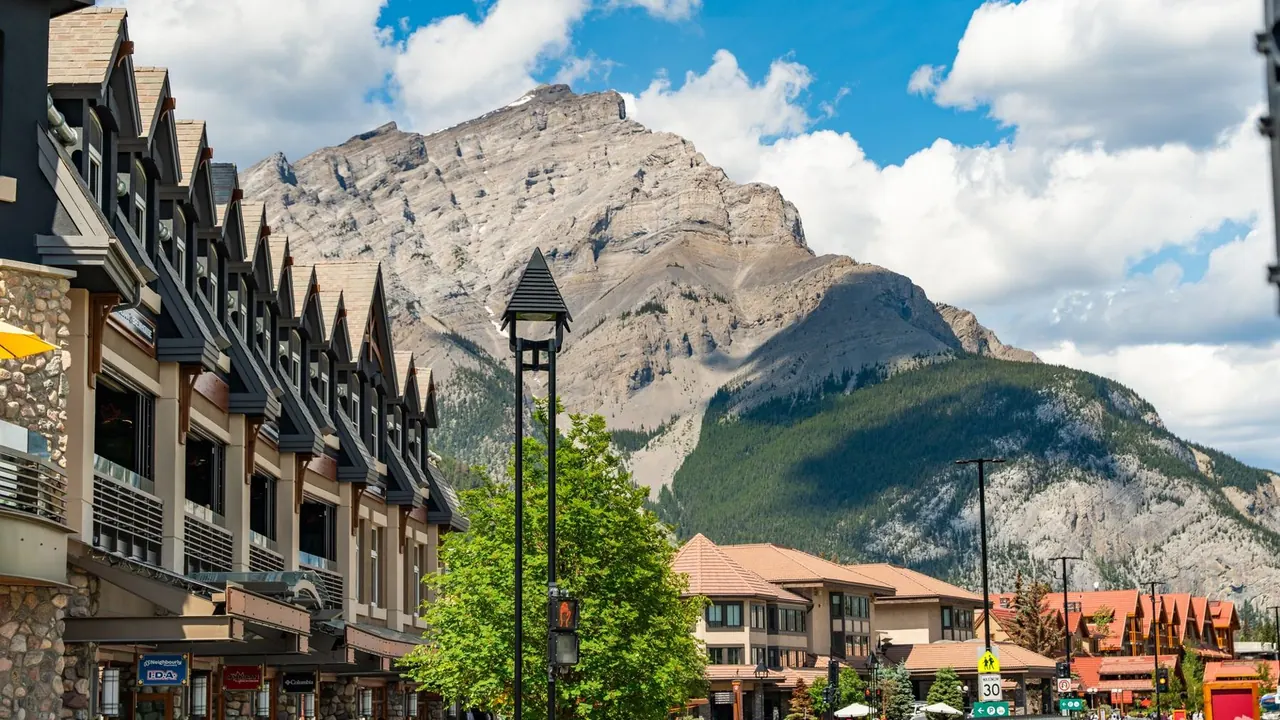
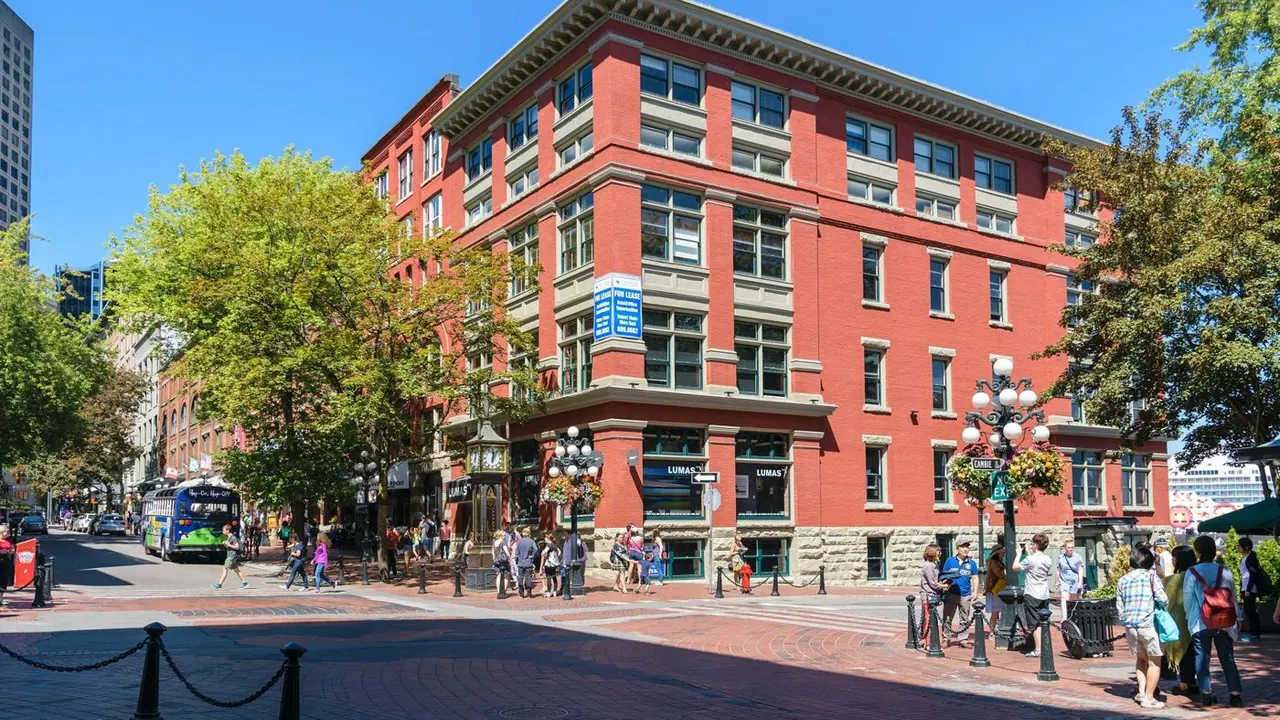
Photos: Banff by bryan pascual, Pexels License; Vancouver by Xicotencatl, CC BY-SA 4.0, cropped.
Banff or Vancouver?
Our verdict in twelve categories, each scored against the same fixed benchmark cities, and the climate month by month, so you can choose for your trip.
Choose Banff for
- wellness
- nature and the outdoors
Banff suits the traveller who wants the mountains to be the whole trip. You wake up inside a national park, with elk on the lawns, glacier lakes and the Icefields Parkway within reach, three ski areas in winter and a hot-spring soak to end the day. Eating, shopping and evenings out in the small town are simple, and that is fine if you spend your days on trails or slopes.
Choose Vancouver for
- food and drink
- beaches
- shopping
Vancouver is the better pick if you want wild country and a proper city on the same trip. The forest, the seawall and the North Shore peaks are close to downtown, and you also get some of the best Asian food outside Asia, a working transit system and far more to keep children busy. Expect rain outside summer.
Scoreboard
Twelve categories on one fixed scale from 0 to 100. The shaded stretch is the gap between the two.
Your match
Pick a travel style or drag the sliders, and both match scores follow your weighting.
Wins on wellness and nature and the outdoors with your weighting.
Wins on food and drink and beaches with your weighting.
What matters to you?
Category by category
What the scores mean for a trip.
Beaches & swimming
Neither is a beach destination, but Vancouver at least has proper sand. English Bay, Kitsilano and the long run of Jericho, Locarno and Spanish Banks fill with picnics and volleyball on summer days, and the sunsets over the bay are part of the city's routine. The heated saltwater pool at Kitsilano is the easiest way to get a real swim.
Banff has no shore to speak of. The glacier-fed lakes are for canoeing and photographs, and the only place for a summer dip is the shallow, small Johnson Lake, east of town.
Food & drink
This is where the two differ most. Banff's food is hearty fuel after a day outdoors: Alberta beef, bison and elk, fondue and pub plates along Banff Avenue, with the grand hotels providing the more ambitious meals. There is no market and little variety.
Vancouver is a real eating city. Cantonese dim sum and seafood in Richmond, ramen and cheap sushi, Pacific salmon, oysters and spot prawns all give you reasons to plan meals ahead. Granville Island's market is good for browsing, and Okanagan wines appear on the lists.
Culture & sights
Banff's sights tell one story, how the national parks began, and that story fits into a day. You can see the cave spring at Cave and Basin, the baronial Banff Springs Hotel, the Whyte Museum's mountain art and the Luxton's look at the plains peoples.
Vancouver has more to see, though it is still modest. The Museum of Anthropology, with its hall of Northwest Coast totem poles and canoes, is worth the trip to the university on its own. Gastown's brick warehouses, the Dr Sun Yat-Sen Garden in Chinatown and Emily Carr at the Vancouver Art Gallery fill two or three days.
Nightlife
Banff's evenings belong to seasonal workers and skiers. Après-ski moves into a few pubs and dance bars on and just off Banff Avenue, all a short walk apart. It is cheerful but much the same every night, and it fades in spring and autumn.
Vancouver offers more choice, even if it goes to bed early for a city. You can drink cocktails and wine in Gastown, try brewery taprooms around Main Street, sit on summer patios in Yaletown, dance on the Granville Street strip at weekends, or head to the gay bars of Davie Village.
Nature & outdoors
Both are outstanding, but the scenery is different. Banff puts you inside high alpine country. Cascade Mountain closes the view down the main street, the turquoise water of Moraine Lake and Lake Louise is close by, glaciers line the Icefields Parkway, and bears, bighorn sheep and mountain goats appear along the roads. In winter there are three full ski areas.
Vancouver combines mountains with sea and rainforest. The cedars of Stanley Park, the canyons at Lynn and Capilano, kayaking at Deep Cove and orca watching are all close to the city, and Grouse, Cypress and Seymour have lit ski runs less than half an hour from downtown.
Day trips
From Banff, nearly every outing leads into the mountains rather than to other towns. Canmore, twenty minutes down the valley, and the railway hamlet of Field or the town of Golden across the Continental Divide make pleasant short stops rather than destinations. Calgary, about an hour and a half east, is the only big-city day out, with Heritage Park and the Stampede grounds.
Vancouver gives you the better list. Victoria, with its harbour and Parliament Buildings, is a long but rewarding day once the ferry crossing and the journeys to each terminal are counted, and Whistler's pedestrian village, about two hours up the coast, also takes a full day. For something shorter, the fishing village of Steveston and the old fur-trade fort at Fort Langley fit easily into an afternoon.
Good for families
Both are safe and relaxed with children, but Vancouver has far more organised to do. Stanley Park alone holds the aquarium, a miniature train, playgrounds and a water park. Add Science World, the Granville Island children's market and the canyon suspension bridges, and wet days are covered.
Banff lets the landscape entertain the children: elk by the road, the Sulphur Mountain gondola, the Johnston Canyon boardwalk and tobogganing in winter. There is nothing built for children, and the long drives between viewpoints test young patience.
Getting around
Vancouver is the easier place to manage without a car. The SkyTrain runs from the airport to downtown, the SeaBus crosses to the North Shore, one tap-on card covers both, and the seawall makes cycling a good way to get around. Buses fill the gaps to Kitsilano and the university.
Banff is small and flat enough to cross on foot, and Roam buses reach the gondola, Lake Minnewanka and Lake Louise. There is no train, though, and the Icefields Parkway, Yoho and the quieter trailheads really need a car or a tour.
Shopping & style
In Banff, shopping is a rainy-afternoon pastime on Banff Avenue: outdoor outfitters, fudge, moose-and-maple souvenirs and a few galleries of Indigenous and landscape art.
Vancouver has much more range. Robson Street has the flagship stores, the luxury labels gather on Alberni Street, and the city's own athleisure brands began here. Granville Island's glassblowers, the vintage shops on Main Street, Richmond's Asian malls and Northwest Coast prints and carvings give you better things to take home.
Affordability
Banff's costs come from its setting. Building is restricted inside the national park, so beds are scarce and dearest in summer and over Christmas and New Year, and resort-priced meals, lift passes, the gondola, guided tours and the park pass all add to the bill. The trails, lakes and viewpoints themselves are free once the pass is paid, and the usual way to stretch a budget is to sleep down the valley in Canmore or at a park campground with a camp stove.
Vancouver is dear for central rooms too, but a large city gives you more ways round it. Dim sum, noodle shops and casual sushi are among the cheapest meals in town and some of the best, where Banff has little between pub plates and hotel dining rooms. The seawall, Stanley Park and the beaches cost nothing, transit is fairly priced, and a stay outside the summer months takes much of the sting out of the hotel bill.
Live music & performing arts
Vancouver has a full calendar. The symphony plays in the ornate Orpheum, opera and Ballet BC share the Queen Elizabeth Theatre, and in summer Bard on the Beach stages Shakespeare in tents, while the folk festival takes over Jericho Beach.
Banff's arts life revolves around one institution, the Banff Centre on Tunnel Mountain, which is busiest in summer. Its autumn Mountain Film and Book Festival is the one event that draws visitors from abroad. Otherwise, live music means bands in pubs.
Wellness & relaxation
The two are about level, but they help you unwind in different ways. Banff was founded as a spa town, and an evening soak in the Upper Hot Springs, looking across the valley as snow falls, is its signature. The grand hotels add mineral pools and treatments, and the small town is quiet after dark.
Vancouver has no hot springs, and its Nordic-style outdoor spas are near Whistler. Here you relax through yoga studios, foot massage in Richmond and slow walks on the seawall and in the forest.
When should you go?
Pick your month. The climate figures are measured averages, not a forecast.
Banff in July
Vancouver in July
Daytime high, °C
Rainfall in the month, mm
Temperature and rainfall are climate normals, averaged over the years shown. Banff: 1991-2020 normals, Banff (2 km from centre). Vancouver: 1991-2020 normals, Vancouver Harbour CS (4.4 km from centre).
Banff has a true mountain climate. Winters are properly cold, with daytime highs around -4°C in December, but they are dry and snowy, which is what skiers want. Summer is short and pleasant, peaking at about 23°C in July. June is the wettest month, though even then the rain is modest. For hiking, July to September is the best window, and September brings the golden larches on cooler days.
Vancouver almost never freezes, but its winter is a long wet season, with rainfall of about 245mm in November and similar totals through to January, and short grey days. From May the rain eases. July and August are dry, sunny and warm, also around 23°C, which makes them the months for the beaches. The sea only reaches about 16°C, so a swim is brief. Both cities are at their best in high summer. Banff is the one for winter, and Vancouver is the gentler choice in spring and autumn for walking.
Which traveller are you?
For a food and nightlife trip, Vancouver wins easily. Richmond's dim sum halls, sushi counters, spot prawns and Dungeness crab are followed by Gastown cocktail bars and Main Street taprooms, while Banff offers steak, fondue and a few loud pubs.
On an outdoors trip, both are superb, but they offer different kinds of wild country. Choose Banff for high alpine passes, glaciers, wildlife by the roadside and three serious ski areas. Choose Vancouver for rainforest canyons, kayaking, whale watching and mountain trails, with the city close by.
On a family trip with children, Vancouver gives you more. The aquarium, the Stanley Park train and water park, Science World and the little False Creek ferries fill days, rain or shine. Banff relies on wildlife spotting and the gondola, and it has no attractions built for children.
Before you go
| Measure | Banff | Vancouver |
|---|---|---|
| Official language | French, English | French, English |
| Currency | Canadian Dollar (CAD) | Canadian Dollar (CAD) |
| Sockets | AB120 V, 60 Hz | AB120 V, 60 Hz |
| Driving side | Right | Right |
| Time zone | UTC-7, UTC-6 in summer | UTC-8, UTC-7 in summer |
| Emergency number | 911 | 911 |
| Elevation | 1,400 m | 2 m |
| Main airport | Calgary International Airport (YYC)109 km from centre103 non-stop destinations | Vancouver International Airport (YVR)9 km from centre109 non-stop destinations |
| Public holidays this year | 13 days | 11 days |
By the numbers
| Measure | Banff | Vancouver |
|---|---|---|
| City population | 8,305 | 662,248 |
| People per km² | 1,730 | 5,759 |
| Museums within 10 km | 4 | 26 |
| UNESCO World Heritage sites within 50 km | 0 | 0 |
| Swim season, months above 21 °C | - | None |
Where else could you go?
Every comparison below shares a destination with this one, so you can follow Banff or Vancouver somewhere new.