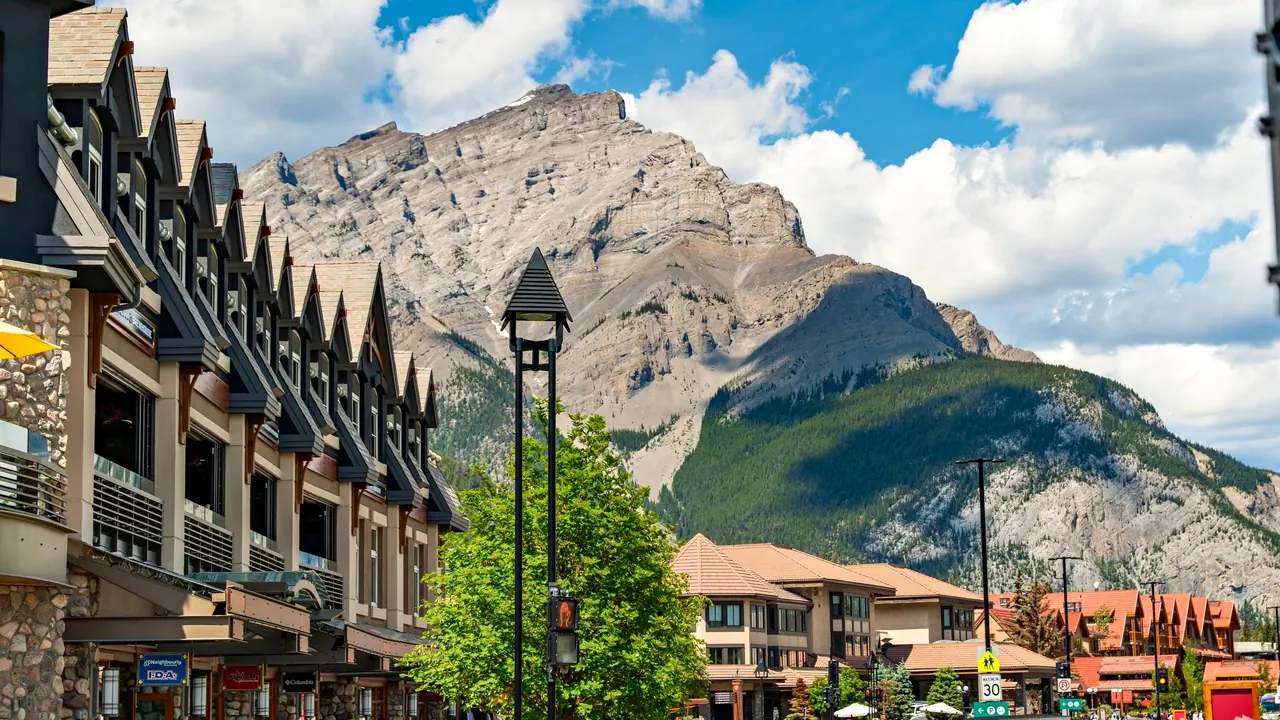
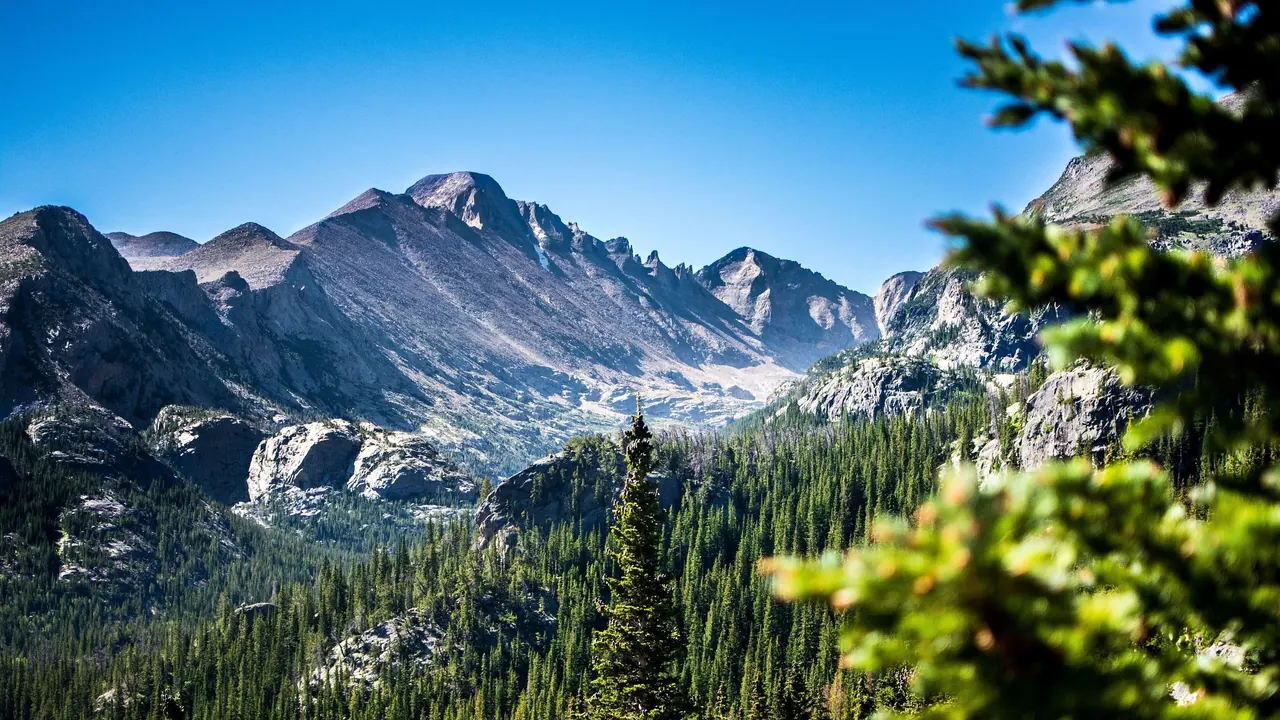
Photos: Banff by bryan pascual, Pexels License; Rocky Mountain National Park by Peter Pryharski epicpeter, CC0.
Banff or Rocky Mountain National Park?
Our verdict in twelve categories, each scored against the same fixed benchmark cities, and the climate month by month, so you can choose for your trip.
Choose Banff for
- nightlife
- wellness
- getting around
Banff suits travellers who want a proper town at the centre of their mountain trip. You can walk across it, buses reach Lake Louise and the hot springs, the pubs stay open late and the Upper Hot Springs are there at the end of the day. It also works in deep winter, when three ski areas, frozen waterfalls and skating turn it into a ski resort. Choose it if you want the Rockies with a bit of evening life and comfort around them, and can live with the cost.
Choose Rocky Mountain National Park for
- day trips
- prices
Rocky Mountain National Park is the better pick for a summer of high walking and quiet nights. Its trails climb onto open alpine tundra and towards Longs Peak, the elk rut fills September evenings, and the gateway towns go to bed early under dark skies. Summers are warmer, it is somewhat easier on the budget, and Boulder or Fort Collins make a good rest day. The cost is that you need a car, and you will usually stay on one side of the park.
Scoreboard
Twelve categories on one fixed scale from 0 to 100. The shaded stretch is the gap between the two.
Your match
Pick a travel style or drag the sliders, and both match scores follow your weighting.
Wins on nightlife and wellness with your weighting.
Wins on day trips and prices with your weighting.
What matters to you?
Category by category
What the scores mean for a trip.
Beaches & swimming
Neither is a place to swim, and both have only cold mountain water. Banff has the slight edge because of Johnson Lake, which is shallow enough to warm up on August afternoons and has a small grassy shore.
In the Colorado park the alpine lakes stay too cold, and Grand Lake on the western side is better for paddleboards and boats than for a swim. In both places, warm water means a hot spring or a hotel pool.
Food & drink
Both feed hungry hikers rather than food lovers, but Banff has more range. Alongside the steakhouses and fondue there are bison and elk dishes, hotel dining rooms cooking with Rocky Mountain produce, and decent craft beer and coffee.
Around Rocky Mountain National Park, eating means Estes Park diners, burger houses and breweries, plus a short row of grills in Grand Lake. Inside the park itself you will mostly be eating a packed picnic. For a serious meal you need to drive down to the Front Range.
Culture & sights
Banff's history goes a little deeper. Cave and Basin is where Canada's national parks began, the Banff Springs Hotel is a real landmark, and the Whyte Museum and Buffalo Nations Luxton Museum cover mountain art and Plains peoples. That is a full day of sightseeing.
The Colorado park's heritage is mainly homesteading, with the Holzwarth dude ranch cabins and the Moraine Park Discovery Center. In Estes Park the Stanley Hotel draws visitors with its ghost tours. Together they fill an afternoon.
Nightlife
This is one of the widest gaps between the two. Banff's seasonal workers and winter ski crowd keep a few pubs and dance bars busy late, all within a short walk of each other, though in spring and autumn it is thinner.
Estes Park and Grand Lake have brewpubs, saloons and a couple of boardwalk bars, but nothing runs late. The best evening there is lying in a dark meadow looking at the stars.
Nature & outdoors
Both are first-rate mountain country, and the difference is in kind. Banff puts wild landscape at the end of every street. Within easy reach are the turquoise water of Lake Louise and Moraine Lake, the catwalks of Johnston Canyon and the glaciers along the Icefields Parkway. Winter is as strong a season as summer, with three ski areas and frozen waterfalls.
Rocky Mountain National Park is higher and more open. Trail Ridge Road crosses wide alpine tundra, more than sixty peaks top 3,600m, and Longs Peak offers a serious summit climb. Elk in Moraine Park, bighorn at Sheep Lakes and moose in the Kawuneeche Valley make wildlife easy to see, but in winter it is quieter, with no resort skiing.
Day trips
Rocky Mountain National Park has better outings beyond the mountains. Boulder, with its pedestrian street and the Flatirons, is about an hour away, and Fort Collins has an old town and its breweries. Denver adds big-city museums. That gives you a varied rest day, at least from the Estes Park side.
From Banff, the town trips are Canmore down the valley, a longer day in Calgary for Heritage Park and the Stampede grounds, and modest stops at Field or Golden. Most people spend their spare days going deeper into the mountains instead.
Good for families
Both work well for outdoor families, and neither has a zoo or aquarium nearby. Banff's strengths are easy outings such as the Sulphur Mountain gondola, the Johnston Canyon boardwalk, a canoe on the Bow and, in winter, ski schools and skating.
The Colorado park has short lake loops, the Junior Ranger programme, and mini-golf and go-karts in Estes Park. Families need to plan for the altitude of around 2,300m, afternoon storms and keeping children away from rutting elk.
Getting around
Banff is much easier without a car. The town takes about twenty minutes to cross on foot, and local buses run to the gondola, Lake Minnewanka, Canmore and Lake Louise, though the Icefields Parkway still needs wheels or a tour.
In Colorado a car is close to essential, and the airport is about two hours away. A summer shuttle runs up Bear Lake Road, but Trail Ridge Road is the only link between the two sides of the park and it closes for much of the year, so you will usually stay on one side.
Shopping & style
Banff Avenue is the better street for a proper shop. Its outdoor outfitters can kit you out fully for the trail, there are Canadian clothing labels, and a few galleries sell Indigenous art and Rocky Mountain landscape painting, which are the things most worth taking home.
Elkhorn Avenue in Estes Park leans more towards souvenirs, with pulled taffy in the windows, Western wear, Native American-style jewellery and a gear store if you forgot a fleece. Grand Lake's boardwalk has a shorter version of the same.
Affordability
Banff is the dearer of the two, and the extras are what push it up. Rooms are at their most expensive in summer and again over Christmas and New Year, restaurants charge resort prices, and the gondola, guided tours and ski lift passes all add to the bill, especially on a winter trip. The trails, lakes and viewpoints themselves cost nothing beyond the park pass.
Rocky Mountain National Park works out cheaper overall, though it has its own pressures. Visitors crowd into a short summer and the September elk season, so Estes Park and Grand Lake charge the most then. Meals cost what they do in any American resort town, with a tip on top, and you will need a car for the whole trip. In both places, late spring and late autumn are noticeably cheaper.
Live music & performing arts
Banff has a real anchor in the Banff Centre for Arts and Creativity, whose theatres present concerts and dance, busiest in summer. The autumn Mountain Film and Book Festival draws an international crowd.
The Colorado park's stages work only in summer. Grand Lake's repertory theatre stages musicals, and Estes Park has chamber concerts and bluegrass evenings, and then everything goes quiet until the next year.
Wellness & relaxation
Banff was founded as a spa town, and you can still feel it. The Upper Hot Springs pool looks across the valley and is best after skiing in falling snow, and the grand hotels have large spas with mineral pools.
Around Rocky Mountain National Park, rest means a lodge massage or a slow morning on a riverside cabin porch. The nearest hot springs are at Hot Sulphur Springs, about forty minutes beyond Grand Lake.
When should you go?
Pick your month. The climate figures are measured averages, not a forecast.
Banff in July
Rocky Mountain National Park in July
Daytime high, °C
Rainfall in the month, mm
Where the figures come from
Rocky Mountain National Park's temperatures are measured 77 km from the centre, at Kremmling.
Rocky Mountain National Park has no rain gauge within 25 km of the centre, so its rainfall comes from a gridded climate dataset read at the destination rather than from a gauge further away.
Temperature and rainfall are climate normals, averaged over the years shown. Banff: 1991-2020 normals, Banff (2 km from centre). Rocky Mountain National Park: 2006-2025 (rainfall 1991-2020) normals, Kremmling (77 km from centre).
Both are high mountain places with short summers and long, freezing winters, but the Colorado park warms up earlier and more. In Banff, July and August reach about 23°C, June is the wettest month at around 66mm, and from November to March daytime highs hover around freezing or below. That suits skiing but makes town walks a bundled-up affair. Around the gateway towns of Rocky Mountain National Park, June to August run warm, with July near 29°C. Rain arrives as afternoon storms rather than long wet spells, so high hikes are best started early.
The shoulder seasons are where the two differ most. September is still mild in Colorado, about 24°C, and stays good for walking into October, while Banff has cooled to the high teens by September and is wintry by November. For lake water, neither place ever gets warm enough for a comfortable swim. Banff's best seasons are high summer and the snowy months, and the Colorado park is at its best from June to early autumn.
Which traveller are you?
For a food and nightlife trip, Banff is the clear choice. Its pubs and dance bars along Banff Avenue stay loud late, après-ski fills winter evenings and the hotel dining rooms add some ambition, while the Colorado gateway towns are quiet after dark.
On a trip on a tight budget, Rocky Mountain National Park is the gentler of two expensive places. A park pass covers a week cheaply, campgrounds and picnic lunches cut costs sharply, and rooms are less constrained than inside Banff's limited park town.
For a ski trip, Banff has what the Colorado park lacks. Sunshine Village, Lake Louise and Mt Norquay are all close by, with a hot-springs soak afterwards. Rocky Mountain National Park offers only snowshoeing and backcountry skiing in winter.
Before you go
| Measure | Banff | Rocky Mountain National Park |
|---|---|---|
| Official language | French, English | - |
| Currency | Canadian Dollar (CAD) | US Dollar (USD) |
| Sockets | AB120 V, 60 Hz | AB120 V, 60 Hz |
| Driving side | Right | Right |
| Time zone | UTC-7, UTC-6 in summer | UTC-7, UTC-6 in summer |
| Emergency number | 911 | 911 |
| Elevation | 1,400 m | - |
| Main airport | Calgary International Airport (YYC)109 km from centre102 non-stop destinations | Denver International Airport (DEN)231 non-stop destinations |
| Public holidays this year | 13 days | 12 days |
By the numbers
| Measure | Banff | Rocky Mountain National Park |
|---|---|---|
| Population | 8,305 | - |
| People per km² | 1,730 | - |
| Museums within 10 km | 4 | - |
| UNESCO World Heritage sites within 50 km | 1 | - |
Where else could you go?
Every comparison below shares a destination with this one, so you can follow Banff or Rocky Mountain National Park somewhere new.
- Canmorevs Banff
- Lake Louisevs Banff
- Jaspervs Banff
- Edmontonvs Banff
- Kelownavs Banff
- Glacier National Parkvs Banff