United States
Rocky Mountain National Park
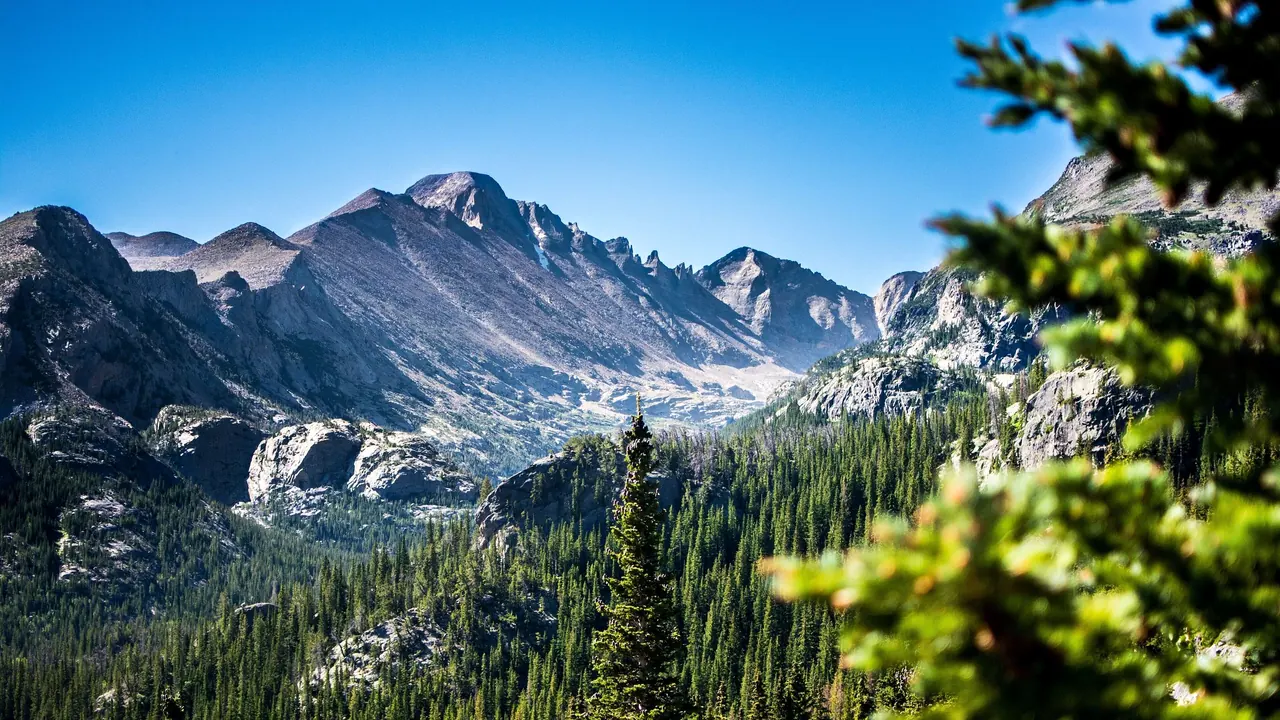
Longs Peak and Glacier Gorge from the Bear Lake trail
- Nature & outdoors92
- Families55
- Day trips40
Photo: Peter Pryharski epicpeter, CC0
Match
31
Every category weighted equally
- Beach & sun31
- Culture & arts27
- Food & nightlife23
- Family trip37
- Outdoors41
- Relax & unwind34
- Shopping & style26
- On a budget31
Rocky Mountain National Park in twelve categories
Our verdict on each, scored 0 to 100 against the same fixed benchmark cities, so a score means the same thing on every page.
Beaches & swimming. Scores 6 out of 100.
Food & drink. Scores 24 out of 100.
Culture & sights. Scores 14 out of 100.
Nightlife. Scores 7 out of 100.
Nature & outdoors. Scores 92 out of 100.
Day trips. Scores 40 out of 100.
Good for families. Scores 55 out of 100.
Getting around. Scores 38 out of 100.
Shopping & style. Scores 14 out of 100.
Affordability. Scores 30 out of 100.
Live music & performing arts. Scores 18 out of 100.
Wellness & relaxation. Scores 36 out of 100.
Rocky Mountain National Park category by category
Beaches & swimming
6This is high mountain country, and the water shows it. The alpine lakes inside the park are fed by snowmelt and stay far too cold for a real swim even in July, and many lie at the end of a long hike. On the western side, the town of Grand Lake sits on Colorado's largest natural lake. It has a small shoreline where people paddle, sunbathe briefly and sometimes take a quick, cold plunge, but boats and paddleboards suit it better than swimming. Anyone who wants water to swim in should treat this as a mountain vacation and look for a hotel pool.
Food & drink
24Eating here is gateway-town food. Estes Park, on the eastern edge, has the most choice: diners for an early breakfast before the trailhead, steak and burger houses, pizza, a few craft breweries and distilleries, and shops on Elkhorn Avenue pulling saltwater taffy and fudge. Grand Lake, on the western side, has a short row of cafés and grills along its wooden boardwalk. Inside the park there is little beyond a snack bar high on Trail Ridge Road, so most visitors pack a picnic for the day. The food is filling and friendly but not a reason to come. Serious eating means a drive down to the Front Range cities.
Culture & sights
14Visitors come for the mountains, and the man-made sights are modest. The park keeps some of its homesteading past: the Holzwarth Historic Site in the Kawuneeche Valley preserves a 1920s dude ranch with log cabins, and the Moraine Park Discovery Center, built as a lodge, tells the story of the glaciers and early settlers. Estes Park has a small local history museum and the Stanley Hotel, a white Georgian Revival hotel of 1909 above the town, known for its links to a famous horror novel and visited on ghost tours. Grand Lake has a log-built main street with a frontier look. Together these fill an afternoon, not a vacation.
Nightlife
7Nights here are quiet. The day starts at dawn, when the elk are out and the trailhead car parks still have space, and most visitors are asleep early. Estes Park has a few brewpubs, taprooms and old-style saloons on and around Elkhorn Avenue, and Grand Lake has a couple of bars along its boardwalk, but nothing runs late and there are no clubs. The real night-time draw is the sky: the high, dark meadows away from town are good for stargazing.
Nature & outdoors
92This is the heart of the matter, and it is among the finest mountain landscapes anywhere. More than sixty peaks rise above 3,600m, crowned by Longs Peak at 4,346m, with glacial lakes, wildflower meadows and a broad stretch of alpine tundra above the tree line. Trail Ridge Road climbs to a high point of 3,713m across that tundra and crosses the Continental Divide lower down, at Milner Pass, about 3,280m. Hundreds of kilometres of trails run from the short loop around Bear Lake to Sky Pond, Chasm Lake and the long, exposed climb of Longs Peak.
Wildlife is easy to see. Elk graze Moraine Park and Horseshoe Park, and their autumn rut fills September evenings with bugling. Bighorn sheep gather at Sheep Lakes, and moose wander the willow flats of the Kawuneeche Valley on the quieter western side. Lumpy Ridge draws rock climbers, the Big Thompson and Colorado rivers suit fly fishing, and winter brings snowshoeing and backcountry skiing. Summer afternoons often bring thunderstorms, so high hikes start early.
Day trips
40The obvious outing is down the canyon roads to the Colorado Front Range. Boulder, about an hour from Estes Park, is a university town with a pedestrian street, the Flatirons and a lively food scene. The small town of Lyons sits on the way, Fort Collins offers an old town and a strong brewing culture, and Denver, around an hour and a half away, has the museums and districts of a large city. From the Grand Lake side, the options shrink to small mountain towns such as Granby and Winter Park. It is a reasonable list for a rest day, but none of it is a destination that would draw visitors on its own.
Good for families
55For families who like being outdoors, it works well. Short, flat walks around Bear Lake, Sprague Lake and Lily Lake suit small legs. Elk grazing beside the road thrill children, and the park's Junior Ranger programme gives them a reason to look closely. Estes Park adds the things children ask for: an aerial tramway up Prospect Mountain, mini-golf, go-karts, horse riding from local stables and riverside paths through the town.
The challenges are real, though. Estes Park sits at about 2,300m and the trails climb higher, so a slow first day helps with the altitude. Afternoon thunderstorms are common in summer, and much of the day is spent in a car. There are no large attractions such as aquariums or theme parks, and keeping children a safe distance from elk, especially during the autumn rut, takes attention.
Getting around
38A car is the way to get here and around. Denver's airport is about two hours from Estes Park, and the roads are good. Inside the park, a free summer shuttle runs up Bear Lake Road to the busiest trailheads, which helps because those car parks fill early on summer mornings and the entrance stations back up. Estes Park itself is small enough to walk.
The two sides of the park are linked only by Trail Ridge Road, a slow, winding high-altitude drive that closes for snow from roughly mid-autumn to late spring. Outside that season, getting from Estes Park to Grand Lake means a long detour of several hours, so most visitors pick one side as their base.
Shopping & style
14Shopping is limited to gateway-town browsing. Elkhorn Avenue in Estes Park is lined with souvenir shops, outdoor gear stores, Western wear, Native American-style jewellery, a few art galleries and windows of pulled taffy, and Grand Lake's boardwalk has a shorter version of the same. It is handy for a forgotten fleece or a postcard, but no one comes here to shop.
Affordability
30This is a costly place to stay in the main season. Demand piles into a short summer and the early autumn elk season, and motel rooms, cabins and lodges in Estes Park and Grand Lake are priced accordingly. Eating out comes at American resort-town levels with a tip on top, and a car is effectively a necessity. The landscape itself is cheap to enjoy: park entry costs little for a week, trails cost nothing, and the park's campgrounds and picnic lunches can bring a trip down sharply for those willing to rough it a little. Late spring and late autumn are noticeably easier on the budget.
Live music & performing arts
18There is a modest summer programme and little else. Grand Lake has a long-established repertory theatre staging Broadway-style musicals through the summer, a surprising find in a small mountain town. Around Estes Park, a summer music school brings chamber concerts, and the town hosts outdoor bandstand concerts and Western and bluegrass evenings in the warm months. Outside summer the stages go quiet, and anyone wanting opera, orchestras or a real club circuit has to drive to Boulder or Denver.
Wellness & relaxation
36There is no bathing tradition here, but there are some places to rest. A few lodges and resorts in Estes Park have spas offering massages and treatments, and the riverside cabins along the Fall River and the Big Thompson are made for slow mornings on a porch. On the western side, the long-established hot spring pools at Hot Sulphur Springs are about forty minutes' drive from Grand Lake, and the quieter Kawuneeche Valley feels far calmer than the eastern side. In midsummer the busiest parts of the park are crowded, so the most restful times are late spring and the weeks after the elk rut.
Where to stay in Rocky Mountain National Park
Estes Park, on the eastern edge, is the natural base for a first visit. It has the most rooms and places to eat, a centre small enough to walk, and the shortest drive to Bear Lake Road, Moraine Park and the busiest trailheads. Families do well here, with flat lakeside walks close by and the tramway, mini-golf and horse riding in town. For a slower stay, the cabins along the Fall River and the Big Thompson give you river sounds and quiet mornings on the porch, a few minutes from the shops.
Grand Lake, on the western side, suits a second visit or anyone after quiet. The small log-built town sits on the lake with a boardwalk of cafés and bars, boating and paddleboarding, and summer musicals at its theatre. The Kawuneeche Valley, where moose feed in the willows, is right on the doorstep, and the hot springs at Hot Sulphur Springs are an easy drive away.
Trail Ridge Road is the only link between the two sides. It is a slow drive and closes for snow from roughly mid-autumn to late spring, when the detour takes several hours. Most visitors stay on one side. In summer, a longer trip can split its nights between both and cross the road just once. For a cheaper stay, try the park's campgrounds.
When should you go?
Pick a month to see what it is like. The climate figures are measured averages, not a forecast.
Rocky Mountain National Park in July
Daytime high, °C
Rainfall in the month, mm
The whole year
Shaded against this destination’s own year: the deepest cell is its best month for that figure and the palest its weakest.
Where the figures come from
Rocky Mountain National Park's temperatures are measured 77 km from the centre, at Kremmling.
Rocky Mountain National Park has no rain gauge within 25 km of the centre, so its rainfall comes from a gridded climate dataset read at the destination rather than from a gauge further away.
Temperature and rainfall are climate normals, averaged over the years shown. Rocky Mountain National Park: 2006-2025 (rainfall 1991-2020) normals, Kremmling (77 km from centre).
Before you go
| Measure | Rocky Mountain National Park |
|---|---|
| Currency | US Dollar (USD) |
| Sockets | AB120 V, 60 Hz |
| Driving side | Right |
| Time zone | UTC-7, UTC-6 in summer |
| Emergency number | 911 |
| Main airport | Denver International Airport (DEN)231 non-stop destinations |
| Public holidays this year | 12 days |
Compare Rocky Mountain National Park with
Every comparison with a written verdict behind it.
- Arches
- Bryce Canyon
- Canyonlands
- Death Valley
- Glacier National Park
- Grand Canyon
- Grand Teton
- Joshua Tree
- Yellowstone
- Zion