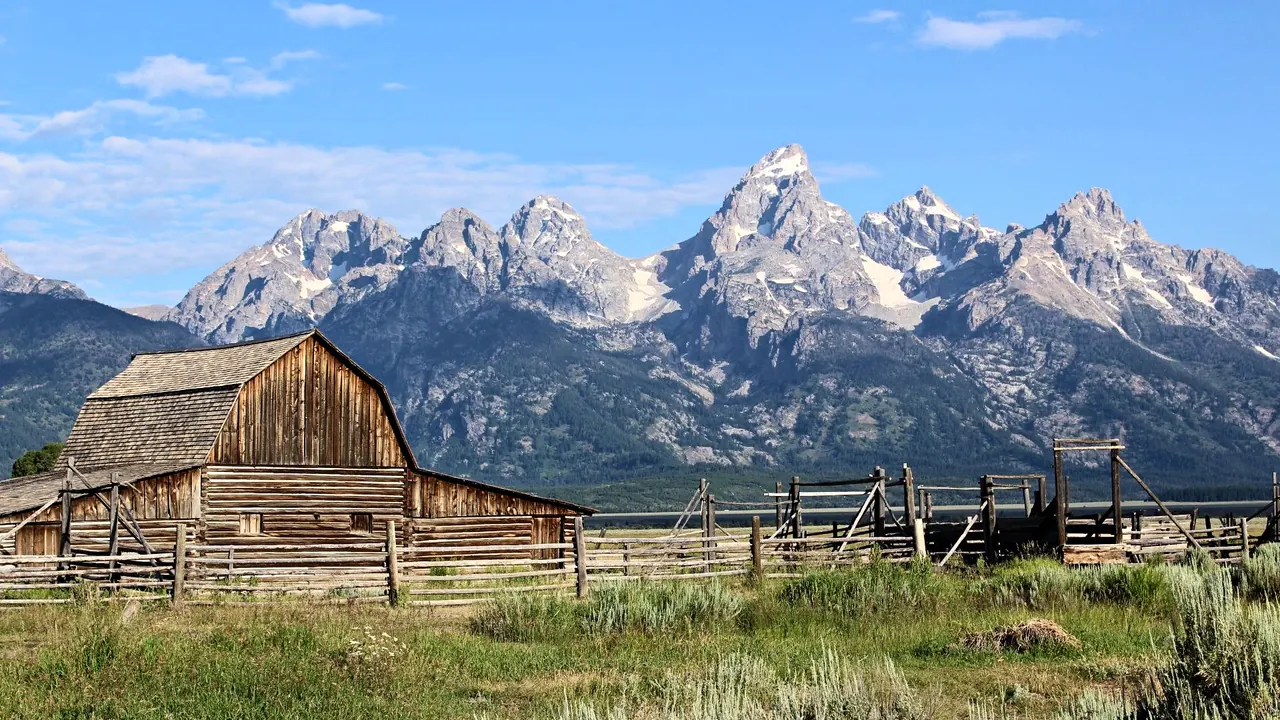
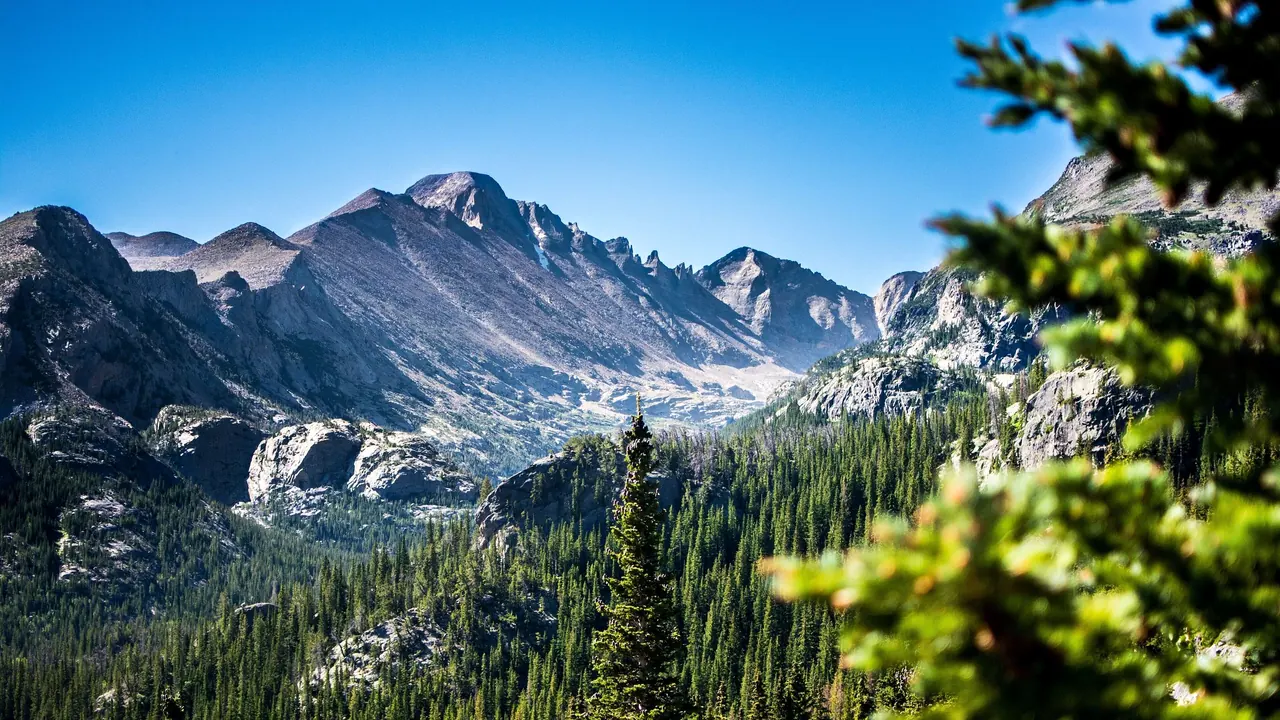
Photos: Grand Teton by Z3lvs, CC0; Rocky Mountain National Park by Peter Pryharski epicpeter, CC0.
Grand Teton or Rocky Mountain National Park?
Our verdict in twelve categories, each scored against the same fixed benchmark cities, and the climate month by month, so you can choose for your trip.
Choose Grand Teton for
- food and drink
- shopping
- nightlife
Grand Teton suits travellers who want the more dramatic single view and a town with some life in the evening. The peaks rise straight off the valley floor, Yellowstone is on the doorstep, and Jackson gives you proper restaurants, western saloons, galleries and a summer music festival after a day on the trails. It costs a good deal more, and it is also the better winter choice, with the deep-powder slopes of Jackson Hole close by.
Choose Rocky Mountain National Park for
- day trips
- prices
- families
Families and anyone watching their spending will get more from Rocky Mountain National Park. Easy lakeside walks, elk beside the road and the simple fun of Estes Park keep children happy, rooms cost less than in Jackson, and Boulder, Fort Collins and Denver are close enough for a day of city life. Evenings are quiet and the food is plain, so go for the high tundra, Longs Peak and early nights rather than for anything after dark.
Scoreboard
Twelve categories on one fixed scale from 0 to 100. The shaded stretch is the gap between the two.
Your match
Pick a travel style or drag the sliders, and both match scores follow your weighting.
Wins on food and drink and shopping with your weighting.
Wins on day trips and prices with your weighting.
What matters to you?
Category by category
What the scores mean for a trip.
Beaches & swimming
Neither is a place for swimming, but Grand Teton at least has one real swim. String Lake is shallow with sandy edges, warm enough on hot afternoons in late July and August, and Colter Bay has gravel shores for paddling. Rocky Mountain's alpine lakes stay too cold even in midsummer, and Grand Lake on the western side is better for a paddleboard or a boat than for a dip.
Food & drink
Jackson is clearly the better place to eat. Wealth and the ski crowd have drawn serious cooks, so elk, bison and trout come in proper dining rooms around the town square, with barbecue places, bakeries and coffee roasters as well. Estes Park feeds you well enough before a hike, with diners, steakhouses, pizza and taffy shops on Elkhorn Avenue, but for a memorable meal you have to drive down to the Front Range.
Inside the parks the two are alike: lodge dining rooms and cafeterias in Grand Teton and a single snack bar on Trail Ridge Road in Rocky Mountain, so you will usually take a picnic in either. Both gateway towns have craft breweries and distilleries.
Culture & sights
Neither park is a place for history, but Grand Teton gets more from what it has, because its settler relics stand in the open with the mountains behind them. Homesteaders' barns, a small log chapel and an old ferry crossing on the Snake are some of the most photographed scenes in the American West, as much for the peaks as for the buildings. Jackson adds a museum devoted to wildlife art and a town square with a frontier look, enough for a day of sightseeing between hikes.
Rocky Mountain tells its past on a smaller scale and mostly indoors. A restored dude ranch in the quiet western valley and an old lodge in Moraine Park explain the homesteaders and the glaciers, and above Estes Park the Stanley Hotel trades on its ghost stories and its link to a horror novel. That makes a good rainy afternoon rather than a day out, and nothing here matches Jackson's art museum.
Nightlife
Jackson gives you an actual night out, short as it is: western saloons on the town square with saddle bar stools and country dancing, brewpubs and cocktail bars, and in winter a loud après-ski at Teton Village. Estes Park and Grand Lake have a few taprooms and old-style saloons, but nothing stays open late and most visitors are in bed early. In both places the best thing after dark is the sky, and Rocky Mountain's high meadows are especially good for stargazing.
Nature & outdoors
These are two of the finest mountain parks anywhere, and the difference lies in the shape of the land. The Tetons are a single granite wall rising straight off the flat sage of Jackson Hole, with a chain of glacial lakes at their foot, float trips on the Snake River and grizzlies as well as moose and bison. Yellowstone begins just to the north.
Rocky Mountain is broader and higher. You can drive across open alpine tundra on Trail Ridge Road, and dozens of peaks top 3,600m around Longs Peak. Elk herds in Moraine Park and bighorn sheep at Sheep Lakes are easy to find, and Lumpy Ridge draws climbers. In winter Grand Teton has lift-served powder at Jackson Hole, while Rocky Mountain is for snowshoes and backcountry skis.
Day trips
Rocky Mountain has the better rest days, because its canyon roads lead down to real towns: Boulder, about an hour away, with its pedestrian street and the Flatirons, Fort Collins with its old town and breweries, and the museums of Denver. Grand Teton's one big outing is Yellowstone, which is more landscape than a change of scene, and beyond that the farming towns of Idaho's Teton Valley make a quiet half day. If you want a day of city life in the middle of a mountain trip, stay on the Estes Park side.
Good for families
Rocky Mountain is the easier park with children, mostly because Estes Park fills the gaps. It has an aerial tramway, mini-golf, go-karts and riding stables, and the flat walks around Bear Lake and Sprague Lake are close by. The altitude calls for a slow first day, and summer thunderstorms can cut afternoons short.
Grand Teton gives children wilder moments: the boat across Jenny Lake to Hidden Falls, gentle floats on the Snake and moose or bison seen from the car, plus a summer rodeo in Jackson. It asks more of them, with bear spray rules, long drives and fewer easy distractions, so it suits active families with older children best.
Getting around
You need a car for either park, and the practical difference is in how each is laid out. Grand Teton's airport sits inside the park, and the open valley is easy to loop in a day. There is no public transport inside the park, though, and the trailhead car parks fill early.
Rocky Mountain is about two hours from Denver's airport, but a free summer shuttle up Bear Lake Road takes the pressure off the busiest trailheads. Its east and west sides are joined only by the slow Trail Ridge Road, which is closed for much of the year, so most people choose either Estes Park or Grand Lake and stay on that side.
Shopping & style
Jackson has the better browsing. The few blocks around its square hold galleries of wildlife painting and bronzes, cowboy hats and boots, Native American jewellery and some upscale boutiques for the resort crowd. Elkhorn Avenue in Estes Park sells similar things in a plainer way, mostly souvenirs, outdoor gear, western wear and taffy, and Grand Lake's boardwalk has even less. Neither is worth a shopping trip, but Jackson is the one where you might come home with a piece of art.
Affordability
Rocky Mountain costs noticeably less than Grand Teton. Jackson is one of the wealthiest resort towns in the country, and its rooms, the park lodges, meals out and guided tours are all priced to match. You save mostly by camping or by staying over the pass in Idaho's Teton Valley.
Estes Park and Grand Lake are still expensive in summer, the way resort towns are, but less so. Park entry, free trails and campgrounds keep the landscape itself cheap to enjoy, and late spring and late autumn cost less again.
Live music & performing arts
Grand Teton has the more serious summer music. The Grand Teton Music Festival, held since the 1960s, brings professional orchestral players to a hall at Teton Village for symphonic and chamber programmes through July and August. Rocky Mountain's offer is lighter: Grand Lake's repertory theatre stages Broadway-style musicals, a summer music school gives chamber concerts, and Estes Park has bandstand and bluegrass evenings. Outside summer both go quiet, although Jackson's saloons keep the country bands playing.
Wellness & relaxation
In both parks rest comes mainly from quiet mornings and dark skies rather than treatments, and each has hot springs within reach. Grand Teton's are wilder: Granite Hot Springs is a natural pool in the forest, reached by snowmobile or skis in winter, and Jackson's upscale hotels have full spas. Rocky Mountain has the long-established pools at Hot Sulphur Springs near Grand Lake, a few lodge spas in Estes Park, and riverside cabins on the Fall River and the Big Thompson for slow mornings on the porch.
When should you go?
Pick your month. The climate figures are measured averages, not a forecast.
Grand Teton in July
Rocky Mountain National Park in July
Daytime high, °C
Rainfall in the month, mm
Where the figures come from
Grand Teton's temperatures are measured 33 km from the centre, at Jackson Hole / Moose.
Grand Teton has no rain gauge within 25 km of the centre, so its rainfall comes from a gridded climate dataset read at the destination rather than from a gauge further away.
Rocky Mountain National Park's temperatures are measured 77 km from the centre, at Kremmling.
Rocky Mountain National Park has no rain gauge within 25 km of the centre, so its rainfall comes from a gridded climate dataset read at the destination rather than from a gauge further away.
Temperature and rainfall are climate normals, averaged over the years shown. Grand Teton: 1991-2020 normals, Jackson Hole / Moose (32.7 km from centre). Rocky Mountain National Park: 2006-2025 (rainfall 1991-2020) normals, Kremmling (77 km from centre).
Both are summer destinations, and the trails are at their best from June to September. Around Jackson Hole the summer is hotter and drier, with July highs near 32°C and only about 24mm of rain, so the open sage flats can feel hot at midday and String Lake becomes warm enough for a swim. On the Estes Park side summer is cooler, around 29°C in July, but it is also the wettest time of year, with about 50mm in July, much of it from afternoon thunderstorms that make an early start on high trails sensible.
Winter differs too. Grand Teton gets its heaviest precipitation from November to January, which means snow for the ski slopes. Rocky Mountain is drier in winter but colder, with January highs around -4°C. In both places spring arrives late, and October is already cool for long days outside.
Which traveller are you?
For a food and nightlife trip, Grand Teton is the clear choice. In Jackson you can eat elk, bison and trout in serious dining rooms and then go on to saloons with country dancing or winter après-ski. Estes Park has diners, steakhouses and a few taprooms that close early.
On a trip on a tight budget, Rocky Mountain National Park makes your money go further. Rooms and meals around Estes Park cost less than in Jackson, park entry is cheap for a whole week, and campgrounds and free trails keep the days inexpensive.
For a ski trip, Grand Teton has what Rocky Mountain lacks: the steep, deep-powder runs of Jackson Hole above Teton Village, backcountry terrain on Teton Pass and lively après-ski. Rocky Mountain's winter is for snowshoes and backcountry touring, with no lift-served skiing inside the park.
Before you go
| Measure | Grand Teton | Rocky Mountain National Park |
|---|---|---|
| Currency | US Dollar (USD) | US Dollar (USD) |
| Sockets | AB120 V, 60 Hz | AB120 V, 60 Hz |
| Driving side | Right | Right |
| Time zone | UTC-7, UTC-6 in summer | UTC-7, UTC-6 in summer |
| Emergency number | 911 | 911 |
| Main airport | Jackson Hole Airport (JAC)16 non-stop destinations | Denver International Airport (DEN)231 non-stop destinations |
| Public holidays this year | 11 days | 12 days |
Where else could you go?
Every comparison below shares a destination with this one, so you can follow Grand Teton or Rocky Mountain National Park somewhere new.
- Yellowstonevs Grand Teton
- Archesvs Rocky Mountain National Park
- Canyonlandsvs Rocky Mountain National Park
- Glacier National Parkvs Grand Teton
- Archesvs Grand Teton
- Canyonlandsvs Grand Teton