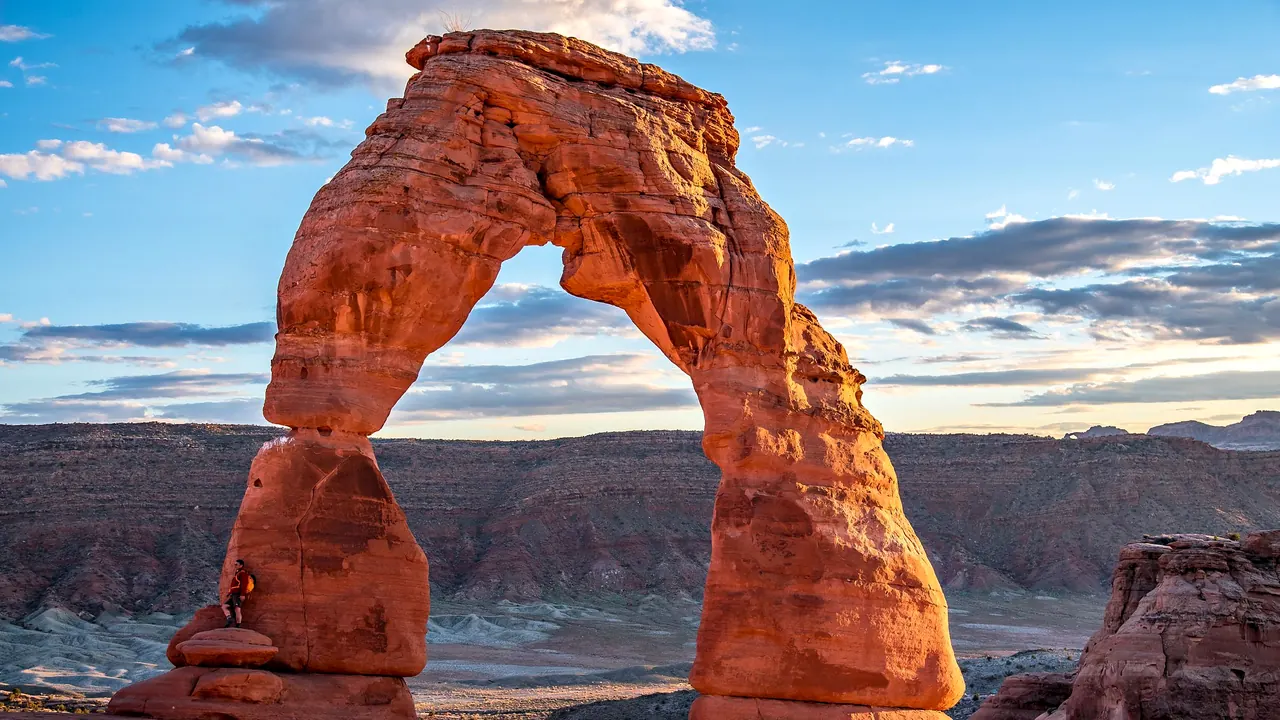
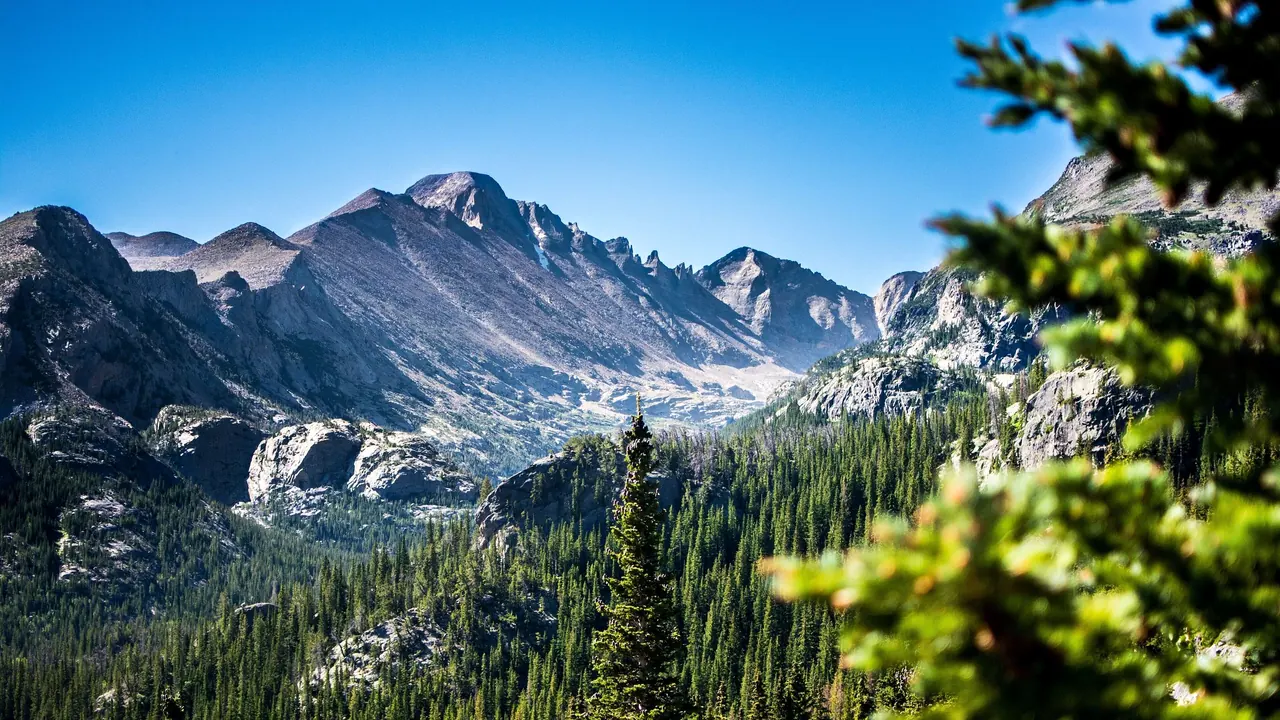
Photos: Arches by Jan Tang, Pexels License; Rocky Mountain National Park by Peter Pryharski epicpeter, CC0.
Arches or Rocky Mountain National Park?
Our verdict in twelve categories, each scored against the same fixed benchmark cities, and the climate month by month, so you can choose for your trip.
Choose Arches for
- prices
- nature and the outdoors
- food and drink
Arches suits travellers who want red-rock desert and a full, active trip. You get short walks to Delicate Arch and the Windows, slickrock biking, rafting on the Colorado and the huge overlooks of Canyonlands, all from Moab, a compact base a few minutes from the park gate. It is a little kinder to the budget, especially if you are happy to camp on public land. It works best for adults and older children who can cope with heat and exposed drops, and who won't mind that there is little else to do on a rest day.
Choose Rocky Mountain National Park for
- day trips
- families
- wellness
If you are drawn to high peaks, alpine lakes and wildlife, Rocky Mountain National Park is the better choice. It is also the easier trip with younger children, who get flat lake walks, elk by the roadside and the tramway and stables of Estes Park. It gives you more once the boots come off, too: Boulder, Fort Collins and Denver are close enough for a day away from the trails, and there are lodge spas, porch-front cabins and hot spring pools on the western side. In return, expect to pay more in its short summer season and to choose between an eastern and a western base.
Scoreboard
Twelve categories on one fixed scale from 0 to 100. The shaded stretch is the gap between the two.
Your match
Pick a travel style or drag the sliders, and both match scores follow your weighting.
Wins on prices and nature and the outdoors with your weighting.
Wins on day trips and families with your weighting.
What matters to you?
Category by category
What the scores mean for a trip.
Beaches & swimming
Neither park is a place to swim, and both leave you in the hotel pool on a hot afternoon. Around Arches, the Colorado is a river for rafts, not bathers, and only a small reservoir in the hills and the odd creek pool offer a dip.
Rocky Mountain National Park has more water but colder. Its snowmelt lakes are far too chilly even in July, and the shoreline of Grand Lake works better for paddleboards than for a quick, bracing plunge.
Food & drink
Both are towns that feed hikers, and neither is a reason to travel. In Moab the food leans Southwestern, with green chile, tacos and Mexican cooking alongside the brewpubs and diners, though Utah's liquor rules make ordering wine with dinner more awkward.
Estes Park leans towards steak houses, pizza, small distilleries and the taffy shops of Elkhorn Avenue, with a short row of grills on the Grand Lake boardwalk. Inside the park itself you will mostly eat a packed picnic. The Front Range cities are an hour or so away if you want a proper meal out.
Culture & sights
Neither gives you more than an afternoon of sights, but the history is quite different. At Arches it is very old: petroglyph and pictograph panels at Courthouse Wash and along Potash Road, dinosaur trackways in nearby canyons, plus a single pioneer cabin at Wolfe Ranch.
Rocky Mountain's story is about settlers and early tourism. There is a 1920s dude ranch at the Holzwarth Historic Site, the old lodge that houses the Moraine Park Discovery Center, and the white Stanley Hotel of 1909 above Estes Park, with its horror-novel connection and ghost tours.
Nightlife
Both shut down early, because the days start at dawn. Moab's brewpubs fill with climbers and mountain bikers, while Estes Park has taprooms and old-style saloons, and nothing runs late in either town. The real night out is under the sky: walking among the fins and arches in Arches' unusually deep darkness, or watching the stars from the high meadows of Rocky Mountain.
Nature & outdoors
Desert or mountains is the real choice here, as each is among the great landscapes of North America. Arches is red sandstone: over two thousand arches, fins and balanced rocks, the drops into Canyonlands from Island in the Sky, and an outdoor menu built on slickrock biking, canyoneering, tower climbing at Fisher Towers and rafting on the Colorado.
Rocky Mountain is high alpine country. Longs Peak tops 4,000m, and the park has glacial lakes such as Sky Pond, wildflower meadows and open tundra along Trail Ridge Road. Wildlife is the bonus Arches can't match: elk in Moraine Park, bighorn sheep at Sheep Lakes and moose in the Kawuneeche Valley, with fly fishing and winter snowshoeing as well.
Day trips
Rocky Mountain National Park has much more beyond its borders. Boulder, with its pedestrian street and the Flatirons, is about an hour from Estes Park, with Lyons on the way. Fort Collins' old town and breweries are also close, and Denver's museums are around an hour and a half away. The Grand Lake side offers only small mountain towns.
From Arches, it is mostly more wilderness. Green River's museum of river exploration is an hour away, Bluff and its Ancestral Puebloan ruins take nearly two, and Mesa Verde and Monument Valley need an overnight stay.
Good for families
Rocky Mountain National Park is the gentler choice for children. Lily Lake and Sprague Lake have flat paths, elk often graze right by the road, and Estes Park adds the Prospect Mountain tramway, go-karts and riding stables for the hours away from the trails. You will need to handle the altitude, the summer storms and keeping a safe distance from elk.
Arches suits older children who can carry water and enjoy scrambling. They will love the sandy slot to Sand Dune Arch, dinosaur tracks and calm float trips on the Colorado. Unfenced viewpoints, summer heat and very little to do on a bad-weather day make it hard going with toddlers.
Getting around
You need a car for both, and the difference is in the layout. Arches is compact. Moab is minutes from the gate, the scenic road is only about 30km long, Canyonlands is under an hour away and a paved bike path runs to the park. The catch is trailhead car parks that fill by mid-morning in spring and autumn.
Rocky Mountain is about two hours from Denver's airport, and a free summer shuttle on Bear Lake Road saves fighting for parking. The real limit is Trail Ridge Road. It is the only link between the two sides and closes for snow from autumn to late spring, so most visitors stick to one side.
Shopping & style
What fills the shop windows tells you which landscape you are in. Moab's Main Street leans towards the desert, with serious bike and outfitting stores, rock shops selling geodes and fossils, and galleries of Southwestern photography. Elkhorn Avenue in Estes Park leans towards the mountains, with Western wear, fleeces, souvenirs and windows of pulled taffy. In either town it is a street for replacing kit rather than a day's browsing.
Affordability
Arches is the easier of the two on the budget, although Moab's motels and condos charge plenty in spring and autumn. Its saving grace is the campgrounds on public land along the river and across the desert, which make a cheap stay easy to find.
Rocky Mountain packs its demand into a short summer and the elk season, so cabins and lodges in Estes Park and Grand Lake cost more, and resort-town meals add up. In both places the trails are free and park entry is modest. The guided tours at Arches and the rooms at Rocky Mountain are what drive the bill.
Live music & performing arts
There is little on stage in either, and what exists happens in summer. Arches has one standout: the Moab Music Festival at the end of summer, with chamber concerts in unusual settings such as a sandstone grotto reached by boat.
Rocky Mountain has a longer, more ordinary season. A long-established repertory theatre in Grand Lake stages Broadway-style musicals, and Estes Park has chamber concerts, bandstand evenings and bluegrass.
Wellness & relaxation
Rocky Mountain National Park has far more for a slow trip. Lodges in Estes Park have spas, cabins on the Fall River and the Big Thompson invite long mornings on the porch, and the hot spring pools at Hot Sulphur Springs are about forty minutes from Grand Lake.
Arches has no hot springs and only a few massage studios, and most days there involve early starts and heat. The rest it offers is the silence of a desert campsite as the cliffs turn red at dusk.
When should you go?
Pick your month. The climate figures are measured averages, not a forecast.
Arches in July
Rocky Mountain National Park in July
Daytime high, °C
Rainfall in the month, mm
Where the figures come from
Arches has no rain gauge within 25 km of the centre, so its rainfall comes from a gridded climate dataset read at the destination rather than from a gauge further away.
Rocky Mountain National Park's temperatures are measured 77 km from the centre, at Kremmling.
Rocky Mountain National Park has no rain gauge within 25 km of the centre, so its rainfall comes from a gridded climate dataset read at the destination rather than from a gauge further away.
Temperature and rainfall are climate normals, averaged over the years shown. Arches: 2006-2020 (rainfall 1991-2020) normals, Moab / Crescent Junction (19.4 km from centre). Rocky Mountain National Park: 2006-2025 (rainfall 1991-2020) normals, Kremmling (77 km from centre).
The two parks are at their best at different times of year. Arches is a spring and autumn destination. April, May, September and October are warm enough for long hikes without being punishing. From June to August the desert around Moab reaches about 35°C, which pushes any walking into the first hours after dawn. Winters are cold, with highs only just above freezing, but quiet. Rain is never much of a factor, and even the wettest month, October, sees only about 25mm.
Rocky Mountain National Park is mainly a summer destination. In the valleys where most visitors stay, June to September brings comfortable highs in the twenties, peaking around 29°C in July. Summer is also the wet season, with about 50mm in July, much of it falling in afternoon thunderstorms, so high hikes start early. Only December and January stay below freezing by day, dropping to about -4°C in January. November, February and March are cold but just above freezing, and from mid-autumn to late spring the high road across the park is closed. That makes winter a time for snowshoeing and skiing rather than general sightseeing.
Which traveller are you?
On a family trip with young children, Rocky Mountain National Park is the easier choice. It has flat loops around Bear Lake and Sprague Lake, elk grazing in plain view and, in Estes Park, a tramway, mini-golf and horse riding. Arches has more heat, more exposed drops and fewer distractions for children.
On a trip on a tight budget, Arches goes further. Neither gateway town is cheap in season, but the hiking around Moab is free. Campgrounds on public land along the river and in the desert also keep costs down, whereas Rocky Mountain's short summer pushes room prices up.
For a relaxing and wellness trip, Rocky Mountain National Park has more to offer. It has lodge spas in Estes Park, riverside cabins on the Fall River and the hot spring pools at Hot Sulphur Springs. In Arches, rest means a quiet campsite and the stars, not treatments.
Before you go
| Measure | Arches | Rocky Mountain National Park |
|---|---|---|
| Currency | US Dollar (USD) | US Dollar (USD) |
| Sockets | AB120 V, 60 Hz | AB120 V, 60 Hz |
| Driving side | Right | Right |
| Time zone | UTC-7, UTC-6 in summer | UTC-7, UTC-6 in summer |
| Emergency number | 911 | 911 |
| Main airport | Canyonlands Regional Airport (CNY)2 non-stop destinations | Denver International Airport (DEN)231 non-stop destinations |
| Public holidays this year | 12 days | 12 days |
Where else could you go?
Every comparison below shares a destination with this one, so you can follow Arches or Rocky Mountain National Park somewhere new.
- Canyonlandsvs Arches
- Bryce Canyonvs Arches
- Zionvs Arches
- Grand Canyonvs Arches
- Canyonlandsvs Rocky Mountain National Park
- Grand Tetonvs Rocky Mountain National Park